
As the holiday season approaches, many turn to soft lighting to create a warm, inviting atmosphere—especially in the bedroom. Among the most popular choices are fairy lights in a jar and traditional string lights. Both offer enchanting glows, but they differ significantly in ambiance, safety, ease of use, and aesthetic impact. Choosing between them isn’t just about preference—it’s about how each option aligns with your sleep environment, interior style, and seasonal routine.
The gentle twinkle of Christmas lights can evoke nostalgia, calm, and joy. But when placed beside your bed, where rest and relaxation are paramount, the quality of light matters more than ever. This article breaks down the real differences between fairy lights in a jar and string lights, helping you decide which delivers the superior bedside Christmas glow.
Ambiance and Light Quality
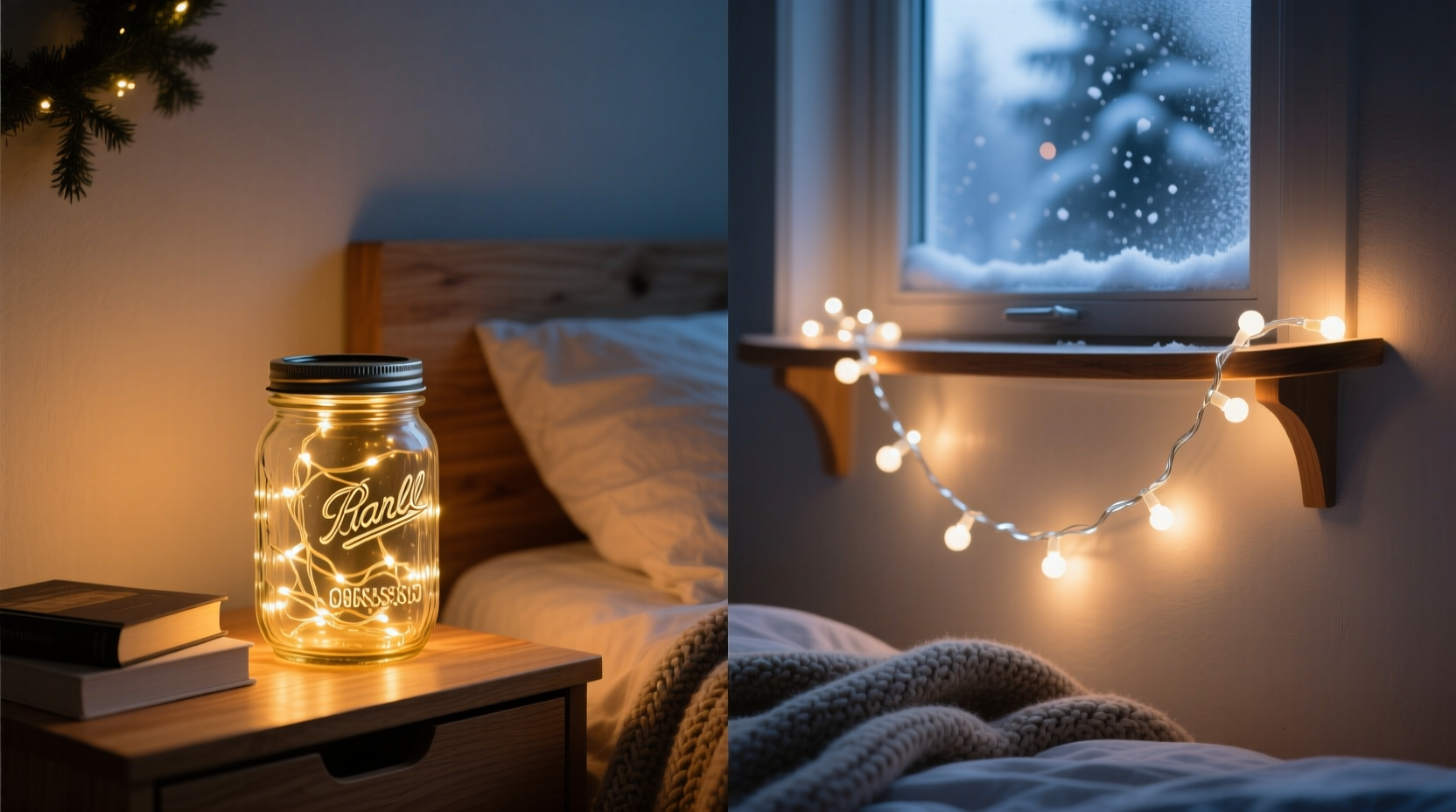
The primary function of bedside lighting during the holidays is not illumination, but atmosphere. You’re not reading or working—you’re unwinding. The ideal glow should be soft, diffused, and soothing, promoting melatonin production rather than disrupting it.
Fairy lights in a jar excel in this area. Encased in glass, the LED bulbs scatter their light through multiple surfaces—the internal reflection off the glass walls, the subtle diffusion from any added fillers (like faux snow, glitter, or moss), and the rounded shape that emits light in all directions. The result is a lantern-like radiance, warm and contained, casting gentle shadows rather than sharp beams.
In contrast, string lights emit direct points of light. Even when using warm-white LEDs, the individual bulbs remain visible and concentrated. When draped over a headboard or along a shelf, they can create a festive sparkle—but also visual noise. For light-sensitive individuals or those prone to disrupted sleep, this can be counterproductive.
One homeowner in Portland shared her experience: “I used string lights across my headboard last year, and while they looked magical in photos, I found myself staring at the bright spots every night. This year, I switched to a mason jar filled with copper-wire fairy lights and eucalyptus. It’s like having a tiny campfire on my nightstand—calming, not stimulating.”
Safety and Practicality
Bedside lighting must be safe—especially when used nightly, near bedding, or within reach of children or pets. Heat emission, electrical hazards, and physical stability are key concerns.
Fairy lights in a jar typically use low-voltage, battery-operated LEDs. Once sealed, there are no exposed wires or plugs near flammable materials. Many jars are designed as standalone units, often with timers or remote controls, reducing the need to touch them daily. Because they sit flat on a surface, they’re less likely to be pulled down accidentally.
String lights, especially plug-in varieties, pose greater risks. Extension cords near beds increase tripping hazards. Overheating—though rare with modern LEDs—can still occur if lights are covered by fabric or left on for days. Tangled wires behind furniture can degrade insulation over time. While many users drape them safely, the margin for error is higher.
“Any light source near a sleeping area should prioritize containment and minimal heat output. Enclosed systems like light jars reduce both fire risk and electromagnetic exposure.” — Dr. Lena Pruitt, Environmental Health Consultant
Battery-powered string lights improve safety but introduce another issue: frequent battery changes. A strand of 20 LEDs might drain AA batteries in 20–40 hours if left on overnight. Jars with built-in rechargeable batteries often last 8–12 hours per charge and can be topped up via USB, making them more convenient for regular use.
Style and Decor Integration
Your bedside space reflects personal taste and contributes to your room’s overall harmony. Fairy lights in a jar allow for high customization and intentional design. You can choose the jar size, bulb color, wire style, and decorative fillers to match your existing decor—rustic, minimalist, boho, or vintage.
Common designs include:
- Mason jars with pine sprigs and cinnamon sticks for a cabin feel
- Apothecary jars with silver tinsel and white LEDs for elegance
- Colored glass bottles with multicolored micro-lights for playful energy
Because they function as decorative objects even when off, these jars double as permanent accent pieces. Come January, simply remove the lights and repurpose the jar.
String lights, while versatile in placement, are harder to integrate subtly. They either dominate the space or get lost in clutter. When not in use, they require storage—often tangled and frustrating to reuse. Their repetitive, uniform pattern lacks the organic charm of a thoughtfully composed light jar.
Comparison Table: Key Features at a Glance
| Feature | Fairy Lights in a Jar | String Lights |
|---|---|---|
| Light Diffusion | High – soft, ambient glow | Low – focused, point-source lighting |
| Safety | Higher – enclosed, low heat, often battery-powered | Moderate – exposed wires, plug-in risks |
| Ease of Setup | Easy – place and turn on | Variable – depends on mounting method |
| Aesthetic Flexibility | High – customizable fillers and jars | Medium – limited by fixed strand design |
| Storage & Reuse | Simple – store as one unit | Challenging – prone to tangling |
| Sleep-Friendliness | Excellent – low glare, calming effect | Fair – potential for overstimulation |
Step-by-Step: Creating Your Own Fairy Light Jar
For those who want full creative control, making a custom light jar takes under an hour and costs less than $20. Here’s how:
- Choose a clean glass jar – Mason, apothecary, or recycled food jars work well. Ensure it’s dry and label-free.
- Select mini fairy lights – Use battery-operated, warm-white, copper-wire string lights (20–50 LEDs). Look for models with on/off switches on the battery pack.
- Prepare decorative fillers – Options include faux snow, dried flowers, pine cones, seashells, or colored sand. Avoid conductive materials like metal flakes.
- Arrange the lights – Coil the wire loosely inside the jar. Place the battery pack at the bottom or outside the jar (drill a small hole in the lid if needed).
- Add fillers around the bulbs – Layer materials to diffuse light evenly. Don’t cover the battery pack.
- Seal and test – Close the jar and turn on the lights. Adjust positioning if some areas are too dark or bright.
- Place bedside – Set on a nightstand, shelf, or dresser. Pair with books or candles for a cohesive vignette.
This DIY approach ensures your bedside glow is unique, functional, and perfectly matched to your room’s mood.
Real Example: A Minimalist Bedroom Transformation
Sophie, a graphic designer in Austin, wanted holiday cheer without clutter. Her bedroom features white walls, walnut furniture, and a neutral linen bedspread. Last year, she tried string lights above her headboard but found them “too busy” and disconnected from the room’s calm aesthetic.
This December, she created two identical amber-glass jars with warm micro-lights and preserved eucalyptus. She placed one on each nightstand. “It’s subtle,” she said. “You don’t realize how much warmth they add until you turn them off. Now, my room feels like a retreat, not a display.”
Her solution highlights a growing trend: holiday decor that enhances rather than interrupts everyday serenity. The jars serve as both seasonal accents and long-term night lights, eliminating the need for post-holiday redecorating.
Frequently Asked Questions
Can I leave fairy lights in a jar on overnight?
Yes, if they are LED and battery-powered. Most are designed for 6–12 hours of continuous use. Avoid leaving plug-in versions unattended for long periods. Always check manufacturer guidelines.
Are string lights safe on wooden headboards?
Generally yes, especially with LED lights that produce minimal heat. However, ensure wires aren’t pinched or frayed, and avoid covering lights with fabric or pillows. Battery-powered options reduce fire risk further.
How do I prevent my string lights from tangling?
Wrap them around a piece of cardboard or a dedicated spool before storing. Label the box “bedroom – 20 lights” to avoid confusion later. Alternatively, invest in pre-strung garlands with built-in frames.
Checklist: Choosing the Right Bedside Glow
- ✅ Prioritize warm-white (not cool-white) LEDs
- ✅ Choose battery-powered or USB-rechargeable options
- ✅ Ensure the light source is stable and enclosed
- ✅ Test brightness level—should be dim enough to read by, but not strain the eyes
- ✅ Match the style to your bedroom’s existing decor
- ✅ Consider long-term use beyond the holidays
- ✅ Check for timer or remote functions for convenience
Conclusion: Why Fairy Lights in a Jar Win for Bedside Use
While string lights have their place in holiday decorating—on trees, mantels, and outdoor displays—they fall short as ideal bedside companions. Their exposed nature, inconsistent diffusion, and setup complexity make them less suitable for a restful environment.
Fairy lights in a jar, by contrast, combine safety, elegance, and functionality. They deliver a superior glow—one that feels intimate, intentional, and calming. Whether store-bought or handmade, they transform the bedside into a sanctuary of warmth during the coldest months.
The best Christmas lighting doesn’t shout; it whispers. It doesn’t dazzle; it comforts. For a truly better bedside Christmas glow, the jar wins—not by a spark, but by a steady, glowing heart.




 浙公网安备
33010002000092号
浙公网安备
33010002000092号 浙B2-20120091-4
Comments
No comments yet. Why don't you start the discussion?