
Walking into a softly lit room strung with delicate glowing strands can feel like stepping into a dream. Whether draped over a headboard, wrapped around a balcony railing, or tucked into glass jars, these miniature lights add warmth and whimsy to any environment. But as you browse online marketplaces or home decor stores, you might notice two terms used interchangeably: “fairy lights” and “twinkle lights.” Are they truly the same, or is there a subtle yet meaningful difference in their design, function, and effect?
The short answer is: in everyday use, they’re often treated as synonyms. But when you dig deeper—into lighting technology, design intent, and application—the distinction becomes clearer. Understanding the nuances between fairy lights and twinkle lights helps you make informed choices for seasonal décor, weddings, ambient interiors, or even photography setups.
Origins and Terminology: How Language Shapes Perception
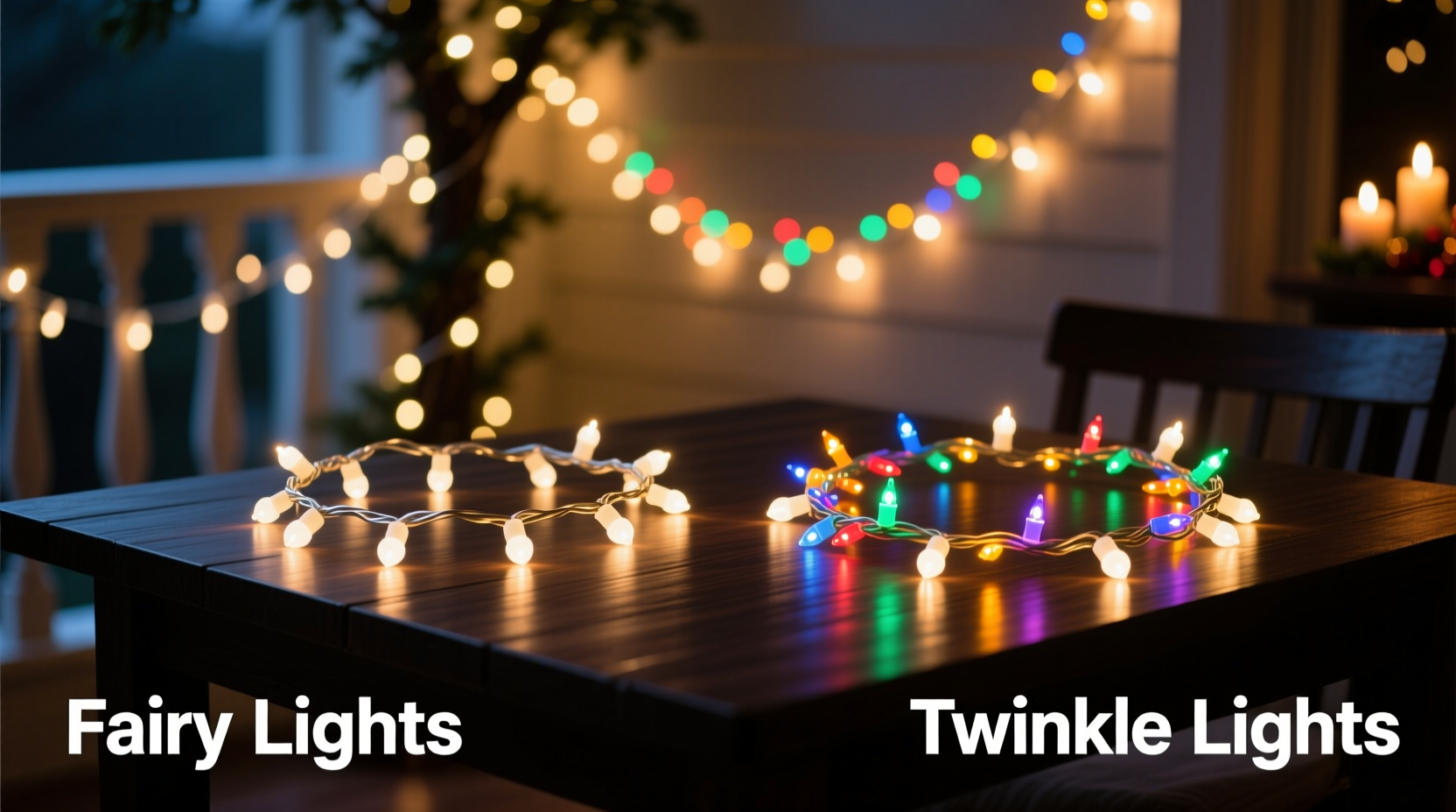
The term “fairy lights” dates back to the late 19th century, shortly after electric Christmas tree lights were introduced. Early versions were small incandescent bulbs wired together, designed to mimic candlelight without the fire risk. Because of their delicate appearance and soft glow, people began calling them “fairy lights,” evoking images of magical woodland creatures and enchanted evenings.
“Twinkle lights,” on the other hand, emerged later as a more descriptive term—referring specifically to the visual behavior of the lights. If a string of LEDs flickers or pulses erratically, creating a starry-night effect, it’s commonly labeled as “twinkle” mode. Over time, retailers began using “twinkle lights” to describe any light strand with an animated effect, regardless of size or context.
This linguistic evolution means that while all twinkle lights can be fairy lights (in form), not all fairy lights are twinkle lights (in function). The confusion arises because marketing language often blurs technical distinctions.
Technology Breakdown: LED Evolution and Lighting Modes
Modern fairy and twinkle lights almost exclusively use LED (Light Emitting Diode) technology. LEDs are energy-efficient, long-lasting, and generate minimal heat—making them safe for indoor and outdoor use, including near fabrics and foliage.
However, within LED lighting, there are key functional differences that separate fairy lights from twinkle lights:
- Fairy lights typically refer to uniformly lit, small-bulb strands where all LEDs remain steadily illuminated. They create a continuous, gentle glow ideal for ambient lighting.
- Twinkle lights incorporate circuitry that causes individual bulbs to flash randomly or in sequence, mimicking the natural flicker of stars or fireflies. This effect is achieved through built-in controllers or microchips embedded in the wire.
Some advanced models offer multiple modes—steady, slow fade, twinkle, chase, and strobe—controlled via a battery pack or plug-in adapter. These multi-mode strings are often marketed under both names, further muddying the waters.
“Consumers often don’t realize they’re buying a programmable light set until they’re halfway through decorating. Clarity in labeling could prevent mismatched expectations.” — Daniel Reeves, Lighting Designer & Home Automation Consultant
Design and Aesthetic Applications
The choice between fairy lights and twinkle lights isn’t just technical—it’s deeply aesthetic. Each serves different moods and environments.
Fairy Lights: Elegance Through Consistency
Fairy lights excel in settings where soft, even illumination enhances intimacy and elegance. Think:
- Bridal showers with sheer canopies draped in white fairy lights
- Reading nooks lined with warm-white fairy lights along shelves
- Hotels using copper-wire fairy lights inside lanterns for lobby ambiance
Because they emit constant light, fairy lights blend seamlessly into architectural features. Their subtlety makes them perfect for year-round use—not just seasonal décor.
Twinkle Lights: Drama Through Movement
Twinkle lights introduce motion into lighting design. The random blinking creates visual interest and draws attention. They work best when you want to simulate magic or excitement:
- Holiday mantles where twinkling mimics falling snow or distant stars
- Children’s rooms with ceiling-mounted constellations
- Outdoor patios during parties, where dynamic lighting boosts energy
Photographers and event planners often prefer twinkle lights for backdrops because the variation in brightness adds depth and dimension to images.
Comparison Table: Key Differences at a Glance
| Feature | Fairy Lights | Twinkle Lights |
|---|---|---|
| Primary Purpose | Ambient, decorative glow | Dynamic, attention-grabbing effect |
| Light Behavior | Steady-on (uniform brightness) | Random or sequential flashing |
| Best Use Cases | Bedrooms, weddings, reading areas | Holidays, parties, photo backdrops |
| Energy Consumption | Low (all LEDs on continuously) | Slightly lower (due to intermittent use) |
| Lifespan | Up to 50,000 hours (steady use) | Up to 60,000 hours (less thermal stress) |
| Control Options | On/off, dimmer-compatible models | Multiple modes (twinkle, fade, wave) |
Real-World Example: Choosing the Right Lights for a Wedding Venue
Sophia was planning her spring wedding in a rustic barn venue. She envisioned a romantic atmosphere with overhead lighting that felt ethereal but not distracting. After testing several options, she discovered a critical detail: some “fairy lights” sold online actually had a default twinkle setting.
During her site visit, she brought two samples—one steady fairy light string, another labeled as “twinkle fairy lights.” When hung above the dining tables, the twinkling version created a jarring effect. Guests reported it was hard to focus, and the photographer noted unwanted flicker in long-exposure shots.
She ultimately chose warm-white, steady-on fairy lights with a copper wire base. Draped in loose swags across the ceiling beams, they provided a soft, even glow that enhanced candlelit centerpieces without competing with them. The non-twinkling design ensured visual comfort throughout the evening.
Her takeaway? Always test before committing—and read reviews carefully for mentions of unintended flashing.
Step-by-Step Guide: Selecting the Right String Lights for Your Space
Follow this practical sequence to ensure you get the lighting effect you actually want:
- Define the purpose: Is this for ambient mood lighting, holiday decoration, or visual impact?
- Assess the environment: Indoor or outdoor? Near flammable materials? Exposed to moisture?
- Determine desired effect: Do you want calm continuity (fairy) or lively sparkle (twinkle)?
- Check power source: Battery-operated offers flexibility; plug-in ensures uninterrupted power.
- Look beyond the name: Search product descriptions for “steady-on,” “constant glow,” or “random twinkle.”
- Test a single strand first: Buy one unit before scaling up, especially for large installations.
- Consider color temperature: Warm white (2700K–3000K) feels cozy; cool white (4000K+) appears clinical.
- Plan for storage: Use a spool or cardboard reel to prevent tangling for next season.
Common Misconceptions and Mistakes to Avoid
Even experienced decorators sometimes fall into traps when selecting string lights. Here are frequent errors and how to avoid them:
- Mistake: Assuming “fairy” means dimmer
Reality: Brightness depends on lumen output and voltage, not naming. Some fairy lights are quite bright. - Mistake: Using outdoor lights indoors without checking aesthetics
Reality: Outdoor-rated strings often have thicker coating and larger bulbs—less delicate in appearance. - Mistake: Ignoring transformer quality in plug-in sets
Reality: Cheap adapters can cause flickering or shorten lifespan. - Mistake: Mixing LED colors in one display
Reality: Slight variations in white tones (warm vs cool) create an unbalanced look.
FAQ: Common Questions About Fairy and Twinkle Lights
Can I convert fairy lights into twinkle lights?
Yes—with accessories. You can purchase inline LED controllers that add flicker effects to steady-on strings. However, this may void warranties or reduce longevity if incompatible. For best results, buy a multi-mode string from the start.
Are twinkle lights more energy-efficient than fairy lights?
Slightly. Since not all LEDs are lit at once, twinkle lights consume marginally less power over time. However, the difference is negligible for most household uses—typically under 0.5 watts per 100 bulbs.
Do fairy lights pose a fire hazard?
Modern LED fairy lights are extremely low-risk. They operate at low voltage and produce little heat. Unlike older incandescent versions, they can safely touch fabric or paper. Still, avoid covering them with flammable materials and never leave damaged wires unattended.
Expert Insight: The Psychology of Light Patterns
Lighting doesn’t just illuminate—it influences emotion. Studies in environmental psychology show that static light sources promote relaxation and focus, while dynamic lights increase alertness and stimulation.
“Steady lighting supports parasympathetic nervous activity—ideal for winding down. Flickering light engages the brain more actively, which is great for celebrations but disruptive in rest spaces.” — Dr. Lena Torres, Environmental Psychologist
This explains why fairy lights are preferred in bedrooms and spas, while twinkle lights dominate festive and commercial environments. Your lighting choice subtly shapes how people feel in a space—sometimes without them realizing it.
Checklist: Before You Buy String Lights
- ☐ Decide: Steady glow (fairy) or animated effect (twinkle)?
- ☐ Confirm indoor/outdoor rating
- ☐ Check for timer or remote control features
- ☐ Verify bulb spacing (e.g., 4”, 6”, 12” apart)
- ☐ Test color temperature compatibility with room décor
- ☐ Ensure adequate length (measure your space)
- ☐ Look for UL certification or equivalent safety standard
- ☐ Read customer reviews for mentions of durability and performance
Conclusion: Make an Informed Choice Based on Intent
Fairy lights and twinkle lights occupy overlapping spaces in modern décor—but they are not identical. One emphasizes serenity through consistency; the other excites through variation. Recognizing the difference empowers you to align your lighting with your intention.
Whether you're crafting a peaceful retreat, designing a memorable celebration, or enhancing a professional photoshoot, the right lights make all the difference. Don’t let marketing blur the lines—look past labels and focus on function, behavior, and fit.




 浙公网安备
33010002000092号
浙公网安备
33010002000092号 浙B2-20120091-4
Comments
No comments yet. Why don't you start the discussion?