
In a world where personal expression often hinges on the smallest details, the humble keychain has quietly evolved from a utilitarian tool into a statement piece. Once just a metal ring with a few keys, today’s keychains dangle with designer logos, handcrafted charms, or sleek minimalist designs. But here’s the real question: does anyone actually notice whether you’re using a fashion keychain or a plain one? And more importantly, should you?
The answer isn’t as simple as yes or no. It depends on context, culture, audience, and even psychology. While some dismiss keychains as invisible accessories, others see them as micro-moments of identity. This article unpacks the nuanced divide between fashion and plain keychains—not just in appearance, but in perception, utility, and social signaling.
What Defines a Fashion Keychain?
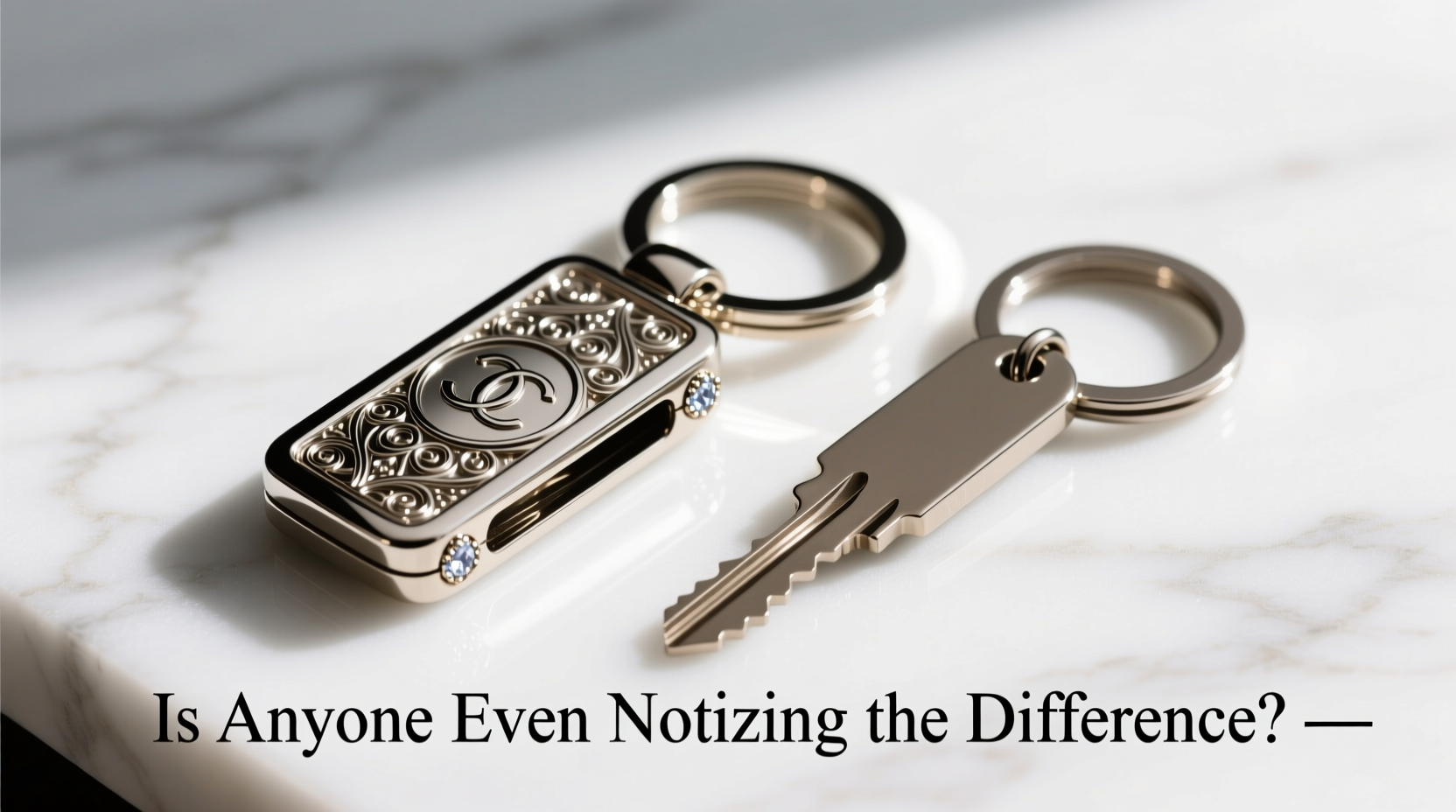
A fashion keychain goes beyond holding keys. It’s designed with aesthetics in mind—often incorporating branded elements, unique materials (like enamel, silicone, or leather), thematic shapes (animals, icons, pop culture references), or artisan craftsmanship. These are sold not just at hardware stores, but in boutiques, online fashion retailers, and luxury gift shops.
Examples include:
- Charm-laden keychains from brands like Gucci or Coach
- Custom engraved pieces with initials or meaningful symbols
- Limited-edition collaborations (e.g., Pokémon x Uniqlo)
- Minimalist titanium rings with magnetic closures
These aren't merely functional—they're curated.
The Case for the Plain Keychain
On the other side stands the plain keychain: unbranded, understated, and purely practical. Often just a split ring or a basic carabiner, it serves its purpose without drawing attention. Advocates argue that simplicity reduces clutter, avoids noise (literally—jingly charms can be annoying), and resists trends.
There's also an efficiency argument. A bulky fashion keychain can snag in pockets, add weight to your bag, or interfere with smart key fobs. For many professionals, especially in tech or security fields, discretion is preferred over flair.
“Most people don’t look at keys—but when they do, they form quick judgments. A flashy keychain might suggest playfulness; a plain one, control.” — Dr. Lena Torres, Behavioral Psychologist
Do People Actually Notice?
Anecdotal evidence suggests awareness is low—but not zero. In casual interactions, few will consciously register what’s dangling from your pocket or bag. However, subtle cues are absorbed subconsciously. A study by the Journal of Consumer Research found that small personal accessories contribute to \"impression formation\" during initial encounters, particularly in informal settings.
Consider these scenarios:
- A job interview: Your keychain likely stays in your coat pocket. No impact.
- A first date: You pull out your keys while leaving dinner. That tiny charm shaped like a retro camera catches their eye. Conversation starter? Possibly.
- At a concert: Someone steps on your bag, and your keys spill out—a neon slime-shaped keychain rolls across the floor. Suddenly, everyone sees it.
Noticeability spikes in moments of visibility, proximity, or shared experience. So while most people won’t scan your keyring daily, there are windows when it *does* matter.
When the Difference Becomes Visible
Certain environments amplify the visibility of accessories:
- Social gatherings: Friends may comment on quirky or sentimental keychains.
- Public transit: Fumbling with oversized keychains draws glances, especially if they make noise.
- Retail or service roles: Employees wearing visible lanyards or clipped keys become walking brand ambassadors—even through their key decor.
Functional Comparison: Fashion vs Plain
| Feature | Fashion Keychain | Plain Keychain |
|---|---|---|
| Style Expression | High – reflects personality or brand loyalty | Low – neutral, non-descript |
| Durability | Varies – decorative elements may break | High – fewer parts to fail |
| Pocket Friendliness | Low – bulkier, may snag fabric | High – compact and smooth |
| Noise Level | Moderate to high – charms clink | Low – minimal movement |
| Security Risk | Higher – distinctive design could aid theft identification | Lower – blends in, less traceable |
Mini Case Study: The Designer Keychain That Got Stolen
Jamal, a 29-year-old graphic designer in Portland, carried a limited-edition Supreme x LEGO brick keychain attached to his apartment keys. He loved it—it was colorful, nostalgic, and turned heads at skate parks. One evening, after leaving a café, he realized his bag had been cut open. His wallet and phone were gone, but so were his keys.
Two days later, police recovered the keys—but not because of surveillance. A neighbor spotted someone trying locks on his building with a bright red LEGO keychain. The distinctiveness that once sparked compliments now made the thief identifiable.
Lesson: Fashion keychains increase visibility—for better and worse.
Step-by-Step Guide to Choosing the Right Keychain
- Assess your lifestyle: Do you commute, work in an office, travel often? High-movement lifestyles favor lighter, quieter options.
- Identify your goals: Are you expressing identity, commemorating an event, or simply organizing keys?
- Test for interference: Attach your candidate keychain to your main set and carry it for a day. Does it trigger alarms? Snag on zippers?
- Evaluate security: Avoid attaching house keys to highly visible or valuable keychains. Use secondary rings for decorative items.
- Rotate seasonally: Keep a plain one for work, a fun one for weekends. Flexibility beats permanence.
Checklist: Is Your Keychain Working for You?
- ✅ Easily accessible when needed
- ✅ Doesn’t damage clothing or bags
- ✅ Reflects your current self-image (even subtly)
- ✅ Secure enough to prevent accidental loss
- ✅ Not louder than necessary in quiet spaces
- ✅ Replaceable if lost (avoid irreplaceable sentimental items on primary keys)
Expert Insight: Beyond Utility
“Accessories are silent language. A keychain might seem trivial, but in anthropology, we call these 'carried objects'—small items that signal belonging, memory, or aspiration.” — Dr. Amara Patel, Cultural Anthropologist, NYU
This perspective reframes the debate. Even if no one explicitly comments on your keychain, it participates in a broader ecosystem of nonverbal communication. Like cufflinks, watches, or shoelaces, it contributes to the overall impression you project—especially in cultures where sartorial subtlety is valued.
FAQ
Does having a fancy keychain make me a target for theft?
Possibly. While not common, highly recognizable or expensive-looking keychains can draw unwanted attention, especially in crowded areas. Pair flashy designs with extra vigilance and consider detaching them from critical keys.
Can a keychain improve mental well-being?
Surprisingly, yes. Therapists sometimes recommend tactile or symbolic objects—like a calming textured keychain or one representing a milestone—to reduce anxiety. The act of fidgeting with a familiar object can be grounding.
Are plain keychains more professional?
In conservative workplaces, yes. Minimalism aligns with perceptions of focus and seriousness. However, creative industries may appreciate tasteful personality touches—even on a keyring.
Conclusion
The gap between a fashion keychain and a plain one isn’t just about looks—it’s about intention. Whether anyone notices depends on timing, setting, and observer. But the deeper truth is this: even unnoticed details shape how we feel about ourselves. A tiny charm might remind you of a trip abroad. A sleek titanium loop might reflect your love of precision. These choices, however small, are part of self-curation.
You don’t need to shout your identity through your keychain. But if you choose to whisper it—someone might still hear.




 浙公网安备
33010002000092号
浙公网安备
33010002000092号 浙B2-20120091-4
Comments
No comments yet. Why don't you start the discussion?