
Every morning, as you reach for your handbag, you're making a silent compromise. Is it the sleek silhouette that matches your outfit? Or the one with enough pockets to organize your life? The tension between fashion and function in handbags isn’t new—but it’s sharper than ever. With social media glorifying minimalist designer totes and urban lifestyles demanding multitasking, the pressure to find a bag that “does it all” has never been greater. But is that even possible? And more importantly, do you actually need it?
The truth is, no single handbag can perfectly balance runway appeal and practical utility for every situation. Yet, understanding where your priorities lie—and when to make trade-offs—can save you money, stress, and closet clutter.
The Allure of Fashion-Forward Handbags
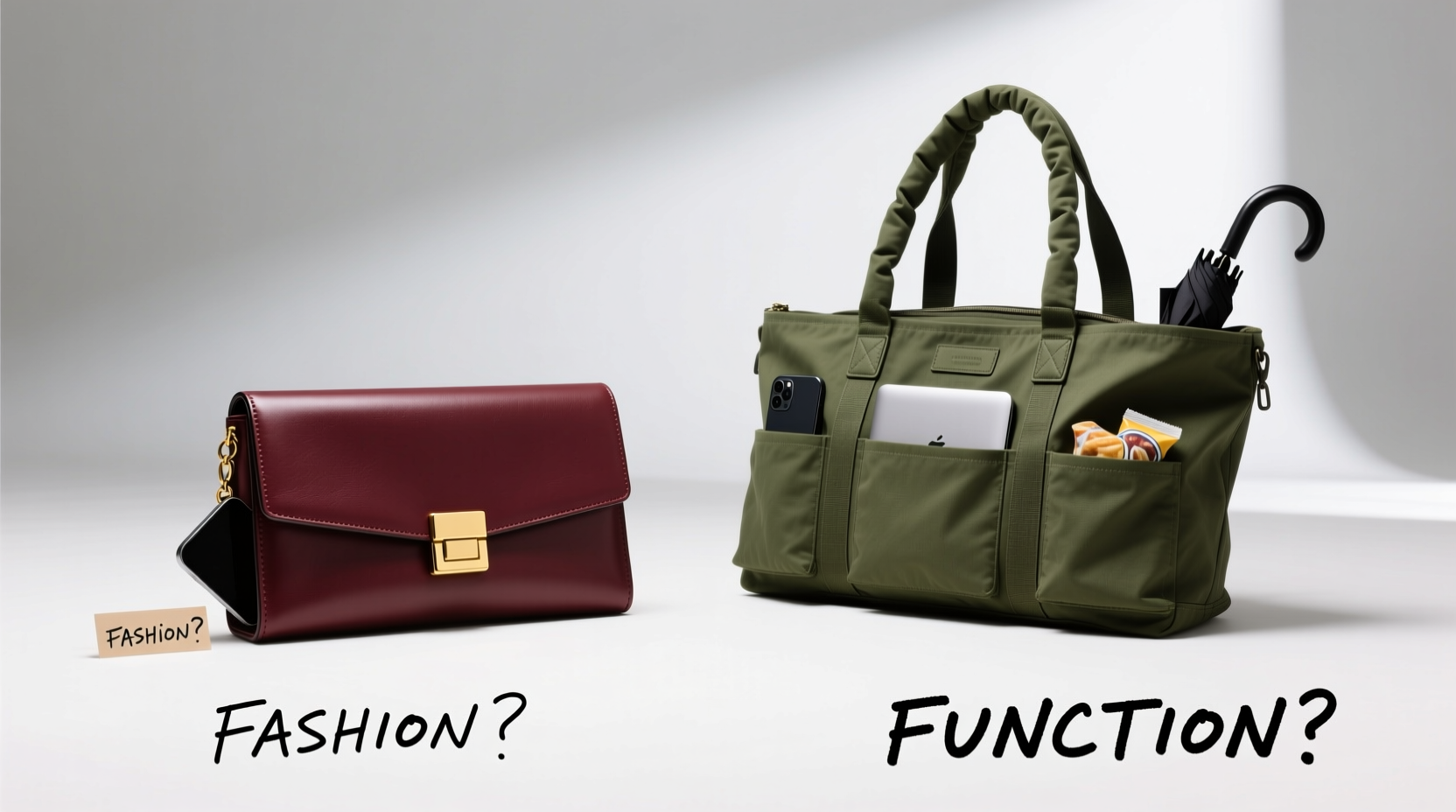
Fashion handbags are designed to impress. They’re the statement piece that elevates an outfit, signals personal style, or even serves as wearable art. Think structured satchels with polished hardware, quilted crossbodies with iconic stitching, or bold-colored clutches that turn heads at evening events.
Designers like Bottega Veneta, Prada, and Jacquemus prioritize aesthetics over storage capacity. Their bags often feature minimal linings, limited compartments, and unconventional shapes—all in service of visual impact. These pieces are made for moments: gallery openings, brunch dates, or city strolls where carrying only essentials is part of the curated lifestyle.
But beauty comes at a cost. Many high-fashion bags lack protective feet, durable straps, or water-resistant finishes. They’re not built for rainy commutes, heavy laptops, or days when you need your wallet, keys, phone, umbrella, and reusable water bottle—all at once.
The Case for Function-First Bags
Functional handbags solve real problems. They’re roomy, organized, and built to last. Brands like Tote&Clutch, Bellroy, and Dagne Dover specialize in bags with padded laptop sleeves, RFID-blocking pockets, adjustable straps, and weather-resistant materials. These are the workhorses of daily life—trusted companions for professionals, parents, travelers, and anyone whose day demands preparedness.
Functionality doesn’t have to mean boring. Many modern utilitarian bags come in stylish colors and clean silhouettes. However, they rarely achieve the cultural cache of a designer logo or avant-garde shape. They’re judged by how well they perform, not how many Instagram likes they get.
“Most women own three to five handbags but use only two regularly—one for work, one for weekends. The others sit unused because they don’t serve a clear purpose.” — Lena Torres, Consumer Behavior Analyst at StyleMetrics
Fashion vs Function: A Practical Comparison
| Feature | Fashion Handbags | Functional Handbags |
|---|---|---|
| Primary Focus | Aesthetic appeal, brand prestige | Organization, durability, comfort |
| Storage Capacity | Limited, often unstructured | Ample, with dedicated compartments |
| Material Quality | Premium (e.g., lambskin, exotic leathers) | Durable (e.g., ballistic nylon, coated canvas) |
| Comfort for Daily Use | Often poor (thin straps, awkward weight distribution) | High (padded straps, ergonomic design) |
| Lifespan Under Heavy Use | Short to moderate | Long |
| Price Range | $500–$5,000+ | $100–$400 |
| Best For | Special occasions, style statements | Work, travel, errands, active lifestyles |
Do You Need a Bag That Does Everything?
The idea of a “do-it-all” bag is seductive. Imagine a single tote that looks chic on a Zoom call, carries your 13-inch MacBook, fits a compact umbrella, charges your phone wirelessly, resists spills, and folds into your pocket when not in use. Some brands market hybrids aiming for this ideal—but they often fall short in one area or another.
For example, a leather tote with a built-in charging port may look professional but lacks sufficient padding for tech protection. A backpack disguised as a handbag might offer comfort but undermine a polished appearance. The reality is that optimizing for multiple functions usually means compromising on each.
Instead of chasing perfection, consider a modular approach. Own two or three purpose-built bags rather than one overstretched compromise. This strategy reduces decision fatigue and ensures you’re equipped for different roles throughout the week.
A Real-Life Example: Sarah’s Bag Rotation
Sarah, a marketing director in Chicago, used to carry a single designer tote everywhere. It looked sharp in meetings but strained under her laptop, charger, and gym clothes. After six months, the leather cracked, and the strap detached. She switched to a rotation system:
- Work Week: A structured nylon tote with padded tech compartment and exterior water bottle holder.
- Weekends: A buttery-soft shoulder bag in camel leather for coffee runs and shopping.
- Evenings: A metallic clutch with chain strap for dinners and events.
Her bags now last longer, and she feels more put-together in every setting. More importantly, she stopped trying to force one bag to fulfill incompatible needs.
How to Choose What Works for You
Before buying another handbag, ask yourself these questions:
- What will I carry most often? (Laptop? Diaper kit? Gym shoes?)
- Where will I use it? (Office, travel, casual outings?)
- How important is comfort during extended wear?
- Do I value longevity over trendiness?
- Am I willing to switch bags based on the day’s demands?
Checklist: Evaluating Your Next Handbag
- ✅ Has secure closures (zippers, magnetic snaps)
- ✅ Includes interior pockets for phone, wallet, keys
- ✅ Made from easy-to-clean, durable material
- ✅ Straps are adjustable and comfortable on the shoulder or crossbody
- ✅ Fits essential items without bulging
- ✅ Matches at least three outfits in your wardrobe
- ✅ Aligns with your most frequent daily activities
Frequently Asked Questions
Can a luxury bag be functional too?
Some can, but selectively. Look for models explicitly designed for daily use—like the Longchamp Le Pliage Cuir or the Coach Tabby Tote. These combine brand prestige with thoughtful details like reinforced bases and interior organization. However, even luxury functional bags often sacrifice some durability compared to performance-focused non-luxury brands.
Is it worth investing in multiple bags?
Yes, if you lead a varied lifestyle. Owning specialized bags often costs less over time because each lasts longer when used appropriately. One $800 bag worn daily for two years may degrade faster than two $400 bags rotated weekly, both lasting four years.
How many handbags should I own?
Three is a practical sweet spot for most people: one for work, one for casual use, and one for special occasions. Adjust based on your routine—parents or travelers may need more; minimalists may thrive with fewer.
Final Thoughts: Embrace Purpose Over Perfection
The pursuit of a handbag that does everything reflects a broader cultural desire for efficiency and simplicity. But true effectiveness comes not from finding a universal solution, but from recognizing that different tasks require different tools. A chef doesn’t use a paring knife to carve a turkey. A photographer doesn’t shoot landscapes with a macro lens. Why expect one bag to master every role?
Let go of the myth of the “perfect” bag. Instead, build a small, intentional collection that supports your actual life—not an idealized version of it. When you stop asking your handbag to be everything, you free it to be exactly what you need, when you need it.




 浙公网安备
33010002000092号
浙公网安备
33010002000092号 浙B2-20120091-4
Comments
No comments yet. Why don't you start the discussion?