
When winter rolls around, a leather jacket becomes more than just a fashion statement—it's armor against the cold. But as temperatures drop year after year, a pressing question arises: should you invest in a real leather jacket or opt for a more affordable faux alternative? While both look sharp on day one, their performance over multiple seasons—especially harsh winters—can differ dramatically. This article dives into the long-term durability, maintenance demands, environmental impact, and real-world resilience of both materials, helping you make a choice that stands the test of time.
Durability Over Time: How Materials Age
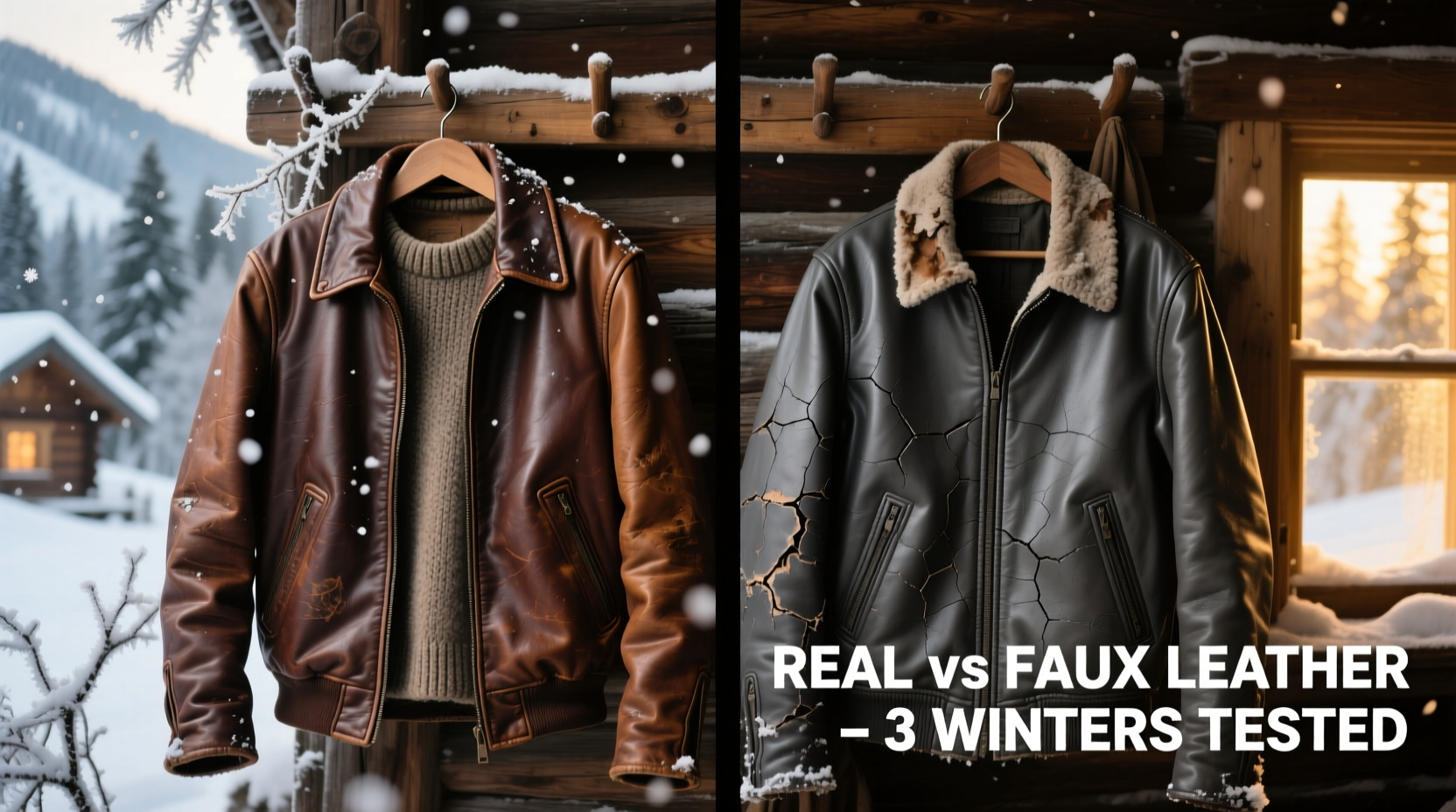
The core difference between real and faux leather lies in composition. Real leather is made from animal hides, typically cowhide, that are tanned and treated to preserve strength and flexibility. Faux leather, also known as synthetic or vegan leather, is usually composed of polyurethane (PU) or polyvinyl chloride (PVC) layered over a fabric backing. These base materials respond very differently to cold, moisture, UV exposure, and physical stress.
Real leather develops a patina—a natural sheen and softening that occurs with age and use. When properly cared for, this aging process enhances its character rather than diminishing it. In contrast, faux leather tends to degrade predictably: cracking, peeling, and fading become common after two to three winters, especially at stress points like elbows and seams.
A study by the Material Innovation Initiative found that high-quality full-grain leather can last 10–20 years with regular maintenance, while most faux leathers begin showing structural wear within 3–5 years—even under moderate use. The polymers in synthetic materials break down faster when exposed to temperature fluctuations, making them particularly vulnerable in climates with freezing winters and humid springs.
Maintenance Demands: What Each Jacket Needs to Survive Winter
Care routines play a decisive role in longevity. Real leather requires periodic conditioning to prevent drying and cracking during dry winter months. A quality leather conditioner applied every few months replenishes natural oils lost due to indoor heating and outdoor exposure. Additionally, storing real leather in breathable garment bags—away from direct heat sources—preserves integrity.
Faux leather, while marketed as “low maintenance,” still needs attention. Wiping it down after wear prevents salt stains from snow and road treatment. However, unlike real leather, it cannot be deeply conditioned. Once micro-cracks appear, they tend to spread quickly. Harsh cleaners or alcohol-based wipes can accelerate deterioration by breaking down the polymer surface.
“People assume fake leather is easier to care for, but without proper cleaning and storage, it fails much faster than people expect.” — Lena Torres, Textile Conservation Specialist at the Boston Fashion Archive
Performance in Cold Weather Conditions
Winter isn’t just about looks—it’s about function. How well does each material insulate, resist moisture, and handle repeated wear?
- Insulation: Real leather has natural thermal mass. It retains body heat better and feels warmer over time, especially when lined with wool or shearling.
- Moisture Resistance: While neither material is fully waterproof, real leather handles light rain and snow better. With a protective spray, it repels water without compromising breathability. Faux leather may resist initial dampness but traps moisture underneath, leading to inner lining mold if not dried properly.
- Flexibility in Cold: Real leather remains pliable in freezing temperatures if conditioned. Faux leather stiffens and becomes brittle below 20°F (-6°C), increasing risk of cracks.
In regions with prolonged sub-zero conditions, users report significantly higher failure rates in faux leather jackets—particularly along zipper pulls, collar folds, and sleeve cuffs—after just two consecutive winters.
Comparative Longevity: Real vs Faux After Multiple Seasons
To illustrate how these materials hold up, consider a side-by-side comparison based on real-world usage patterns across five years in a northern climate:
| Factor | Real Leather (Full-Grain) | Faux Leather (PU-Based) |
|---|---|---|
| Average Lifespan (with care) | 10–20 years | 3–5 years |
| Cracking/Peeling Risk | Low (if conditioned) | High (after Year 2) |
| Cold Weather Flexibility | Good to excellent | Poor below 20°F |
| Water Resistance | Moderate (improves with treatment) | Surface-level only |
| Stain & Salt Resistance | Manageable with cleaning | Prone to permanent marks |
| Repairability | Yes (dye, patch, recondition) | Limited (surface damage irreversible) |
| Environmental Impact (long-term) | Higher initial footprint, longer use | Lower upfront cost, higher turnover |
This data reflects trends observed in consumer reports and repair shop logs from cities like Minneapolis, Montreal, and Berlin—areas known for demanding winter wear.
Mini Case Study: Two Jackets, Five Winters
Take the example of Sarah M., a commuter in Chicago who bought two nearly identical motorcycle-style jackets in 2019—one genuine lambskin ($275), one PU-based faux ($98). Both were worn regularly during winter months and stored in her closet during off-seasons.
By winter 2021, the faux jacket began showing fine cracks near the shoulders and elbows. Despite wiping it down monthly, salt stains had etched into the surface. By 2023, the back panel was visibly peeling, and the lining started detaching at the seams. She replaced it with another faux model, citing affordability.
Meanwhile, her real leather jacket darkened slightly and developed subtle creases—but no structural flaws. She applied leather balm twice a year and used a cotton cover for storage. As of 2024, it remains in active rotation, now with a richer appearance and consistent performance in wind and snow.
Sarah’s experience mirrors broader consumer behavior: those prioritizing short-term savings often cycle through multiple faux jackets, while real leather owners make fewer purchases over time.
Step-by-Step Guide to Maximizing Jacket Longevity
No matter which material you choose, following a disciplined care routine will stretch its usable life. Here’s a seasonal timeline for maintaining your jacket through multiple winters:
- Before Winter: Clean the surface gently with a damp cloth and appropriate cleaner (leather-specific or mild soap for faux). Apply a protective water-repellent spray suitable for the material.
- Monthly During Winter: Wipe away salt, dirt, and moisture after exposure. For real leather, condition once every 6–8 weeks. Avoid heating vents or radiators when drying.
- End of Season: Give a thorough clean. Check for loose stitching or early signs of wear. Store in a cool, dry place on a wide wooden hanger, inside a breathable cotton garment bag.
- Avoid: Plastic bags (trap moisture), direct sunlight, folded storage, and stacking heavy items on top.
- Every Spring: Inspect both interior and exterior. Address minor issues early—small tears in real leather can be stitched; faux leather damage is rarely fixable.
Environmental and Ethical Considerations
The debate isn’t just about durability—it’s also about sustainability. Real leather uses animal byproducts, raising ethical concerns for some consumers. However, it’s often argued that using hide byproducts from the meat industry reduces waste. High-quality tanning methods (like vegetable tanning) minimize toxic runoff, though chrome tanning remains common and environmentally taxing.
Faux leather avoids animal sourcing but relies on petroleum-based plastics. Most synthetic leathers are not biodegradable and shed microplastics when they degrade. While newer plant-based alternatives (e.g., Piñatex, mushroom leather) show promise, they’re not yet widely available in durable outerwear forms.
From a lifecycle perspective, a real leather jacket worn for 15 years generates less waste than five faux jackets replaced every three years. The key is viewing outerwear as a long-term investment rather than disposable fashion.
FAQ: Common Questions About Leather Jacket Longevity
Can I repair a cracked faux leather jacket?
Minor surface cracks can sometimes be patched with a vinyl repair kit or paint-on coating, but these fixes are cosmetic and temporary. Structural degradation cannot be reversed. Unlike real leather, faux material lacks depth—once the top layer fails, replacement is usually necessary.
Do real leather jackets get stiffer in cold weather?
They can feel tighter initially, but properly conditioned leather remains flexible even in freezing temperatures. Stiffness usually indicates dryness or lack of use. Wearing it indoors first helps it warm up and conform to your body.
Is there such thing as \"high-end\" faux leather that lasts longer?
Some premium synthetics, like Italian-made eco-leathers using advanced PU formulas, offer improved resilience and can last 5+ years with careful use. However, they still don’t match the tensile strength or repairability of top-tier full-grain leather. Price points for these materials often approach entry-level real leather, narrowing the economic advantage.
Checklist: Choosing the Right Winter Jacket for Long-Term Wear
- ☐ Assess your climate: frequent snow and freeze-thaw cycles favor real leather.
- ☐ Set a budget that accounts for total ownership cost over 5+ years.
- ☐ Prioritize full-grain or top-grain leather if going real.
- ☐ Look for reinforced stitching and quality zippers regardless of material.
- ☐ Commit to a seasonal care routine before purchasing.
- ☐ Consider secondhand or vintage real leather options—they’ve already proven durability.
Conclusion: Making a Choice That Lasts
After multiple winters, the evidence is clear: real leather outperforms faux leather in durability, adaptability, and long-term value. While faux options win on upfront cost and ethical appeal for some, they rarely survive beyond a few seasons in demanding conditions. Real leather, when maintained, not only endures but improves—developing depth, character, and resilience that synthetics cannot replicate.
If you live in a region with harsh winters and plan to wear your jacket for years, investing in a well-made real leather piece is likely the smarter, more sustainable decision. But if you're seeking a seasonal trend piece or have firm ethical boundaries around animal products, choose high-quality faux, limit exposure to extreme conditions, and commit to meticulous care.




 浙公网安备
33010002000092号
浙公网安备
33010002000092号 浙B2-20120091-4
Comments
No comments yet. Why don't you start the discussion?