
Suddenly becoming aware of a pulsing sensation in your abdomen can be unsettling. You're sitting quietly, perhaps lying down after dinner, and you notice what feels like a heartbeat throbbing in your stomach. Is this normal? Could it signal something serious? While many instances are harmless, especially in lean individuals or during pregnancy, certain symptoms should not be ignored. Understanding the physiological mechanisms behind this sensation—and knowing when it might point to an underlying condition—is essential for peace of mind and timely care.
What Causes the Sensation of a Heartbeat in the Stomach?
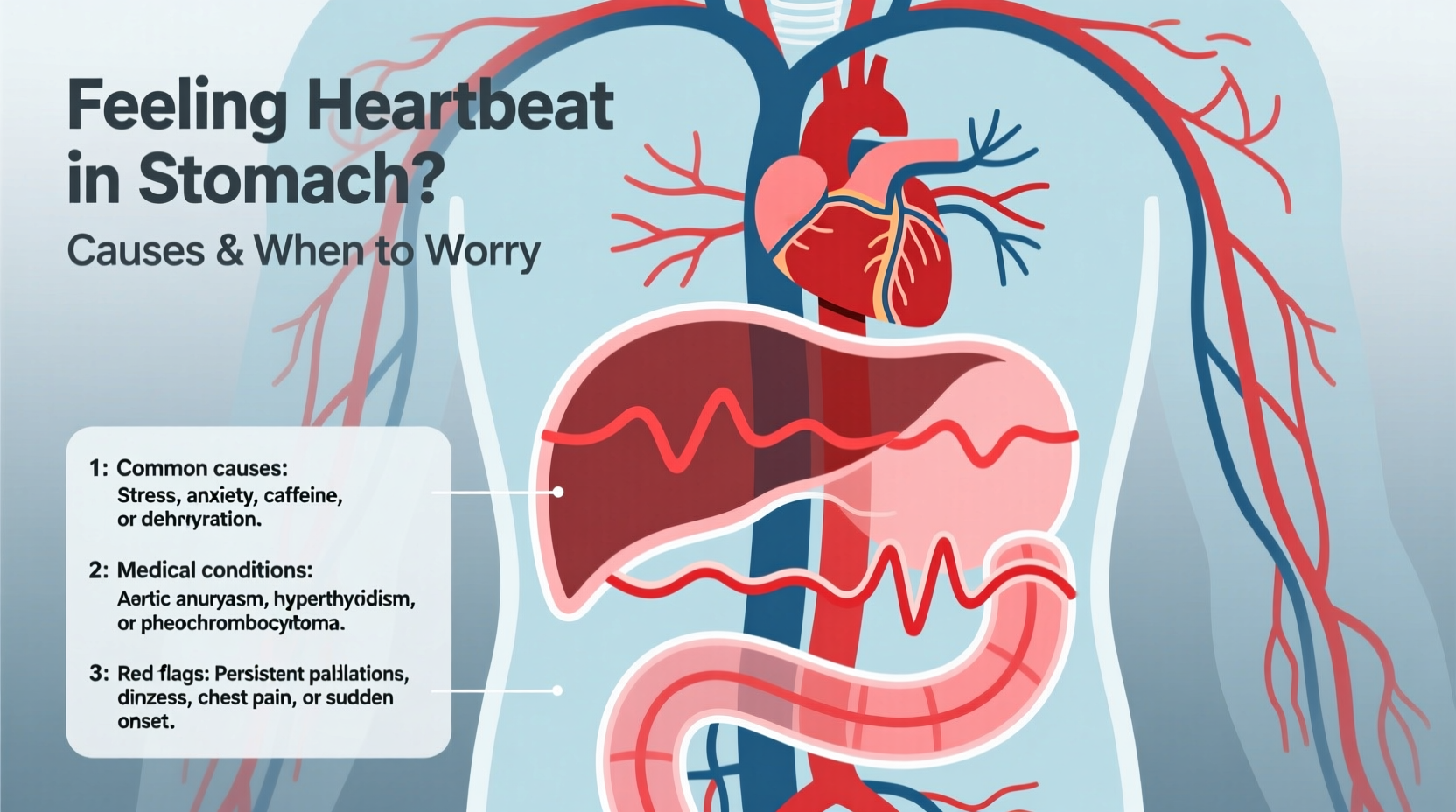
The pulse you feel in your abdomen is typically the pulsation of the abdominal aorta—the largest artery in the abdominal cavity. This vessel carries oxygenated blood from the heart through the chest and into the lower body. In most people, this pulse isn’t noticeable under everyday conditions. However, several factors can make it more perceptible:
- Anatomical build: Individuals with a lean body composition may feel the aortic pulse more easily due to less fatty tissue insulating the artery.
- Pregnancy: As the uterus expands, it pushes abdominal organs upward, bringing the aorta closer to the abdominal wall. Increased blood volume during pregnancy also amplifies pulse strength.
- Lying down: When reclining, especially after eating, blood flow increases to the digestive system, making aortic pulsations more pronounced.
- Anxiety or heightened awareness: Stress can increase heart rate and sensitivity to bodily sensations, leading someone to focus on otherwise normal internal rhythms.
- Digestive bloating: Gas or fullness can stretch the abdominal wall, enhancing perception of nearby vascular activity.
When It Might Be a Sign of Something Serious
While occasional awareness of abdominal pulsing is usually benign, persistent or intense sensations—especially when accompanied by other symptoms—can indicate medical concerns. The most significant condition associated with this symptom is an abdominal aortic aneurysm (AAA).
An AAA occurs when the wall of the aorta weakens and bulges, creating a potentially life-threatening situation if rupture occurs. According to the U.S. Centers for Disease Control and Prevention, ruptured AAAs account for over 9,000 deaths annually. Early detection dramatically improves outcomes.
“Many patients with small abdominal aortic aneurysms are asymptomatic. But when they do report a pulsatile mass in the upper abdomen, it’s a critical red flag that warrants immediate imaging.” — Dr. Alan Reyes, Vascular Surgeon, Massachusetts General Hospital
Other concerning conditions include:
- Hypertension: High blood pressure can increase arterial pulsatility, making the aorta more noticeable.
- Aortitis: Inflammation of the aortic wall, often due to autoimmune disorders like giant cell arteritis.
- Arteriovenous malformations (AVMs): Abnormal connections between arteries and veins in the abdomen that can create turbulent blood flow and palpable thrills.
Red Flags: When to Seek Medical Attention
Not every instance of feeling a heartbeat in the stomach requires emergency care. However, certain accompanying signs suggest the need for prompt evaluation:
| Symptom | Benign Context | Concerning Context |
|---|---|---|
| Pulsation only when lying down | Common in thin individuals | — |
| Dull, rhythmic throb | Matches resting heart rate | Irregular or forceful beat |
| Abdominal pain | None | Deep, constant pain in back or flank |
| Visible movement | Slight undulation | Noticeable mass expanding with each pulse |
| Sudden onset | After large meal or anxiety episode | With dizziness, nausea, or low blood pressure |
Diagnosis and Medical Evaluation
If you're concerned about abdominal pulsations, a healthcare provider will likely begin with a physical exam. Using palpation and auscultation (listening with a stethoscope), they can assess the size, rhythm, and character of the pulse. However, definitive diagnosis often requires imaging:
- Abdominal ultrasound: Non-invasive, cost-effective, and highly accurate for detecting AAAs. Recommended for men over 65 with a history of smoking.
- CT scan: Provides detailed cross-sectional images, useful for monitoring aneurysm growth or planning surgery.
- MRI: Less commonly used but helpful when radiation exposure must be avoided.
Additional tests may include blood work to check for inflammation markers or renal function, particularly if vasculitis or hypertension is suspected.
Real-Life Example: Recognizing the Warning Signs
Mark, a 71-year-old former smoker, began noticing a strong pulsing near his belly button while lying in bed. Initially dismissing it as aging, he later developed a persistent dull ache in his lower back. After reading an article about AAA screening, he scheduled a visit with his primary care physician. An ultrasound revealed a 5.2 cm abdominal aortic aneurysm. Referred to a vascular surgeon, Mark underwent elective endovascular repair. His doctor emphasized that had the aneurysm gone undetected, a rupture would have been fatal in over 80% of cases.
This case illustrates how a subtle symptom—when combined with risk factors—can lead to life-saving intervention.
Prevention and Risk Reduction Strategies
You can't control all risk factors—like age or family history—but lifestyle choices play a major role in vascular health. Follow this checklist to reduce your risk of serious vascular issues:
✅ Abdominal Pulsation Risk Checklist
- Quit smoking or avoid tobacco use entirely
- Maintain blood pressure below 130/80 mmHg
- Keep LDL cholesterol under control through diet or medication
- Exercise regularly (at least 150 minutes of moderate activity per week)
- Get screened for AAA if you're a man aged 65–75 with any smoking history
- Monitor for new or worsening abdominal sensations, especially with back pain
Diet also plays a crucial role. A Mediterranean-style pattern rich in leafy greens, whole grains, nuts, and fatty fish supports arterial elasticity and reduces inflammation.
Frequently Asked Questions
Is it normal to feel your heartbeat in your stomach when lying down?
Yes, especially in thinner individuals. Lying flat increases abdominal blood flow and reduces insulation between the aorta and skin, making the pulse more noticeable. As long as there’s no pain, visible bulge, or dizziness, it’s typically harmless.
Can anxiety cause me to feel my heartbeat in my stomach?
Absolutely. Anxiety increases sympathetic nervous system activity, raising heart rate and cardiac output. This can amplify normal vascular pulsations. Additionally, hypervigilance during anxious states makes people more aware of bodily sensations they’d otherwise ignore.
How is an abdominal aortic aneurysm treated?
Treatment depends on size and growth rate. Aneurysms smaller than 5.5 cm are usually monitored with regular ultrasounds. Larger ones—or those growing quickly—may require surgical repair, either via open surgery or minimally invasive endovascular stent grafting.
Final Thoughts: Listen to Your Body, But Don’t Panic
Feeling your heartbeat in your stomach isn’t automatically dangerous. For many, it’s a fleeting experience tied to posture, digestion, or body type. But your body often sends subtle signals before problems escalate. Ignoring persistent pulsations—especially with pain or risk factors like smoking and high blood pressure—can have dire consequences.
Knowledge empowers action. If you’re over 65, have a history of cardiovascular disease, or simply notice a new, strong pulse in your abdomen, talk to your doctor. Screening is quick, non-invasive, and could save your life.




 浙公网安备
33010002000092号
浙公网安备
33010002000092号 浙B2-20120091-4
Comments
No comments yet. Why don't you start the discussion?