
Many people occasionally notice a pulsing sensation in their legs—sometimes near the groin, behind the knee, or along the inner thigh. While this can be completely normal, especially after physical activity, it may also signal an underlying condition that requires medical attention. Understanding the difference between benign awareness of circulation and a warning sign is crucial. This article explores the physiology behind feeling a pulse in the leg, identifies common and serious causes, outlines red flags, and provides actionable guidance on when and how to seek help.
Why You Might Feel a Pulse in Your Leg
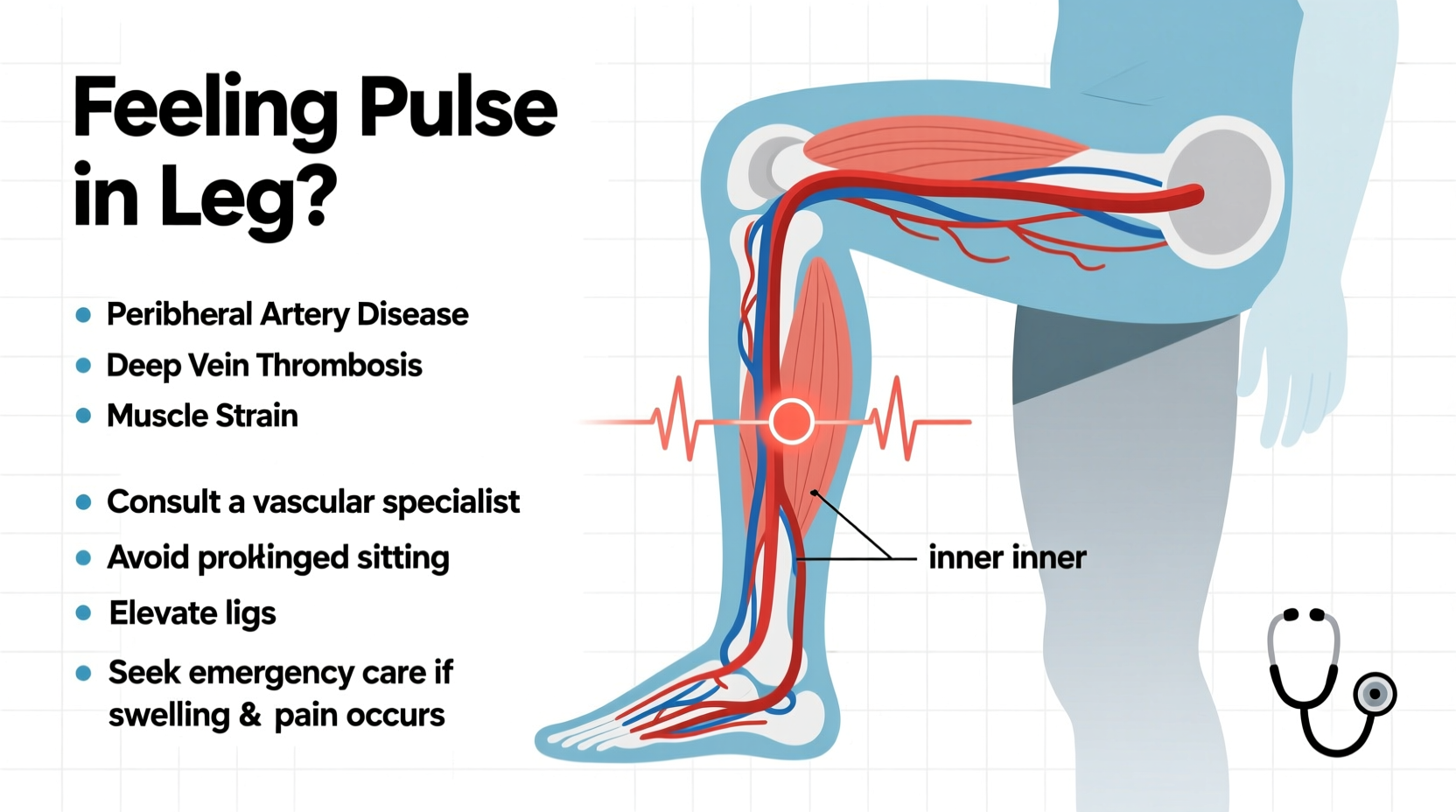
The sensation of a pulse in the leg typically comes from blood flowing through major arteries, most commonly the femoral artery in the groin or the popliteal artery behind the knee. In healthy individuals, you usually don’t feel these pulses unless certain conditions amplify them. Increased blood flow during or after exercise, elevated heart rate, or heightened body awareness can make arterial pulsations more noticeable.
Some people are simply more sensitive to internal bodily sensations. Athletes, for example, may become aware of pulses in their legs due to strong cardiac output and well-developed vasculature. Similarly, individuals with low body fat may physically see or feel arterial pulsations more easily because there’s less tissue to dampen the movement.
Common Non-Serious Causes
In most cases, perceiving a pulse in the leg isn't dangerous. The following are typical explanations that don’t require urgent intervention:
- Physical activity: Exercise increases cardiac output and blood velocity, making arterial pulsations more prominent.
- Stress or anxiety: Adrenaline surges can elevate heart rate and blood pressure, leading to more noticeable pulses.
- Pregnancy: Increased blood volume and circulation often lead to heightened awareness of pulses throughout the body.
- Positioning: Lying down with legs elevated or pressing against furniture may direct blood flow in ways that accentuate pulsations.
- High blood pressure: Even mild hypertension can intensify arterial pulsing, particularly in sensitive areas like the groin.
These causes are generally temporary and resolve once the triggering factor subsides. However, consistent or worsening symptoms should prompt further evaluation.
When to Worry: Red Flags and Serious Conditions
Certain symptoms accompanying a leg pulse suggest potentially serious vascular issues. These require timely medical assessment to prevent complications such as clot formation, ischemia, or aneurysm rupture.
“Not all pulses are created equal. A new, throbbing mass in the thigh or calf could indicate an aneurysm—something we always investigate promptly.” — Dr. Lena Torres, Vascular Medicine Specialist
Potential Underlying Conditions
| Condition | Symptoms | Risk Factors |
|---|---|---|
| Peripheral Artery Disease (PAD) | Leg pain when walking, cold limbs, weak pulses, hair loss on legs | Smoking, diabetes, high cholesterol, age over 50 |
| Femoral or Popliteal Aneurysm | Throbbing lump in groin or behind knee, possible numbness or coolness below | Male gender, smoking, history of aneurysms elsewhere |
| Arteriovenous Fistula (AVF) | Swelling, visible veins, warm skin, continuous humming sensation (bruit) | Trauma, dialysis patients, congenital defects |
| Deep Vein Thrombosis (DVT) | Swelling, redness, warmth, tenderness—though DVT affects veins, not arteries | Recent surgery, immobility, clotting disorders |
Aneurysms, though rare in the legs, are among the most concerning causes. A popliteal aneurysm, for instance, occurs behind the knee and may present as a pulsatile mass. Left untreated, it can lead to clot formation or limb-threatening blockage.
What to Do: Step-by-Step Assessment and Action Plan
If you’re noticing a new or unusual pulse in your leg, follow this structured approach to determine the next steps:
- Assess the context: Did the sensation start after exercise, stress, or positional change? If so, monitor for resolution within hours.
- Check for additional symptoms: Look for swelling, discoloration (blue, pale, or red), temperature changes, pain, or weakness.
- Perform a basic self-check: Gently press in the groin or behind the knee. Is there a visible bulge or rhythmic throbbing that wasn’t there before?
- Monitor over 24 hours: Keep track of whether the pulse persists at rest, worsens, or spreads.
- Seek medical evaluation: If the pulse remains, is painful, or associated with other symptoms, schedule an appointment with your primary care provider or visit a vascular clinic.
During your visit, expect a physical exam including Doppler ultrasound to assess blood flow and detect abnormalities like aneurysms or stenosis. In some cases, CT angiography or MRI may be ordered for detailed imaging.
Diagnostic Tools Commonly Used
- Ankle-Brachial Index (ABI): Compares blood pressure in arms and legs to detect PAD.
- Doppler Ultrasound: Evaluates blood flow speed and vessel structure non-invasively.
- MRI/CT Angiography: Provides high-resolution images of arteries to identify blockages or aneurysms.
Real-Life Scenario: Recognizing a Silent Threat
Mark, a 62-year-old retired mechanic, began noticing a faint pulsing behind his right knee while watching TV. At first, he dismissed it as muscle twitching. Over two weeks, the area became slightly swollen and felt warmer than the other leg. He also developed mild calf pain when walking.
After reading about popliteal aneurysms online, Mark scheduled a visit with his doctor. A Doppler ultrasound revealed a 2.8 cm aneurysm in the popliteal artery. With early detection, he underwent minimally invasive stent grafting and avoided emergency surgery. His case highlights how seemingly minor sensations can precede serious outcomes—and why timely action matters.
Prevention and Long-Term Care Tips
Maintaining vascular health reduces the risk of developing conditions that cause abnormal leg pulsations. Consider the following preventive strategies:
- Maintain healthy blood pressure and cholesterol levels.
- Avoid tobacco use, which damages blood vessels and accelerates atherosclerosis.
- Stay physically active to promote circulation and arterial flexibility.
- Manage diabetes effectively to protect small and large blood vessels.
- Get regular check-ups, especially if you have a family history of aneurysms or cardiovascular disease.
Vascular Health Checklist
- ✅ Know your blood pressure and aim for under 130/80 mmHg.
- ✅ Have cholesterol checked every 4–5 years (or more often if at risk).
- ✅ Avoid prolonged sitting; take walking breaks every hour.
- ✅ Wear compression socks if prone to swelling or DVT.
- ✅ Report new leg pulsations lasting more than 48 hours to your doctor.
Frequently Asked Questions
Is it normal to feel a pulse in your inner thigh?
Yes, especially after exercise or if you have a lean build. The femoral artery runs close to the surface in the groin and can produce a noticeable beat. However, if it's new, painful, or associated with a lump, consult a healthcare provider.
Can anxiety cause me to feel a pulse in my leg?
Absolutely. Anxiety triggers the release of adrenaline, increasing heart rate and blood pressure. This can amplify normal arterial pulsations, making them more perceptible—even in the legs.
What does a leg aneurysm feel like?
A leg aneurysm may feel like a rhythmic, throbbing bulge beneath the skin—often behind the knee or in the groin. It might be tender or warm to touch. Some people report a “buzzing” sensation due to turbulent blood flow.
Take Control of Your Vascular Health
Feeling a pulse in your leg isn’t automatically alarming, but it shouldn’t be ignored when it appears without cause or lingers. Your circulatory system communicates through subtle signs, and paying attention can prevent major complications. Whether it’s adjusting lifestyle habits, monitoring symptoms, or seeking expert evaluation, proactive steps today can safeguard your mobility and long-term health tomorrow.




 浙公网安备
33010002000092号
浙公网安备
33010002000092号 浙B2-20120091-4
Comments
No comments yet. Why don't you start the discussion?