
Fighting games demand precision, timing, and muscle memory. Whether you're playing Street Fighter, Mortal Kombat, or GUILTY GEAR STRIVE, the input device you choose can significantly influence your performance. The debate between using a fight stick versus a standard gamepad has raged for decades. While controllers are more accessible and intuitive, fight sticks offer a different kind of control—one that many competitive players swear by. But with a steeper learning curve, is switching to a fight stick truly worth it?
The answer isn't binary. It depends on your goals, playstyle, and commitment to improvement. For casual players, a controller may be sufficient. But for those aiming to climb leaderboards, compete in tournaments, or simply deepen their mastery of the genre, the fight stick offers tangible advantages—if you're willing to invest the time.
The Mechanics: How Fight Sticks and Controllers Differ
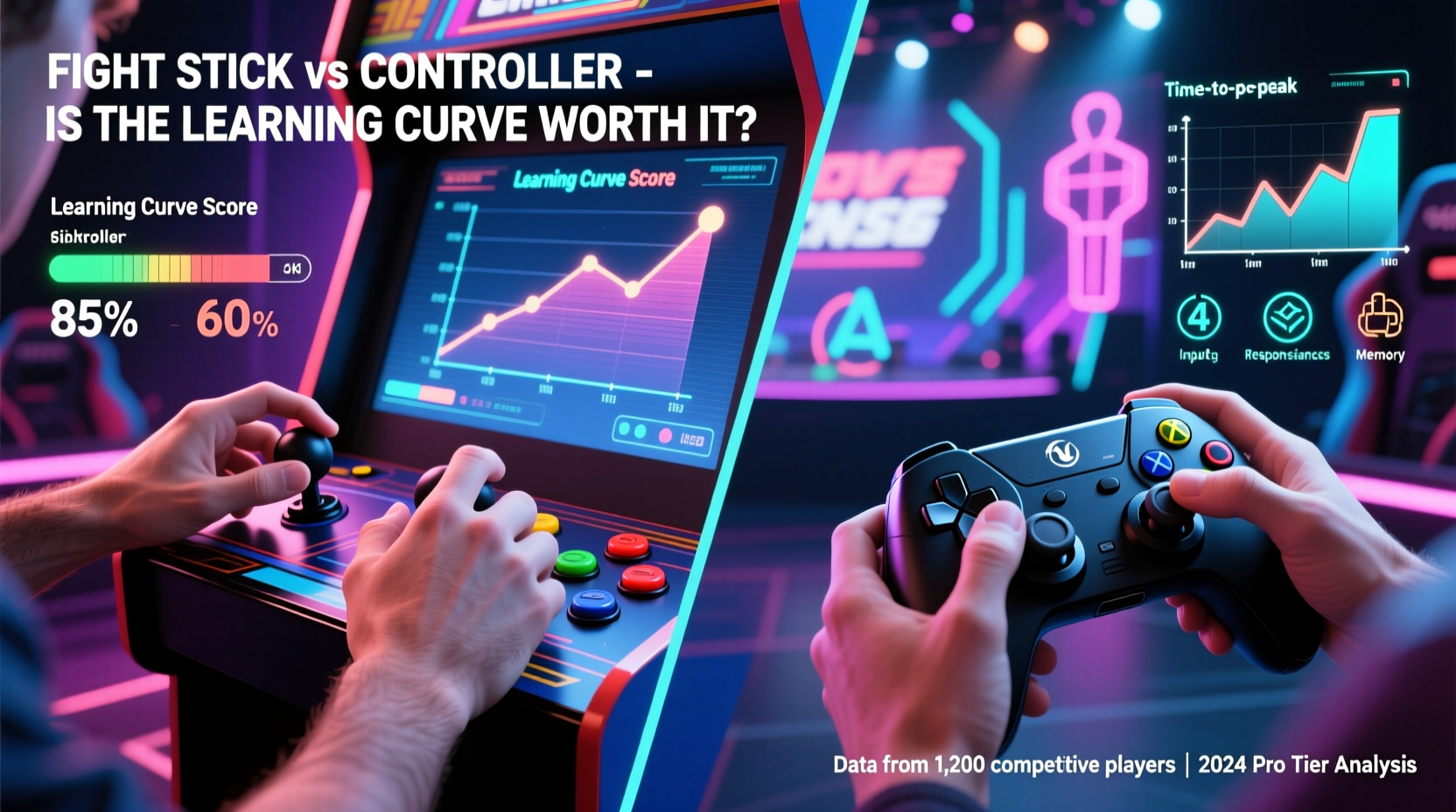
A fight stick, also known as an arcade stick, mimics the layout of classic arcade cabinets. It features a joystick for directional inputs and large buttons arranged in a 6-button configuration (typically three punches and three kicks). In contrast, a standard gamepad uses a directional pad (D-pad) or analog stick alongside face buttons placed under the right thumb.
The physical differences impact how inputs are executed:
- Fight sticks rely on precise joystick movements and deliberate button presses, often requiring wrist and forearm motion.
- Controllers allow for rapid thumb-based inputs and are generally more compact, making them easier to use in tight spaces.
Joysticks provide smoother diagonal inputs and more consistent quarter-circle and half-circle motions—essential for executing special moves like fireballs or dragon punches. Meanwhile, the D-pad on a controller can feel less fluid for complex motions, though modern high-end pads like the Hitbox or Scuf Instinct have narrowed this gap.
Performance Advantages of Fight Sticks
For advanced players, fight sticks offer several mechanical advantages:
- Better Motion Consistency: The joystick allows for smooth, repeatable motion inputs. Once mastered, executing Shoryukens or Sonic Booms becomes more reliable than on a D-pad, which can register false inputs due to its segmented nature.
- Ergonomic Precision: High-quality fight sticks let players rest their hand naturally, reducing finger fatigue during long sessions. Buttons are spaced for palm strikes, enabling faster recovery between inputs.
- Tournament Standard: Many professional tournaments feature arcade cabinets, and competing on a stick prepares players for real-world competition environments.
However, these benefits come at a cost: the learning curve is steep. New users often struggle with joystick sensitivity, misfire special moves, or find themselves slower than they were on a controller. This initial frustration deters many from continuing.
“Switching to a fight stick isn’t about immediate gains—it’s a long-term investment in precision and consistency.” — Alex \"Gamerbee\" Valle, Street Fighter veteran and tournament organizer
Controller Strengths: Accessibility and Flexibility
Gamepads dominate the console gaming world for good reason. They’re versatile, portable, and intuitive. For fighting games, controllers offer distinct advantages:
- Faster Thumb Inputs: Skilled players can execute rapid light attacks or combos using only their thumbs, sometimes outpacing stick players in execution-heavy scenarios.
- Better Block Strings and Tick Throws: The D-pad allows for quick back-and-forth blocking and frame-tight inputs that some argue are harder to replicate on a stick.
- Lower Entry Barrier: No setup required. Plug and play. Most gamers already own a controller, making it the default choice.
Additionally, hybrid devices like the Hitbox—a box-style controller with separate buttons for each direction and action—have gained popularity. These offer the precision of a stick without the joystick, blending the best of both worlds for certain playstyles.
Still, even with optimized controllers, many top-tier players believe that true mastery of movement and spacing comes from the spatial awareness developed through joystick use.
Is the Learning Curve Worth It? A Practical Breakdown
To determine whether switching to a fight stick is worth the effort, consider the following factors:
| Factor | Fight Stick | Controller |
|---|---|---|
| Learning Curve | Steep – takes weeks to months to match controller proficiency | Shallow – familiar to most gamers |
| Precision on Special Moves | High – consistent motion inputs once mastered | Variable – depends on D-pad quality and technique |
| Combo Execution Speed | Moderate to High – depends on player adaptation | High – especially for short-thumb combos |
| Tournament Readiness | Excellent – aligns with arcade standards | Limited – not allowed in some pro events |
| Portability | Poor – bulky and fragile | Excellent – fits in backpacks |
| Long-Term Growth Potential | High – favored by elite players in SF and GG communities | Moderate – ceiling varies by game and meta |
The data suggests that while controllers offer immediate usability, fight sticks provide superior long-term growth potential—especially in games where motion inputs and spacing are critical.
Mini Case Study: From Controller to Competitor
Jamal, a 24-year-old Street Fighter V player, had been using a DualShock 4 for two years. He consistently ranked in the mid-tier online but struggled to land consistent anti-air counters or execute perfect Ryu fireballs. After watching a tournament stream where pros spoke about joystick finesse, he purchased a Mad Catz TE2+.
The first month was frustrating. His combo accuracy dropped by nearly 40%. He missed basic specials and felt slower. But after committing to 30 minutes of daily motion drills and neutral game practice, his consistency improved. By month three, he was landing EX moves with higher success rates and reading opponent patterns better—partly because the joystick forced him to slow down and think about positioning.
Six months later, Jamal placed top 16 at a local Capcom Pro Tour qualifier. “I didn’t get better because the stick made me faster,” he said. “I got better because it made me more intentional with every input.”
How to Transition Successfully: A Step-by-Step Guide
If you're considering making the switch, follow this timeline to maximize progress and minimize frustration:
- Week 1–2: Familiarization
Use the fight stick exclusively, even if performance drops. Focus on basic movement, blocking, and walking forward/backward. Practice simple motions like quarter-circles slowly. - Week 3–4: Input Drills
Use training mode to perform 50 successful fireballs, DP motions, and half-circles daily. Prioritize clean inputs over speed. - Month 2: Character Integration
Apply motions within combos. Work on linking crouching light kick into a special move. Record input lag issues and adjust technique. - Month 3: Pressure Testing
Play online matches using only the stick. Accept losses as part of the process. Analyze replays to spot input errors. - Month 4+: Refinement
Focus on advanced techniques like plinking, tick throws, and fuzzy guarding. Adjust stick tension and button layout if customizable.
Expert Tips for Maximizing Your Investment
Not all fight sticks are created equal. To get the most out of your device:
- Choose a model with Sanwa or Seimitsu components—they’re the gold standard for responsiveness and durability.
- Adjust the restrictor gate (square, octagonal, or circular) based on your preferred movement style. Square gates help prevent accidental diagonals; circular gates allow freer motion.
- Keep the joystick calibrated. Dust and debris can affect input accuracy over time.
- Practice with mirror matchups. Playing against yourself with the same character helps isolate mechanical weaknesses.
“The best hardware doesn’t win fights—consistent practice does. But the right tool removes friction between intent and execution.” — Aris Bakhtanians, fighting game community advocate
Frequently Asked Questions
Can I become competitive using a controller?
Absolutely. Players like Punk (Mortal Kombat) and iDom (Street Fighter) have reached the highest levels using controllers. However, some tournaments restrict non-standard controllers, so check event rules beforehand.
Do fight sticks work well for all fighting games?
They excel in traditional 2D fighters like Street Fighter, GUILTY GEAR, and BlazBlue. However, in 3D fighters like TEKKEN or hybrid games like Smash Bros., the joystick offers fewer advantages, and gamepads are often preferred.
How much should I spend on a fight stick?
Entry-level models like the Hori Real Arcade Pro start around $80 and are suitable for beginners. Premium custom builds with Sanwa parts can exceed $200 but offer superior feel and longevity. Avoid ultra-cheap third-party sticks—they often have mushy inputs and poor durability.
Final Verdict: Is the Learning Curve Worth It?
The fight stick isn’t a shortcut to victory. It’s a tool designed for depth, precision, and authenticity. The learning curve is real and often discouraging in the early stages. You will lose matches you might have won on a controller. Your fingers will ache. Your inputs will fail.
But if your goal is mastery—not just winning, but understanding spacing, timing, and the tactile language of fighting games—then yes, the fight stick is worth it. It forces intentionality. It rewards patience. And over time, it fosters a deeper connection between player and character.
For casual players, a high-quality controller remains a perfectly valid choice. But for those who want to push their limits, train like a pro, and experience fighting games as they were originally designed, the fight stick offers a path to a richer, more rewarding experience.




 浙公网安备
33010002000092号
浙公网安备
33010002000092号 浙B2-20120091-4
Comments
No comments yet. Why don't you start the discussion?