
Shelves are more than storage—they’re storytelling spaces. Whether in a living room, study, or bedroom, they offer a curated glimpse into personal taste, interests, and lifestyle. When it comes to styling them, two popular choices stand out: figurine ornaments and decorative bookends. Both add character, but they serve different purposes and create distinct visual effects. The real question isn’t just about beauty—it’s about harmony, intention, and balance.
Choosing between a whimsical figurine and an elegant bookend depends on more than preference. It involves understanding how each item interacts with light, space, books, and surrounding decor. This guide breaks down their strengths, limitations, and aesthetic impacts so you can make a decision that elevates your entire display.
The Role of Aesthetics in Shelf Styling
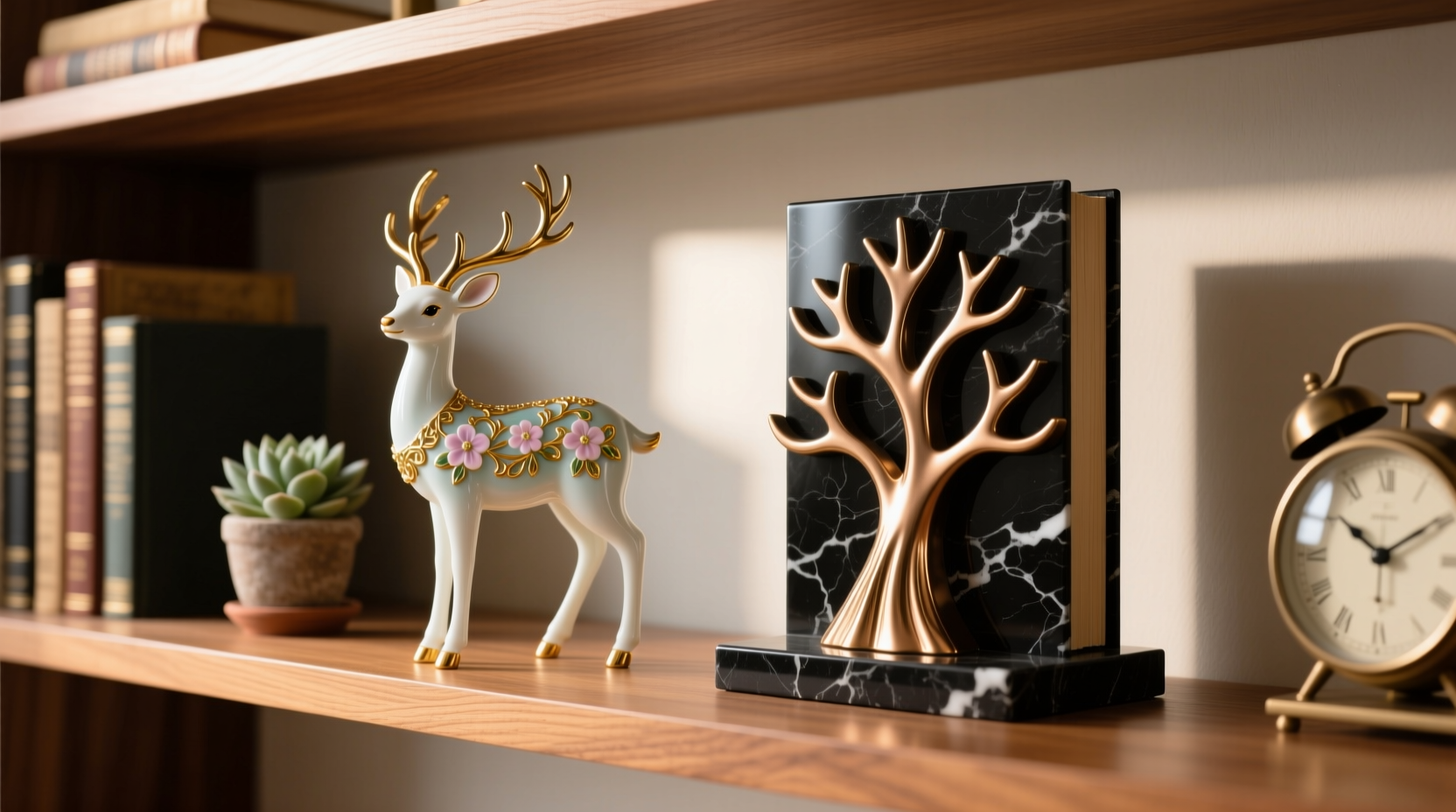
Visual appeal is subjective, but effective shelf design follows principles of proportion, contrast, and rhythm. A well-styled shelf guides the eye naturally, balancing color, height, and texture. Figurines and bookends contribute differently to this balance.
Figurine ornaments—whether ceramic animals, abstract sculptures, or pop culture collectibles—act as focal points. They draw attention through detail, movement, or emotional resonance. In contrast, decorative bookends often blend form and function. While they may feature artistic designs, their primary role is structural: keeping books upright and organized.
Interior designer Lena Moretti observes:
“Ornamental pieces should never feel like clutter. A single figurine can anchor a shelf if placed with intention. Bookends, even when beautiful, must first serve their purpose—otherwise, they become awkward props.” — Lena Moretti, Interior Stylist & Author of *Curated Living*
Functional Differences: Form Meets Purpose
Understanding utility helps clarify which option suits your needs.
- Figurine Ornaments: Primarily decorative. They don’t support weight or organize items. Best used as accent pieces among books, plants, or framed photos.
- Decorative Bookends: Serve a dual role. They stabilize leaning books while contributing to visual interest. Often made from metal, wood, or stone, they can be minimalist or sculptural.
If your shelf holds many books, especially taller or heavier ones, bookends are practical necessities. Without them, books slump forward, creating visual chaos. But when books are few or purely decorative, figurines gain prominence as standalone art.
Comparative Analysis: Key Decision Factors
To determine which looks “better,” consider these five elements:
| Factor | Figurine Ornament | Decorative Bookend |
|---|---|---|
| Visual Impact | High—acts as a centerpiece; draws immediate attention | Moderate—depends on design; often subtle unless sculptural |
| Functionality | Low—purely decorative | High—supports book stability |
| Space Efficiency | Variable—small figurines save space; large ones dominate | Efficient—utilizes dead space at book ends |
| Versatility | High—can be moved freely across shelves | Low—positioned only where books need support |
| Durability | Depends on material—ceramic fragile, resin durable | Generally high—built to withstand pressure |
This comparison shows that “better” depends on context. For dynamic visual interest without functional demands, figurines win. For integrated elegance with utility, bookends prevail.
Design Harmony: Matching Your Decor Style
Your interior theme plays a major role in the decision.
- Minimalist Interiors: Sleek, geometric bookends in matte black or brushed steel complement clean lines. Avoid cluttered figurines.
- Bohemian or Eclectic Spaces: Figurines shine here—think hand-carved wooden animals, vintage dolls, or colorful glass sculptures.
- Traditional Libraries: Ornate brass or marble bookends echo classic sophistication. Figurines may feel out of place unless antique or literary-themed.
- Modern Shelving Displays: Mix both. Use one sculptural bookend paired with a small figurine nearby for layered depth.
Mini Case Study: Sarah’s Home Office Shelf
Sarah, a freelance writer, wanted her office shelf to reflect creativity without sacrificing order. She had a mix of novels, journals, and decorative objects. Initially, she placed three small figurines—miniature typewriters, a bronze owl, and a painted fox—along the shelf. While charming, the books leaned haphazardly behind them.
She replaced the fox (placed at the end) with a matching pair of copper bookends shaped like open hands holding up a book. Instantly, the shelf looked neater. The remaining figurines now stood out more because the background was stable and aligned. The transformation wasn’t just functional—it enhanced the overall aesthetic by reducing visual noise.
Result: By choosing a decorative bookend where structure mattered and reserving figurines for mid-shelf accents, Sarah achieved balance between charm and clarity.
When to Choose a Figurine Ornament
Select a figurine when:
- You have limited books and want to emphasize personality.
- The shelf is primarily decorative (e.g., above a console table).
- You’re highlighting a collection or hobby (e.g., movie memorabilia).
- You want to introduce whimsy, nostalgia, or conversation.
- The piece has sentimental value and deserves center stage.
In such cases, a figurine becomes more than decoration—it becomes narrative.
When a Decorative Bookend Is the Better Choice
Opt for a bookend when:
- You own tall or heavy books that tend to fall over.
- You prefer a tidy, organized appearance.
- Your style leans toward functional elegance (Scandinavian, industrial, traditional).
- You want to subtly integrate art into utility.
- You’re designing a workspace or library where usability matters.
Well-designed bookends—like those shaped like lions, geometric arcs, or abstract forms—can be as expressive as any sculpture, without compromising order.
Checklist: Choosing the Right Option for Your Shelf
Before deciding, ask yourself the following:
- Do I have enough books to require stabilization? → Yes = Bookend
- Is this shelf mainly for display or daily use? → Display = Figurine
- Does my decor style favor minimalism or maximalism? → Minimalist = Bookend, Maximalist = Figurine
- Am I trying to tell a story or evoke emotion? → Emotional impact = Figurine
- Will this piece be touched or moved often? → High traffic = Durable bookend
- Do I already have enough decorative clutter? → Cluttered = Skip figurine, try bookend
Frequently Asked Questions
Can I use both a figurine and a decorative bookend on the same shelf?
Absolutely. In fact, combining both often yields the best results. Use bookends to secure books at the ends, then place figurines in the middle or staggered throughout for visual rhythm. Just ensure spacing feels intentional, not crowded.
Are decorative bookends outdated?
No. While utilitarian metal bookends from decades ago may seem dated, today’s designs are highly artistic. From 3D-printed geometrics to hand-sculpted ceramics, modern bookends are collectible decor items in their own right.
How do I prevent figurines from looking like clutter?
Limit quantity—one to three per shelf is ideal. Group by theme, color, or size. Elevate smaller pieces on risers or stack books underneath to create height variation. Always leave breathing room around each object.
Final Thoughts: Beauty Lies in Balance
There’s no universal answer to whether a figurine ornament or decorative bookend looks better on your shelf. The truth is, the most visually pleasing shelves aren’t defined by individual objects—but by how those objects work together.
A figurine can spark joy. A bookend can bring order. The best shelves often include both, arranged with purpose. Prioritize function where needed, then layer in personality through carefully chosen ornaments. Let your space reflect not just what you own, but how you live.




 浙公网安备
33010002000092号
浙公网安备
33010002000092号 浙B2-20120091-4
Comments
No comments yet. Why don't you start the discussion?