
Betta fish are among the most popular freshwater aquarium pets, admired for their vibrant colors and flowing fins. Yet, despite their widespread appeal, many bettas live in conditions far below what they need to thrive. A key factor in ensuring a healthy, active life for your betta is choosing the right tank size. While myths persist about bettas surviving in tiny bowls or vases, modern understanding of their biology and behavior reveals that space, stability, and environment play crucial roles in their well-being.
Selecting the appropriate tank isn't just about volume—it's about creating a sustainable ecosystem where water parameters remain stable, swimming space encourages natural behavior, and temperature and filtration support long-term health. This guide breaks down everything you need to know to make an informed decision when choosing the best size tank for your betta.
Why Tank Size Matters for Betta Fish
Bettas originate from slow-moving waters in Southeast Asia—rice paddies, shallow ponds, and drainage ditches. These environments may be warm and sometimes stagnant, but they are not small or isolated. In captivity, replicating a dynamic yet stable version of this habitat requires adequate space.
A larger tank provides more than just room to swim. It allows for better dilution of waste, more consistent water temperature, and reduced stress from rapid fluctuations in pH and ammonia levels. Small containers like cups or 1-gallon bowls lack the buffering capacity to maintain stable conditions, making frequent water changes essential—and even then, they remain high-risk environments.
“Bettas are resilient, but resilience isn’t a justification for poor housing. A 5-gallon minimum should be the baseline for any responsible keeper.” — Dr. Laura Chen, Aquatic Veterinarian
Recommended Tank Sizes: What Works and What Doesn’t
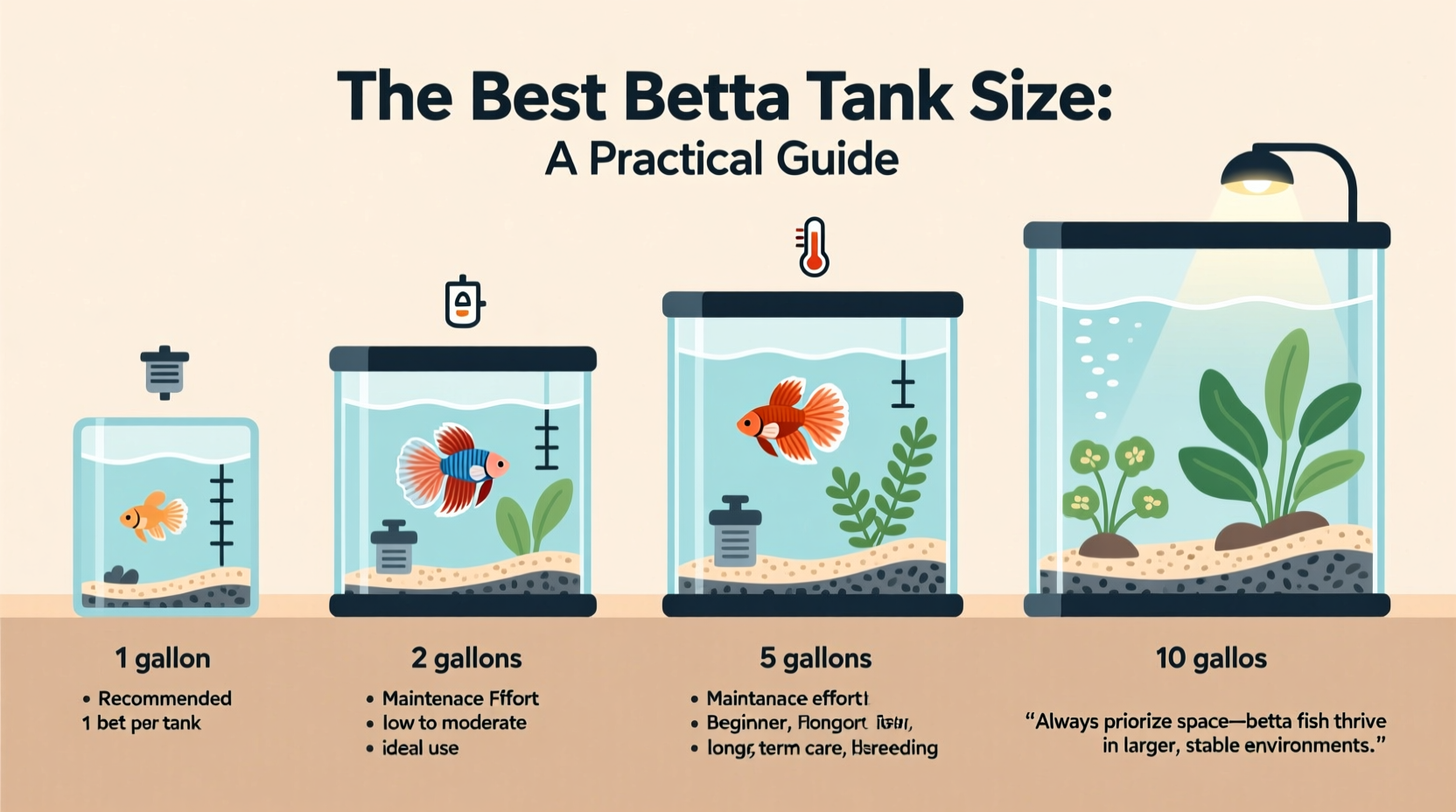
Not all tanks are created equal. The ideal size balances practicality with biological needs. Below is a comparison of common tank sizes and their suitability for a single betta fish.
| Tank Size | Suitable for Betta? | Pros | Cons |
|---|---|---|---|
| Less than 1 gallon (e.g., bowl, vase) | No | Cheap, decorative | Unstable water, no heater/filter fit, illegal in some countries |
| 1–2 gallons | Poor | Compact, affordable | Frequent water changes needed, hard to regulate temperature |
| 3–4 gallons | Marginal | Better stability than smaller tanks | Still prone to spikes, limited equipment options |
| 5 gallons | Yes (Minimum Recommended) | Stable parameters, fits heater & filter, allows enrichment | Takes up more space, slightly higher initial cost |
| 10+ gallons | Excellent (with proper setup) | High stability, room for plants and decor, potential for compatible tank mates | Requires more maintenance time, not ideal for very small spaces |
The consensus among experienced aquarists and animal welfare advocates is clear: **a 5-gallon tank is the minimum recommended size** for a single betta. Anything smaller increases the risk of illness, stress, and premature death due to unstable water chemistry.
Key Features of a Healthy Betta Environment
Size alone doesn’t guarantee a good home. A properly equipped tank ensures your betta remains active, disease-free, and comfortable. Here’s what to include regardless of tank size:
- Heater: Bettas require warm water between 76°F and 80°F (24°C–27°C). Room temperature is rarely sufficient, especially in cooler climates.
- Filtration: Use a low-flow filter. Strong currents can stress bettas, so sponge filters or adjustable-output filters are ideal.
- Lid: Bettas are jumpers. A secure lid prevents accidental escapes.
- Substrate and Decor: Soft substrate, live or silk plants, and hiding spots reduce stress and encourage exploration.
- Lighting: Regular light cycles (8–10 hours per day) help maintain circadian rhythms.
Step-by-Step: Setting Up a 5-Gallon Betta Tank
- Choose a glass or acrylic 5-gallon aquarium with a lid.
- Add a soft substrate like sand or smooth gravel.
- Install a heater set to 78°F and calibrate it with a separate thermometer.
- Set up a sponge filter or low-flow internal filter.
- Arrange decorations, plants, and hiding places—avoid sharp edges.
- Fill with dechlorinated water and run the system for 24–48 hours before adding the betta.
- Introduce the betta slowly using drip acclimation to prevent shock.
- Begin weekly water changes of 25% to maintain quality.
Common Misconceptions About Betta Housing
Despite growing awareness, outdated ideas still circulate. Addressing these myths is critical to improving betta welfare.
- Myth: Bettas can live in a bowl because they breathe air.
Truth: While bettas have a labyrinth organ allowing them to gulp air, they still rely on gills and clean water. Poor water quality leads to gill damage and disease. - Myth: Smaller tanks are easier to maintain.
Truth: Small volumes fluctuate rapidly in temperature and toxin levels, requiring daily monitoring. Larger tanks are more forgiving and stable. - Myth: Bettas don’t need filters.
Truth: Without filtration, ammonia builds up quickly. A gentle filter supports beneficial bacteria and reduces maintenance burden.
Real-Life Example: From Bowl to 5-Gallon Success
Mark adopted a male betta named Blaze from a pet store display tank housed in a half-gallon cup. The fish was lethargic, had clamped fins, and showed signs of fin rot. After researching proper care, Mark upgraded to a cycled 5-gallon tank with a sponge filter, heater, and live plants.
Within three weeks, Blaze’s color brightened, his fins began regrowing, and he became noticeably more active. Weekly 25% water changes and a balanced diet supported full recovery. “I had no idea how much difference space made,” Mark said. “He swims around now like he owns the place.”
Checklist: Is Your Betta Tank Suitable?
Use this checklist to evaluate your current setup or plan a new one:
- ✅ Tank is at least 5 gallons in capacity
- ✅ Equipped with a reliable heater (76–80°F maintained)
- ✅ Has a low-flow filtration system
- ✅ Covered with a secure lid
- ✅ Includes hiding spots and soft decorations
- ✅ Uses dechlorinated water with regular testing (ammonia = 0 ppm)
- ✅ Scheduled weekly water changes (20–25%)
- ✅ No aggressive tank mates (if solo, ensure compatibility if adding others)
Frequently Asked Questions
Can I keep a betta in a nano tank under 5 gallons if I do daily water changes?
You can, but it’s not ideal. Frequent changes cause environmental instability and stress. Even with diligence, micro-fluctuations in temperature and pH can harm your betta over time. A 5-gallon tank reduces this risk significantly.
Is a 10-gallon tank too big for a betta?
No. A 10-gallon tank is excellent as long as the flow from the filter is gentle. Larger tanks offer superior water stability and allow for more creative aquascaping. Just ensure there are plenty of visual barriers and resting spots.
Do female bettas need the same tank size as males?
Yes. While females are less colorful and slightly smaller, they have identical environmental needs. If housing multiple females (a \"sorority\"), a 10-gallon or larger tank is required for adequate territory division.
Final Thoughts and Next Steps
Finding the best size tank for a betta isn’t about minimal survival—it’s about enabling a thriving, enriched life. Moving beyond outdated practices means embracing science-backed standards that prioritize animal welfare over convenience.
Your betta deserves more than a decorative bowl. With a 5-gallon or larger tank, proper heating, filtration, and thoughtful decor, you create not just a home, but a habitat where natural behaviors can flourish. The initial investment pays off in longevity, vibrancy, and peace of mind.




 浙公网安备
33010002000092号
浙公网安备
33010002000092号 浙B2-20120091-4
Comments
No comments yet. Why don't you start the discussion?