
Nestled along France’s northern coastline, Normandy offers a captivating blend of history, natural beauty, and culinary excellence. From the D-Day landing beaches and medieval towns like Bayeux to the dramatic cliffs of Étretat and the pastoral charm of the Pays d’Auge, the region is a compelling destination just a short journey from Paris. Whether you're planning a day trip or an extended stay, choosing the right way to travel from Paris to Normandy can make all the difference in your experience. This guide explores the most convenient, cost-effective, and enjoyable options available—helping you plan a seamless transition from the bustling capital to the tranquil countryside.
Understanding Your Travel Options
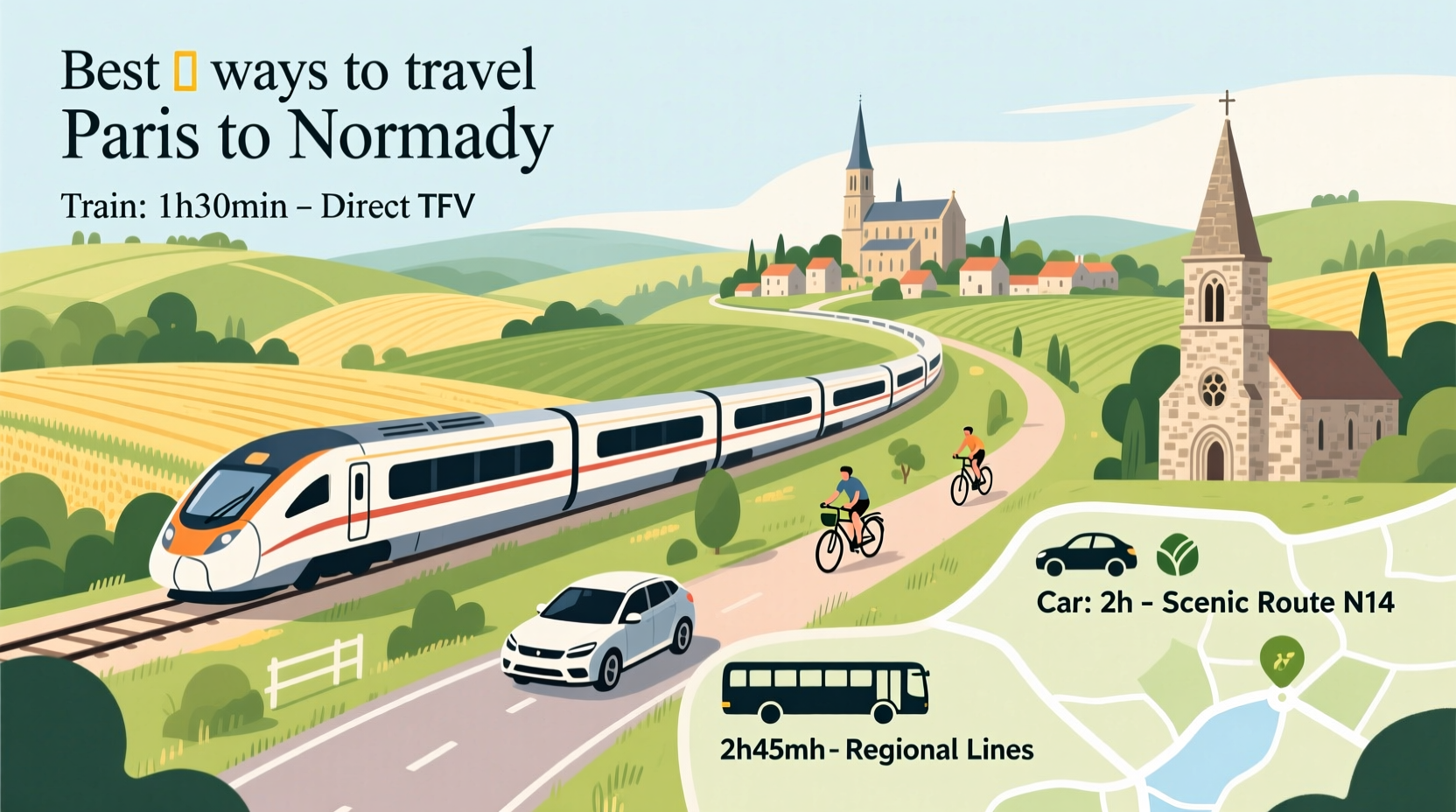
There are several ways to reach Normandy from Paris: by train, car, guided tour, or bus. Each method has its advantages depending on your destination within Normandy, time constraints, budget, and personal preferences. The region spans over 300 kilometers west of Paris, so travel times vary significantly based on whether you're heading to Rouen, Caen, Honfleur, or Mont-Saint-Michel.
The key is matching your mode of transport to your itinerary. For example, high-speed trains (TER and Intercités) serve major cities like Rouen and Caen efficiently, while driving offers flexibility for rural exploration. Guided tours simplify logistics but may limit spontaneity.
Train Travel: Fast, Reliable, and Comfortable
Rail remains one of the most popular and efficient ways to travel from Paris to Normandy. The SNCF operates frequent services from multiple Parisian stations:
- From Gare Saint-Lazare: Direct trains to Rouen-Rive-Droite (approx. 1h15m), with connections onward to Le Havre or Caen.
- From Gare Montparnasse: Direct TGV and Intercités services to Caen (about 2 hours) and occasionally Cherbourg.
- Future Option – Grand Paris Express: While not yet fully operational, improved regional rail links will further streamline access to western destinations.
Trains offer comfort, Wi-Fi, luggage space, and scenic views as you leave the city behind and enter rolling farmland and river valleys. Once in Rouen or Caen, local buses, taxis, or rental cars can take you deeper into the region.
“Rail connectivity between Paris and central Normandy has never been better. With modern rolling stock and reliable schedules, it's ideal for both solo travelers and families.” — Laurent Dubois, Regional Transport Analyst, SNCF Insights
Driving: Freedom and Flexibility
If your goal is to explore rural Normandy—visit cider farms, walk along coastal paths, or discover hidden villages—renting a car is often the best choice. Driving gives you control over your schedule and access to areas poorly served by public transit.
The main routes from Paris include:
- A13 Motorway: Leads directly to Rouen and continues toward Caen. Well-maintained and tolled beyond Mantes-la-Jolie.
- N13 National Road: A slower, free alternative that passes through historic towns like Évreux.
Travel time to Rouen is about 1.5 hours; to Caen, roughly 2.5–3 hours depending on traffic. Be aware that French motorways require payment unless you choose secondary roads. Most rental agencies in Paris offer GPS-equipped vehicles and toll-prepaid options for convenience.
| Mode of Transport | Destination | Approx. Time | Cost Estimate (One Way) |
|---|---|---|---|
| Train (TGV/Intercités) | Caen | 2h | €25–€60 |
| Train (TER) | Rouen | 1h15m | €15–€30 |
| Car Rental + Fuel | Rouen | 1.5h | €60–€90 (incl. rental & fuel) |
| Guided Tour (Group) | Mont-Saint-Michel* | 6–7h round-trip | €120–€180 |
| Bus (FlixBus/Ouibus) | Caen | 3.5h | €10–€25 |
*Note: Mont-Saint-Michel requires additional transfer via shuttle or regional bus even after reaching nearby train stations like Rennes or Dol-de-Bretagne.
Mini Case Study: A Weekend in the Pays d’Auge
Sophie, a traveler from Toronto, wanted to spend two days exploring Calvados, known for its half-timbered houses, apple orchards, and Camembert cheese. She considered taking the train to Lisieux but realized direct service was limited. Instead, she rented a compact car at Charles de Gaulle Airport upon arrival. Over two days, she visited Camembert village, sampled cider at a farm near Pont-l'Évêque, and wandered through the market town of Beuvron-en-Auge—all without relying on infrequent buses. Her flexibility allowed spontaneous stops and photo opportunities along quiet country lanes. Though the rental added cost, the depth of experience justified the investment.
Guided Tours vs. Independent Travel
For first-time visitors unsure about navigating French roads or train connections, guided day trips from Paris offer peace of mind. Companies like GetYourGuide, Viator, and Evan Evans provide well-organized excursions to key sites such as:
- D-Day beaches and American Cemetery (Colleville-sur-Mer)
- Mont-Saint-Michel (though technically in Brittany, often marketed as part of Normandy tours)
- Honfleur and the Seine Valley
These tours typically include hotel pickup, expert commentary, and structured itineraries. However, they come with trade-offs: less freedom, fixed departure times, and potential overcrowding at popular spots.
Independent travel, though requiring more planning, allows deeper immersion. You can linger at a WWII bunker museum, have lunch at a family-run crêperie, or attend a local farmers’ market at your own pace.
Checklist: Preparing for Your Journey from Paris to Normandy
- Determine your primary destination in Normandy (e.g., Rouen, Bayeux, Honfleur).
- Compare train schedules on SNCF Connect for speed and price.
- If driving, reserve a rental car early—especially in July and August.
- Pack light if using public transport; larger bags complicate transfers.
- Download offline maps (Google Maps or Maps.me) for rural navigation.
- Carry euros for tolls, parking, and small-town purchases where cards may not be accepted.
- Confirm return transportation times to avoid missing the last train or shuttle.
Step-by-Step Guide: How to Reach Bayeux from Paris
Bayeux, home to the famous tapestry and a gateway to the D-Day beaches, is a common destination. Here’s how to get there smoothly:
- Step 1: Take a TGV or Intercités train from Paris Montparnasse to Caen (departures every 1–2 hours, ~2 hours).
- Step 2: Upon arrival in Caen, exit the station and walk to the adjacent bus terminal.
- Step 3: Board Bus Line #11 (Libeo network) bound for Bayeux (~45 minutes, €2.20).
- Step 4: Alight at “Gare” stop in central Bayeux—short walk to hotels and museums.
- Step 5: For return, check the last train from Caen to Paris (usually around 9:30 PM).
Alternatively, rent a car in Paris and drive directly via A13 and N13 (approx. 3 hours). This route enables side visits to Arromanches and Pointe du Hoc en route.
Frequently Asked Questions
Is it easy to travel from Paris to Normandy without speaking French?
Yes. Train signage, ticketing kiosks, and tourist information centers in major cities like Rouen and Caen offer English support. GPS navigation and translation apps also help when driving. Locals in tourist areas are generally accustomed to international visitors.
Can I bring my bicycle on the train to Normandy?
Yes, most TER and TGV trains allow bicycles either in designated areas or inside passenger compartments (when folded or disassembled). A small reservation fee may apply. Check current rules on SNCF Connect before travel.
What’s the most scenic way to travel from Paris to Normandy?
Driving along the Seine River valley via Route des Crêtes offers panoramic views of chalk cliffs and lush meadows. Alternatively, the train from Gare Saint-Lazare to Rouen follows the Seine and passes through picturesque riverside towns like Mantes-la-Jolie and Elbeuf.
Conclusion: Choose What Fits Your Journey
There is no single “best” way to get from Paris to Normandy—only the best option for your specific needs. Trains deliver speed and comfort for city-bound travelers. Cars unlock the countryside. Guided tours reduce stress for newcomers. Buses offer affordability for budget-conscious adventurers.
By aligning your transportation choice with your goals—whether it’s paying respects at war memorials, tasting calvados, or strolling through impressionist landscapes—you set the tone for a meaningful journey. Plan ahead, stay flexible, and embrace the changing scenery as you move from urban energy to pastoral serenity.




 浙公网安备
33010002000092号
浙公网安备
33010002000092号 浙B2-20120091-4
Comments
No comments yet. Why don't you start the discussion?