Selecting a tactical backpack isn’t just about durability or brand reputation—it’s about matching capacity, design, and functionality to your specific use case. Whether you're preparing for weekend excursions, urban commuting, emergency preparedness, or extended field operations, choosing the wrong size can lead to discomfort, inefficiency, or even mission failure. The ideal pack supports your load, fits your body, and adapts to your environment. This guide breaks down how to determine the right tactical backpack size by evaluating your needs, understanding volume metrics, and considering real-world scenarios.
Understanding Tactical Backpack Capacity: What Do Liters Mean?
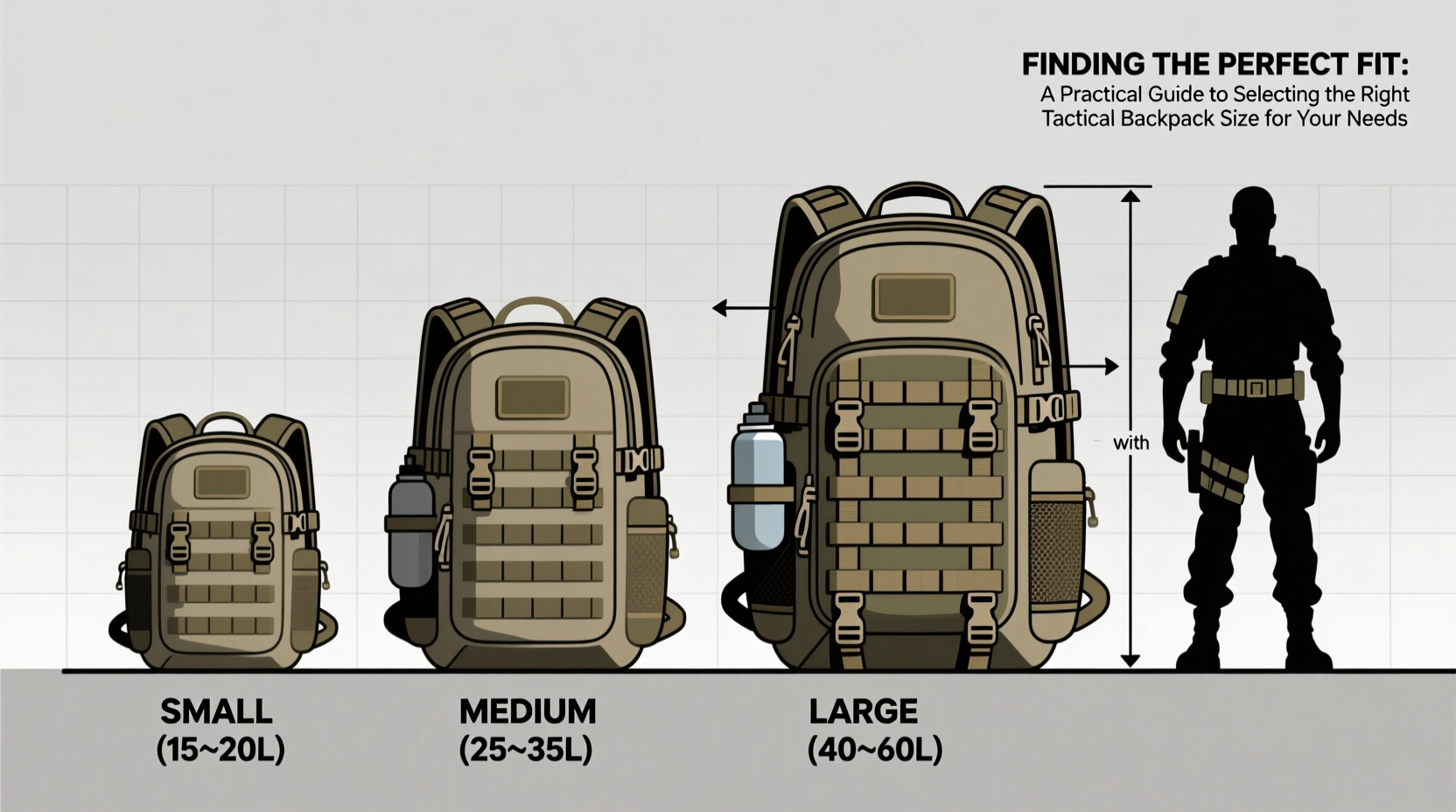
Tactical backpacks are typically measured in liters (L), which refers to the total internal volume. However, unlike consumer hiking packs, tactical models often include external MOLLE webbing, hydration sleeves, admin panels, and modular compartments that affect usable space. A 30-liter tactical pack may feel roomier—or more restricted—than its civilian counterpart due to these design elements.
Here's a general breakdown of common sizes and their primary applications:
| Capacity (Liters) | Best For | Typical Use Cases |
|---|---|---|
| 15–25L | Daily carry, EDC, short missions | Urban commuting, concealed carry setup, bug-out essentials, 24-hour ops |
| 30–40L | Extended day trips, multi-day deployments | Weekend camping, patrol duties, medical response kits, law enforcement operations |
| 50–70L | Long-term field use, survival scenarios | 72-hour bug-out, remote reconnaissance, disaster relief, long-range hiking |
| 70+L | Expedition-level missions | Specialized military ops, mountaineering, prolonged off-grid survival |
It's important not to overpack. A well-organized 40L pack with essential gear is far more efficient than a stuffed 70L bag full of clutter. Prioritize purpose over potential.
Matching Backpack Size to Your Mission Profile
The term \"tactical\" implies readiness for dynamic situations, but not all missions demand the same equipment. Defining your operational profile helps narrow down the ideal size.
Everyday Carry & Urban Preparedness (15–25L)
If your goal is discreet readiness—carrying a firearm, first aid supplies, communication tools, and water—a compact 20L pack offers mobility without drawing attention. These are popular among professionals who need quick access to critical gear while maintaining a low profile.
Patrol & Field Operations (30–40L)
This range suits most law enforcement, security personnel, or outdoor enthusiasts requiring sustained capability. Features like admin pockets, helmet carry systems, and integrated rain covers make 35L packs highly functional for 24–72 hour engagements.
Survival & Bug-Out Scenarios (50–70L)
When self-reliance is paramount, larger volumes allow for shelter, cooking gear, extra clothing, and bulkier survival tools. Look for frames or internal stays that transfer weight to the hips, reducing fatigue during long evacuations.
“Size matters only as much as it serves the mission. I’ve seen operators fail under 50 pounds in a poorly fitted 30L pack because they ignored ergonomics.” — Master Sgt. Daniel Reyes (Ret.), U.S. Army Special Operations
Step-by-Step Guide to Choosing Your Ideal Tactical Backpack Size
Follow this five-step process to ensure your selection aligns with both physical requirements and mission goals.
- Define Your Primary Use Case: Are you using the pack for daily work, emergency evacuation, weekend training, or extended deployment? Write down the top three scenarios.
- List Essential Gear: Inventory every item you plan to carry regularly. Include weight estimates (e.g., water = 1kg per liter).
- Measure Total Volume Needs: Use packing cubes or containers to simulate gear volume. Add 10–15% extra space for flexibility and compression changes.
- Test Fit Based on Torso Length: Measure your torso from C7 vertebra (base of neck) to iliac crest (top of hip bones). Match this to the pack’s adjustable harness system. A misfit here causes poor weight distribution regardless of size.
- Load Test Before Purchase: If possible, fill candidate packs with sandbags or books to simulate real weight. Walk stairs, kneel, and move through tight spaces to assess maneuverability.
Real-World Example: Choosing for a Wilderness Medical Response Team
A rural search-and-rescue unit needed new backpacks for their medics. Initially, they considered 70L expedition packs, assuming more space meant better preparedness. After analysis, they realized most calls were within a 10-mile radius, lasting 6–12 hours. Medics carried trauma kits, IV supplies, weather-appropriate clothing, and two liters of water.
The team tested three options: 25L, 40L, and 60L. The 25L was too tight for bulky splints. The 60L caused excessive sway and heat buildup. The 40L model—with a stowable rain cover, front-access trauma compartment, and hip belt pockets—proved optimal. It balanced capacity, agility, and comfort across varied terrain.
The lesson? Real conditions trump theoretical capacity.
Checklist: Selecting the Right Tactical Backpack Size
- ☐ Identify primary use: daily carry, short mission, long-term survival
- ☐ List all required gear and estimate combined volume
- ☐ Measure your torso length for proper harness fit
- ☐ Choose a pack with 10–15% more capacity than current needs
- ☐ Verify weight distribution: at least 80% should rest on hips
- ☐ Confirm compatibility with hydration systems, radio mounts, or armor if needed
- ☐ Test load stability with simulated weight before purchase
Frequently Asked Questions
Can I use a large tactical backpack (60L+) for everyday tasks?
Possibly, but it’s generally impractical. Oversized packs are harder to store, attract unwanted attention, and often lack organizational features for small electronics or documents. They also sit higher on the back, increasing the risk of snagging indoors. Stick to 20–30L for urban environments.
How do I know if a backpack is too big for my frame?
If the top of the pack extends above your shoulders or the waist belt rides above your hip bones, it’s too large. Also, if you must tighten shoulder straps excessively to prevent bouncing, the torso length is mismatched. Adjustable suspension systems help, but cannot compensate for extreme sizing errors.
Does MOLLE add usable space?
MOLLE (Modular Lightweight Load-carrying Equipment) doesn’t increase internal volume, but it expands functional capacity by allowing external attachment of pouches. However, overloading MOLLE strips can shift the center of gravity forward, leading to back strain. Use it strategically—not as a storage crutch.
Final Considerations: Fit Over Fashion
Many buyers are drawn to high-capacity, feature-heavy tactical backpacks marketed with military aesthetics. But performance hinges on fit, not features. A perfectly sized pack with fewer bells and whistles will outperform an oversized one loaded with gimmicks. Focus on structure: padded hip belts, ventilated back panels, load lifters, and durable zippers matter more than color or brand prestige.
Also consider future needs. If you anticipate longer missions or additional gear, opt for a slightly scalable size—but never sacrifice current comfort for hypothetical expansion.
“Your backpack is part of your body when you’re in the field. If it fights you, you lose efficiency. The best pack disappears on your back.” — Sarah Lin, Wilderness EMT and Tactical Gear Instructor
Conclusion
Finding the perfect fit means aligning backpack size with purpose, physiology, and practicality. Whether you're securing your home, serving in a professional capacity, or training for emergencies, the right tactical pack enhances your effectiveness and endurance. Take the time to assess your real needs, test options rigorously, and prioritize ergonomic design. Once you’ve found your match, maintain it with care—clean straps, inspect stitching, and store properly—to ensure years of reliable service.




 浙公网安备
33010002000092号
浙公网安备
33010002000092号 浙B2-20120091-4
Comments
No comments yet. Why don't you start the discussion?