
Fairy slippers—soft, lightweight, and often whimsically designed—are gaining popularity among men who value comfort without sacrificing style. Originally associated with loungewear or recovery footwear, modern iterations now blend functionality with fashion, making them suitable for casual wear at home or even short outdoor excursions. However, their unique construction and flexible materials mean standard shoe sizing doesn’t always apply. Getting the right fit is crucial: too tight, and you lose the airy comfort; too loose, and they slip off with every step. This guide breaks down how to find your ideal size with precision, using practical methods, real-world insights, and expert-backed advice.
Understanding Fairy Slipper Sizing Challenges
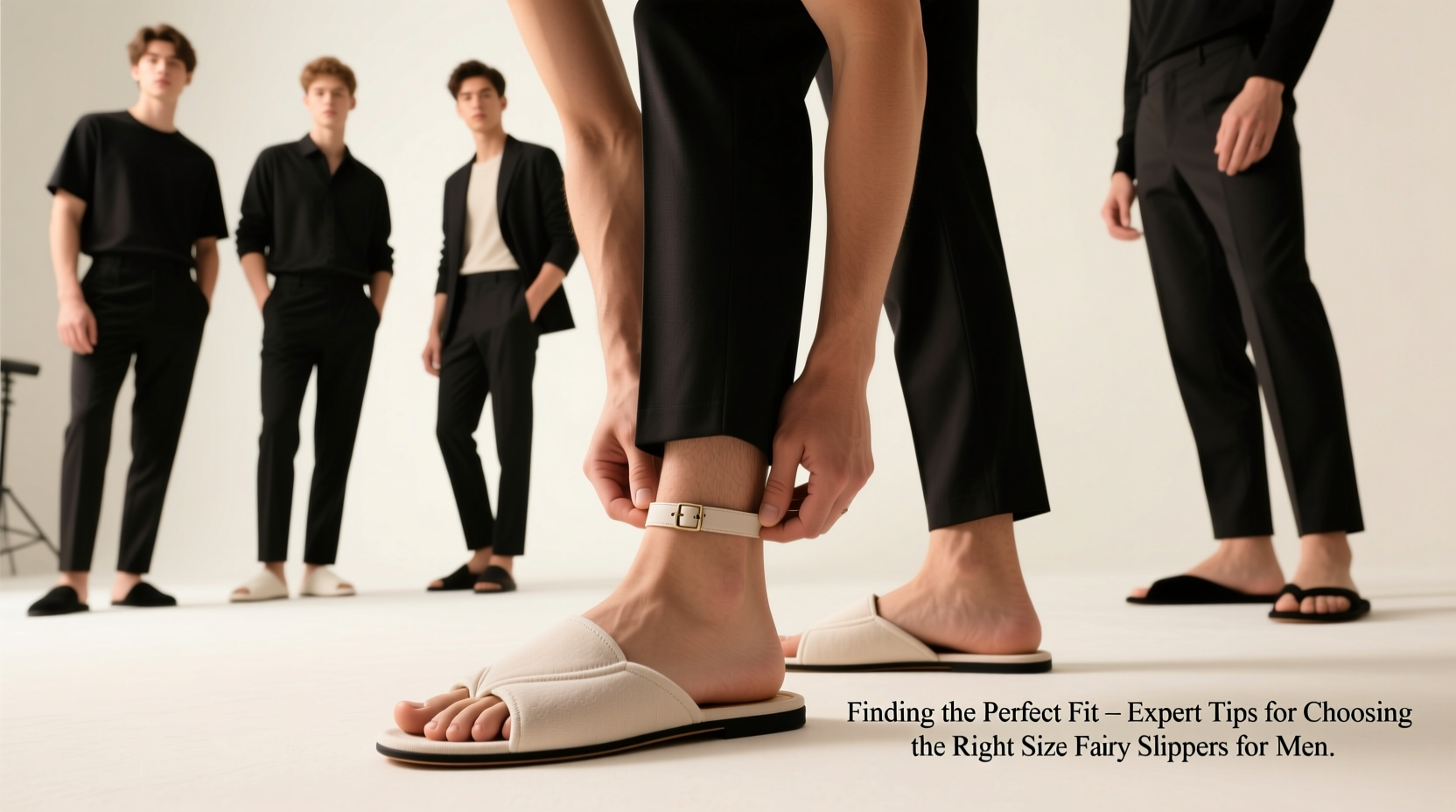
Unlike athletic shoes or formal dress shoes, fairy slippers are typically made from breathable knits, memory foam insoles, or stretchable uppers. These materials conform to the foot over time, which means initial fit can feel different than what you're used to. Many brands also use unisex or European sizing, creating confusion for men accustomed to U.S. men’s standards.
Additionally, fairy slippers often lack rigid heel counters or structured midsoles, so there's less support to keep your foot locked in place. That makes accurate sizing even more important. A half-size difference can turn a cozy experience into an awkward shuffle.
Step-by-Step Guide to Measuring Your Feet Accurately
Since most online purchases rely on self-measured data, taking precise foot dimensions is essential. Follow this five-step process for reliable results:
- Measure in the evening – Feet naturally swell throughout the day, reaching maximum size by late afternoon. Measuring then ensures enough room for daily expansion.
- Use a firm surface and paper – Place a blank sheet on a hard floor. Stand on it barefoot with your full weight distributed evenly.
- Trace your foot outline – Use a pencil held vertically to trace around both feet. Don’t tilt the pencil inward—keep it perpendicular to the ground.
- Measure length and width – For length, measure from the heel to the longest toe (often the big toe, but sometimes the second). For width, measure across the broadest part of the forefoot.
- Compare to brand-specific charts – Convert your measurements into the brand’s recommended size. Never assume a U.S. size 10 equals a EU 43 across all labels.
Repeat this process for both feet—even minor asymmetry matters when fit precision is key. Always size for the larger foot.
Key Fit Indicators to Watch For
Once you receive your fairy slippers, assess fit using these physical cues:
- Heel slippage: A slight lift (3–5mm) is normal due to minimal heel structure, but if your heel lifts more than a centimeter, the slipper is likely too long.
- Toes near the edge: There should be about 5–10mm between your longest toe and the front seam. Any tighter risks pressure; any looser invites sliding.
- Midfoot hold: The arch and ball of the foot should feel gently cradled without constriction. If the upper pulls or pinches, the width may be off.
- No creasing at the toe box: Excessive wrinkling in the fabric indicates excess length or poor material elasticity.
“Fairy slippers aren’t meant to be stretched-in. They should feel comfortably snug out of the box.” — Marcus Lin, Footwear Design Consultant at Urban Comfort Labs
Size Comparison Table: Men’s vs. International Standards
| U.S. Men’s Size | EU Size | Foot Length (cm) | Foot Width (cm) - Medium D | Common Conversion Pitfall |
|---|---|---|---|---|
| 7 | 40 | 25.1 | 9.8 | Often confused with women’s size 8.5 |
| 8 | 41 | 26.0 | 10.0 | Some brands skip 41, jumping from 40 to 42 |
| 9 | 42–43 | 26.7–27.3 | 10.3 | Inconsistent labeling; verify per brand |
| 10 | 44 | 27.9 | 10.6 | May require wide-width option |
| 11 | 45 | 28.6 | 10.9 | Larger sizes often run short in toe depth |
This table serves as a general reference. Always cross-check with the manufacturer’s detailed size chart, especially for width categories (standard, wide, narrow).
Checklist: Before You Buy Fairy Slippers Online
- ✅ Measure both feet at the end of the day
- ✅ Confirm if the brand uses men’s, women’s, or unisex sizing
- ✅ Check return policy for exchanges—especially for final-sale items
- ✅ Read customer reviews mentioning fit (“runs small,” “best for narrow feet”)
- ✅ Look for adjustable features like elastic gussets or toggle straps
- ✅ Consider sock thickness you plan to wear with them
- ✅ Verify material stretch potential (e.g., knit vs. canvas)
Real Example: John’s Sizing Journey
John, a 42-year-old software developer, ordered his first pair of fairy slippers after seeing glowing reviews. He assumed his usual U.S. size 10 would work seamlessly. When they arrived, the slippers felt loose in the heel and required constant repositioning while walking.
After reviewing the brand’s site, he discovered their EU-based sizing ran half a size short. Their size 44 was equivalent to a U.S. 9.5—not 10. He remeasured his foot and found it was actually 27.8 cm, placing him firmly at U.S. 10, but the slipper’s design didn’t accommodate that variance. He exchanged for a custom-made wide version offered by the brand, which included reinforced side panels and a deeper heel cup. The new pair stayed securely on his feet and provided lasting comfort through long work-from-home days.
His takeaway? Never trust assumptions—verify every dimension.
Do’s and Don’ts of Fairy Slipper Fitting
| Do’s | Don’ts |
|---|---|
| Measure your feet every 1–2 years (feet change with age) | Assume one brand’s size fits all styles |
| Wear the same socks you intend to use with the slippers | Order multiple sizes without checking return eligibility |
| Break in slippers gradually over 1–2 hours per day | Expect significant stretch in non-knit models |
| Contact customer service with specific fit questions | Ignore width options if you have broad forefeet |
Frequently Asked Questions
Should fairy slippers feel tight at first?
No. While some softening and molding to your foot will occur, they should never feel constricting. If there’s immediate pressure on the toes or sides, the size or width is incorrect.
Can I wear orthotics with fairy slippers?
Only if the insole is removable and the interior depth allows for added height. Most fairy slippers have built-in cushioning and limited space, so full-length orthotics usually don’t fit. Consult the product specs or choose a model designed for orthopedic compatibility.
Why do my fairy slippers slide off when I walk?
Slipping is typically caused by incorrect length, insufficient heel grip, or lack of closure mechanism. Look for models with back straps, elastic ankle bands, or contoured footbeds that secure the heel. Also ensure you haven’t sized up too much for swelling.
Final Thoughts: Prioritize Precision Over Convenience
Finding the perfect fit in fairy slippers isn’t about guessing or hoping for the best—it’s about measurement, research, and attention to detail. With the right approach, men can enjoy all the plush comfort and effortless style these unique slippers offer, without compromising on performance or foot health. Whether you’re recovering from long shifts, managing foot sensitivity, or simply upgrading your home footwear, proper fit transforms a simple slip-on into a daily luxury.




 浙公网安备
33010002000092号
浙公网安备
33010002000092号 浙B2-20120091-4
Comments
No comments yet. Why don't you start the discussion?