
Walking your dog is more than just a routine—it’s a shared experience that strengthens your bond, supports physical health, and provides essential mental stimulation. Yet one often overlooked detail can make or break the walk: leash length. Too short, and your dog feels restricted; too long, and control slips away. The right leash length balances safety, freedom, and communication. With so many options—from six-foot nylon leads to retractable 16-foot lines—choosing the ideal length requires understanding your dog’s needs, your walking environment, and your own comfort level.
Why Leash Length Matters More Than You Think
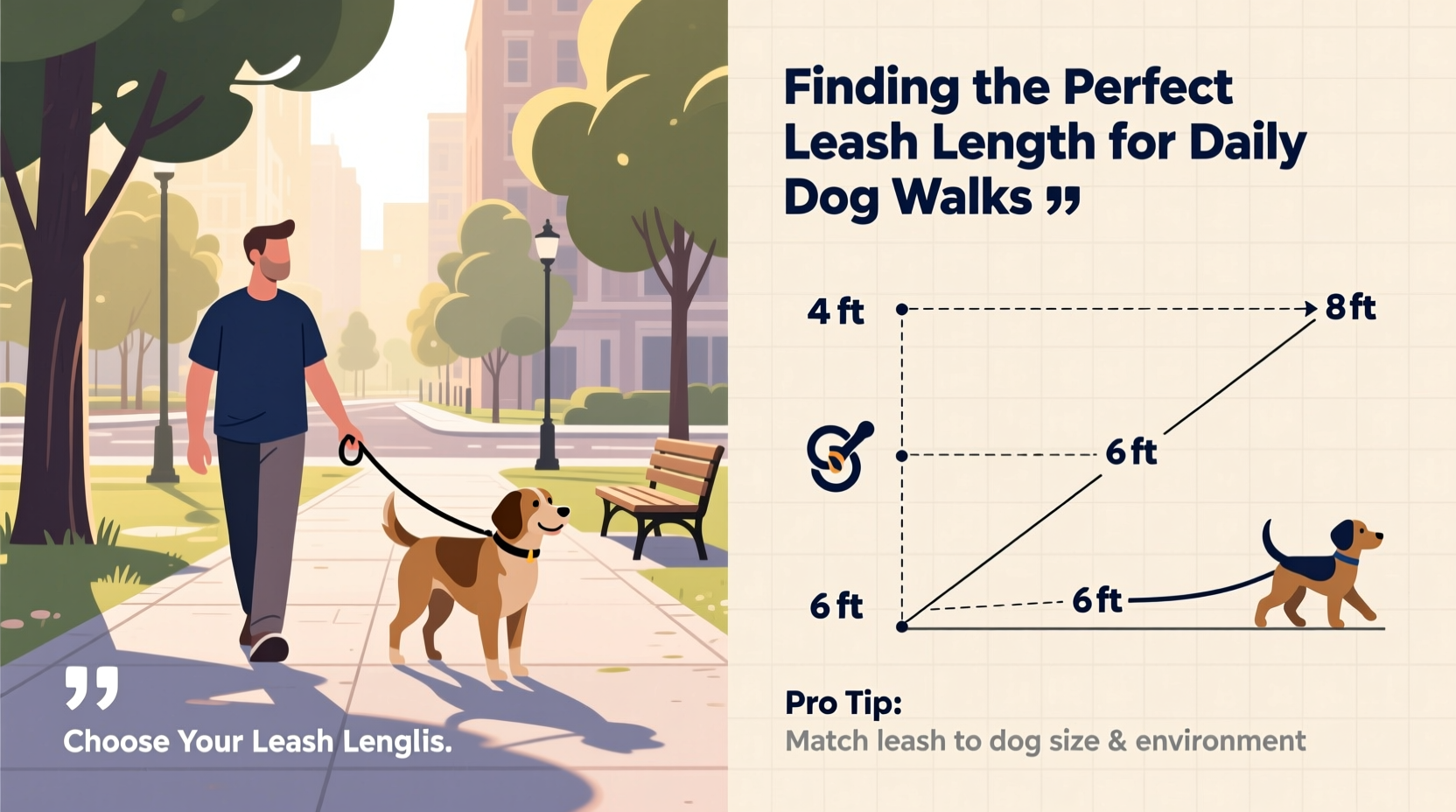
Leash length isn’t just about convenience—it directly affects your dog’s behavior, training progress, and overall walking experience. A well-chosen leash allows your dog to explore safely while remaining responsive to cues. On the other hand, an inappropriate length can encourage pulling, create tripping hazards, or limit your ability to react to sudden movements.
Dogs are naturally curious. They rely on scent, sound, and movement to interpret their surroundings. Restricting their ability to investigate within a reasonable range can lead to frustration, which often manifests as tugging, barking, or anxiety. Conversely, giving too much freedom in high-traffic areas increases risk and reduces your influence over their actions.
“Leash length is a tool for balance—between freedom and focus. It should support your dog’s natural instincts while keeping them safe and attentive.” — Dr. Lena Torres, Certified Canine Behavior Consultant
Common Leash Types and Their Standard Lengths
Before choosing a length, it helps to understand the most common leash types available and their typical uses:
| Leash Type | Standard Length | Best For | Limitations |
|---|---|---|---|
| Fixed-Length Nylon | 4–6 feet | Daily walks, training, urban environments | Limited reach, less flexibility |
| Retractable | 4–16 feet (adjustable) | Parks, open spaces, scent exploration | Harder to control, tangling risk |
| Hands-Free | 3–5 feet (belt-mounted) | Running, hiking, multitasking | Less precision for training |
| Double Leash | 6 feet (dual clips) | Walking two dogs simultaneously | Bulky, potential for tangling |
| Training Leash | 10–15 feet (long line) | Off-leash training in secure areas | Not suitable for public sidewalks |
While fixed-length leashes offer consistency and control, retractable leashes provide flexibility at the cost of responsiveness. Hands-free models promote mobility but may not be ideal for reactive dogs. Understanding these trade-offs is key to making an informed decision.
Choosing the Right Length Based on Your Dog’s Traits
No single leash length suits all dogs. The best choice depends on several factors unique to your pet:
- Breed and size: Larger, stronger breeds like German Shepherds or Huskies benefit from shorter, sturdier leashes (4–6 feet) for better control. Smaller dogs, such as Pomeranians or Chihuahuas, may do well with slightly shorter leashes (4 feet) to prevent tripping and ensure quick response.
- Energy level: High-energy dogs often pull if they feel constrained. A longer line (within reason) during structured off-leash training can help satisfy their need for movement, but daily walks typically require a standard 6-foot leash for safety.
- Temperament: Reactive or anxious dogs respond better to shorter leashes, which allow quicker redirection. Calm, well-trained dogs may enjoy more freedom on adjustable or longer lines in low-distraction settings.
- Training stage: Puppies and dogs learning loose-leash walking thrive on 4–6 foot leashes. These lengths keep them close enough for immediate feedback and correction.
A Step-by-Step Guide to Testing and Selecting Your Ideal Leash
Finding the right leash length doesn’t have to be guesswork. Follow this practical process to identify what works best for you and your dog:
- Assess your walking environment: Do you walk in busy city streets, quiet neighborhoods, or open parks? Urban areas call for shorter leashes (4–6 feet), while rural or park settings may allow for longer, controlled lines.
- Observe your dog’s current behavior: Note whether they lunge, lag behind, or walk calmly. Pulling may indicate a need for better training rather than a longer leash—but sometimes, slight length adjustments can reduce tension.
- Test a standard 6-foot leash: Start here as a baseline. This length is widely recommended for general use and offers a good balance of control and comfort.
- Try a retractable (with caution): Use only in open, safe areas. Let your dog extend the line briefly to sniff, then reel it back in before crossing streets or approaching others.
- Introduce a long line (10–15 feet) for training: In a fenced yard or empty field, practice recall and attention exercises. This helps build trust and responsiveness at greater distances.
- Evaluate after each walk: Ask yourself: Did I feel in control? Was my dog relaxed? Were there moments of strain or distraction? Adjust accordingly.
Real-Life Example: Transforming a Daily Walk with the Right Leash
Sarah adopted Max, a 2-year-old Border Collie mix known for his high energy and reactivity toward cyclists. Initially, she used a 16-foot retractable leash, thinking it would give him room to explore. Instead, Max would sprint toward bikes, yanking her forward and creating dangerous situations.
After consulting a trainer, Sarah switched to a 4-foot woven biothane leash—a durable, non-stretch material. The shorter length allowed her to maintain proximity and redirect Max quickly when triggers appeared. Over time, with consistent training and the right equipment, Max learned to walk calmly beside her. On weekends, she uses a 10-foot training line in a closed field to let him explore safely while practicing commands.
The change wasn’t just about control—it was about communication. The right leash became a bridge between impulse and obedience.
Checklist: How to Choose the Perfect Leash Length
- ✅ Identify your primary walking environment (urban, suburban, rural)
- ✅ Consider your dog’s size, strength, and energy level
- ✅ Evaluate your dog’s training level and behavior on walks
- ✅ Start with a 6-foot standard leash as a baseline
- ✅ Avoid retractable leashes in crowded or unpredictable areas
- ✅ Use longer lines only in secure, enclosed spaces for training
- ✅ Prioritize durability and grip comfort in material choice
- ✅ Reassess every few months, especially during behavioral changes
Frequently Asked Questions
Is a 6-foot leash too long for small dogs?
Not necessarily. A 6-foot leash gives small dogs enough space to move without constant tension, while still allowing owners to maintain control. For crowded areas, consider folding the leash in half to shorten it temporarily.
Are retractable leashes bad for dogs?
They aren’t inherently bad, but they come with risks. The thin cord can cause burns or cuts, and sudden extension may encourage pulling. They’re best reserved for open, low-traffic areas and should never be used with strong or untrained dogs.
Can leash length affect training?
Absolutely. Shorter leashes provide clearer feedback during obedience work. Long lines are excellent for teaching recall in a safe setting, allowing gradual freedom while maintaining safety. Consistency in length during training phases improves learning outcomes.
Final Thoughts: Matching Leash Length to Lifestyle
The perfect leash length isn’t a universal measurement—it’s a personal fit shaped by your dog’s personality, your neighborhood, and your goals. A thoughtful choice enhances safety, reduces stress, and turns daily walks into enjoyable rituals rather than struggles. Whether you’re navigating city sidewalks or exploring nature trails, the right leash empowers both you and your dog to walk with confidence.




 浙公网安备
33010002000092号
浙公网安备
33010002000092号 浙B2-20120091-4
Comments
No comments yet. Why don't you start the discussion?