
Selecting the right watch for a young person isn’t just about ticking off a gift list. It’s about choosing a timepiece that fits comfortably, complements their wrist, and aligns with their evolving sense of identity. For youth—typically aged 8 to 17—their physical proportions and lifestyle needs differ significantly from adults. A watch that’s too large can slip around or feel burdensome; one that’s too small may appear childish or be difficult to read. The ideal balance lies in understanding wrist dimensions, daily activities, and personal preferences. This guide breaks down the key considerations to help parents, guardians, or young buyers make informed decisions.
Understanding Youth Wrist Proportions
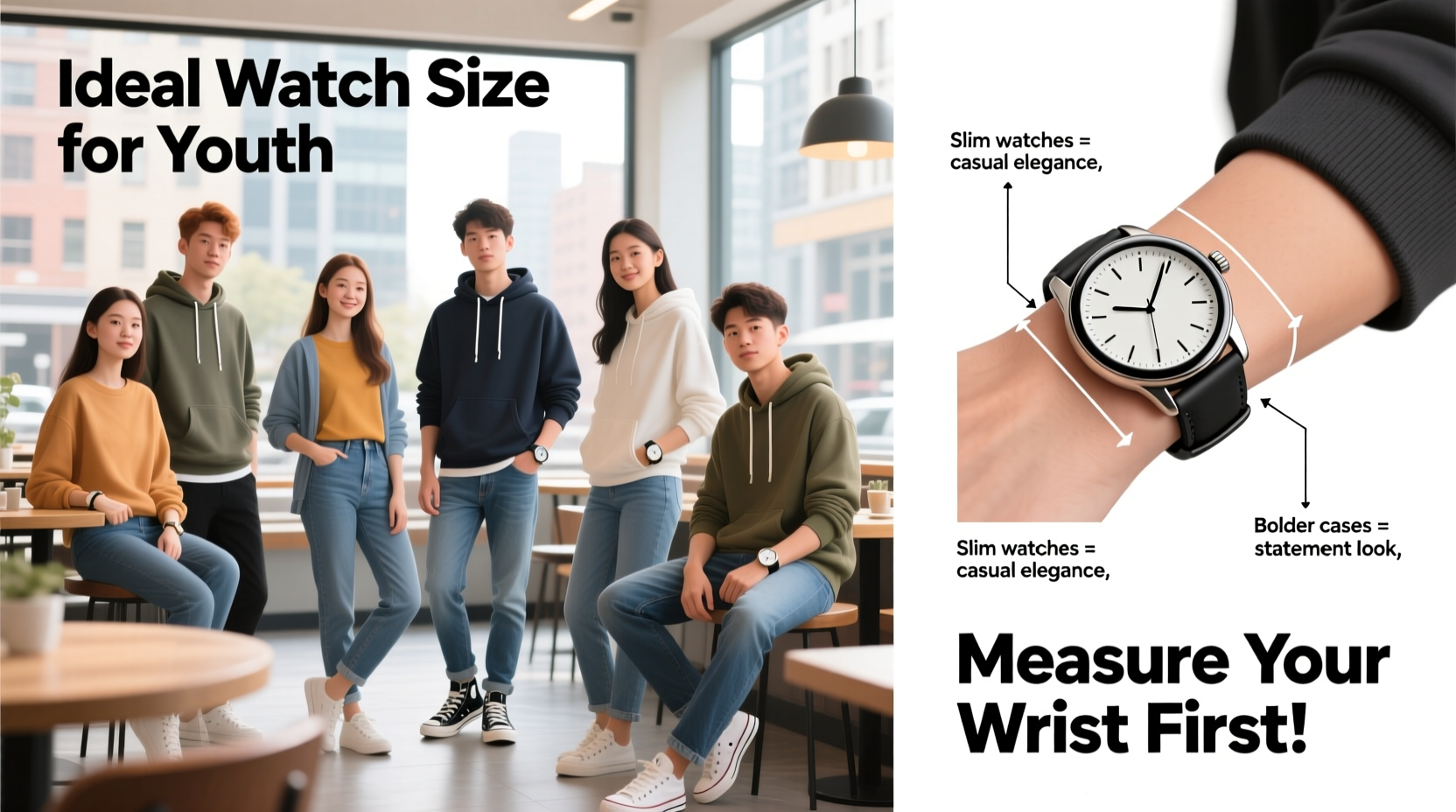
The average wrist circumference for children and teenagers varies widely based on age, gender, and build. While adult watches often range from 40mm to 45mm in diameter, youth wrists typically require smaller cases—between 28mm and 38mm—for optimal visual harmony.
Wrist size is more critical than age alone. A tall 14-year-old might comfortably wear a 40mm watch, while a petite 16-year-old may find it overwhelming. Measuring the wrist is the most reliable method. Use a flexible measuring tape to wrap around the narrowest part of the wrist, just below the wrist bone. Record the measurement in centimeters or inches.
Choosing the Right Case Diameter
Watch case diameter directly affects both aesthetics and usability. For youth, prioritize function and fit over trend-driven oversized designs. Below is a general guideline based on wrist size and age group:
| Age Range | Avg. Wrist Size (cm) | Recommended Case Size (mm) | Notes |
|---|---|---|---|
| 8–10 years | 12–14 cm | 28–32 mm | Look for cartoon-themed or colorful sport watches |
| 11–13 years | 14–16 cm | 32–36 mm | Transition models with simple dials and durable straps |
| 14–17 years | 15–18 cm | 36–40 mm | Suitable for early adult styles; consider minimalist or smartwatches |
It’s important to note that case thickness also matters. A 38mm watch with a slim profile (under 9mm) will feel lighter and sit better under sleeves than a bulky 36mm chronograph that’s 12mm thick. For active youth, low-profile watches are often more practical.
Strap Selection: Comfort Meets Lifestyle
The strap determines not only comfort but also durability and versatility. Youth are often physically active, so material choice should reflect their routine—whether they’re playing sports, typing on a laptop, or attending formal events.
- Silicone/Rubber: Ideal for sports and outdoor activities. Water-resistant, easy to clean, and flexible.
- Nylon (NATO or Perlon): Breathable and adjustable. Great for school or casual wear. Offers safety—if one spring bar fails, the watch stays on the wrist.
- Leather: Best for older teens in semi-formal settings. Requires occasional conditioning and should be kept dry.
- Stainless Steel: Durable but heavier. More suitable for teens with larger wrists or those who prefer a premium look.
Adjustability is crucial. Many youth watches come with removable links or multiple strap holes to accommodate growth spurts or seasonal clothing layers. Avoid fixed-length bracelets unless sizing is precisely matched.
“Fit is everything when introducing a young person to wearing a watch. If it’s uncomfortable or constantly slipping, they won’t wear it—no matter how cool it looks.” — Daniel Reyes, Watch Educator & Retail Consultant
Step-by-Step Guide to Finding the Perfect Fit
Follow this five-step process to ensure the right watch selection:
- Measure the wrist: Use a soft tape measure to get an accurate circumference. Write it down.
- Determine primary use: Is the watch for school, sports, fashion, or all-day wear? This influences size and material choices.
- Test virtual try-ons: Many online retailers offer AR tools or size comparison visuals. Use them to visualize scale.
- Check lug-to-lug distance: This is the span from one end of the watch case to the other. It should not extend beyond the wrist edges. Ideally, it should be within 10–15% of the wrist’s width.
- Try before committing: If possible, visit a store. Have the youth wear different models to assess weight, visibility, and comfort during movement.
Style Considerations for Growing Tastes
As youth mature, their style evolves—from playful characters to sleek minimalism or tech-forward designs. A watch should reflect their personality without locking them into a juvenile image.
Younger children appreciate bright colors, animated dials, and themed bands (e.g., superheroes, animals). Pre-teens begin showing interest in brands, team logos, or digital features like step counters. By mid-teens, many lean toward subtle elegance or smart functionality.
Smartwatches have become increasingly popular, especially among tech-savvy youth. Models like the Apple Watch SE or Fitbit Ace 3 offer fitness tracking, parental controls, and app integration. However, screen size and battery life must be balanced with comfort. A large smartwatch may dominate a small wrist, making it cumbersome for daily tasks.
For those seeking analog options, minimalist Japanese or Swiss-designed watches with clean dials and neutral tones provide timeless appeal that can last through high school and beyond.
Mini Case Study: Alex’s First “Big Kid” Watch
Alex, a 13-year-old student, had outgrown his childhood digital watch. His parents wanted something durable for school and weekend basketball games, but also stylish enough for family events. After measuring his wrist at 15.5 cm, they considered several 40mm models—but found them too wide when tried on.
They settled on a 36mm stainless steel quartz watch with a silicone NATO strap. The lug-to-lug distance was 42mm—just under his wrist width—ensuring it sat flush. The black dial with white markers offered high readability, and the quick-release strap allowed him to switch to a blue nylon band for casual days.
Six months later, Alex still wears it daily. “It doesn’t bounce when I run,” he said, “and my friends think it looks ‘expensive’ even though it wasn’t.”
Frequently Asked Questions
Can a youth wear an adult-sized watch?
Occasionally, yes—especially if they have a larger frame. But consistently oversized watches can strain the wrist, slide around, or appear disproportionate. Stick to youth-appropriate sizing unless the wearer is near adult height and build.
Are smartwatches suitable for younger kids?
Yes, with caveats. Choose models designed for kids, which include GPS tracking, screen time limits, and restricted communication. Avoid full-featured smartwatches for under-10s unless parental controls are strictly enforced.
How tight should a watch strap be?
The watch should stay in place without leaving marks or restricting circulation. You should be able to slide one finger comfortably underneath the strap. For growing children, allow slight looseness and plan to adjust as needed.
Final Checklist Before Buying
- ✅ Measure the wrist circumference accurately
- Use a soft tape; don’t guess based on age.
- ✅ Confirm primary use (school, sports, fashion)
- This guides material and feature choices.
- ✅ Check case diameter and lug-to-lug distance
- Ensure it fits within the wrist’s width.
- ✅ Choose a lightweight, adjustable strap
- Silicone, nylon, or perforated leather work best.
- ✅ Involve the youth in the decision
- Personal preference boosts long-term wear.
Conclusion: Time Well Spent on the Right Fit
Finding the perfect watch for a young person goes beyond branding or price. It’s about matching size to anatomy, function to lifestyle, and style to self-expression. A well-fitting watch becomes more than a tool—it’s a rite of passage, a confidence booster, and sometimes, a cherished keepsake. Whether it's a first analog timepiece or a transition to smart technology, the right choice today can spark a lifelong appreciation for thoughtful design and personal detail.




 浙公网安备
33010002000092号
浙公网安备
33010002000092号 浙B2-20120091-4
Comments
No comments yet. Why don't you start the discussion?