
When the Fitbit Ionic and Samsung Gear S3 launched in the late 2010s, they represented two distinct philosophies in smartwatch design. The Gear S3 leaned into full Android Wear (now Wear OS) functionality with LTE options, rugged build quality, and a rotating bezel. The Fitbit Ionic took a fitness-first approach, prioritizing health tracking accuracy and long-term data insights over app ecosystems. Fast forward to 2025, and both watches are well beyond their prime—but for budget-conscious buyers or those holding onto older devices, the question remains: is the Samsung Gear S3 still a viable option compared to the Fitbit Ionic?
The answer isn’t straightforward. While both devices have been discontinued and lack modern software updates, their durability, feature sets, and ecosystem support vary significantly in today’s context. This analysis breaks down performance, longevity, health tracking, software status, and real-world usability to determine which device holds up—and whether either deserves a place on your wrist in 2025.
Design and Build Quality: Durability That Lasts
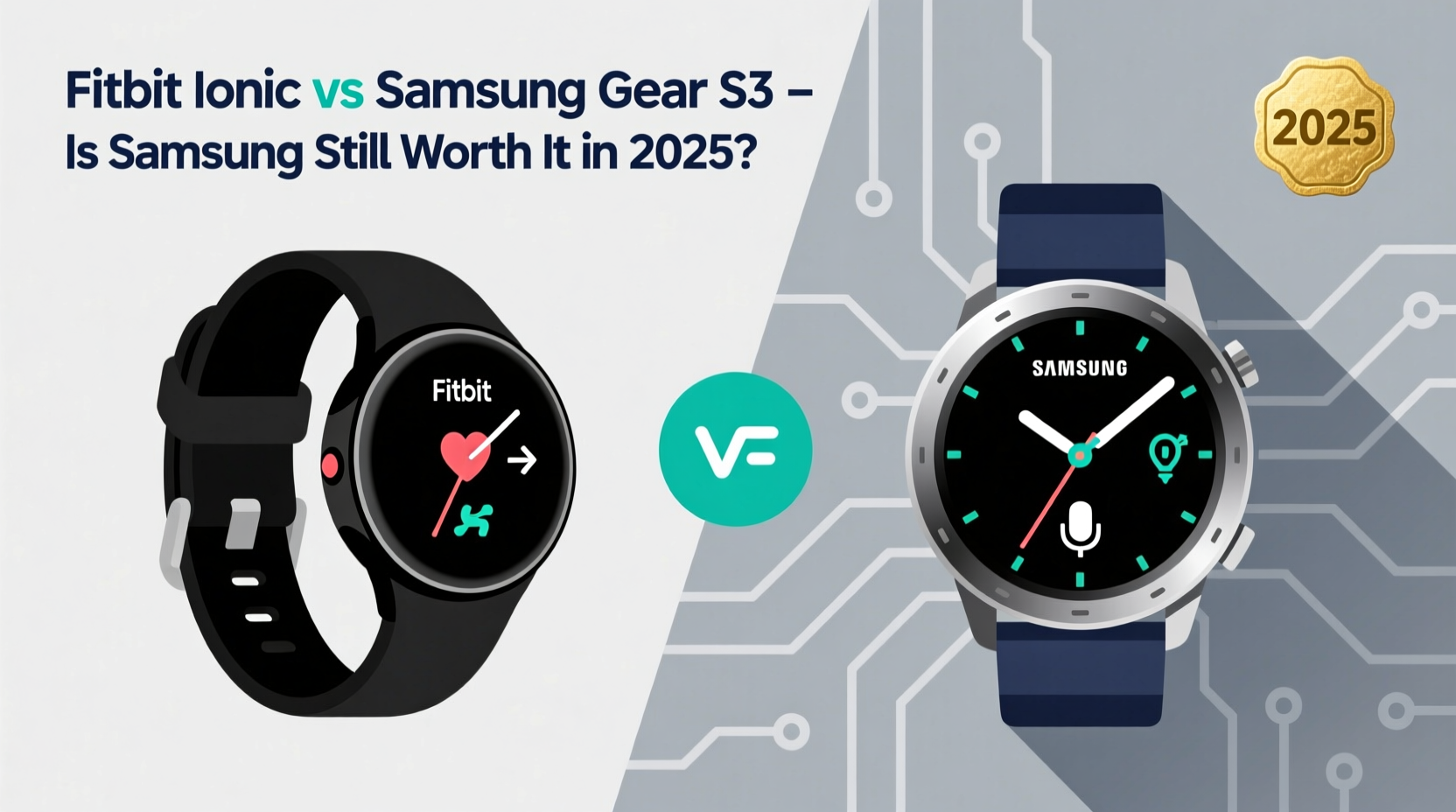
The Samsung Gear S3 stands out immediately with its premium stainless steel casing, physical rotating bezel, and MIL-STD-810G certification for durability. Available in Frontier (outdoor-focused) and Classic (business-oriented) variants, it was built to withstand daily wear, water exposure, and accidental drops. Its 1.3-inch circular Super AMOLED display remains sharp and vibrant even years later, and the tactile feedback from the bezel makes navigation intuitive without relying solely on touch.
In contrast, the Fitbit Ionic uses a more utilitarian polycarbonate body with a rectangular grayscale LCD screen. It’s lightweight and comfortable for 24/7 wear, especially during workouts, but lacks the refined feel of the Gear S3. While it’s also water-resistant up to 50 meters, the screen is less bright and harder to read in direct sunlight.
Software and Ecosystem Support in 2025
This is where the narrative shifts dramatically. As of 2025, Samsung has fully transitioned to its Galaxy Watch series running on Wear OS powered by Samsung. The Gear S3, originally on Tizen OS, no longer receives firmware updates, security patches, or official app support. Google Play Store access on the Gear S3 was deprecated in 2023, meaning new apps cannot be downloaded, and many existing ones—especially fitness and communication tools—no longer function reliably.
Similarly, the Fitbit Ionic lost official support when Fitbit ended updates for legacy devices in early 2023. However, Fitbit’s cloud-based dashboard remains accessible, allowing users to sync historical health data. The companion app still works on iOS and Android, though newer phone OS versions may cause occasional syncing hiccups.
“Devices stuck on outdated operating systems become increasingly isolated. By 2025, compatibility gaps make even basic functions unreliable.” — Lena Park, Wearable Tech Analyst at MobileInsight Group
While neither device supports modern voice assistants like updated Google Assistant or Alexa, the Gear S3’s standalone LTE model could once operate independently of a phone—a feature the Ionic never offered. But without carrier certification renewals, LTE functionality is now spotty or non-functional in many regions.
Health and Fitness Tracking: Accuracy vs Longevity
Fitness tracking is where the Fitbit Ionic shines—even in 2025. Its optical heart rate sensor was among the most accurate in its class, and its continuous sleep staging algorithm provided meaningful insights into light, deep, and REM sleep. The Ionic also includes built-in GPS, essential for runners and cyclists who want to track routes without carrying a phone.
The Gear S3 relies on Samsung’s heart rate sensor, which had mixed reviews during its prime—tending to overestimate during high-intensity intervals. It lacks built-in GPS; instead, it depends on connected phone GPS, which limits standalone use. However, it does offer stress tracking via heart rate variability and basic sleep monitoring through Samsung Health.
| Feature | Fitbit Ionic | Samsung Gear S3 |
|---|---|---|
| Built-in GPS | Yes | No (requires phone) |
| Heart Rate Accuracy | High (clinical-grade calibration) | Moderate (drifts under load) |
| Sleep Tracking Depth | Detailed stages + SpO2 (basic) | Basic duration and restfulness |
| Battery Life | 4–5 days | 2–3 days (1 day with LTE) |
| Water Resistance | 50m (swim-proof) | 5ATM (swim-ready) |
For users focused on health metrics, the Fitbit Ionic continues to deliver usable data, especially if synced occasionally to maintain trend visibility. The Gear S3, while capable in its time, falls short in precision and depth.
Real-World Use Case: Can Either Replace a Modern Smartwatch?
Consider Mark, a 42-year-old teacher who’s used his Samsung Gear S3 Frontier since 2018. He liked the rugged look, the ability to take calls via Bluetooth, and the always-on display. By 2024, he noticed apps crashing, delayed notifications, and increasing difficulty pairing with his new Android phone. After switching to a refurbished Fitbit Ionic for $40, he found sleep tracking far more insightful and appreciated the multi-day battery. However, he missed the tactile bezel and robust casing.
Mark’s experience reflects a broader trend: users clinging to older hardware often do so for cost or sentimental reasons, not performance. Neither watch supports modern features like ECG, skin temperature sensing, or advanced workout detection. Both struggle with third-party app integration. For someone needing reliable notifications, voice assistant access, or emergency fall detection, these devices are functionally obsolete.
Step-by-Step Guide: How to Maximize Value from Legacy Devices in 2025
If you already own one of these watches or are considering a secondhand purchase under $50, follow this practical timeline to assess usability:
- Week 1: Pair and Test Core Functions – Connect to your current phone. Verify time sync, step counting, heart rate readings, and notification delivery.
- Week 2: Evaluate Battery and Charging – Note how quickly the battery depletes. Swollen or degraded batteries are common in 6+ year-old devices.
- Week 3: Test Sync Reliability – Ensure data uploads consistently to Fitbit or Samsung Health. Missing syncs indicate failing hardware or software conflicts.
- Week 4: Assess Daily Usability – Wear it full-time. Does it provide actionable insights? Are notifications useful or frustrating?
- Decision Point – If syncing fails regularly, sensors lag, or the screen flickers, retire the device. Otherwise, use it as a secondary tracker or backup.
Checklist: Is Your Legacy Watch Still Viable in 2025?
- ✅ Pairs reliably with your current smartphone OS
- ✅ Syncs health data without manual intervention
- ✅ Battery lasts at least 24 hours under normal use
- ✅ Screen is crack-free and responsive
- ✅ Core sensors (heart rate, accelerometer) report consistent data
- ❌ Avoid if: Frequent crashes, unresponsive touch, or failed updates
Frequently Asked Questions
Can I still use Samsung Pay on the Gear S3 in 2025?
Samsung Pay on the Gear S3 relied on MST (Magnetic Secure Transmission), which allowed payments at traditional card terminals. However, major payment processors have phased out MST support, and token expiration prevents reactivation on older devices. Most users report that Samsung Pay no longer works unless previously active and untouched—but even then, functionality is limited and declining.
Does the Fitbit Ionic support SpO2 or ECG?
The Ionic includes a basic pulse oximeter for spot-check SpO2 measurements, but it does not continuously monitor blood oxygen levels like newer Fitbits. It lacks an ECG sensor entirely. Data from the SpO2 sensor should be considered approximate and not medical-grade.
Which watch holds better resale value today?
Neither retains significant resale value. Refurbished units sell between $30–$60 depending on condition. The Gear S3 typically commands slightly higher prices due to its premium materials, but demand is minimal overall.
Final Verdict: Is the Samsung Gear S3 Still Worth It in 2025?
In a word: unlikely. While the Samsung Gear S3 was a technological marvel in 2016–2017, its lack of software support, app obsolescence, and hardware aging make it impractical as a primary smartwatch in 2025. The Fitbit Ionic, though also outdated, maintains a stronger case for continued use due to its superior health tracking, longer battery life, and ongoing access to Fitbit’s analytics platform.
That said, neither should be purchased new or at full price. If you’re exploring budget options, consider newer entry-level models like the Fitbit Charge 6, Garmin Vivomove, or even a refurbed Galaxy Watch 4, all of which offer modern sensors, updated software, and better smartphone integration—at similar price points.
Legacy devices have charm, but in the fast-evolving world of wearables, staying current means better health insights, improved reliability, and true smart functionality. Holding onto the past may save dollars today but costs you in accuracy, convenience, and long-term usability tomorrow.




 浙公网安备
33010002000092号
浙公网安备
33010002000092号 浙B2-20120091-4
Comments
No comments yet. Why don't you start the discussion?