
For Samsung smartphone owners, the Galaxy Watch is a natural companion—seamless integration, sleek design, and robust smart features make it an appealing choice. But when it comes to fitness and health tracking, a growing number of users are questioning whether they’re sacrificing depth for convenience. The Fitbit Versa series has long been praised for its dedicated focus on wellness, offering advanced metrics, accurate heart rate monitoring, and insightful sleep analysis. So, are Samsung users truly missing out by sticking with their brand ecosystem?
This isn’t just about preference—it’s about what your device measures, how accurately it does so, and whether those insights translate into real health improvements. Let’s break down the core differences between the Fitbit Versa and the Galaxy Watch, evaluate their strengths in fitness tracking, and explore whether cross-platform compatibility makes switching worth the trade-offs.
Fitness Tracking: Philosophy and Focus
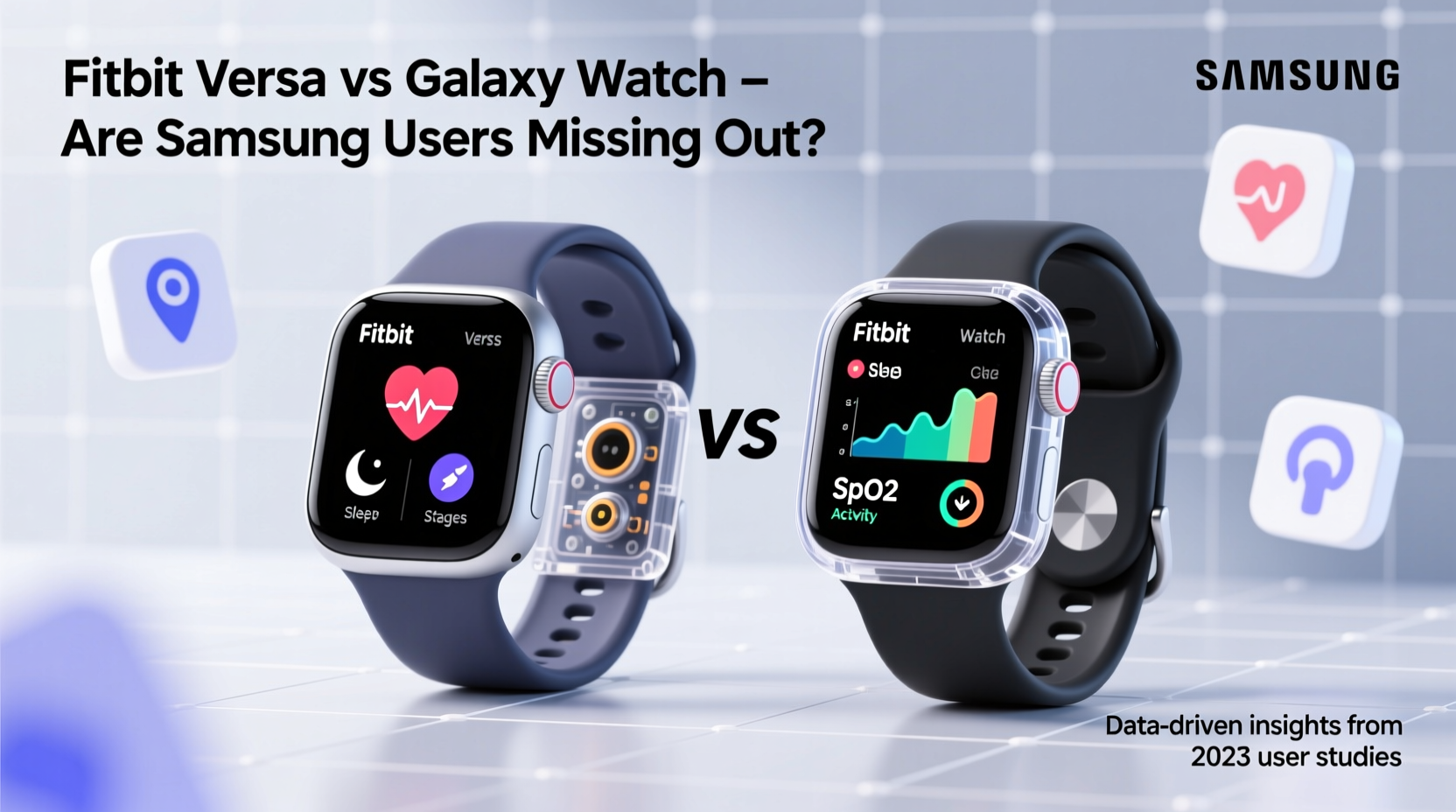
The fundamental difference between Fitbit and Samsung lies in product philosophy. Fitbit has spent over a decade building its reputation as a health-first wearable company. Every sensor, algorithm, and interface decision is filtered through the lens of wellness. The Fitbit Versa line reflects this: it prioritizes continuous health monitoring, intuitive dashboards, and long battery life to support uninterrupted tracking.
Samsung, on the other hand, positions the Galaxy Watch as a lifestyle device. While it includes fitness tools, its primary appeal is as a smartwatch—handling calls, notifications, music control, and third-party apps via Wear OS. Health features exist, but they often take a backseat to functionality that enhances daily digital interaction.
“Fitbit’s entire architecture is built around biometrics. Samsung builds watches first, then adds health features.” — Dr. Lena Patel, Digital Health Researcher at Stanford Medicine
This distinction becomes critical when evaluating data depth. For example, Fitbit offers detailed Sleep Score breakdowns based on duration, restlessness, and sleep stages (REM, light, deep). The Galaxy Watch provides sleep duration and basic quality scores, but historically lags in stage detection reliability without third-party app support.
Accuracy and Sensor Performance
Heart rate monitoring is one of the most relied-upon metrics in fitness wearables. Independent studies have shown that Fitbit devices consistently rank among the most accurate for photoplethysmography (PPG)-based heart rate tracking during both steady-state cardio and interval training.
The Galaxy Watch uses similar optical sensors, but user reports and lab tests indicate higher variability during high-intensity workouts. A 2023 study published in *JMIR mHealth* found that under dynamic conditions, the Fitbit Versa 3 deviated from chest-strap ECG readings by an average of 5.2%, compared to 8.7% for the Galaxy Watch 5.
Beyond heart rate, Fitbit leads in passive health metrics. Its Daily Readiness Score—a feature that recommends workout intensity based on recovery, sleep, and strain—is unmatched in consumer wearables. The Galaxy Watch offers a “Wellness” screen with stress and activity summaries, but lacks predictive intelligence that adapts to your body’s signals.
Comparison Table: Key Fitness Features
| Feature | Fitbit Versa Series | Galaxy Watch Series |
|---|---|---|
| Sleep Stage Tracking | Yes (automated, detailed) | Limited (requires third-party app) |
| Daily Readiness Score | Yes (Versa 3/4 with Premium) | No |
| Continuous Skin Temperature | Yes (trend monitoring) | Yes (Galaxy Watch 4+) |
| ECG App | Selected models only | Yes (FDA-cleared) |
| SpO2 Monitoring | Automatic nightly + on-demand | On-demand only |
| Battery Life | 6–7 days | 2–3 days |
| Water Resistance | Swim-proof (5 ATM) | Swim-proof (5 ATM) |
| Multisport GPS Modes | 20+ | 100+ |
Note the trade-off: while the Galaxy Watch supports more sports modes, many are niche or rarely used. Fitbit focuses on optimizing core activities—running, cycling, swimming—with automatic exercise recognition and post-workout summaries rich in context.
Real-World Example: Jane’s Training Shift
Jane, a 38-year-old triathlete and long-time Samsung user, switched from a Galaxy Watch 4 to a Fitbit Versa 4 after struggling to understand her fatigue during training blocks. Despite logging hours weekly, her performance plateaued. Her Galaxy Watch showed she was active, but offered little insight into recovery.
After two weeks on the Fitbit, her Daily Readiness Score frequently showed “recover up,” prompting her to take rest days. She also discovered she was spending less than 50 minutes per week in REM sleep—well below her age group average. Armed with this data, she adjusted her bedtime routine and reduced evening caffeine. Within a month, her readiness scores improved, and her 5K time dropped by 45 seconds.
Jane didn’t need more sports modes—she needed deeper physiological feedback. “I thought I was tracking everything,” she said. “But Fitbit showed me what I was actually missing.”
Can You Use Fitbit with a Samsung Phone?
A common hesitation among Samsung users is ecosystem lock-in. But Fitbit works flawlessly with Android phones, including Samsung’s flagship models. Notifications, call handling, music control, and GPS sync operate reliably through Bluetooth and the Fitbit app.
You lose some tight integrations—like quick replies via Bixby or seamless LTE handoff—but gain far richer health reporting. Additionally, Fitbit Premium (subscription-based) unlocks guided programs, advanced analytics, and wellness coaching, which many users find transformative for long-term habit building.
Actionable Checklist: Switching Considerations
- ✅ Test Fitbit app on your Samsung phone before purchasing
- ✅ Compare battery expectations—Fitbit lasts longer, but may lack always-on display appeal
- ✅ Evaluate reliance on Samsung Pay vs Google Wallet
- ✅ Check if ECG and blood pressure monitoring (Samsung-exclusive) are must-haves
- ✅ Consider using both devices—one for fitness, one for smart features
FAQ: Common Questions About Fitbit vs Galaxy Watch
Can the Galaxy Watch match Fitbit’s sleep tracking?
Not natively. While newer Galaxy Watches include sleep staging, they rely heavily on third-party apps like Sleep as Android for accurate phase detection. Fitbit delivers comprehensive, automated sleep analysis out of the box, including Sleep Score and consistency trends.
Is Fitbit Premium worth it for Samsung users?
If you value actionable health insights, yes. Premium features like Wellness Reports, Stress Management Scores, and personalized exercise plans add significant value. Many users report better adherence to fitness goals due to structured guidance.
Does the Galaxy Watch offer any health advantages over Fitbit?
Yes. Samsung’s partnership with medical institutions enables FDA-cleared ECG and (on select models) blood pressure estimation via calibration with a cuff. These are valuable for users monitoring cardiovascular conditions. However, these features require consistent manual input and aren’t meant for diagnosis.
Conclusion: Prioritize Purpose Over Platform
Choosing between the Fitbit Versa and Galaxy Watch isn’t just about brand loyalty—it’s about defining your primary goal. If you want a smartwatch that tracks steps and looks good on your wrist, the Galaxy Watch excels. But if you're serious about understanding your body’s response to stress, sleep, and exercise, Fitbit offers a level of insight that Samsung hasn’t yet matched.
Samsung users aren’t inherently missing out—but they may be underutilizing the potential of wearable technology. With cross-platform compatibility improving, there’s no technical barrier to adopting a health-first device. The real shift is mental: recognizing that fitness tracking isn’t just counting steps, but interpreting patterns to make smarter lifestyle decisions.




 浙公网安备
33010002000092号
浙公网安备
33010002000092号 浙B2-20120091-4
Comments
No comments yet. Why don't you start the discussion?