
In 2025, the smartwatch market remains fiercely competitive, with Fitbit and Samsung continuing to refine their offerings for fitness enthusiasts and casual users alike. The Fitbit Versa series and the Samsung Galaxy Watch Active line have long been top contenders in the mid-tier wearable space. But as prices diverge—Samsung’s models often commanding a $50–$100 premium—the question arises: does that extra cost deliver meaningful benefits?
This isn’t just about specs on paper. It’s about real-world usability, ecosystem integration, long-term durability, and whether the added features translate into tangible improvements in daily life. Let’s break down the key differences and determine if Samsung’s edge in price is matched by an equal leap in performance.
Design and Build Quality
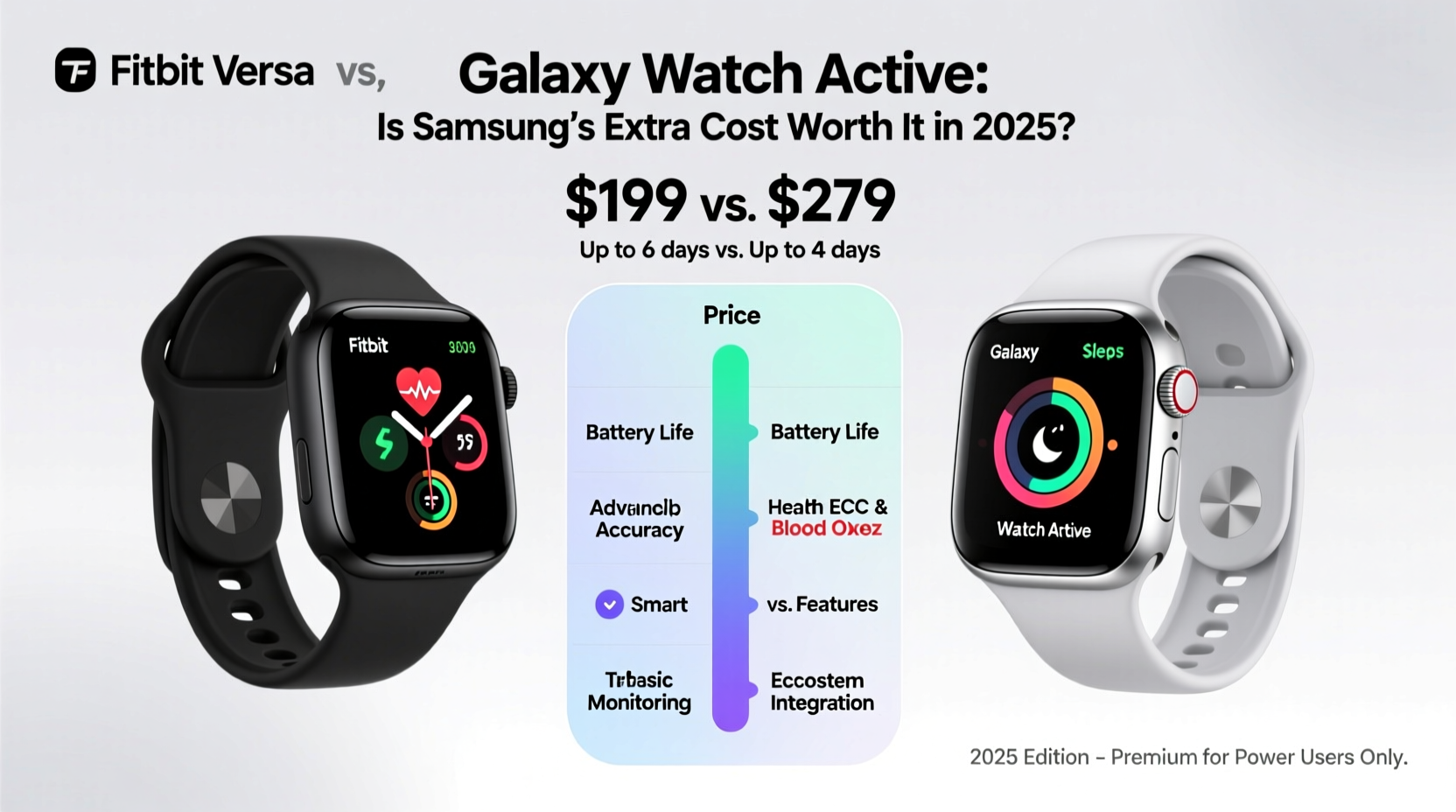
The physical experience of wearing a smartwatch matters more than many realize. Both the Fitbit Versa and Galaxy Watch Active prioritize lightweight comfort, but they take different design philosophies.
The Fitbit Versa leans into its fitness roots with a square face, rubberized band options, and a no-nonsense aesthetic. It’s durable, sweat-resistant, and built for gym-goers and runners. Its display is bright enough for outdoor visibility but lacks the vibrancy of AMOLED screens found on Samsung devices.
Samsung’s Galaxy Watch Active, by contrast, uses a sleek circular design with an aluminum or stainless steel case and a rotating touch bezel (on select models). This gives it a more premium feel, closer to traditional watches. The AMOLED display is sharper, more colorful, and easier to read in direct sunlight. In 2025, Samsung has also improved scratch resistance with enhanced Gorilla Glass variants.
Health and Fitness Tracking: Who Does It Better?
Fitness tracking is where Fitbit has historically held a strong advantage. The Versa line includes continuous heart rate monitoring, sleep staging, SpO2 tracking, and advanced workout recognition. Fitbit’s algorithm for sleep analysis remains one of the most accurate among consumer wearables, even outperforming some medical-grade devices in studies.
Samsung hasn’t lagged behind. The Galaxy Watch Active now includes ECG monitoring, blood pressure estimation (with calibration), and stress tracking via HRV analysis. Samsung Health has evolved significantly, offering guided breathing sessions and menstrual cycle tracking with predictive insights. However, third-party validation of Samsung’s health metrics still trails Fitbit’s well-documented accuracy.
For serious fitness users, Fitbit’s automatic exercise detection is more reliable. It can distinguish between a brisk walk and a run without user input, while Samsung sometimes requires manual tagging. On the flip side, Samsung integrates better with Google Fit and other Android health platforms, giving users more flexibility in data export.
“Fitbit’s strength lies in longitudinal health insights—trends over time. Samsung excels in real-time biometrics and immediate feedback.” — Dr. Lena Patel, Digital Health Researcher at Stanford Medicine
Performance and Software Experience
Under the hood, the gap widens. The Galaxy Watch Active runs on Wear OS Powered by Samsung, which in 2025 offers seamless integration with Android phones, especially Samsung Galaxy devices. Users benefit from faster app launches, smoother animations, and access to a broader app ecosystem including Spotify offline playback, Uber, and Google Wallet.
The Fitbit Versa uses Fitbit OS, which is stable but limited. App selection is sparse, and third-party developer support has waned since Google’s acquisition of Fitbit. While core functions like step counting and notifications work flawlessly, multitasking feels sluggish compared to Samsung’s offering.
Battery life tells a different story. The Fitbit Versa consistently delivers 5–6 days on a single charge—even with GPS use during workouts. The Galaxy Watch Active typically lasts 2–3 days under moderate use, dropping to a single day with heavy app usage or LTE connectivity.
| Feature | Fitbit Versa | Galaxy Watch Active |
|---|---|---|
| Operating System | Fitbit OS | Wear OS (Samsung) |
| App Ecosystem | Limited (50+ apps) | Extensive (500+ apps) |
| Battery Life | 5–6 days | 2–3 days |
| Charging Speed | 2 hours | 1.5 hours |
| GPS Included | Yes | Yes |
| LTE Option | No (as of 2025) | Yes (select models) |
Smart Features and Ecosystem Integration
If you own a Samsung phone, the Galaxy Watch Active becomes almost essential. Features like call and message replies, seamless Bluetooth audio switching, and SmartThings control are deeply integrated. You can unlock your phone with your watch, locate lost earbuds, and even use it as a remote for your TV—all without opening an app.
For iPhone users, the experience is more limited. While basic notifications and health syncing work, many advanced features are disabled. Fitbit, meanwhile, maintains strong cross-platform compatibility. Whether you’re on iOS or Android, you get full functionality—notifications, music control, and health dashboard access.
Voice assistant support also differs. Samsung offers Bixby, Google Assistant, and limited Siri-like shortcuts. Fitbit relies solely on Google Assistant (on Android) or basic voice-to-text (on iOS), which feels outdated in 2025.
Real-World Example: Sarah’s Morning Routine
Sarah, a marketing manager and triathlete, uses her Galaxy Watch Active daily. Her routine starts at 6:00 AM with a wake-up vibration and a glance at her sleep score. She checks her calendar, replies to urgent emails via voice dictation, then heads out for a 5-mile run. During her run, she starts a GPS workout, streams music from her watch to wireless earbuds, and receives a call from her coach—all without touching her phone.
Afterward, she reviews her heart rate zones and recovery time suggestions. Later, at work, she uses her watch to present slides via Bluetooth clicker mode. At home, she dims the lights using SmartThings. For Sarah, the premium cost is justified by the seamless integration across her digital life.
Compare this to James, who uses a Fitbit Versa. His mornings are simpler: he checks steps, gets a weather update, and tracks his yoga session. He appreciates the longer battery life and doesn’t miss app-heavy features. For him, the extra $80 on Samsung feels unnecessary.
Value Over Time: Longevity and Updates
One often overlooked factor is software support. In 2025, Samsung guarantees four years of major OS updates and five years of security patches for the Galaxy Watch Active. Fitbit, despite Google’s backing, only commits to two major updates post-launch, raising concerns about long-term viability.
Hardware durability also plays a role. Samsung uses higher-grade materials and offers IP68 + MIL-STD-810H ratings on newer models, meaning better resistance to dust, drops, and extreme temperatures. Fitbit devices are water-resistant up to 50 meters but lack military-grade ruggedness.
Checklist: Choosing the Right Watch for You
- ✅ Do you prioritize fitness accuracy and long battery life? → Consider Fitbit Versa
- ✅ Do you want a wide range of apps and smart features? → Lean toward Galaxy Watch Active
- ✅ Are you a Samsung phone user? → Strongly consider the Galaxy Watch for integration
- ✅ Do you wear your watch 24/7, including sleep tracking? → Evaluate comfort and skin sensitivity
- ✅ Is budget a primary concern? → Fitbit offers better value under $200
- ✅ Do you travel frequently and need LTE or offline music? → Galaxy Watch Active with LTE is ideal
Frequently Asked Questions
Is the Galaxy Watch Active compatible with iPhones?
Yes, but with limitations. You can receive notifications and track fitness, but features like app installations, voice replies, and ECG are restricted or unavailable on iOS.
Can the Fitbit Versa make payments?
Yes, most recent Fitbit Versa models support Fitbit Pay, allowing contactless payments at NFC terminals. However, it supports fewer banks than Samsung Pay or Google Wallet.
Which watch has better GPS accuracy?
Both are accurate in open environments. However, the Galaxy Watch Active tends to lock onto satellites faster and maintains signal better in urban canyons due to dual-band GNSS support in 2025 models.
Final Verdict: Is Samsung’s Extra Cost Worth It?
The answer depends on your priorities. If your main goals are step counting, sleep analysis, and basic notifications—and you dislike frequent charging—the Fitbit Versa remains an excellent, budget-friendly choice. It does the fundamentals well and continues to lead in passive health monitoring.
But if you want a true smartwatch experience—rich app support, superior display quality, LTE connectivity, and deep smartphone integration—the Galaxy Watch Active justifies its higher price tag. The ecosystem advantages, especially for Android users, create a more cohesive and powerful daily tool.
In 2025, Samsung isn’t just selling hardware; it’s selling convenience, continuity, and future-proofing. For tech-savvy users who rely on their wearables beyond fitness, that premium is worth every dollar.




 浙公网安备
33010002000092号
浙公网安备
33010002000092号 浙B2-20120091-4
Comments
No comments yet. Why don't you start the discussion?