
When it comes to outfitting a bed, many shoppers assume that purchasing individual sheets—especially just the fitted one—is the smarter financial move. After all, why pay for a flat sheet or pillowcases you don’t use? But is skipping the full sheet set actually saving money in the long run? The answer isn't as straightforward as it seems. While buying only a fitted sheet may appear cost-effective upfront, several hidden factors—durability, replacement frequency, laundering efficiency, and overall comfort—can shift the balance.
This article examines the real economics behind choosing between standalone fitted sheets and complete bed sheet sets. By analyzing pricing trends, usage patterns, and consumer behavior, we reveal whether the perceived savings are genuine—or if they come at a higher long-term cost.
The Anatomy of a Bed Sheet Set
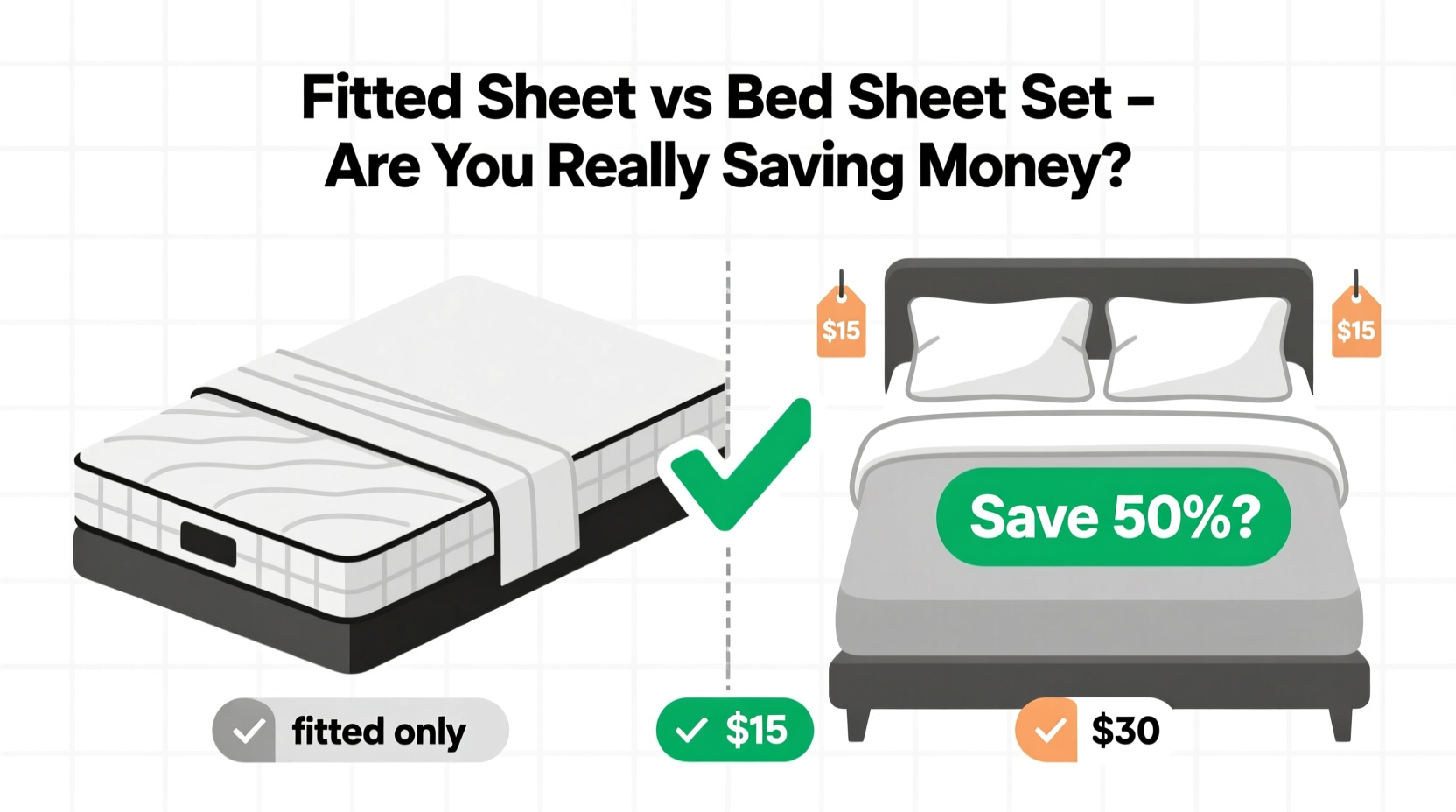
A standard bed sheet set typically includes three components:
- Fitted sheet – Designed with elastic corners to hug the mattress securely.
- Flat sheet – A rectangular top layer placed over the sleeper (less common in modern use).
- Pillowcases – Usually one or two, depending on bed size.
These are usually sold together in matching fabric, color, and thread count. Sets are available in various materials—cotton, linen, microfiber, sateen, and bamboo—and across multiple price points, from budget-friendly options under $20 to luxury versions exceeding $200.
In contrast, fitted sheets can be purchased individually, often ranging from $15 to $50 depending on quality and brand. At first glance, this seems like a way to save, especially if you don’t use flat sheets or already have extra pillowcases.
Upfront Cost Comparison: What’s the Real Difference?
To determine whether buying only a fitted sheet saves money, let’s compare actual retail prices across popular retailers (Amazon, Target, Bed Bath & Beyond) for mid-range 100% cotton percale sheets in queen size:
| Product | Average Price | Includes |
|---|---|---|
| Complete Sheet Set | $35 | Fitted sheet, flat sheet, 2 pillowcases |
| Standalone Fitted Sheet | $22 | Fitted sheet only |
| Standalone Flat Sheet | $18 | Flat sheet only |
| Single Pillowcase | $8 | One pillowcase |
At these prices, buying the full set saves approximately $7 compared to purchasing each piece separately. Even if you never use the flat sheet or already own pillowcases, you’re still getting those items at a discount built into the bundle pricing. Retailers use sheet sets as loss leaders or bundled offers to encourage larger purchases, which means the per-item cost is lower than when bought à la carte.
The Hidden Costs of Buying Only Fitted Sheets
Saving $13 by skipping the set might seem smart, but consider what happens over time:
- Replacement frequency: Fitted sheets wear out faster than flat sheets due to constant stretching and friction from the mattress. If you own only one, you’ll need to wash it weekly—sometimes more—with no backup. This accelerates wear, leading to loose corners, fading, or tears within 1–2 years.
- Laundering inefficiency: Without a matching flat sheet or pillowcase, you lose coordination in your laundry cycle. You might end up washing mismatched linens separately, increasing water, energy, and detergent use.
- Matching difficulties: Colors fade differently over time. If you buy a new fitted sheet months later, it may not match your existing pieces—even from the same brand—due to batch variations or discontinued lines.
Over three years, replacing a single fitted sheet twice while struggling to coordinate with older linens could cost more than investing in two full sets initially—one in use, one in rotation.
“Consumers often overlook the lifecycle cost of bedding. A $35 sheet set used in rotation lasts longer and performs better than two $22 fitted sheets bought separately.” — Lydia Chen, Home Textiles Analyst at Consumer Insight Group
Real-Life Scenario: Two Households, Two Approaches
Consider two individuals setting up their guest rooms:
Case Study: Emma vs. Jordan
Emma buys a complete queen sheet set for $38. She uses it every other week and rotates it with a second set she purchased during a sale. After two years, both sets remain in good condition, with minimal fading and intact elasticity.
Jordan opts to save money by buying only a fitted sheet for $24. He already has an old flat sheet he repurposes and uses spare pillowcases. Within 10 months, the elastic degrades, and the sheet slips off nightly. He replaces it with another standalone fitted sheet—but the new one is slightly darker. Guests notice the mismatch. By year two, he’s spent $48 and still lacks cohesion.
Result: Emma spent $76 upfront but enjoys seamless rotation and longevity. Jordan spent $48 but deals with inconvenience, aesthetic inconsistency, and potential future replacements.
When Buying Only a Fitted Sheet Makes Sense
There are legitimate situations where purchasing only a fitted sheet is practical:
- You practice minimalist bedding (no flat sheet).
- You have excess pillowcases and prefer mixing patterns.
- You're replacing a damaged fitted sheet and still have matching top pieces.
- You're customizing hybrid beds (e.g., different sizes or deep-pocket needs).
However, even in these cases, evaluate whether the short-term savings outweigh the long-term trade-offs in durability and uniformity.
Step-by-Step Guide to Smart Sheet Shopping
Follow this sequence to make financially sound decisions:
- Assess your bedding habits: Do you use a flat sheet? How often do you change linens?
- Check inventory: Count how many fitted sheets, flat sheets, and pillowcases you currently own.
- Determine needed quantities: Aim for at least two complete sets per bed for proper rotation.
- Compare bundle vs. individual pricing: Calculate the cost of buying each piece separately versus a set.
- Factor in material quality: Higher thread count or organic cotton may justify a higher initial cost due to longevity.
- Buy during sales: Major holidays (Memorial Day, Black Friday) often feature 30–50% discounts on sheet sets.
- Store properly: Keep spare sets in breathable cotton bags away from sunlight to prevent yellowing.
FAQ
Do I need a flat sheet if I’m trying to save money?
Not necessarily. Many people skip flat sheets entirely, using just a fitted sheet and duvet. However, flat sheets act as a protective barrier, reducing how often you need to wash heavier bedding. In that sense, they can extend the life of your comforter and reduce cleaning costs.
Can I mix and match brands between fitted sheets and sets?
Yes, but be cautious about sizing and depth. Mattress depths vary (standard vs. deep-pocket), so ensure compatibility. Also, colors may differ slightly between brands even if labeled the same shade.
How many fitted sheets should I own per bed?
At minimum, two—one in use and one clean backup. For households with frequent laundry delays or guests, three is ideal.
Final Verdict: Are You Really Saving Money?
The evidence suggests that buying only a fitted sheet rarely leads to meaningful long-term savings. While the sticker price is lower, the lack of rotation increases wear, creates laundry inefficiencies, and limits flexibility. Full sheet sets offer better value through bundling, coordinated design, and balanced usage.
True savings come not from cutting corners, but from strategic purchasing—buying high-quality sets during sales, rotating them regularly, and caring for them properly. In this model, the fitted sheet isn’t a standalone expense; it’s part of a system designed for durability and comfort.




 浙公网安备
33010002000092号
浙公网安备
33010002000092号 浙B2-20120091-4
Comments
No comments yet. Why don't you start the discussion?