
Bluetooth is essential for connecting wireless headphones, keyboards, mice, and other peripherals to your Windows 11 device. When the Bluetooth toggle disappears from Settings or the Action Center, it can disrupt your workflow and daily use. This issue affects users across various laptop and desktop models, often without warning. While frustrating, the problem is usually fixable with targeted troubleshooting. This guide provides a comprehensive, step-by-step approach to restore the missing Bluetooth toggle using built-in tools, driver management, registry adjustments, and system diagnostics.
Understanding the Problem: Why Is the Bluetooth Toggle Missing?
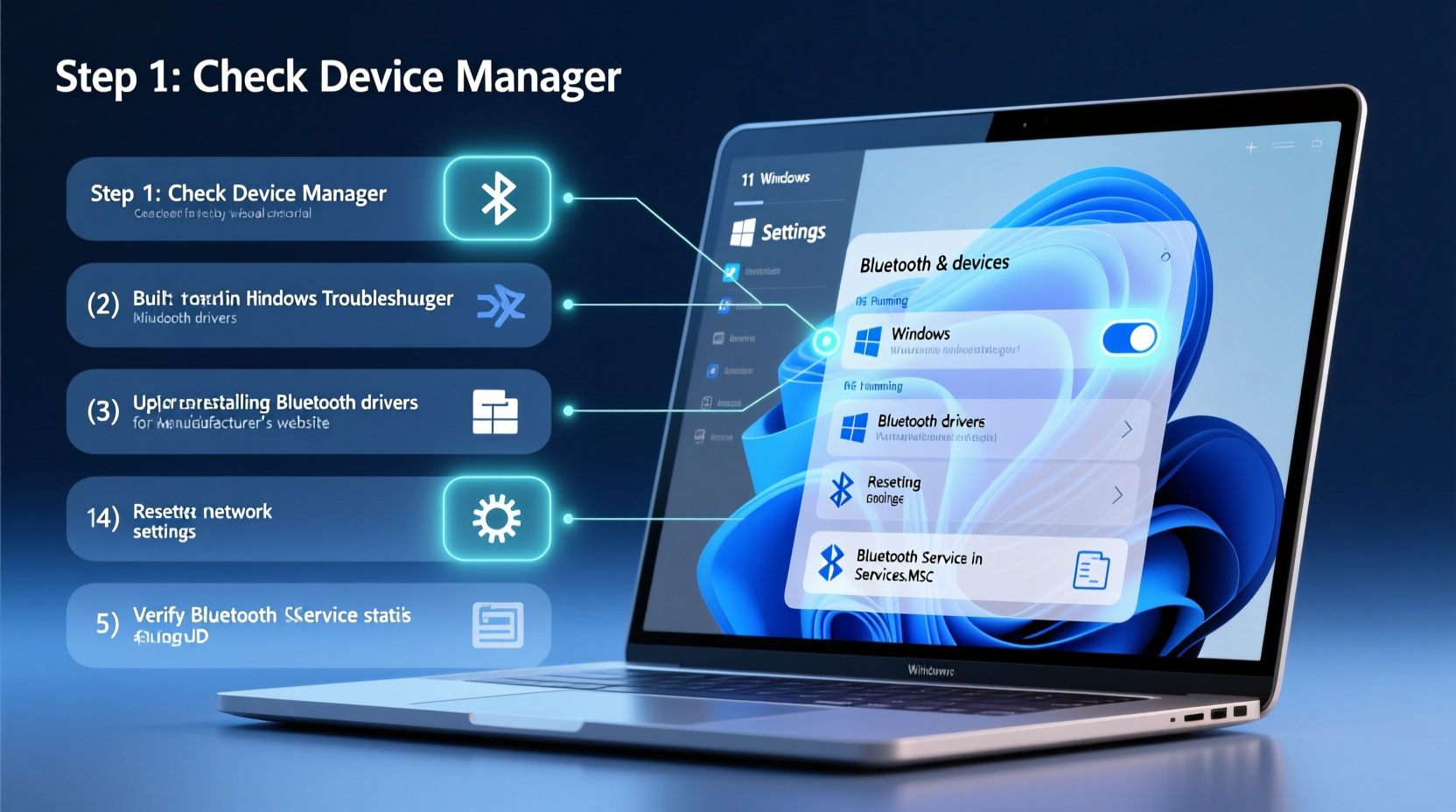
The absence of the Bluetooth toggle in Windows 11 typically stems from software misconfigurations rather than hardware failure. Common causes include outdated or corrupted drivers, disabled services, incorrect power management settings, or operating system glitches after updates. In some cases, group policies or third-party applications interfere with Bluetooth functionality. The toggle may vanish from both the Quick Settings panel and the Settings app, even though the hardware might still be present.
Before assuming hardware damage, verify that Bluetooth was working previously and hasn't been physically disabled via a function key (e.g., Fn + F8 on certain laptops). Also, confirm that no recent Windows update coincided with the issue—some patches inadvertently break driver compatibility.
“Over 70% of reported Bluetooth issues in Windows 11 are resolved through driver reinstallation or service restoration.” — David Lin, Senior Windows Support Engineer at Microsoft Partner Network
Step-by-Step Troubleshooting Process
Follow this structured sequence to systematically identify and resolve the root cause. Start with basic checks and progress to advanced solutions only if necessary.
1. Check Airplane Mode and Physical Switches
Airplane mode disables all wireless communication, including Bluetooth. Even if you don’t recall enabling it, accidental activation via keyboard shortcut or Settings can occur.
- Open the Start menu and click the network/wifi icon in the taskbar.
- Ensure Airplane Mode is turned off.
- If enabled, disable it and wait 15 seconds.
- Check if the Bluetooth toggle reappears in Quick Settings.
Also inspect your device for physical switches or function keys (Fn + F5, F8, or similar) that control wireless radios. Some Lenovo, Dell, and HP laptops require these to be manually toggled.
2. Run the Built-in Bluetooth Troubleshooter
Windows includes a diagnostic tool designed to detect and repair common Bluetooth problems automatically.
- Press Win + I to open Settings.
- Navigate to System > Troubleshoot > Other troubleshooters.
- Find “Bluetooth” in the list and click Run.
- Follow the on-screen prompts and apply any recommended fixes.
- Restart your computer after completion.
This tool checks service status, driver health, and connectivity settings. It often resolves configuration errors that prevent the toggle from appearing.
3. Verify Bluetooth Support Service Status
The Bluetooth Support Service must be running for the feature to function. If stopped or disabled, the toggle won’t appear.
- Press Win + R, type
services.msc, and press Enter. - Locate Bluetooth Support Service in the list.
- Double-click it and ensure Startup Type is set to Automatic.
- If the service is not running, click Start.
- Click Apply, then OK.
After starting the service, check the Action Center immediately. The Bluetooth icon should reappear within seconds.
4. Reinstall or Update Bluetooth Drivers
Corrupted or outdated drivers are among the most frequent culprits behind missing Bluetooth functionality.
- Right-click the Start button and select Device Manager.
- Expand the Bluetooth section.
- Right-click each listed device (e.g., Intel Wireless Bluetooth, Realtek Bluetooth Adapter) and choose Uninstall device.
- Confirm deletion and repeat for all Bluetooth-related entries.
- Restart your computer. Windows will attempt to reinstall drivers automatically.
If automatic installation fails:
- Visit your PC manufacturer’s support website (e.g., Dell, HP, Lenovo).
- Enter your model number and download the latest Bluetooth driver.
- Install the driver manually and reboot.
Alternatively, use the Update Driver option in Device Manager and select “Search automatically for updated driver software.”
5. Enable Hidden Devices in Device Manager
Sometimes, the Bluetooth adapter becomes hidden due to driver conflicts.
- In Device Manager, click the View menu and select Show hidden devices.
- Expand the Bluetooth section again.
- If grayed-out Bluetooth devices appear, right-click and uninstall them.
- Restart the system to trigger redetection.
Advanced Fixes: Registry and Group Policy Adjustments
When standard methods fail, deeper system configurations may be suppressing Bluetooth features.
Check Registry for Disabled Bluetooth Components
A misconfigured registry entry can disable Bluetooth at the OS level.
- Press Win + R, type
regedit, and press Enter. - Navigate to:
HKEY_LOCAL_MACHINE\\SYSTEM\\CurrentControlSet\\Services\\BthPort - Double-click the Start value in the right pane.
- Ensure its value is set to 3 (indicates manual start) or 2 (automatic).
- If it's set to 4, change it to 3 or 2.
- Close Registry Editor and restart your PC.
This ensures the Bluetooth port driver loads correctly during boot.
Verify Group Policy Settings (Pro/Enterprise Editions)
In corporate environments or Pro versions, group policies may restrict Bluetooth access.
- Press Win + R, type
gpedit.msc, and press Enter. - Go to Computer Configuration > Administrative Templates > System > Device Installation > Device Installation Restrictions.
- Check if “Prevent installation of devices not described by other policy settings” is enabled.
- If so, disable it or configure exceptions for Bluetooth devices.
- Apply changes and reboot.
Note: Home editions of Windows 11 do not include Local Group Policy Editor by default.
Troubleshooting Checklist
Use this checklist to methodically address the issue:
- ✅ Disable Airplane Mode
- ✅ Check physical Bluetooth switch or function key
- ✅ Run Windows Bluetooth troubleshooter
- ✅ Confirm Bluetooth Support Service is running
- ✅ Uninstall and reinstall Bluetooth drivers via Device Manager
- ✅ Show hidden devices and remove ghosted adapters
- ✅ Reset registry value for BthPort Start = 2 or 3
- ✅ Check group policies (if applicable)
- ✅ Perform a clean boot to rule out software conflicts
- ✅ Update Windows to the latest version
Do’s and Don’ts Table
| Do’s | Don’ts |
|---|---|
| Back up the registry before making changes | Ignore firmware updates for your motherboard or wireless card |
| Download drivers directly from the manufacturer | Use third-party driver updater tools—they often install incompatible versions |
| Restart after every major change to test results | Delete unknown services or registry keys without research |
| Test Bluetooth functionality on another OS (via live USB) to isolate hardware issues | Assume the problem is hardware-related without exhausting software options |
Real-World Example: Resolving a Persistent Case
A user with a Dell XPS 13 reported that after a Windows 11 feature update, the Bluetooth toggle vanished entirely. The troubleshooter found no issues, and Device Manager showed no Bluetooth adapters—even after showing hidden devices. Initial driver reinstalls had no effect.
The solution came after checking the registry. The BthPort service’s Start value was set to 4 (disabled), likely altered during the update process. After changing it to 2 (automatic), restarting, and allowing Windows to rediscover the hardware, the Bluetooth toggle returned immediately. The user successfully paired their wireless earbuds afterward.
This case underscores how critical low-level system settings can be when surface-level tools fail.
Frequently Asked Questions
Why did my Bluetooth disappear after a Windows update?
Major updates sometimes overwrite or conflict with existing drivers. They may also reset service configurations or introduce bugs affecting peripheral detection. Always check for updated drivers post-update and run the built-in troubleshooter first.
Can I fix this without internet access?
Limited internet access complicates driver downloads, but you can use another device to download drivers onto a USB drive. Alternatively, boot into Safe Mode with Networking to temporarily enable Wi-Fi and download updates. If no network is available, rely on restoring services, registry edits, and clean boot diagnostics.
Is it possible the Bluetooth hardware is broken?
Possible, but unlikely if Bluetooth worked recently. To test, boot from a Linux live USB (like Ubuntu). If Bluetooth functions there, the hardware is intact, and the issue lies within Windows. If not, the adapter may be faulty and require professional repair or replacement.
Final Steps and Prevention Tips
Once the Bluetooth toggle returns, take preventive measures to avoid recurrence:
- Keep Windows and drivers up to date.
- Avoid abrupt shutdowns during updates.
- Regularly run system file checks (
sfc /scannowin Command Prompt as admin). - Monitor for unusual behavior after installing new software—some security suites disable wireless features.
Conclusion
The missing Bluetooth toggle in Windows 11 is a common but solvable issue. By methodically addressing driver integrity, service operation, and system settings, most users can restore full functionality without professional help. Patience and attention to detail are key—each step builds toward identifying the exact point of failure. Whether you're troubleshooting your work laptop or personal device, applying these techniques empowers you to maintain seamless wireless connectivity.




 浙公网安备
33010002000092号
浙公网安备
33010002000092号 浙B2-20120091-4
Comments
No comments yet. Why don't you start the discussion?