
In an age where personal security extends beyond home and car to the bag on your shoulder, choosing the right handbag closure isn’t just a matter of aesthetics—it’s about protection. Whether you're navigating a crowded subway, attending a busy festival, or simply commuting through a bustling city, how your bag closes can determine whether your phone, wallet, or keys stay put. The two most common closures—flaps and zippers—each come with distinct advantages and vulnerabilities. But when it comes to actual safety, which one wins?
This isn’t about fashion trends or Instagram appeal. It’s about function, peace of mind, and minimizing risk in everyday scenarios. Let’s break down the real-world performance of flap and zipper handbags when it comes to keeping your belongings secure.
The Security Factor: What Makes a Closure Effective?
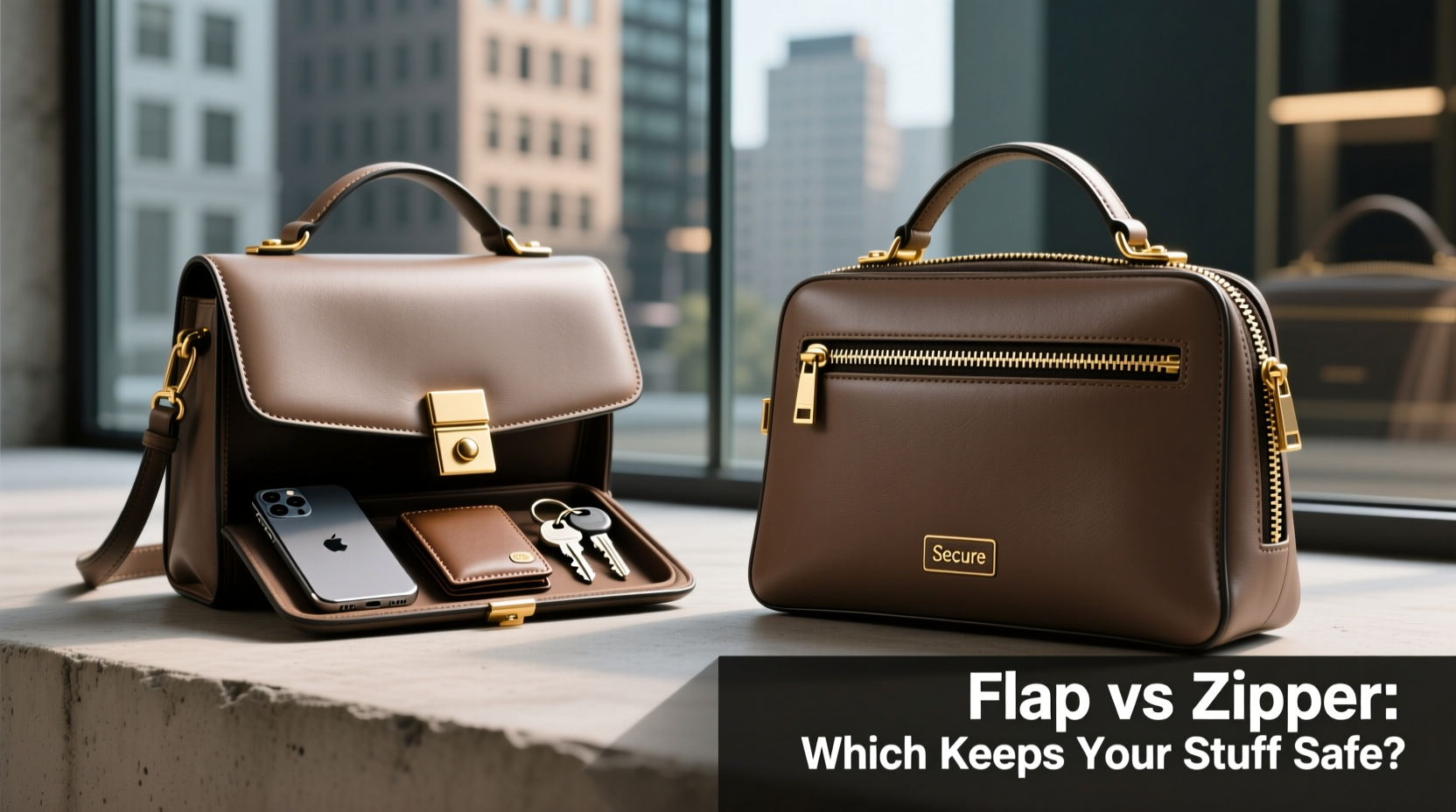
A secure handbag closure should do more than look good—it must resist casual access, deter pickpockets, and prevent accidental spills. Key factors include:
- Physical barrier strength: How difficult is it to open without intention?
- Speed of access: Can contents be grabbed quickly by someone else?
- User convenience: Is it easy for you to open but hard for others?
- Accidental opening risk: Does movement or jostling cause items to fall out?
Zippers create a continuous mechanical seal, while flaps rely on secondary fasteners like magnetic snaps, buttons, or turn locks. These design differences lead to significant variations in real-world security.
“From a theft-prevention standpoint, zippers offer a measurable advantage because they require deliberate action to open. Flaps, especially magnetic ones, can be lifted silently and swiftly.” — Lena Torres, Urban Safety Consultant
Zipper Handbags: Built-In Security, But With Trade-Offs
Zippers provide one of the most reliable physical barriers in handbag design. When fully closed, a zipper forms a near-seamless lock across the top of the bag, making it extremely difficult to access contents without notice.
The metal or plastic teeth interlock tightly, requiring a slider pull to disengage them. This creates both audible and tactile feedback if someone attempts to tamper with the bag. Even partially open zippers are harder to exploit than open flaps.
However, zippers aren’t foolproof. Some drawbacks include:
- Wear over time: Zippers can jam or break, especially on cheaper bags.
- Limited openness: Fully unzipping a bag in public may expose all contents at once.
- Style constraints: Zippered tops often dictate a more structured, utilitarian look.
Despite these limitations, zippers remain the preferred closure for travelers, commuters, and anyone prioritizing security over instant access.
Flap Handbags: Style First, Security Second
Flap closures dominate fashion-forward designs. Think of iconic silhouettes like the Chanel 2.55 or the Gucci Soho—elegant, timeless, and instantly recognizable. But elegance often comes at the cost of practical security.
Most flap bags use either magnetic snaps, push clasps, or turn locks. While turn locks (like the classic \"lock and key\" mechanism) offer decent resistance, magnetic snaps—which are far more common—are notoriously easy to bypass. A light tug or even strong jostling can pop them open.
In high-density environments—concerts, subways, tourist hotspots—this becomes a serious vulnerability. Pickpockets are trained to exploit quick-access points, and a magnetic flap is among the easiest targets.
“I’ve seen tourists lose wallets within minutes of stepping off a train simply because their flap bag wasn’t properly secured. The magnet gave a false sense of safety.” — Diego Mendez, Travel Safety Instructor
That said, not all flap bags are equally risky. A well-designed turn-lock flap provides significantly better protection than a magnetic version. And from a usability perspective, flaps allow quicker access to essentials like phones or transit cards.
Comparative Analysis: Flap vs Zipper Performance
| Closure Type | Anti-Theft Resistance | Accidental Opening Risk | User Convenience | Fashion Flexibility |
|---|---|---|---|---|
| Zipper | High – requires deliberate action | Low – stays closed under movement | Moderate – slower access | Moderate – often structured styles |
| Flap (Magnetic) | Low – easily lifted | High – prone to popping open | High – instant access | High – wide range of designs |
| Flap (Turn Lock) | Moderate – harder to open silently | Moderate – secure when locked | Moderate – requires unlocking | High – luxury aesthetic |
This table highlights a clear trade-off: zippers win on security and reliability, while flaps—especially magnetic ones—excel in accessibility and style but lag in protection.
Real-World Scenario: The Festival Test
Consider Maya, a 28-year-old event planner attending a three-day outdoor music festival. She brought two bags: a crossbody with a magnetic flap and a small backpack with a U-shaped zipper.
On day one, she used the flap bag for easy phone access. During a packed set, she felt a brush against her side. Later, she discovered her credit card was missing—slipped from an interior pocket when the flap popped open unnoticed.
Day two, she switched to the zippered backpack. Though slightly slower to open, she never lost anything. Even during mosh pits and crowd surges, the zipper remained intact. The extra two seconds it took to unzip were negligible compared to the peace of mind.
This scenario reflects a common pattern: convenience invites risk in dynamic environments. For situations involving crowds, travel, or unpredictable movement, zippers consistently outperform flaps in safeguarding contents.
How to Maximize Security Regardless of Closure Type
You don’t have to abandon your favorite flap bag entirely. With smart habits and minor modifications, you can improve its safety:
- Upgrade your closure: Replace weak magnetic snaps with stronger alternatives or add a small luggage lock to zipper pulls.
- Use internal organizers: Place valuables in zippered pouches inside your bag, even if the main compartment is a flap.
- Wear bags crossbody: Position the strap across your chest so the bag sits in front, making unauthorized access much harder.
- Stay aware of surroundings: In dense areas, keep your bag in sight and hands nearby.
- Limit exposed pockets: Avoid outer compartments with no closure—these are prime targets.
FAQ: Common Questions About Handbag Closures
Are zipper handbags less stylish than flap bags?
Not necessarily. Many designer brands now blend fashion with function, offering sleek zippered totes, satchels, and clutches. Brands like Aera, Bellroy, and Radley specialize in secure yet stylish zipper-centric designs that defy the “bulky” stereotype.
Can I make my flap bag more secure?
Yes. Consider sewing in a hidden snap, using a strap lock clip, or inserting a removable zipper insert. Some third-party accessories convert open-top bags into semi-enclosed ones with minimal effort.
Is there a closure type that’s best for travel?
Absolutely. For travel, zippered closures—especially wrap-around or locking zippers—are strongly recommended. They prevent both theft and accidental loss during transit. Look for bags with lockable zipper pulls compatible with TSA-approved luggage locks.
Final Verdict: Which Closure Keeps Your Stuff Actually Safe?
If security is your priority, the answer is clear: zipper closures offer superior protection. They physically seal the bag, resist tampering, and minimize the risk of accidental exposure. While flap bags—particularly those with turn locks—can be reasonably secure, magnetic flaps are inherently vulnerable in high-risk settings.
That doesn’t mean you must give up style. The modern market offers countless handbags that merge zipper functionality with elegant design. The key is shifting focus from perceived convenience to proven safety.
Your belongings—ID, phone, money—are too important to gamble on a flimsy snap. In a world where opportunistic theft is increasingly common, choosing a zippered handbag isn’t just practical. It’s responsible.




 浙公网安备
33010002000092号
浙公网安备
33010002000092号 浙B2-20120091-4
Comments
No comments yet. Why don't you start the discussion?