
When the power fails and temperatures drop, your ability to stay warm often comes down to a simple choice: what you wrap yourself in. Fleece blankets and wool throws are two of the most common options found in homes across cold climates. Both promise warmth, but they deliver it differently—especially under emergency conditions like prolonged power outages. Understanding their thermal properties, moisture management, durability, and overall performance can mean the difference between shivering through the night and maintaining comfort until the heat returns.
This comparison goes beyond softness or price. It’s about survival-level preparedness, energy efficiency, and material science. Whether you're stocking an emergency kit, upgrading your winter bedding, or simply trying to make smarter home choices, knowing how fleece and wool behave when the grid fails is essential knowledge.
How Heat Retention Works in Fabrics
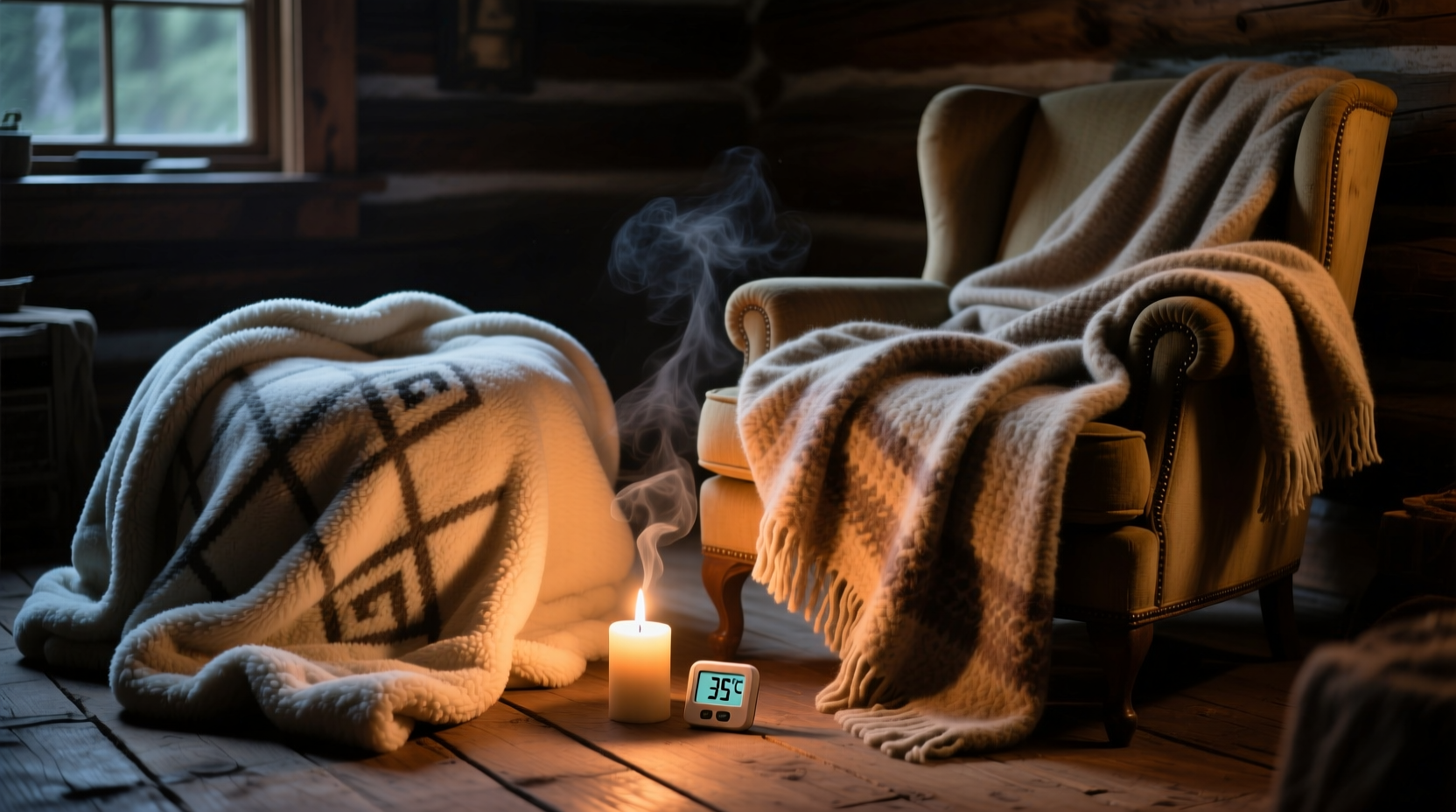
Thermal insulation in textiles depends on a fabric’s ability to trap air. Air is one of the best natural insulators, and materials that create tiny pockets of still air between fibers effectively slow down heat loss from the body. The structure, density, and fiber type all influence how well a textile performs this function.
Natural fibers like wool have crimped, scaly structures that naturally form air pockets. These micro-spaces retain body heat while allowing some breathability. Wool also has a unique ability to absorb moisture without feeling wet—a critical advantage when perspiration builds up during long periods of immobility.
Synthetic fleece, typically made from polyester, mimics wool’s loft through engineered loops and brushed surfaces. It traps air efficiently and dries quickly, but lacks the hygroscopic (moisture-wicking) properties of wool. Once damp—either from ambient humidity or sweat—fleece loses insulating effectiveness faster than wool.
“Wool’s combination of natural crimp, moisture absorption, and flame resistance makes it unmatched for passive heating in off-grid scenarios.” — Dr. Lena Patel, Textile Scientist at Northern Climate Research Institute
Material Breakdown: Fleece vs Wool
To understand which material performs better during blackouts, it helps to examine their core characteristics side by side.
| Property | Fleece (Polyester) | Wool (Natural Fiber) |
|---|---|---|
| Heat Retention (Dry) | High – excellent initial warmth due to trapped air | Very High – superior long-term retention even in cold environments |
| Maintains Warmth When Damp | Poor – loses insulating value when moist | Excellent – retains up to 80% warmth when wet |
| Breathability | Moderate – can cause overheating and sweat buildup | High – wicks moisture away and regulates temperature |
| Durability | Good – resists pilling with care, but degrades over time | Excellent – resilient fibers withstand repeated use and compression |
| Flame Resistance | Poor – melts and ignites easily near open flames | Good – self-extinguishing, high ignition point |
| Eco-Impact | Low – derived from petroleum, non-biodegradable | Higher sustainability – biodegradable, renewable source |
The data shows that while fleece offers strong initial warmth, wool excels in sustained performance—particularly in unpredictable, off-grid conditions where moisture, fluctuating body temperature, and safety concerns come into play.
Real-World Performance During Power Outages
A winter storm in Vermont offers a telling example. In January 2023, a rural household lost power for 68 hours during sub-zero temperatures. The family used both fleece blankets and wool throws while huddled in a single room with limited wood stove access.
Initially, the fleece blankets felt warmer—soft, lightweight, and instantly cozy. But after several hours of continuous use, occupants began to feel clammy. Condensation formed beneath the blankets, especially around shoulders and feet. As body moisture accumulated, the fleece clung and chilled, requiring frequent replacement or airing out.
In contrast, the wool throws, though slightly heavier and less plush to the touch, maintained consistent warmth. Even when occupants moved less and generated less body heat, the wool continued to insulate. One family member noted, “I could fall asleep wrapped in the wool and wake up still warm, even if I’d been still for hours.”
This case illustrates a key principle: short-term comfort doesn’t always translate to long-term resilience. During multi-day outages, where drying options are limited and movement is restricted, wool’s ability to manage moisture and retain heat becomes decisive.
Step-by-Step Guide to Maximizing Warmth Without Power
Staying warm during a power outage requires more than just choosing the right blanket. Here’s a practical sequence to optimize your thermal protection using either fleece or wool:
- Insulate your environment first: Close off unused rooms, seal drafts with towels, and use thermal curtains. Reducing heat loss from your space amplifies the effectiveness of any blanket.
- Layer clothing before adding blankets: Wear moisture-wicking base layers, insulating mid-layers (like wool sweaters), and a wind-resistant outer shell. This reduces reliance on external covers alone.
- Use a sleeping bag or quilt as a base: These compressible insulators add another layer of trapped air beneath you, preventing ground chill—a major source of heat loss.
- Choose your top blanket based on duration: For short outages (under 12 hours), fleece may suffice. For longer durations, prioritize wool or wool-blend throws.
- Rotate and air out blankets if possible: If you have multiple covers, swap them periodically to let damp ones dry near a safe heat source (e.g., candle lantern or stove).
- Combine materials strategically: Place a wool throw over a fleece layer to benefit from immediate warmth and sustained insulation.
- Hydrate and eat high-energy foods: Your body generates heat through metabolism. Consuming calories helps maintain core temperature, making any blanket more effective.
This approach turns passive covering into active thermal management, leveraging material strengths where they matter most.
Common Misconceptions About Warmth and Blankets
Many people assume that thicker or softer blankets are inherently warmer. However, thickness doesn’t always correlate with insulation. A thin merino wool throw can outperform a bulky fleece due to its superior fiber structure and moisture handling.
Another myth is that all wool is itchy and uncomfortable. Modern wool processing produces ultra-fine merino and lambswool throws that are soft against the skin and suitable for sensitive individuals. Conversely, some fleece products contain microplastics that shed during use and washing, posing environmental and potential health concerns.
There’s also a false belief that synthetic materials are always cheaper in the long run. While fleece blankets often cost less upfront, their lifespan is shorter. Wool throws, though pricier initially, can last decades with proper care, offering better value over time—especially in emergency contexts where reliability matters.
Checklist: Choosing the Right Blanket for Emergency Use
- ✅ Prioritize wool for outages longer than 12 hours
- ✅ Avoid 100% acrylic or thin polar fleece for sustained use
- ✅ Look for tightly woven, medium-weight wool throws (4–6 lbs)
- ✅ Check for natural fire resistance—important near candles or stoves
- ✅ Store blankets in breathable cotton bags, not plastic
- ✅ Test warmth in advance—try sleeping under each during a cool night
- ✅ Keep at least one wool throw in your emergency supply kit
Frequently Asked Questions
Can I wash wool throws regularly without damaging them?
Yes, but with care. Most modern wool throws can be hand-washed or machine-washed on a gentle, cold cycle using wool-specific detergent. Always lay flat to dry to prevent shrinking or distortion. Avoid wringing or hanging wet wool, as this stretches the fibers.
Is there a hybrid option that combines fleece and wool?
Yes. Some manufacturers produce blends (e.g., 70% wool, 30% polyester) that aim to balance cost, weight, and performance. While these don’t match pure wool in moisture management, they offer improved durability and reduced price. For emergency kits, a high-wool-content blend is a reasonable compromise.
Does color affect heat retention?
Not significantly in indoor settings. Darker colors absorb more radiant heat in sunlight, but during a power outage indoors, radiant gain is minimal. Insulation quality, fiber type, and fit matter far more than color.
Expert Recommendations for Emergency Preparedness
Emergency management professionals consistently rank natural insulators like wool above synthetics for disaster readiness. The Federal Emergency Management Agency (FEMA) recommends including “warm clothing and blankets” in emergency kits, with emphasis on materials that perform reliably in wet or cold conditions.
According to Dr. Alan Torres, a disaster response coordinator with over 20 years of field experience:
“In flood zones or winter storms, we see people underestimate the danger of damp insulation. A soaked fleece blanket is worse than no blanket—it draws heat away. Wool, even when damp, continues to protect. That’s why our teams carry wool liners in every cold-weather deployment.” — Dr. Alan Torres, FEMA Regional Response Unit
This insight underscores a crucial point: in emergencies, performance under stress—not comfort in ideal conditions—determines effectiveness.
Final Verdict: Which Is Better for Power Outages?
For brief outages—say, a few hours on a mild winter night—fleece blankets are perfectly adequate. They’re affordable, soft, and provide rapid warmth. However, when conditions become extreme, prolonged, or unpredictable, wool throws clearly outperform.
Wool retains heat better over time, manages moisture effectively, resists fire, and maintains structural integrity after years of storage. Its ability to keep you warm even when wet gives it a life-saving edge in crisis situations. Fleece, while useful, should be viewed as a supplemental layer rather than a primary defense against cold.
If you're building an emergency preparedness kit, invest in at least one high-quality wool throw. Pair it with other insulating layers, and store it properly. For everyday use, keep fleece on hand for quick comfort—but don’t rely on it when everything else fails.




 浙公网安备
33010002000092号
浙公网安备
33010002000092号 浙B2-20120091-4
Comments
No comments yet. Why don't you start the discussion?