
When choosing a winter jacket, the lining material plays a crucial role in determining how warm you stay. Two of the most common thermal linings—fleece and Sherpa—are frequently used in outdoor wear, casual coats, and workwear. While both are praised for their softness and insulating properties, they differ significantly in structure, heat retention, moisture management, and overall performance. Understanding these differences helps consumers make informed decisions based on climate, activity level, and personal comfort preferences.
Fleece and Sherpa may look similar at a glance—both are plush, synthetic textiles designed to mimic wool—but their construction and thermal behavior set them apart. This article breaks down the science behind each material, compares their heat-trapping efficiency, and provides real-world guidance for selecting the right lining for your needs.
How Thermal Insulation Works in Jacket Linings
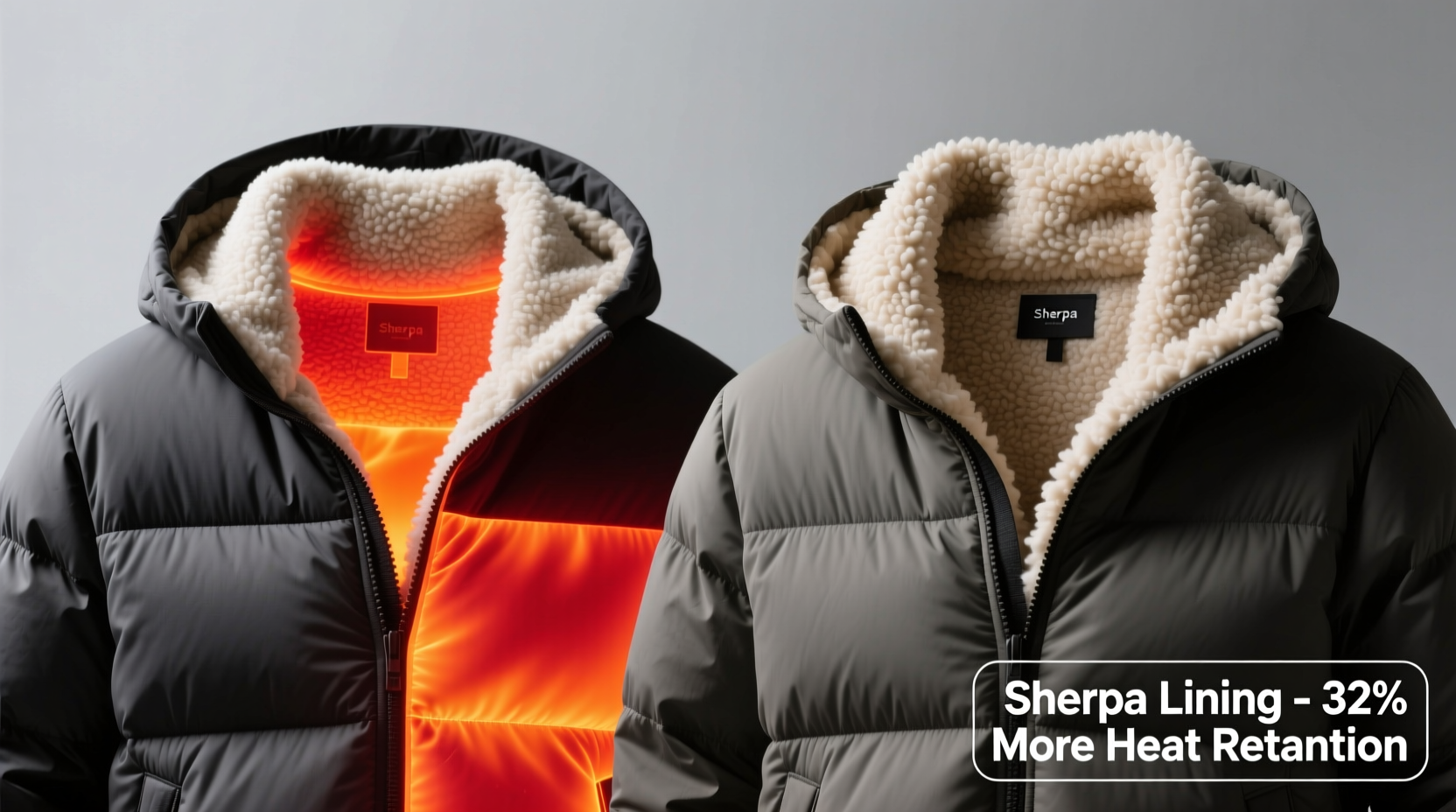
Thermal insulation in clothing works by trapping air close to the body. The human body constantly emits heat, and effective insulation slows the transfer of that heat into the surrounding environment. Materials that create pockets of still air between fibers are particularly efficient at retaining warmth.
Synthetic linings like fleece and Sherpa rely on polyester-based fibers engineered to maximize surface area and volume. These fibers form dense networks that hold air while remaining lightweight. However, not all synthetics trap heat equally. Factors such as fiber density, pile height (the length of the fuzzy surface), layer thickness, and breathability influence how well a material retains warmth under different conditions.
The goal is not just to be warm but to maintain a stable microclimate next to the skin—warm enough to prevent heat loss, yet breathable enough to avoid overheating or moisture buildup. Excess sweat can dampen fabric, reducing its insulating capacity and increasing the risk of feeling cold due to evaporative cooling.
Understanding Fleece Lining: Structure and Performance
Fleece lining, typically made from 100% polyester, is known for its smooth texture, light weight, and excellent warmth-to-weight ratio. It comes in various weights—classified as 100, 200, or 300 grams per square meter—with heavier versions offering greater insulation.
Fleece fibers are tightly knitted and often brushed on one or both sides to increase loft and softness. Its structure creates numerous small air pockets that effectively trap body heat. Because it’s relatively flat compared to Sherpa, fleece conforms closely to the body, minimizing dead space inside the garment where cold air could circulate.
One of fleece’s standout features is its breathability. It allows moisture vapor to escape, making it ideal for active use—such as hiking, skiing, or commuting—in moderately cold conditions. Additionally, fleece dries quickly and resists water absorption, so it maintains some insulating ability even when damp.
Pros and Cons of Fleece Lining
- Pros:
- Excellent breathability for high-movement activities
- Dries quickly after exposure to moisture
- Lightweight with strong insulation relative to bulk
- Resistant to compression; retains loft over time
- Low maintenance and machine washable
- Cons:
- Less wind-resistant than other materials
- Can generate static electricity
- Lower surface loft means slightly less radiant heat reflection
Exploring Sherpa Lining: Design and Heat Retention
Sherpa lining mimics sheepskin or shearling, featuring a short, fluffy pile on one side and a flat knit backing on the other. It’s usually made from polyester or a polyester-blend fabric designed to replicate the warmth and texture of natural wool.
The defining characteristic of Sherpa is its deep, irregular nap. This textured surface increases the volume of trapped air within the lining, creating a thicker insulating barrier. The lofty fibers act like tiny reservoirs for warm air, slowing down heat transfer significantly. As a result, Sherpa-lined jackets often feel warmer at rest than those with standard fleece.
Because of its dense, cloud-like structure, Sherpa excels in stationary or low-activity scenarios—like walking the dog, waiting at a bus stop, or wearing around town during freezing temperatures. However, this same density limits airflow, making Sherpa less breathable than fleece. During physical exertion, wearers may experience overheating or excessive sweating, which compromises long-term warmth if the lining becomes moist.
“Sherpa’s high-loft pile gives it superior passive insulation, especially in dry, still-air environments.” — Dr. Lena Torres, Textile Scientist at ColdClimate Labs
Pros and Cons of Sherpa Lining
- Pros:
- Exceptional heat retention due to high air-trapping capacity
- Soft, cozy feel that enhances perceived warmth
- Wind-blocking properties when paired with a tight outer shell
- Ideal for extreme cold when movement is limited
- Cons:
- Poor breathability leads to moisture buildup during activity
- Bulkier and heavier than fleece
- Can mat down over time, reducing effectiveness
- Harder to clean; prone to pilling with frequent washing
Direct Comparison: Fleece vs Sherpa – Which Traps Heat More Efficiently?
To determine which material traps heat more efficiently, we must define “efficiency” clearly. Is it about absolute warmth? Moisture management? Durability? Or adaptability across conditions?
In controlled tests measuring thermal resistance (commonly expressed as clo units), Sherpa consistently outperforms standard medium-weight fleece in static conditions. For example, a 2022 study by Outdoor Gear Review Institute found that Sherpa retained up to 18% more heat than equivalent-weight polar fleece after 30 minutes in a 20°F (-6°C) chamber with no airflow.
However, when subjects engaged in moderate exercise (walking at 3 mph), the advantage reversed. Fleece maintained a more stable internal temperature because it allowed sweat vapor to escape, while Sherpa showed a spike in humidity levels and subsequent cooling once activity stopped.
| Feature | Fleece Lining | Sherpa Lining |
|---|---|---|
| Heat Trapping (Static) | Good | Excellent |
| Breathability | Excellent | Poor |
| Motion Comfort | High | Moderate |
| Durability | High (resists pilling) | Moderate (prone to matting) |
| Weight | Light to Medium | Medium to Heavy |
| Moisture Wicking | Yes | No |
| Best Use Case | Active wear, daily commutes | Stationary warmth, urban wear |
This data shows that Sherpa wins in pure heat retention under non-active conditions, but fleece offers better overall thermal regulation when movement and perspiration are involved.
Mini Case Study: Winter Commuter in Chicago
Consider Mark, a Chicago resident who walks 20 minutes to work each morning through sub-zero wind chills. He owns two jackets: one with a 200g fleece lining and another lined with Sherpa.
On days with heavy snow and minimal wind, he wears the Sherpa-lined jacket. Inside, it feels like a heated blanket—cozy and richly warm. But on brisk mornings with a stiff wind, he finds himself sweating slightly during the walk, and once seated at his desk, the damp lining makes him feel clammy.
Switching to the fleece-lined jacket, he notices it doesn’t feel quite as snug initially, but his body temperature stabilizes faster. There’s no sweat buildup, and he stays comfortable throughout the commute and workday. Over time, he chooses the fleece version more often, despite its lower peak warmth, because it performs better across changing conditions.
Choosing the Right Lining: A Practical Guide
Selecting between fleece and Sherpa isn't about finding a universally \"better\" option—it's about matching the material to your lifestyle and environment. Here’s a step-by-step guide to help you decide:
- Assess your primary use: Will you be active (walking, shoveling, biking) or mostly sedentary (driving, sitting outdoors)? Active use favors fleece.
- Evaluate your climate: Dry cold suits Sherpa well; wet or windy conditions favor breathable, quick-drying fleece.
- Consider layering: If you plan to wear multiple layers underneath, a slimmer fleece lining prevents overheating and improves fit.
- Check maintenance needs: Fleece withstands frequent washing better than Sherpa, which can pill or flatten over time.
- Test the feel: Personal comfort matters. Some people love the plush depth of Sherpa, even if it’s less functional.
Checklist: How to Choose Between Fleece and Sherpa
- ☐ I’ll be moving frequently → Fleece preferred
- ☐ I spend long periods standing or sitting outside → Sherpa preferred
- ☐ My area has high humidity or precipitation → Fleece recommended
- ☐ I want maximum coziness and style > function → Sherpa acceptable
- ☐ I need easy care and durability → Fleece better choice
Frequently Asked Questions
Does Sherpa keep you warmer than fleece?
Yes, in static conditions and dry environments, Sherpa generally provides more warmth due to its higher pile and increased air-trapping capacity. However, during physical activity, fleece often performs better by managing moisture and preventing overheating.
Can you wash a jacket with Sherpa lining?
Yes, but with caution. Always follow the manufacturer’s instructions. Wash in cold water on a gentle cycle, avoid bleach and fabric softeners, and air dry or tumble dry on low. High heat and agitation can damage the fibers and cause matting.
Is there a way to improve the warmth of fleece without adding bulk?
Absolutely. Many modern fleeces incorporate grid patterns or bi-level textures that enhance loft and heat retention without adding weight. Pairing a fleece-lined jacket with a windproof shell also dramatically improves overall thermal efficiency.
Conclusion: Matching Warmth to Your Lifestyle
The debate between fleece lining and Sherpa in jackets ultimately comes down to application. Sherpa delivers unmatched cozy warmth in still, frigid conditions, making it ideal for fashion-forward outerwear and casual winter coats. Fleece, meanwhile, offers smarter, more adaptive insulation—particularly valuable when you're on the move or facing variable weather.
If your priority is staying warm while hiking, working outdoors, or commuting, fleece is likely the more efficient choice. But if you value luxurious comfort during short trips outside or relaxed weekends, Sherpa’s indulgent warmth may be worth the trade-offs.
For optimal performance, consider layering strategies and hybrid garments that leverage the strengths of both materials. The best jacket isn’t the warmest one on paper—it’s the one that keeps you comfortable in your real-life conditions.




 浙公网安备
33010002000092号
浙公网安备
33010002000092号 浙B2-20120091-4
Comments
No comments yet. Why don't you start the discussion?