
When the temperature drops, choosing the right outerwear becomes essential. Two popular options—fleece and denim jackets—are staples in many wardrobes. But when it comes to staying warm, they function very differently. While denim offers durability and a classic style, fleece is engineered for heat retention. Understanding the science behind how each fabric traps heat, manages moisture, and performs in various conditions can help you make an informed decision based on your climate, activity level, and personal comfort.
How Warmth Works: The Science Behind Insulation
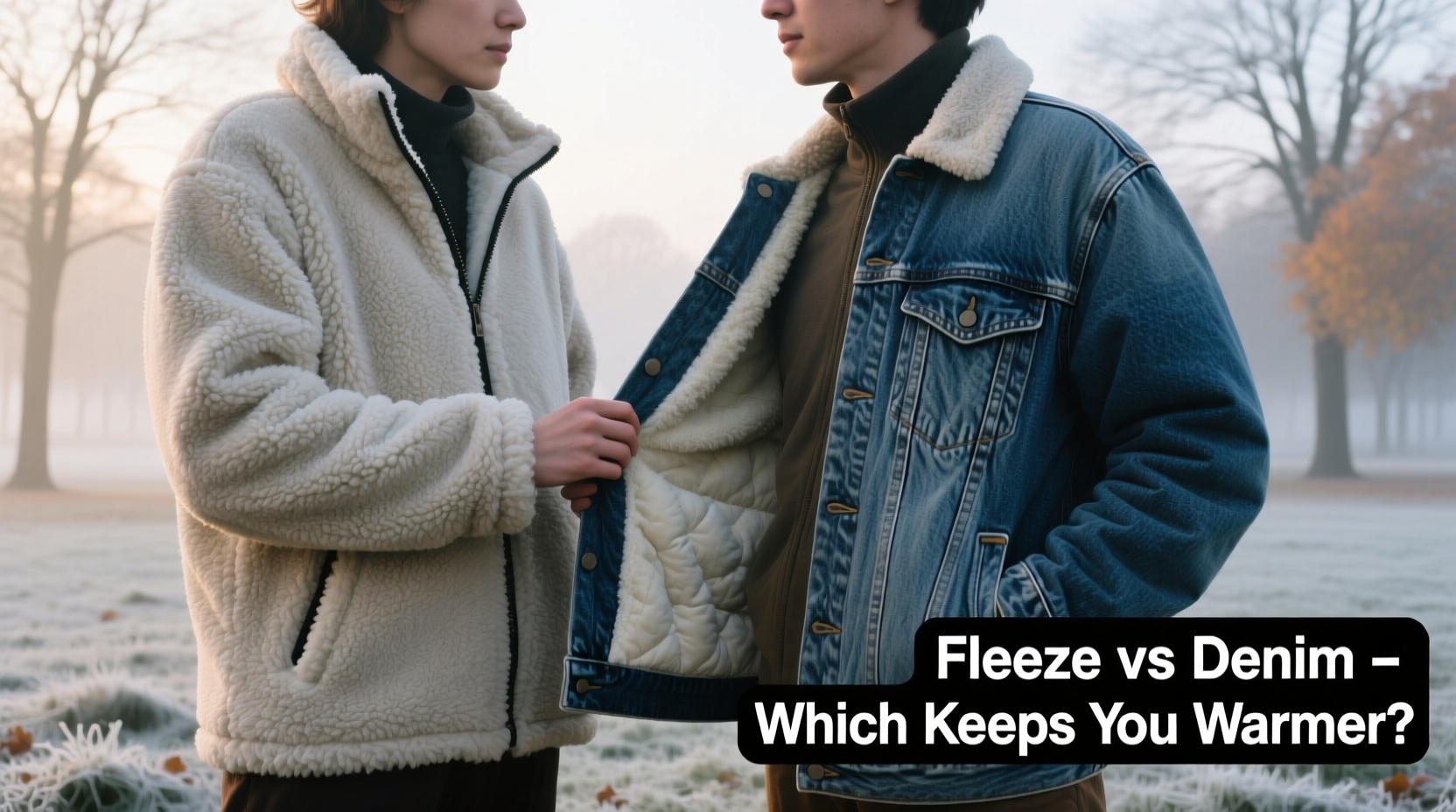
Warmth in clothing isn’t just about thickness—it’s about how well a material traps body heat and resists cold air infiltration. The key principle is **thermal insulation**, which relies on still air pockets. Materials that create more of these micro-pockets retain heat better because air is a poor conductor of heat.
Fleece, typically made from polyester, is designed specifically to maximize these air pockets. Its brushed, napped surface creates a dense network of fibers that trap warm air close to the skin. This structure makes fleece highly effective at retaining body heat even when not layered heavily.
Denim, on the other hand, is woven tightly from cotton (or cotton blends), offering minimal inherent insulation. While heavy denim can block wind to some extent, cotton absorbs moisture easily and conducts heat away from the body—especially in damp or windy conditions. Without additional lining or layering, denim provides limited thermal protection.
“Fleece outperforms most natural fabrics in warmth-to-weight ratio. It’s not just warm—it’s engineered to be so.” — Dr. Lena Reyes, Textile Scientist, University of Oregon
Material Comparison: Fleece vs Denim
To understand the practical differences, let’s break down the core properties of each fabric:
| Property | Fleece Jacket | Denim Jacket |
|---|---|---|
| Primary Material | Polyester (synthetic) | Cotton (natural) |
| Inherent Insulation | High – traps air efficiently | Low – minimal air retention |
| Moisture Management | Wicks sweat, dries quickly | Absorbs moisture, slow drying |
| Breathability | Moderate to high | Moderate (depends on weight) |
| Wind Resistance | Low to moderate (unless windproof variant) | Moderate (tight weave helps) |
| Weight | Light to medium | Medium to heavy |
| Durability | Good, but pills over time | Excellent, especially raw denim |
| Warmth in Wet Conditions | Holds warmth even when damp | Loses insulating ability when wet |
This table highlights a fundamental truth: fleece is built for warmth, while denim is built for structure and style. That doesn’t mean denim can’t be part of a warm outfit—but on its own, it falls short in cold environments.
Real-World Performance: When Each Jacket Shines
The best choice depends on context—your environment, activity, and personal tolerance for cold.
Fleece excels in:
- Active outdoor pursuits like hiking, walking, or commuting in chilly weather.
- Layering under a shell jacket for skiing or snowshoeing.
- Damp climates where moisture resistance matters.
- Situations requiring lightweight warmth without bulk.
Denim works best in:
- Mild fall or spring temperatures (45–60°F / 7–15°C).
- Urban settings where style is as important as function.
- Layered outfits—e.g., over a hoodie or sweater in winter.
- Dry, calm conditions with little wind or precipitation.
Mini Case Study: Commuting in Seattle Winter
Alice, a daily bike commuter in Seattle, used to rely on her vintage denim trucker jacket during the damp winter months. Despite its rugged look, she found herself shivering by mid-morning, especially when rain set in. The cotton absorbed ambient moisture, losing its ability to insulate. After switching to a mid-weight fleece jacket with a quarter-zip design, she noticed immediate improvement. Even in drizzle, the fleece retained warmth and dried quickly indoors. She now layers it under a waterproof shell on rainy days—a combination far superior to denim alone.
Layering Strategies for Maximum Warmth
Neither jacket needs to work solo. Smart layering can enhance performance, especially in variable conditions.
Here’s a step-by-step guide to building a warm, adaptable system:
- Base Layer: Start with a moisture-wicking top (merino wool or synthetic) to keep sweat away from skin.
- Mid-Layer (Insulation): This is where your jacket plays a role. Fleece naturally fits here. Denim, if worn, should be supplemented with a thermal mid-layer underneath.
- Outer Layer (Shell): Add a windproof or waterproof jacket if needed. Fleece pairs perfectly with hardshells. Denim does not offer wind resistance and benefits greatly from a protective outer.
- Adjust as Needed: Remove or add layers based on activity level and temperature changes throughout the day.
For example, wearing a fleece jacket as a mid-layer under a nylon windbreaker creates a highly effective cold-weather combo. In contrast, wearing a denim jacket as the outer layer in freezing rain leaves you exposed—cotton loses up to 97% of its insulating value when wet.
Common Misconceptions About Warmth and Fabric
Many people assume heavier garments are warmer. While weight can contribute, it’s not the whole story. A thick denim jacket may feel substantial, but without trapped air or moisture management, it won’t keep you warm in real cold.
Another myth: “Cotton is fine if it’s thick.” This is dangerously misleading. In outdoor safety training, the phrase “cotton kills” is often used because wet cotton accelerates heat loss through conduction and evaporation. Fleece avoids this risk entirely.
Finally, style shouldn’t override function in extreme conditions. A denim jacket might look great on a coffee run, but for extended exposure to cold, fleece is objectively better suited.
Frequently Asked Questions
Can a lined denim jacket be as warm as fleece?
Some denim jackets come with flannel, sherpa, or quilted linings that improve warmth significantly. A well-lined denim jacket can approach the warmth of light fleece, but it still tends to be less breathable and slower to dry if damp. For active use, fleece remains superior.
Is fleece warmer than wool?
Compared to lightweight wool, yes—fleece generally provides more insulation per ounce. However, heavyweight merino or lambswool can rival or exceed mid-weight fleece in warmth while offering better odor resistance and natural fiber benefits.
Do I need to replace my denim jacket with fleece?
No. Denim has enduring value for casual wear, fashion, and mild weather. The goal isn’t replacement, but understanding limitations. Use denim when warmth isn’t critical, and turn to fleece when staying warm is the priority.
Final Tips for Choosing the Right Jacket
Use this checklist to decide which jacket suits your needs:
- ✅ Will you be active (walking, biking, working outdoors)? → Choose fleece.
- ✅ Is the weather damp, windy, or below 50°F (10°C)? → Fleece is safer.
- ✅ Do you prioritize style in low-effort settings (cafes, errands)? → Denim works.
- ✅ Are you layering over sweaters or hoodies? → Denim can serve as a durable outer.
- ✅ Do you need quick-drying, easy-care fabric? → Fleece wins again.
Conclusion: Prioritize Warmth When It Matters
Fleece and denim serve different purposes. If your primary concern is warmth—especially in cold, damp, or active conditions—fleece is the clear winner. It’s scientifically designed to retain heat, manage moisture, and perform reliably across seasons. Denim, while iconic and durable, lacks the functional insulation needed for serious cold protection unless heavily modified or layered.
That said, there’s room in every wardrobe for both. Use denim for style and mild weather. Reach for fleece when the wind picks up and your body starts to cool. Understanding the strengths and limits of each fabric empowers you to dress smarter, stay comfortable, and avoid the chill that comes from relying on fashion over function.




 浙公网安备
33010002000092号
浙公网安备
33010002000092号 浙B2-20120091-4
Comments
No comments yet. Why don't you start the discussion?