
In recent years, travelers have grown increasingly familiar with the frustration of checking flight status only to see “cancelled” in bold red letters. Whether you're at the airport or monitoring your trip from home, discovering that your flight has been scrubbed can be stressful—especially when it seems like half the departures on a given day are affected. So what’s really behind this surge in flight cancellations? The answer isn’t singular. Instead, it's a complex web of operational, environmental, and systemic challenges converging across the global aviation industry.
Understanding why so many flights are being cancelled today requires looking beyond isolated incidents. It involves examining staffing shortages, air traffic control limitations, weather patterns, aircraft availability, and broader industry pressures. This article breaks down the primary causes, offers actionable advice for affected passengers, and provides insight into how airlines manage large-scale disruptions.
Staffing Shortages: The Hidden Backbone of Flight Operations
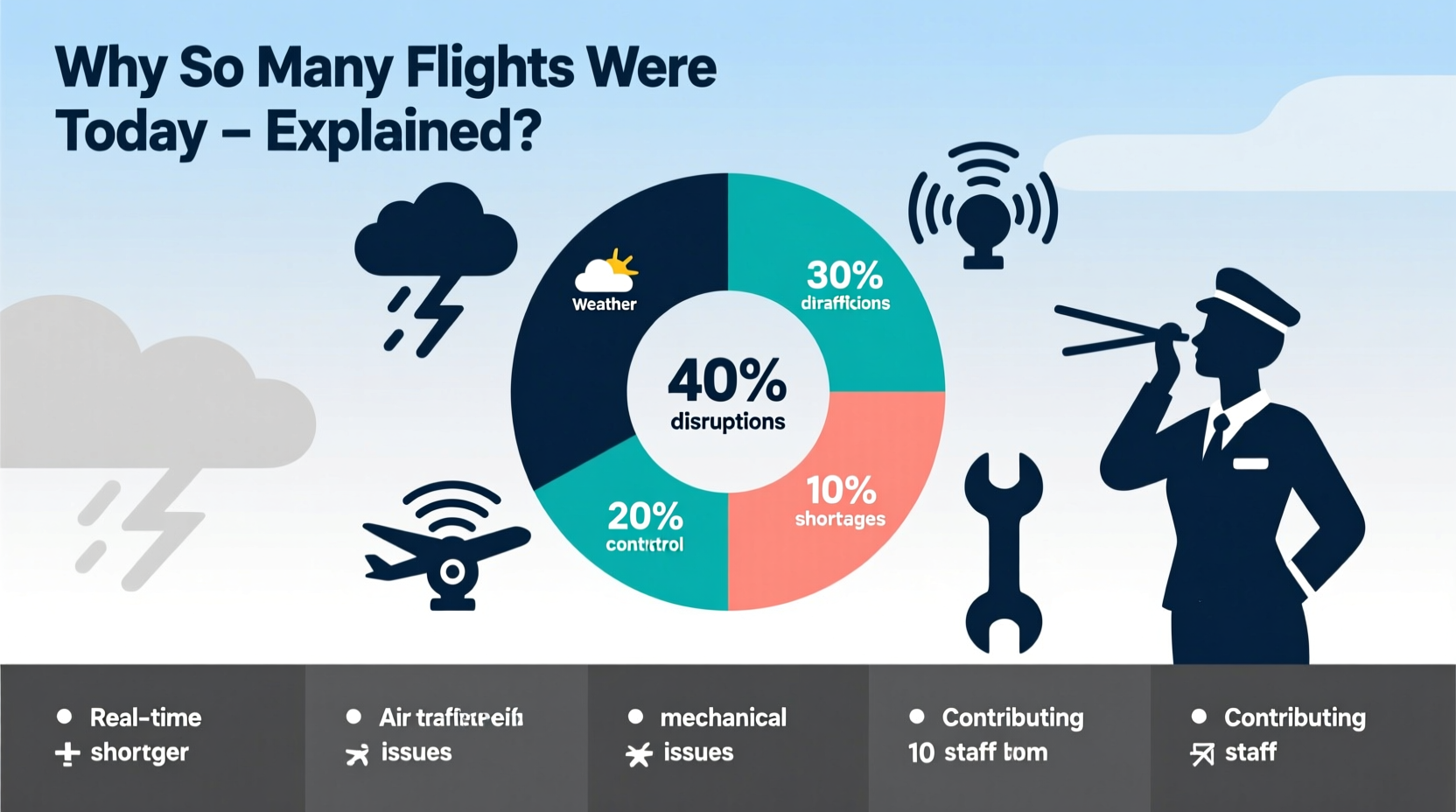
One of the most significant contributors to flight cancellations is the ongoing shortage of essential aviation personnel. Pilots, flight attendants, ground crew, and air traffic controllers are all critical links in the chain that keeps flights operating. In the wake of the pandemic, airlines downsized rapidly, laying off or furloughing thousands. Now, as demand rebounds, the industry struggles to rehire and retrain fast enough.
The Federal Aviation Administration (FAA) estimates that U.S. airlines will need over 100,000 new pilots by 2035 just to keep pace with growth and retirements. Training and certification take time, creating a bottleneck. Meanwhile, regional carriers—who operate smaller feeder flights—have been hit hardest, leading to cascading cancellations across major airline networks.
Weather and Environmental Factors
No matter how well-staffed an airline may be, nature remains an uncontrollable variable. Severe weather—such as thunderstorms, snowstorms, hurricanes, and high winds—can shut down airports or delay de-icing operations, leading to ripple effects throughout the system.
For example, a single winter storm in the Northeast can delay hundreds of flights at New York’s JFK, Newark, and LaGuardia, disrupting connections nationwide. Summer brings its own challenges: heatwaves can make runways unsafe for takeoff in extreme temperatures, while wildfires in the West can reduce visibility and compromise air quality.
Climate change is amplifying these disruptions. According to NOAA, extreme weather events have increased in frequency and intensity over the past decade, contributing to more frequent and widespread flight cancellations.
Air Traffic Control and Airport Congestion
Even when planes are ready and crews are available, air traffic congestion can bring operations to a standstill. Major hubs like Atlanta, Chicago O’Hare, and Dallas/Fort Worth handle over 1,500 flights per day. When one flight is delayed, it can create a domino effect, especially if the aircraft or crew are scheduled for multiple legs.
Additionally, aging air traffic control infrastructure in some countries limits capacity. In the U.S., despite modernization efforts under NextGen, delays persist during peak hours. Europe faces similar challenges, with fragmented airspace management across national boundaries slowing coordination.
| Factor | Impact on Flights | Typical Duration |
|---|---|---|
| Pilot/crew shortage | Preemptive cancellations | Ongoing, weeks to months |
| Severe weather | Immediate cancellations/delays | Hours to days |
| Airport congestion | Ground delays, missed connections | Same-day ripple effects |
| Aircraft maintenance | Sudden cancellations | Variable, often 1–3 days |
| Air traffic control strikes | Widespread EU disruptions | 1–5 days |
Operational Challenges and Aircraft Availability
Maintenance issues and fleet readiness also play a major role. Airlines operate on tight schedules, often giving planes only 30–60 minutes between flights. Any mechanical issue—even minor—can pull an aircraft out of service. With limited spare planes, replacements aren’t always available.
Supply chain problems have worsened this issue. During the pandemic, manufacturers slowed production. Now, parts like engines, avionics, and landing gear components face long lead times. Boeing, for instance, reported delivery delays of up to six months for certain 737 MAX models in 2023 due to supply constraints.
“We’re seeing more schedule adjustments not because of demand drops, but because airlines simply don’t have enough planes or crews to fly every route they planned.” — Sarah Thompson, Aviation Analyst at Route Economics Group
Real-World Example: A Day of Chaos at Denver International
In December 2023, a winter storm blanketed Denver with over 18 inches of snow. While the weather itself was severe, the real crisis unfolded in the aftermath. De-icing equipment was overwhelmed, ground crews were short-staffed, and air traffic into the mountain region slowed to a crawl.
United Airlines, which uses Denver as a major hub, cancelled over 60% of its flights that day. Passengers reported waiting hours for rebooking, only to find no available seats for two days. The disruption spread eastward as connecting passengers missed flights from Chicago to Boston.
This case illustrates how one factor—weather—can expose deeper vulnerabilities in staffing, infrastructure, and contingency planning. Even after the snow stopped, the system took nearly 72 hours to recover.
What You Can Do: A Traveler’s Action Plan
While you can't control the weather or pilot hiring rates, you can take steps to minimize the impact of flight cancellations on your travel plans.
Step-by-Step Guide: Responding to a Cancelled Flight
- Check your airline’s app immediately. Many carriers automatically rebook passengers before sending alerts.
- Review your options. Look at alternative departure times, nearby airports, or even different airlines if codeshares are available.
- Contact customer service—but strategically. Use chatbots or Twitter/X for faster responses than call centers.
- Know your rights. In the U.S., airlines aren’t required to compensate for weather-related cancellations, but they must refund your ticket if you cancel. In the EU, Regulation EC 261/2004 entitles you to compensation for cancellations with less than 14 days’ notice, unless due to extraordinary circumstances.
- Consider travel insurance. Policies with trip interruption coverage can reimburse hotel stays, meals, and alternate transportation.
Checklist: Before Booking Your Next Flight
- ✅ Choose non-stop flights when possible to reduce connection risks
- ✅ Book early morning departures—they’re less likely to be affected by prior-day delays
- ✅ Avoid flying during peak holiday periods unless necessary
- ✅ Sign up for flight alert services (e.g., FlightAware, Google Flights)
- ✅ Purchase refundable fares or travel insurance for flexibility
Frequently Asked Questions
Do airlines have to pay me if my flight is cancelled?
It depends on the reason and location. In the U.S., airlines must provide a full refund if they cancel your flight, but not additional compensation. In the European Union, passengers may be eligible for up to €600 in compensation unless the cancellation was due to \"extraordinary circumstances\" like severe weather or political unrest.
Can I get a hotel if my flight is cancelled overnight?
Yes—if the cancellation is within the airline’s control (e.g., staffing or maintenance). Most major carriers will provide meals and accommodations for significant delays. However, if the cause is weather or ATC issues, assistance is discretionary.
How far in advance do airlines decide to cancel flights?
Some cancellations are issued days ahead, especially if weather is forecasted or crew scheduling fails. Others happen last-minute due to mechanical issues. Airlines aim to notify passengers at least two hours before departure, but this isn’t guaranteed.
Conclusion: Staying Ahead in an Unpredictable System
Flight cancellations today are not the result of a single flaw but rather a convergence of structural pressures on an industry still recovering from unprecedented disruption. From staffing gaps to climate volatility, the challenges are systemic—and unlikely to disappear overnight.
As a traveler, your best defense is preparation. Build flexibility into your itinerary, stay informed through real-time tracking tools, and understand your rights. The skies may be turbulent, but informed decisions can keep your journey on course.




 浙公网安备
33010002000092号
浙公网安备
33010002000092号 浙B2-20120091-4
Comments
No comments yet. Why don't you start the discussion?