
Displaying preserved butterflies is an art form that blends natural beauty with thoughtful presentation. Whether you're a collector, educator, or nature enthusiast, choosing the right display method—floating frame or shadow box—is critical to both aesthetic appeal and specimen safety. Each option offers distinct advantages in depth, protection, and visual impact. Understanding their differences allows you to make an informed decision that honors the delicate craftsmanship of nature while safeguarding your investment.
Understanding Display Options: Floating Frames vs. Shadow Boxes
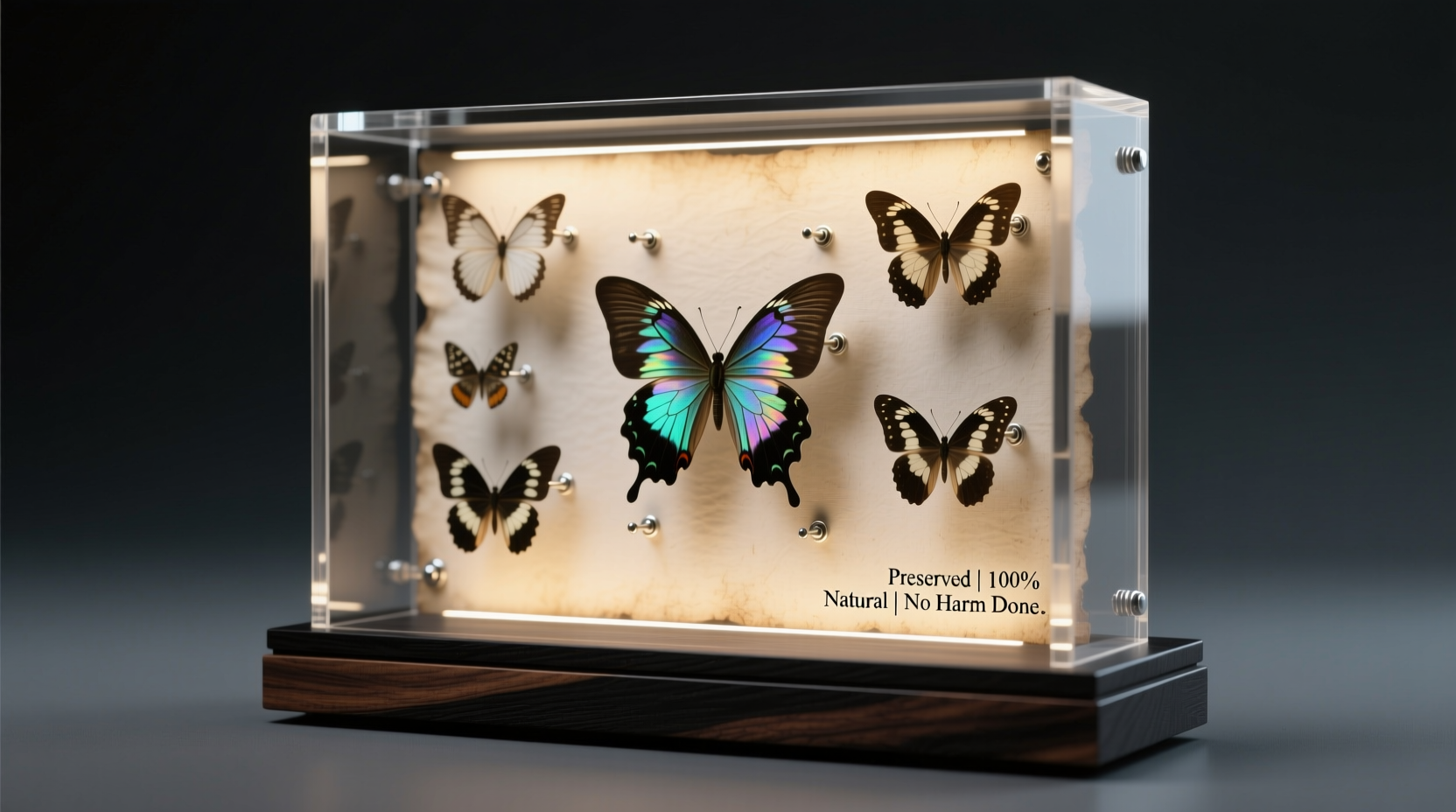
A floating frame creates the illusion that the butterfly is suspended within the glass, often mounted on a neutral background with minimal depth. The term “floating” refers not to three-dimensional space but to the visual effect of levitation achieved through careful placement and spacing behind glass. These frames are typically shallow, ranging from 1/4 to 1/2 inch in depth, making them ideal for flat, two-dimensional presentations.
In contrast, a shadow box has significantly more internal depth—usually between 1 to 3 inches—allowing for layered arrangements and dimensional mounting. This added space enables you to position the butterfly slightly above the backing, cast subtle shadows, and even include contextual elements like botanical specimens or informational plaques.
The choice between these formats hinges on how you value presentation versus preservation. While floating frames emphasize elegance and minimalism, shadow boxes offer greater flexibility and physical protection due to their enclosed structure.
Visual Impact: Which Style Enhances Aesthetic Appeal?
When it comes to visual presentation, personal preference plays a role—but so does context. Floating frames deliver a modern, gallery-like appearance. Their sleek profile suits contemporary interiors and works well when displaying a single specimen with symmetrical precision. Because there’s little depth, attention remains focused entirely on the butterfly itself, free from distractions.
Shadow boxes, by comparison, create drama through dimensionality. Light interacts differently within the deeper cavity, producing soft gradients and natural-looking shadows that mimic how butterflies appear in flight. This dynamic interplay enhances realism, especially when combined with angled lighting. For collectors showcasing rare species or thematic groupings (e.g., regional butterflies), shadow boxes provide a storytelling advantage.
Consider the setting where the piece will be displayed. In formal spaces such as offices or galleries, floating frames convey sophistication. In homes, museums, or educational displays, shadow boxes often feel more immersive and engaging.
“The depth of a shadow box doesn’t just protect the specimen—it adds narrative depth, turning a simple insect into a story about habitat, movement, and fragility.” — Dr. Lena Torres, Entomology Curator at the National Natural History Collection
Preservation and Long-Term Safety
No matter how beautiful the display, if it compromises the integrity of the butterfly, its value diminishes over time. Preservation depends on several factors: exposure to light, humidity, dust, and physical disturbance.
Floating frames, being shallower, often press the specimen closer to the glass. If improperly mounted, this contact can lead to wing damage or pigment transfer. Additionally, many floating frames lack full sealing mechanisms, leaving specimens vulnerable to airborne contaminants and pests like dermestid beetles.
Shadow boxes, particularly those designed for conservation framing, are typically fully enclosed with tight-fitting backs and spacers that keep the butterfly from touching the glass. They also allow for the inclusion of acid-free matting, silica gel packets (to control moisture), and barrier films that block UV radiation. When constructed with museum-grade materials, shadow boxes meet professional archival standards.
For long-term storage, especially in environments with fluctuating temperatures or high foot traffic, shadow boxes offer superior protection. Their depth reduces vibration transmission and minimizes risk during handling.
Do’s and Don’ts of Butterfly Framing
| Action | Recommended | Not Recommended |
|---|---|---|
| Use UV-filtering glass | ✅ Yes – prevents color degradation | ❌ Regular glass – accelerates fading |
| Mount with insect pins or archival glue | ✅ Acid-free methods only | ❌ Tape or rubber cement – damages wings |
| Include desiccant packs | ✅ In humid climates | ❌ Never expose to dampness |
| Hang in direct sunlight | ❌ Avoid entirely | ✅ Place in indirect, ambient light |
| Clean interior before sealing | ✅ Essential for pest prevention | ❌ Leaving debris invites mold and insects |
Step-by-Step Guide to Safe Mounting and Sealing
Regardless of frame type, proper preparation ensures longevity. Follow this sequence to mount and seal your butterfly safely:
- Prepare the Specimen: Ensure the butterfly is fully dried and relaxed (if previously stored). Use a spreading board to gently position wings symmetrically.
- Select Acid-Free Materials: Use pH-neutral foam core or cardstock as backing. Avoid colored papers or adhesives containing lignin.
- Secure the Butterfly: Pin through the thorax using fine entomological pins, or apply micro-dots of conservation-grade adhesive under the body only.
- Add Desiccant (Optional): Place a small breathable packet of silica gel in the corner if humidity exceeds 50%.
- Assemble the Frame: Insert the mounted specimen into the frame with a spacer to prevent glass contact. Seal all edges with acid-free tape.
- Final Inspection: Check for gaps, dust, or misalignment. Once closed, avoid opening unless absolutely necessary.
Real Example: Museum-Quality Home Display
Sarah Kim, a biology teacher in Portland, wanted to display a Morpho peleides she collected during a field trip in Costa Rica. Initially drawn to a minimalist floating frame for her living room, she consulted a local conservator who advised against it due to Portland’s coastal humidity.
Instead, Sarah chose a 2-inch deep shadow box with UV-filtering acrylic front, sealed edges, and a hidden silica gel compartment. She mounted the butterfly atop a hand-painted watercolor sky background, adding a brass plaque with scientific details. Five years later, the colors remain vibrant, and no signs of deterioration have appeared—even after seasonal changes and occasional cleaning.
This case illustrates how prioritizing preservation doesn’t sacrifice aesthetics; in fact, it enhances long-term enjoyment.
FAQ: Common Questions About Butterfly Displays
Can I use a regular picture frame for a butterfly?
Standard picture frames lack proper depth, sealing, and protective glazing. Without spacers, the butterfly may touch the glass, causing damage. Only use frames specifically modified or purchased for entomological display.
How do I prevent bugs from eating my mounted butterfly?
Prioritize cleanliness and sealing. Before assembly, freeze the specimen for 48 hours to kill any eggs or larvae. Use tightly closed frames with no gaps, and consider including a naphthalene-free pest deterrent strip designed for collections.
Are shadow boxes heavier than floating frames?
Yes, due to deeper construction and sturdier materials, shadow boxes are generally heavier. Ensure wall anchors are used when hanging, especially for larger sizes (over 12x16 inches).
Conclusion: Balancing Beauty and Protection
The decision between a floating frame and a shadow box ultimately reflects your priorities: refined simplicity or comprehensive preservation. While floating frames offer a clean, modern look, they fall short in environmental protection and long-term durability. Shadow boxes, though bulkier, provide superior safeguards against light, moisture, and pests—all without sacrificing visual richness.
For serious collectors, educators, or anyone committed to honoring the ephemeral beauty of butterflies, the shadow box emerges as the optimal choice. It balances aesthetic depth with functional resilience, ensuring that these fragile wonders endure for decades.




 浙公网安备
33010002000092号
浙公网安备
33010002000092号 浙B2-20120091-4
Comments
No comments yet. Why don't you start the discussion?