
When designing or renovating a kitchen, bathroom, or living space, one of the most impactful decisions involves storage solutions. Floating shelves and traditional cabinets represent two distinct approaches—one rooted in minimalism and openness, the other in practicality and concealment. While floating shelves are often praised for their sleek, modern aesthetic, traditional cabinets dominate when it comes to high-capacity storage and durability. The choice between them isn't just about appearance; it's about how you live, what you store, and how much maintenance you're willing to commit to.
This comparison dives deep into functionality, design flexibility, cost, installation complexity, and long-term usability to help you decide which option aligns best with your lifestyle and interior goals.
The Aesthetic Divide: Modern Minimalism vs Timeless Utility
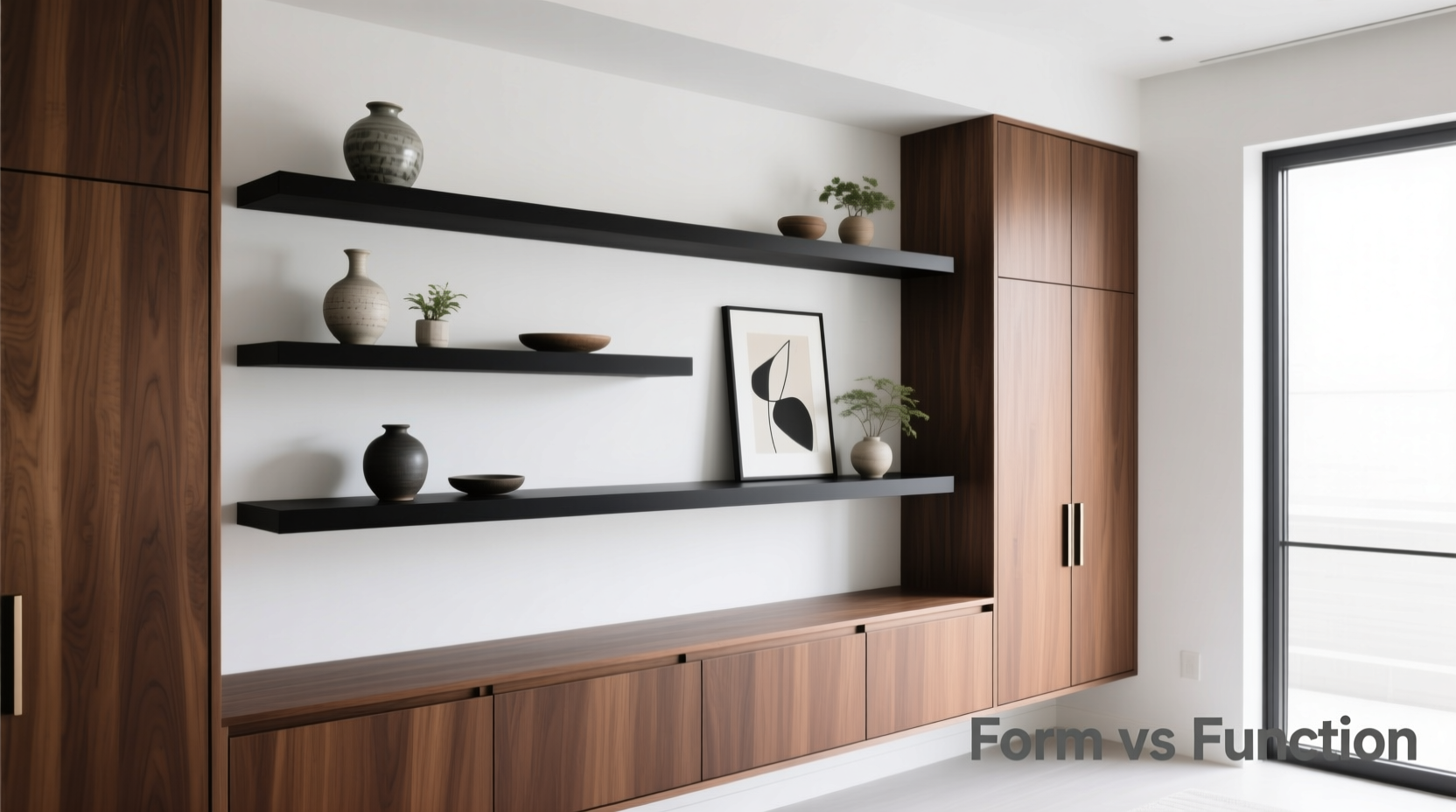
Floating shelves have become synonymous with contemporary interior design. Their clean lines, lack of visible supports, and open structure create a sense of airiness that’s particularly effective in small spaces. By eliminating bulky frames and doors, they allow rooms to feel larger and more connected. This makes them ideal for minimalist, Scandinavian, industrial, and urban lofts where visual lightness is prioritized.
In contrast, traditional cabinets offer a more enclosed, structured presence. Whether made from wood, laminate, or MDF, they provide a grounded, finished look. With options for detailed molding, glass inserts, and custom finishes, cabinets can range from country rustic to ultra-luxurious. They’ve long been the standard in kitchens and bathrooms because they deliver both form and function—offering concealed storage while anchoring the room’s design.
The core tension lies here: floating shelves elevate aesthetics but expose clutter; cabinets hide mess but can visually weigh down a space. Designers increasingly blend both—using cabinets below for heavy items and shelves above for display—to balance beauty and utility.
“Floating shelves work beautifully in curated environments, but they demand discipline. If you can’t keep them tidy, they’ll undermine the entire room.” — Lena Park, Interior Architect at Studio Forma
Functionality Showdown: Storage, Strength, and Daily Use
When evaluating storage solutions, longevity and daily convenience matter as much as looks. Let’s break down key functional differences:
Weight Capacity and Durability
Floating shelves, despite their sturdy appearances, have strict weight limitations. Most can support 15–50 pounds depending on materials (wood, metal, glass) and wall anchors used. Overloading leads to sagging or detachment—especially dangerous in homes with children or pets. Heavy appliances, cookware, or large book collections are not suitable for floating shelves unless specially engineered.
Traditional cabinets, built with reinforced frames and fixed to wall studs or floor bases, handle significantly heavier loads. Upper cabinets typically support 60–100 pounds per shelf, while base cabinets can bear several hundred pounds. This makes them indispensable in kitchens and utility areas where pots, pans, dishes, and cleaning supplies accumulate.
Accessibility and Ergonomics
Floating shelves offer instant access—no opening doors or reaching behind objects. This benefits frequently used items like coffee mugs, spices, or decorative books. However, their open nature also means dust accumulation and exposure to spills, requiring regular wiping.
Cabinets protect contents from dust, grease, and humidity, especially important in kitchens and bathrooms. But they require more motion to access—opening doors, pulling out drawers—and may hide items if not organized well. Poor lighting inside cabinets can further hinder usability.
Cost and Installation: DIY-Friendly or Contractor Required?
Budget and skill level play a major role in choosing between these systems.
| Feature | Floating Shelves | Traditional Cabinets |
|---|---|---|
| Average Cost (per linear foot) | $20–$100 | $150–$500+ |
| Installation Time | 1–3 hours per shelf | 1–3 days for full set |
| DIY Feasibility | High (with proper tools) | Low to moderate |
| Required Tools | Level, drill, stud finder, anchors | Multiple power tools, alignment jigs |
| Wall Requirements | Studs or masonry recommended | Structural framing often needed |
Floating shelves are generally cheaper and easier to install, making them popular among renters and DIYers. Kits are widely available, and many can be mounted without permanent damage—though true \"floating\" strength requires hitting wall studs or using toggle bolts in drywall.
Traditional cabinets involve higher material costs, professional measurements, and often require carpentry expertise. Custom cabinetry can run into thousands of dollars, though stock and semi-custom options offer middle-ground pricing. Remodeling with cabinets may also necessitate countertop installation, plumbing adjustments, or electrical rerouting.
Real-Life Application: A Kitchen Renovation Case Study
Sarah and James, a couple in Portland, Oregon, renovated their 1970s galley kitchen last year. With only 80 square feet of space, they wanted to avoid a cramped feeling but still needed ample storage.
Their designer proposed a hybrid model: lower traditional cabinets in matte white finish for pantry items, appliances, and dishware, paired with upper floating walnut shelves replacing standard wall cabinets. The change eliminated visual clutter and allowed them to display handmade ceramics and indoor herbs—a personal touch they loved.
After six months, they reported mixed results. The aesthetic was exactly what they wanted—bright, modern, and inviting. However, they underestimated the cleaning effort. Grease splatter from cooking required weekly shelf wipe-downs, and they had to rotate displayed items to prevent monotony. They also missed overhead cabinet lighting, which they later added via adhesive LED strips.
They concluded that the floating shelves worked well *because* they kept the collection minimal—only eight items on display at a time. For families with more kitchenware or less time to curate, they’d recommend sticking with upper cabinets.
Step-by-Step: How to Choose the Right Option for Your Space
Follow this decision framework to determine whether floating shelves, traditional cabinets, or a combination suits your needs.
- Assess your storage needs. List all items you plan to store. Categorize by weight, frequency of use, and sensitivity to dust.
- Evaluate your space size and layout. Small rooms benefit from open shelves to reduce visual weight. Larger rooms can accommodate both types without feeling crowded.
- Determine your maintenance tolerance. Are you willing to dust shelves weekly and style them intentionally? If not, concealed storage may be better.
- Check wall structure. Floating shelves require secure anchoring. Avoid plaster or hollow walls unless reinforced. Cabinets need structural framing, especially for countertops.
- Set a realistic budget. Include materials, hardware, labor (if needed), and potential upgrades like under-shelf lighting or cabinet organizers.
- Prototype with temporary solutions. Use removable brackets and scrap wood to mock up shelf placement before committing.
- Plan for lighting. Open shelves lose internal lighting. Consider ambient or under-shelf LEDs to maintain visibility.
Do’s and Don’ts Summary
| Action | Floating Shelves | Traditional Cabinets |
|---|---|---|
| Do anchor into studs | ✔ Essential | ✔ Recommended |
| Do overload beyond rated capacity | ✘ Risk of collapse | △ Moderate risk with drawer wear |
| Do use for displaying decor | ✔ Ideal | △ Possible with glass doors |
| Do install in high-moisture areas without sealed materials | ✘ Warping risk | △ Use moisture-resistant finishes |
| Do mix with closed storage | ✔ Balanced approach | ✔ Enhances accessibility |
Expert Insight: Balancing Style and Practicality
“In residential design, we’re seeing a shift toward intentional minimalism. Clients want the look of floating shelves but don’t realize the upkeep. The solution isn’t choosing one over the other—it’s layering them strategically. Use cabinets where life happens, shelves where life is showcased.” — Marcus Tran, Principal Designer at Urban Habitat Co.
This philosophy reflects a broader trend: functionality doesn’t have to sacrifice style. Integrated designs now feature recessed cabinets with floating shelf extensions, magnetic knife holders, pull-out trash bins, and hidden appliance garages—all preserving clean lines while maximizing utility.
Frequently Asked Questions
Can floating shelves really hold books or kitchen appliances?
Yes, but only if properly installed and within weight limits. Solid wood shelves anchored into wall studs can safely hold a row of hardcover books (up to 30–40 lbs). However, small kitchen appliances like blenders or toaster ovens are generally too heavy and should remain on counters or in cabinets.
Are floating shelves safe in homes with kids or pets?
They can be, with precautions. Mount shelves higher than a child’s reach and avoid placing tempting or fragile items on them. Use corner guards if edges are sharp. For pet owners, ensure shelves aren’t near jumping zones—cats, in particular, may treat them as climbing ledges.
Can I retrofit floating shelves into a rental apartment?
Often, yes—but check your lease. Many landlords allow shelves if they’re securely mounted and patched upon move-out. Use removable adhesive strips for very lightweight displays, or opt for tension rods with shelving in place of drilling.
Final Recommendation: It’s Not Either/Or—It’s Both/And
The debate between floating shelves and traditional cabinets isn’t about declaring a winner. It’s about understanding context. In a modern studio apartment where every inch counts and aesthetics define comfort, floating shelves bring elegance and openness. In a family kitchen where chaos is inevitable and storage demands are high, traditional cabinets provide essential order.
The smartest interiors use both. Imagine a bathroom with floating shelves above the sink for towels and toiletries on display, while lower cabinets hide laundry baskets, cleaning supplies, and extra toilet paper. Or a living room where media components live in closed cabinets, flanked by floating shelves holding curated books and art.
The goal is harmony—between how a space looks and how it works. Prioritize function in high-traffic zones, and reserve floating shelves for areas where curation enhances rather than complicates daily life.




 浙公网安备
33010002000092号
浙公网安备
33010002000092号 浙B2-20120091-4
Comments
No comments yet. Why don't you start the discussion?