
When it comes to holiday decor, few elements evoke the spirit of winter quite like a beautifully adorned Christmas tree. But as artificial trees have evolved, so too have their finishes—particularly flocked and frosted tip varieties. Both aim to replicate the magic of a snow-dusted evergreen, but they achieve it in strikingly different ways. For homeowners, designers, and seasonal decorators alike, the choice between a flocked tree and one with frosted tips can define the entire ambiance of a room. The real question isn’t just about aesthetics—it’s about authenticity. Which option truly captures the quiet hush of a winter forest blanketed in fresh snow?
This guide dives deep into the visual, tactile, and atmospheric differences between flocked and frosted tip trees. We’ll examine how light interacts with each finish, how they age over time, and what experts in interior design and holiday styling have to say. Whether you're aiming for a cozy cottage feel or a crisp alpine lodge aesthetic, understanding these two styles will help you make a decision that enhances not just your decor—but the emotional resonance of your holidays.
The Visual Language of Winter: What Makes a Tree Look “Authentic”?
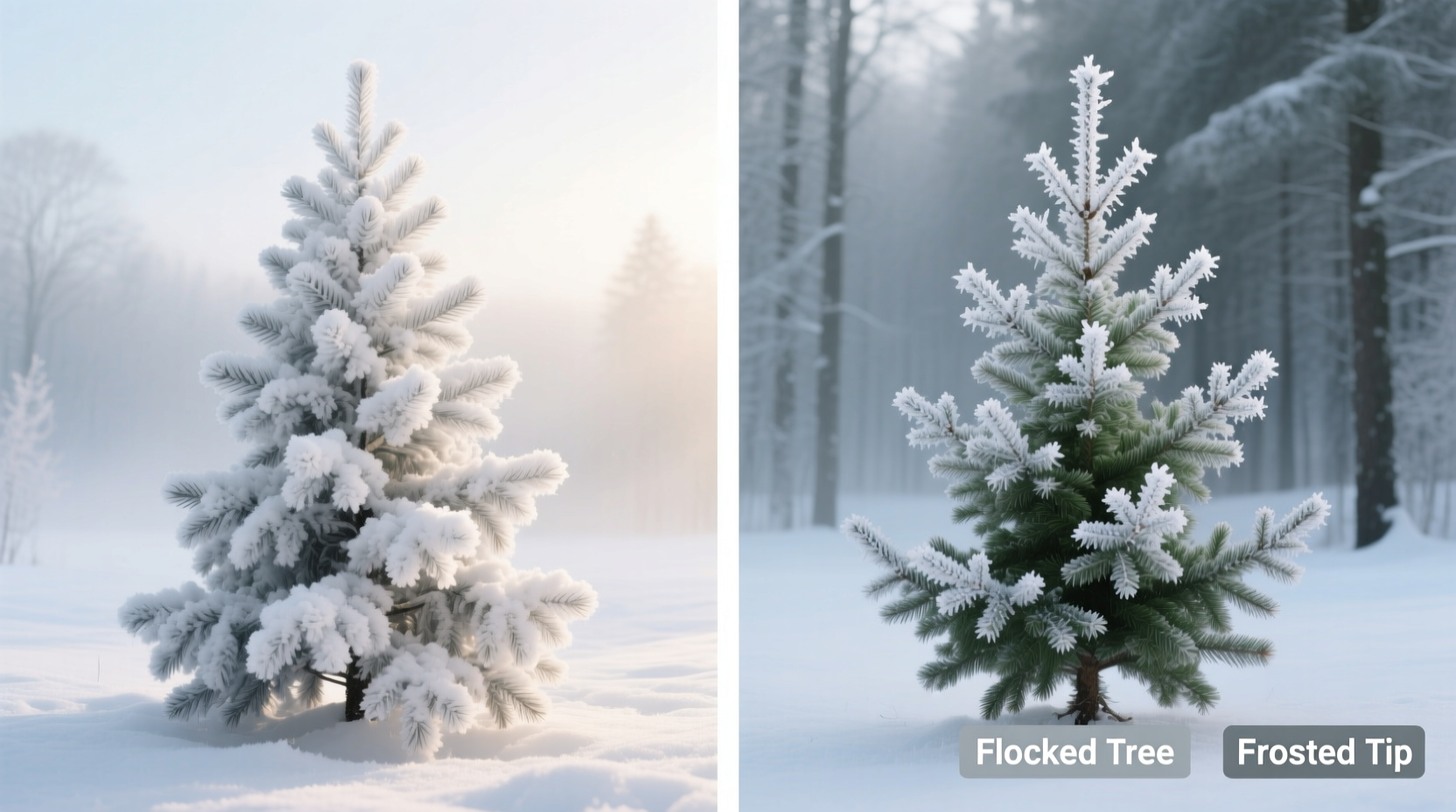
An authentic winter look goes beyond mere imitation. It's about evoking a sensory memory—the crunch of snow underfoot, the soft diffusion of light on a frosty morning, the way pine needles glisten after a storm. A convincing artificial tree should suggest stillness, natural imperfection, and organic texture. This is where the distinction between flocked and frosted tip trees becomes critical.
Flocked trees are coated with a fine, powdery substance—traditionally a blend of adhesive and cellulose or synthetic fibers—that mimics a thick layer of accumulated snow. The result is a uniform, soft-white coverage across branches, tips, and even trunks. It creates the impression of a tree that has stood through a full night of gentle snowfall, untouched by wind or foot traffic.
Frosted tip trees, on the other hand, apply a lighter treatment. Only the very ends of the branches receive a dusting of white or silver pigment. This simulates the effect of frost forming on exposed surfaces—like the highest boughs of a tree catching the first light of dawn. The rest of the branch remains green or dark, preserving depth and contrast.
From a design perspective, flocked trees lean toward romanticism—a stylized, almost theatrical version of winter. Frosted tips offer a subtler, more observational realism, suggesting nature caught mid-transformation.
Material Realism: Texture, Light, and Depth Compared
The true test of any artificial tree lies in how it behaves under real-world conditions—especially lighting. A tree that looks convincing under showroom fluorescents may appear flat or artificial in the warm glow of home lighting.
Flocked trees diffuse light exceptionally well. The matte, textured surface scatters illumination evenly, reducing glare and creating a soft halo around the tree. This works particularly well with warm incandescent or vintage-style bulbs, enhancing a nostalgic, storybook atmosphere. However, this same diffusion can mute ornament colors and reduce shadow definition, making decorations appear flatter.
Frosted tip trees handle light differently. Because only the extremities are treated, light reflects selectively off the white tips, creating points of sparkle against darker foliage. This mimics the natural phenomenon of ice crystals catching sunlight. Under cooler lighting, the effect can be dazzling—almost like dew-covered spiderwebs. But under overly warm tones, the contrast may look unnatural, as if the tree were dusted with powdered sugar rather than frost.
In terms of texture, flocked trees offer a consistent feel—slightly gritty to the touch, with a velvety appearance from a distance. Over time, flocking can shed, especially if stored improperly or handled frequently. Frosted tips, being a painted or sprayed finish, are generally more durable but can chip if branches are bent aggressively during setup.
“Authenticity in holiday decor isn’t about perfection—it’s about suggestion. A single fleck of ‘snow’ melting at the edge of a branch can say more than a fully flocked tree.” — Lena Briggs, Interior Stylist & Seasonal Design Consultant
Comparison Table: Flocked vs Frosted Tip Trees
| Feature | Flocked Tree | Frosted Tip Tree |
|---|---|---|
| Snow Effect | Uniform, heavy coverage | Light dusting on branch tips only |
| Realism Level | High (stylized winter) | High (natural frost effect) |
| Light Interaction | Diffused, soft glow | Sparkling, directional highlights |
| Durability | Moderate (prone to shedding) | High (resists wear better) |
| Maintenance | Requires careful storage; may need touch-ups | Low; minimal upkeep needed |
| Best For | Classic winter scenes, nostalgic themes | Modern, minimalist, or alpine aesthetics |
Real-World Example: A Designer’s Choice for a Mountain Lodge
Consider the case of a recent project by Denver-based decorator Mara Lin. Tasked with outfitting a newly built ski lodge in Aspen, she faced a challenge: how to create a sense of year-round winter without veering into cliché. The client wanted authenticity—not a theme park version of the Alps, but something that felt lived-in and naturally cold.
Lin tested both flocked and frosted tip trees in situ. The flocked tree, while beautiful, felt too deliberate—like a stage prop. “It looked like someone had dumped flour on it,” she admitted. “In a real forest, snow doesn’t coat every needle uniformly. Wind and gravity shape how it settles.”
She ultimately chose a high-density frosted tip tree with slightly irregular frosting patterns. By using cool-toned LEDs and placing the tree near floor-to-ceiling windows, she created the illusion of morning frost forming overnight. She added subtle movement with a low-speed fan to gently sway the branches, enhancing the realism. Guests regularly asked if the tree was real.
“The frosted tips allowed for negative space,” Lin explained. “You could see through the branches, notice shadows, feel the depth. That’s where authenticity lives—not in coverage, but in contrast.”
Step-by-Step Guide: Choosing the Right Tree for Your Space
- Assess Your Lighting Environment: Take note of whether your room has warm or cool ambient light. Warm lighting (2700K–3000K) pairs better with flocked trees. Cool lighting (3500K+) enhances frosted tips.
- Determine Your Decor Theme: Are you going for a traditional, nostalgic Christmas or a modern, minimalist winter scene? Flocked trees suit classic red-and-green schemes; frosted tips complement silver, white, or icy blue palettes.
- Consider Maintenance Tolerance: If you prefer low upkeep, frosted tip trees require less care. Flocked trees may need annual inspection for shedding or thinning spots.
- Evaluate Storage Conditions: Flocked trees are sensitive to heat and compression. Store them in breathable bags in a climate-controlled area. Frosted tip trees are more forgiving but should still avoid extreme temperatures.
- Test in Person if Possible: Visit a showroom or rental display. View both types under similar lighting. Bring ornaments to see how they interact with the tree’s finish.
- Add Atmospheric Touches: Use a humidifier nearby to subtly enhance the perception of frost. Avoid sprays or mists directly on flocked trees—they can cause clumping or mold.
FAQ: Common Questions About Flocked and Frosted Tip Trees
Is flocking safe for homes with pets or children?
Most modern flocking is non-toxic, but it can shed over time. Small particles may be ingested if pets chew on branches. Frosted tip trees are generally safer in homes with curious animals or toddlers, as the finish is bonded to the tips and less likely to flake.
Can I make a frosted tip tree look more heavily snowed-in?
Yes—with caution. You can lightly apply artificial snow spray or DIY flocking mix to lower branches for added effect. Avoid oversaturating, as this can weigh down tips or create an uneven appearance. Always test on a small section first.
Which type lasts longer?
Frosted tip trees typically have a longer lifespan due to the durability of the finish. Flocked trees can degrade faster if exposed to humidity, static, or rough handling. With proper care, both can last 10+ years, but frosted tips require less intervention.
Final Checklist Before You Buy
- ☑ Decide on your desired winter aesthetic—uniform snow cover or natural frost
- ☑ Check bulb color temperature compatibility
- ☑ Measure ceiling height and base diameter for fit
- ☑ Inspect branch tip quality—avoid trees with cracked or peeling frosting
- ☑ Confirm storage space and protection method
- ☑ Read reviews specifically mentioning realism and durability
Conclusion: Authenticity Lies in Intention
In the end, the choice between a flocked tree and a frosted tip model isn’t about which is objectively more realistic—it’s about which aligns with your vision of winter. A flocked tree offers the comfort of tradition, the kind of image found on vintage Christmas cards. It speaks to memory, warmth, and celebration. A frosted tip tree captures a quieter truth—the delicate, transient beauty of nature in cold repose.
Authenticity isn’t just in the details; it’s in the feeling the tree evokes. Whether you’re drawn to the plush serenity of a snow-laden spruce or the crystalline precision of frost-kissed tips, your choice should reflect the kind of winter you want to bring indoors.




 浙公网安备
33010002000092号
浙公网安备
33010002000092号 浙B2-20120091-4
Comments
No comments yet. Why don't you start the discussion?