
For decades, the flocked Christmas tree has been a symbol of winter wonder—a shimmering evergreen blanketed in artificial snow, evoking nostalgia and charm. But as modern holiday decor trends shift toward low-maintenance elegance and allergy-conscious living, many families are reconsidering whether the aesthetic payoff justifies the drawbacks. The debate between flocked and unflocked trees isn’t just about appearance; it’s about practicality, health, safety, and long-term value. Understanding the full scope of this choice can help you decide which tree best fits your home, lifestyle, and holiday vision.
The Allure of the Flocked Tree: Why It Still Captivates
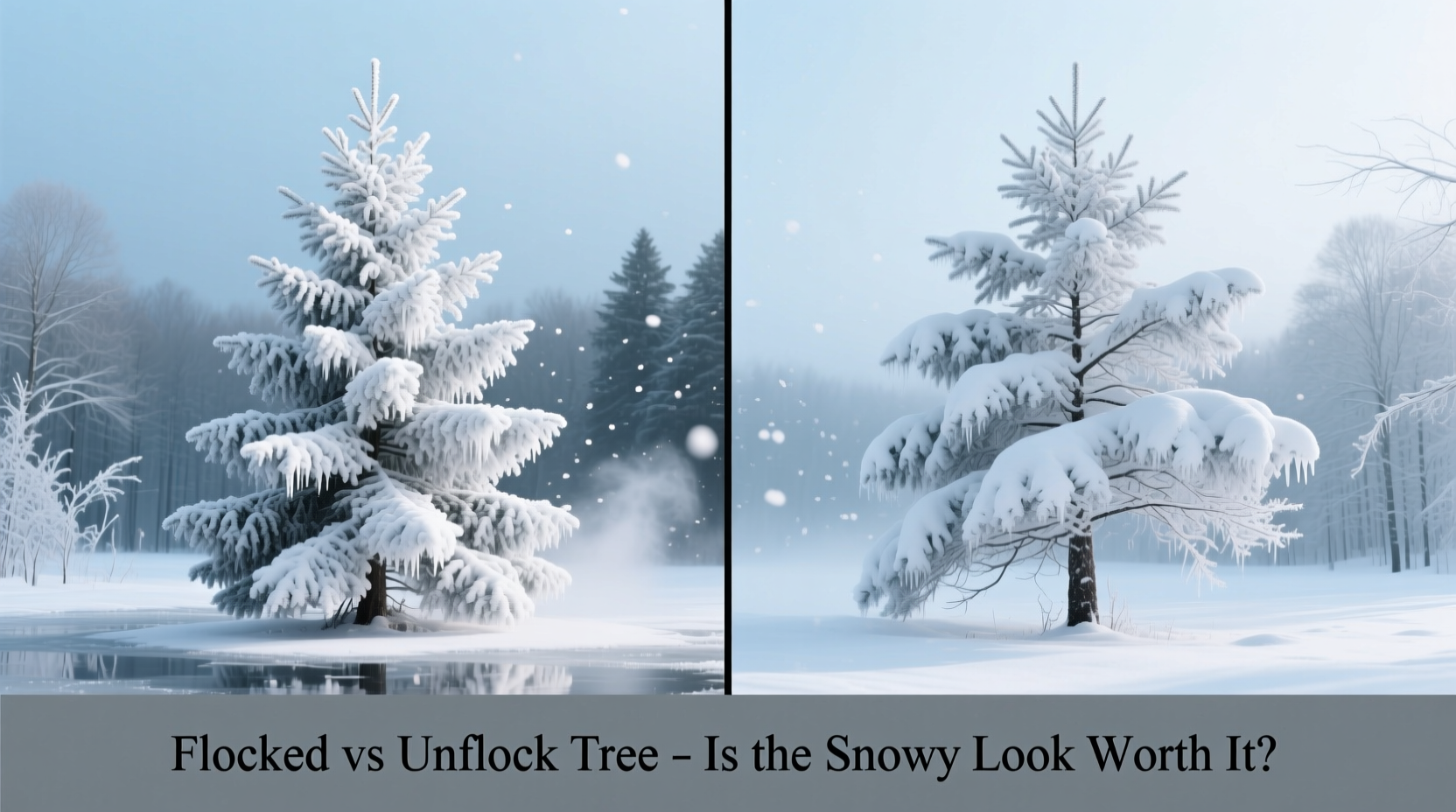
Flocking refers to the process of coating a tree—real or artificial—with a fine, powdery substance that mimics snow. Traditionally made from materials like kaolin clay, cellulose, or even finely ground limestone, flocking gives trees a soft, frosted appearance that enhances the illusion of a cozy, snow-kissed winter scene. This effect has made flocked trees a staple in department store displays, film sets, and homes aiming for a storybook Christmas atmosphere.
One reason flocking remains popular is its ability to elevate lighting effects. When lights are strung through a flocked tree, the flock reflects and diffuses the glow, creating a warm, ambient radiance. For decorators who prioritize ambiance over convenience, this visual enhancement can be transformative.
Flocked trees also tend to pair well with vintage or traditional ornaments. The neutral, textured backdrop allows metallics, glass baubles, and heirloom decorations to stand out more vividly than on a plain green tree. In themed décor setups—such as \"Winter Wonderland\" or \"North Pole Village\"—flocking completes the immersive experience.
The Hidden Costs of Flocking: Cleanup, Static, and Health Concerns
Despite their beauty, flocked trees come with significant trade-offs. Chief among them is the mess. Flocking material sheds continuously throughout the season. Tiny white particles flake off onto floors, furniture, and electronics. Vacuuming becomes a daily chore, and dusting ornaments afterward is often necessary. Pet owners report finding flock residue in pet beds and food bowls, raising concerns about ingestion.
Static buildup is another major issue, particularly with artificial trees. The synthetic materials used in most pre-lit trees already generate static electricity. Adding flocking exacerbates this problem, causing tinsel, lightweight garlands, and even small ornaments to cling unpredictably to branches. Some users report mild shocks when touching heavily flocked trees, especially in dry indoor environments.
Health considerations are increasingly important. While modern flocking products are generally labeled as non-toxic, they can still irritate individuals with asthma, allergies, or respiratory sensitivities. Airborne particles may trigger coughing, sneezing, or eye irritation. In tightly sealed homes with poor ventilation, these effects can intensify over time.
“While flocking creates a magical look, we’ve seen an uptick in seasonal allergy complaints linked to decorative materials—especially in homes with forced-air heating systems that circulate fine particulates.” — Dr. Lena Pruitt, Environmental Health Specialist
Unflocked Trees: Simplicity, Safety, and Sustainability
In contrast, unflocked trees—whether live or artificial—offer a cleaner, safer alternative. Without the added layer of flocking, there’s no shedding, minimal static, and fewer airborne irritants. This makes unflocked trees ideal for households with children, pets, or anyone managing respiratory conditions.
Maintenance is significantly reduced. An unflocked artificial tree can be stored in sections and reused year after year with little more than a quick wipe-down. Live trees require watering but don’t leave behind chemical residues or dust clouds. Cleanup at season’s end is faster and less labor-intensive.
From a sustainability perspective, unflocked trees have an edge. Many commercial flocking products are not biodegradable, meaning they contribute to landfill waste when applied to real trees. Even reusable artificial trees lose resale value if heavily flocked, limiting secondhand options. As eco-conscious consumerism grows, the demand for non-flocked, recyclable trees is rising.
Comparison: Flocked vs Unflocked Trees
| Factor | Flocked Tree | Unflocked Tree |
|---|---|---|
| Aesthetic Appeal | High – snowy, cinematic look | Moderate to high – natural or clean appearance |
| Cleanup Effort | High – constant shedding | Low – minimal debris |
| Static Issues | Common – attracts lightweight decor | Rare – manageable with anti-static spray |
| Allergy Risk | Moderate to high – airborne particles | Low – especially with hypoallergenic materials |
| Lifespan (Artificial) | Shorter – flock degrades over time | Longer – easier to maintain and store |
| Cost Over Time | Higher – frequent cleaning, shorter reuse cycle | Lower – durable and reparable |
Real-Life Scenario: The Thompson Family’s Holiday Experiment
The Thompsons of Denver, Colorado, had always used a professionally flocked tree for their annual holiday display. For years, they loved the enchanting look—until two of their three children began experiencing persistent coughing during December. After consulting an allergist, they discovered that microscopic flocking particles were circulating through their home’s HVAC system, aggravating mild asthma in both kids.
Determined to find a solution, they switched to an unflocked artificial tree one year and supplemented the wintry aesthetic with LED icicle lights, silver garlands, and a white tree skirt. To mimic snow, they lightly dusted lower branches with removable artificial snow spray—applied only during evening hours and wiped off weekly.
The results surprised them. Not only did the children’s symptoms disappear, but setup and takedown took half the time. They saved nearly four hours over the season on vacuuming alone. The new tree received just as many compliments, proving that beauty doesn’t require excess mess.
Step-by-Step Guide: How to Achieve a Snowy Look Without Flocking
You don’t need permanent flocking to create a frosty, magical tree. Here’s how to get the look safely and cleanly:
- Choose the right tree base: Opt for an artificial tree with built-in clear or warm-white LEDs. Light-colored tips or “snow-tipped” branches enhance the wintery effect without shedding.
- Add layered lighting: String additional mini lights in white or cool tones. Wrap them tightly near the trunk for a glowing core effect.
- Use removable snow sprays: Apply temporary snow sprays sparingly to lower branches. These wash off easily and don’t leave residue on carpets.
- Incorporate reflective décor: Hang mirrored balls, silver ribbons, or crystal prisms that catch and scatter light like ice.
- Enhance the base: Place the tree on a white fur rug, faux-snow mat, or sequined skirt to extend the snowy illusion to the floor.
- Mist occasionally (for real trees): Lightly mist a real tree with water mixed with a pinch of Epsom salt for a dewy, frost-like sheen—avoid over-saturation.
Checklist: Choosing Between Flocked and Unflocked Trees
- ☐ Do you or a household member have asthma, allergies, or respiratory sensitivities?
- ☐ Are you willing to vacuum and dust daily during the holiday season?
- ☐ Do you plan to keep and reuse an artificial tree for multiple years?
- ☐ Is ease of storage and setup a priority?
- ☐ Are you decorating around pets or toddlers who might touch or ingest debris?
- ☐ Does your holiday theme rely heavily on a “snow-covered” aesthetic?
- ☐ Are you open to alternatives that mimic snow without permanent flocking?
If most of your answers lean toward the left side (health, convenience, longevity), an unflocked tree is likely the better choice. If visual impact is your top priority and you’re prepared for the upkeep, a flocked tree may still be worth it—for now.
Frequently Asked Questions
Can I remove flocking from an artificial tree?
Removing flocking is difficult and often damages the tree. Most manufacturers advise against scrubbing or washing flocked branches. Some people use compressed air to blow off loose particles, but this spreads dust into the air. Prevention—choosing non-flocked trees—is more effective than removal.
Is DIY flocking safe for indoor use?
Homemade flocking recipes (like mixtures of baking soda and glue) are not recommended. These can corrode metal parts, promote mold growth on real trees, and increase fire risk near lights. Commercially applied flocking uses flame-retardant formulas, but even those should be handled with care and proper ventilation.
Do flocked trees pose a fire hazard?
Modern flocked trees sold in the U.S. must meet flammability standards set by the Consumer Product Safety Commission (CPSC). However, older or improperly stored flocked trees can become brittle and more combustible. Always keep trees away from heat sources and check lights for frayed wires. Never use open flames (candles) near any flocked surface.
Final Thoughts: Weighing Magic Against Maintenance
The decision between a flocked and unflocked Christmas tree ultimately comes down to values. Is the fleeting magic of a snow-dusted pine worth the daily cleanup, potential health risks, and long-term wear on your décor? For some, the answer is a resounding yes—the tree is a centerpiece, a photo backdrop, a tradition. For others, the holidays are about comfort, family time, and minimizing stress, not battling static and dust bunnies.
Thankfully, advancements in lighting, décor, and artificial materials mean you no longer have to choose between beauty and practicality. With thoughtful design choices, you can achieve a breathtaking winter scene without compromising air quality or sanity. The modern holiday home doesn’t need fake snow to feel festive—it needs warmth, safety, and joy.




 浙公网安备
33010002000092号
浙公网安备
33010002000092号 浙B2-20120091-4
Comments
No comments yet. Why don't you start the discussion?