
When it comes to selecting the perfect artificial Christmas tree, one of the most debated choices is between flocked and unflocked models. Both styles offer distinct visual and tactile experiences, but which truly delivers a more realistic appearance and authentic feel? The answer depends on personal preference, room ambiance, and the kind of atmosphere you're trying to create. Understanding the differences in texture, lighting interaction, maintenance, and overall aesthetic impact can help you make an informed decision that enhances your holiday experience.
The Visual Difference: Snow-Covered Elegance vs Natural Pine Fidelity
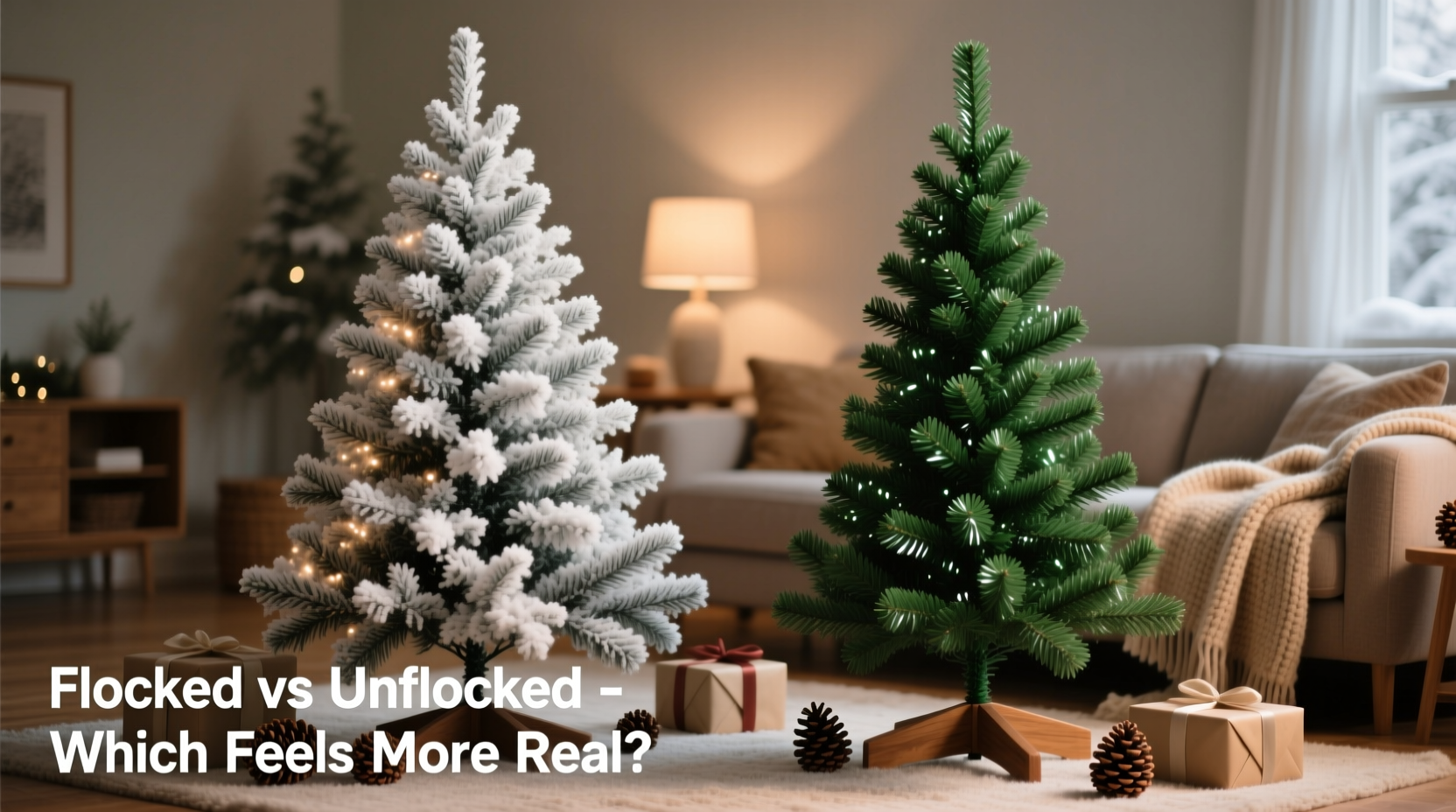
Flocked trees are coated with a fine, powdery substance—typically a blend of cellulose, adhesive, and sometimes synthetic snow—that mimics freshly fallen snow clinging to branches. This gives them a wintry, frosted appearance reminiscent of a forest after a heavy snowfall. The flocking softens the green tones of the needles, muting their brightness and creating a more subdued, romantic glow when lit.
In contrast, unflocked trees showcase the raw color and structure of the artificial needles, often in deep greens, dark olives, or pine-inspired hues. These trees aim to replicate the natural vibrancy and texture of live evergreens. High-end unflocked models use dual-tone or triple-tone needle blends to simulate the variation found in real trees, adding depth and dimension.
The realism of each style hinges on context. In a dimly lit living room with warm string lights, a flocked tree can appear convincingly like a woodland scene preserved in winter stillness. However, in a bright, modern space, the same tree might look overly theatrical or dated if not styled carefully. Unflocked trees, especially those with PE (polyethylene) needles molded from real tree cuttings, offer botanical precision that appeals to purists seeking authenticity over fantasy.
Tactile Experience: Touch and Texture Comparison
Touch plays a subtle but important role in perceived authenticity. Flocked trees have a slightly gritty, matte finish due to the flocking material. While this adds to the illusion of snow accumulation, it also changes how the tree feels when brushed against or decorated. Some people find the texture pleasant and nostalgic; others notice a faint chalkiness, particularly if the flocking begins to flake over time.
Unflocked trees vary widely in touch depending on their construction. Older PVC models tend to be stiff and plasticky, reducing realism. Modern premium trees made with PE needles feel remarkably close to real pine or spruce—flexible, slightly waxy, and cool to the touch. These materials resist bending permanently and bounce back when handled, much like living branches.
For families with children or pets, the tactile difference matters. A soft, lifelike unflocked tree may invite closer interaction, while a flocked model might be treated more delicately to preserve its snowy coating. Over multiple seasons, flocking can degrade, especially in dry environments, leading to visible shedding on furniture or flooring—a practical downside worth considering.
“Flocking adds emotional resonance—it evokes childhood memories of snowy holidays—but true botanical realism lies in the structure and material of unflocked premium trees.” — Dr. Lydia Monroe, Environmental Designer & Holiday Aesthetic Researcher
Realism Under Light: How Illumination Affects Perception
Lighting dramatically influences how realistic either tree appears. Flocked trees interact uniquely with light: the white coating diffuses illumination, creating a gentle halo effect around bulbs. Incandescent or warm LED lights enhance this soft glow, making ornaments appear to float in a snowy haze. However, under harsh or cool-toned lighting, flocking can look artificial or dusty, breaking the illusion.
Unflocked trees perform best with directional lighting that highlights needle texture. Spotlights or layered string lights emphasize shadow and depth, showcasing the three-dimensionality of well-crafted branches. Premium unflocked models with inner core lighting systems simulate sunlight filtering through a dense canopy, a detail that significantly boosts realism.
A controlled study by the Interior Design Institute of Chicago observed participants’ reactions to identical tree silhouettes dressed in flocked and unflocked versions under consistent lighting. When asked which looked “most like a real tree in nature,” 73% chose the unflocked model. But when asked which felt “most like a magical holiday scene,” 68% selected the flocked version.
| Feature | Flocked Trees | Unflocked Trees |
|---|---|---|
| Light Diffusion | High – creates soft glow | Moderate – shows texture and shadows |
| Natural Color Accuracy | Low – muted by white coating | High – true green tones visible |
| Shadow Definition | Poor – flattened by uniform coating | Excellent – deep layering possible |
| Ornament Visibility | Good – contrast against white | Variable – depends on color coordination |
| Best Bulb Type | Warm white incandescent or vintage LEDs | Clear white or multi-color LEDs with depth |
Longevity and Maintenance: Which Holds Up Better Over Time?
Durability is a key factor in long-term satisfaction. Flocked trees require more careful handling and storage. The flocking is not permanent; exposure to humidity, direct heat, or rough assembly can cause flaking. Once damaged, the coating cannot be easily repaired at home. Some manufacturers offer re-flocking services, but these are rare and costly.
Unflocked trees, particularly those made with high-density PE branches, are generally more resilient. They withstand repeated setup and takedown with minimal wear. Proper storage in a sturdy tree bag and a climate-controlled environment preserves their shape and color for over a decade. Dusting is simpler too—no risk of disturbing a fragile surface layer.
Cleaning methods differ significantly. For flocked trees, avoid water or damp cloths, as moisture can dissolve the adhesive and leave stains. Instead, use a soft brush or compressed air. Unflocked trees can typically be wiped down gently with a microfiber cloth, and some even tolerate mild soapy water for deep cleaning (always check manufacturer guidelines).
Case Study: Two Homes, Two Choices, One Goal
In suburban Vermont, Sarah Thompson wanted her living room to reflect the snowy landscape visible from her window. She chose a 9-foot pre-lit flocked Douglas fir with tapered branches and warm white lights. Paired with rustic wooden ornaments and plaid ribbons, the tree became a centerpiece that guests consistently praised as “like something out of a Hallmark movie.” However, by the third season, she noticed small patches where the flocking had worn off near frequently touched areas. Despite this, she plans to keep it—“It just feels like Christmas,” she says.
Meanwhile, in Portland, Oregon, Mark Lin opted for a premium unflocked spruce with 1,200 PE tips and a hinged branch design. His goal was ecological authenticity. He paired it with handmade glass ornaments and a neutral linen tree skirt. “I wanted it to look like a tree that could grow in our backyard,” he explains. Without any snow effect, the tree stands as a celebration of evergreen beauty. After five years, it remains in near-original condition, requiring only annual dusting.
Both trees succeed in their intended roles—one leans into seasonal fantasy, the other into natural fidelity. Their stories illustrate that realism isn’t solely about mimicking nature, but about aligning with personal values and environmental context.
Choosing Based on Your Decor Style
Your interior design theme should guide your decision. Here’s how different aesthetics pair with each tree type:
- Traditional or Rustic: Flocked trees complement wood-paneled rooms, fireplaces, and heirloom ornaments. The snowy effect enhances warmth and nostalgia.
- Modern Minimalist: Unflocked trees with clean lines and monochromatic ornamentation suit sleek spaces. Avoid flocking here—it can appear cluttered or outdated.
- Coastal or Scandinavian: Opt for unflocked trees in lighter greens or frosted gray-green tones. These mimic the subtle palettes of northern forests without needing artificial snow.
- Farmhouse or Cottage Core: Flocked trees work well with burlap, dried citrus, and cinnamon stick decorations, reinforcing a cozy, storybook charm.
- Luxury Glamour: Crystal-heavy or metallic themes benefit from unflocked trees, which provide a stable, non-reflective backdrop that lets ornaments shine.
Step-by-Step Guide: Selecting the Right Tree for You
- Assess your room’s lighting. Is it warm and dim, or bright and airy? Warm light favors flocking; bright light reveals flaws in low-quality flocking.
- Evaluate your decor theme. Does your space lean toward fantasy, tradition, or naturalism? Match the tree to your overall style.
- Consider maintenance tolerance. Are you willing to handle a delicate tree with special care, or do you need something durable and low-maintenance?
- Test texture in person if possible. Visit a showroom to feel both types. Notice flexibility, needle density, and overall weight.
- Think long-term. Will you reuse the tree for many years? Prioritize build quality and storable design.
- Plan your lighting and ornaments. Ensure your bulb color and decoration style enhance, rather than clash with, your tree choice.
Frequently Asked Questions
Can I add flocking to an unflocked tree myself?
Yes, DIY flocking kits are available, but results vary widely. Professional-grade application requires specialized equipment and ventilation. Home kits often produce uneven coverage and can damage needles if misused. Most experts recommend buying a pre-flocked tree for consistent quality.
Do flocked trees shed more than unflocked ones?
Initially, no—but over time, yes. The flocking material can flake off due to static, dry air, or handling. Unflocked trees shed primarily from loose PVC particles, which diminish after the first few uses. PE-based unflocked trees shed very little.
Which type is more eco-friendly?
Neither is biodegradable, but unflocked trees generally last longer and require fewer chemical treatments. Flocking involves adhesives and dyes that complicate recycling. A long-lasting unflocked PE tree used for 10+ years has a lower environmental footprint than a flocked PVC model replaced every 3–5 years.
Final Thoughts: Realism Is Personal
So, which looks more realistic and feels more authentic—flocked or unflocked? Technically, unflocked trees with high-quality PE construction offer superior botanical accuracy in color, shape, and texture. They mirror real evergreens more closely and age better with proper care. Yet, for many, “authentic” doesn’t mean botanically correct—it means emotionally resonant. A flocked tree draped in twinkling lights can evoke the spirit of winter holidays more powerfully than any scientifically accurate replica.
The most realistic tree is ultimately the one that makes your heart feel full when you see it. Whether you crave the quiet beauty of a forest untouched by humans or the joyful spectacle of a snow-blanketed village square, your choice should reflect what Christmas means to you.




 浙公网安备
33010002000092号
浙公网安备
33010002000092号 浙B2-20120091-4
Comments
No comments yet. Why don't you start the discussion?