
For those drawn to the delicate beauty of floral design, the desire to create something meaningful with blooms often begins as a quiet passion. Whether you're a complete beginner or someone who's dabbled in gardening, the urge to arrange flowers creatively can surface at any moment. But how do you channel that inspiration? Two increasingly popular paths have emerged: flower building blocks—modular, reusable kits that mimic floral arrangements—and traditional flower arranging classes, where fresh stems are shaped into art under expert guidance. Both promise creative fulfillment, but they deliver very different experiences. Understanding their strengths, limitations, and emotional impact is key to discovering which path truly lets you express your inner florist.
The Rise of Flower Building Blocks: Playful Creativity Meets Design
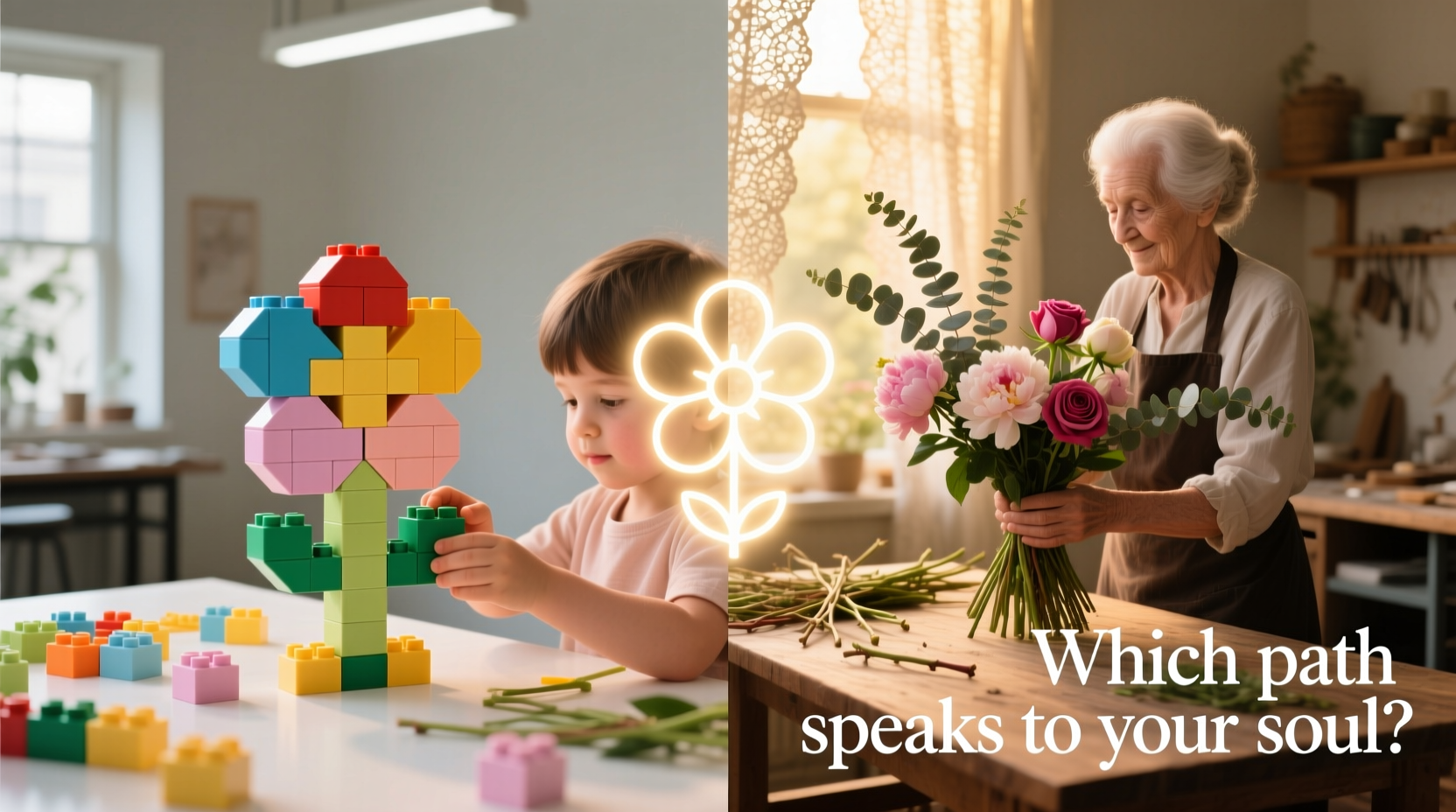
Flower building blocks are inspired by toy construction sets but designed to resemble real botanicals. Made from durable materials like ABS plastic or silicone, these interlocking pieces allow users to assemble blossoms, stems, and foliage into decorative arrangements. They’re marketed as mess-free, long-lasting alternatives to fresh flowers, ideal for home decor, educational play, or stress-relief crafting.
What makes them appealing is accessibility. No water, no wilting, no special tools. You can build a centerpiece in minutes, disassemble it, and try again. Many kits come with color-coded stems and petal shapes, making symmetry and balance easier to achieve. For children or adults new to design, this structured approach lowers the barrier to entry.
However, the very structure that makes building blocks user-friendly also limits artistic freedom. Each piece fits only a specific way, constraining organic variation. There’s no scent, no texture of real petals, and no element of surprise that comes from working with living material. The result, while neat, often feels more like assembly than creation.
Flower Arranging Classes: Where Artistry and Emotion Take Root
In contrast, flower arranging classes immerse participants in the sensory world of floristry. Led by professional designers, these sessions typically use seasonal, perishable blooms and teach foundational techniques: conditioning stems, understanding color theory, creating focal points, and mastering balance. The process is tactile and intuitive, demanding attention to detail and an openness to imperfection.
“There’s a quiet magic in holding a stem and deciding where it belongs,” says Lena Torres, a certified floral designer and instructor at Bloom Studio in Portland.
“Every arrangement tells a story—not just of beauty, but of patience, presence, and personal expression. That can’t be replicated with pre-formed parts.”
Classes vary in format: single workshops for beginners, multi-week courses for skill development, or specialized sessions like Japanese ikebana or wedding bouquet design. Most emphasize sustainability, teaching students how to compost green waste and reuse mechanics like floral foam alternatives.
Beyond technical skills, these classes foster emotional connection. The fragility of fresh flowers teaches mindfulness. A drooping bloom becomes a lesson in timing; a clashing color combination prompts reflection on harmony. Over time, students develop not just technique, but taste—a personal aesthetic rooted in experience.
Comparing the Two: A Practical Breakdown
To better understand which option suits different goals, here’s a side-by-side comparison.
| Aspect | Flower Building Blocks | Flower Arranging Classes |
|---|---|---|
| Cost (Initial) | $20–$60 per kit | $50–$150 per class |
| Ongoing Expenses | None (reusable) | Flowers, tools, vases (~$30–$80/session) |
| Skill Development | Limited (pattern-based) | High (technique + creativity) |
| Creativity & Flexibility | Moderate (predefined shapes) | High (organic materials, freeform design) |
| Sensory Experience | Visual only | Sight, touch, smell |
| Lifespan of Creations | Years (permanent) | 3–10 days (fresh), longer if dried |
| Best For | Kids, decor enthusiasts, casual crafters | Artistic growth, emotional expression, serious hobbyists |
When Building Blocks Shine: A Real Example
Consider Sarah, a graphic designer in Chicago with two young children. She wanted to introduce floral themes into her home but found fresh flowers impractical—too messy, too expensive, and gone in days. After trying a weekend workshop that left her overwhelmed, she discovered a magnetic flower block set at a local gift shop. Within an hour, she had assembled a vibrant wall display her kids helped design. It stayed up for months, survived a move, and even traveled to a school art fair.
For Sarah, building blocks weren’t about becoming a florist—they were about bringing joy and color into daily life without added stress. In her case, the structured, reusable nature of the blocks was a perfect fit. This illustrates a key insight: the “better” method depends on your goals. If you seek low-effort creativity and lasting decor, building blocks offer real value.
When Classes Unlock True Expression: A Step-by-Step Journey
For others, the temporary nature of fresh arrangements is precisely what makes them powerful. Here’s how a typical transformation unfolds in a six-week floral design course:
- Week 1: Learn to cut and condition stems, create a simple monobotanical arrangement using one flower type.
- Week 2: Explore color pairing and texture with complementary foliage.
- Week 3: Practice shaping with line flowers and filler blooms.
- Week 4: Design a hand-tied bouquet using spiral technique.
- Week 5: Work with asymmetry and negative space, inspired by ikebana principles.
- Week 6: Create a personal piece reflecting your style, presented in a final group critique.
By the end, students don’t just know how to make arrangements—they’ve developed a visual language. They notice how light falls on petals, how stems curve naturally, and how emotion can be conveyed through form. This depth of engagement is difficult to replicate with static components.
Choosing What’s Right for You: A Quick Checklist
Use this checklist to determine which path aligns with your intentions:
- ✅ Do you want a permanent, reusable decoration? → Building blocks
- ✅ Are you on a tight budget with no room for recurring costs? → Building blocks
- ✅ Do you enjoy hands-on learning with expert feedback? → Classes
- ✅ Are you seeking emotional or therapeutic benefits from creating with natural materials? → Classes
- ✅ Do you dream of designing for events or starting a side business? → Classes
- ✅ Are you introducing floral concepts to children or beginners? → Building blocks
Frequently Asked Questions
Can I combine both methods?
Absolutely. Some designers use building blocks to prototype arrangements before buying flowers. Others incorporate preserved blooms into modular bases for hybrid displays. Blending both worlds can spark unique ideas.
Are flower arranging classes worth the cost?
If your goal is skill development or personal enrichment, yes. Beyond technique, classes offer community, inspiration, and confidence. Many students report reduced anxiety and increased mindfulness after regular sessions.
Do building blocks help improve real floral design skills?
Only indirectly. They can teach basic composition and color coordination, but lack the unpredictability of real flowers—the very challenge that fosters true artistry.
Final Thoughts: Expressing Your Inner Florist Is a Personal Journey
There is no universal answer to whether flower building blocks or arranging classes are “better.” One offers convenience and consistency; the other, depth and transformation. The choice isn’t about which is superior in absolute terms, but which resonates with your current stage of creative exploration.
If you crave control, durability, and instant results, building blocks provide a satisfying outlet. But if you’re ready to embrace impermanence, engage your senses, and grow through trial and error, flower arranging classes open a richer, more expressive path.




 浙公网安备
33010002000092号
浙公网安备
33010002000092号 浙B2-20120091-4
Comments
No comments yet. Why don't you start the discussion?