
Fog is a common atmospheric phenomenon that transforms landscapes into hazy, dreamlike scenes. While often romanticized in literature and film, fog plays a crucial role in weather systems and can significantly impact transportation, agriculture, and daily life. Despite its familiarity, many people remain unclear about how fog forms, what distinguishes it from clouds, and why it appears more frequently in certain places and seasons. Understanding fog formation involves exploring temperature, humidity, and air movement—key components of meteorology that govern this ground-level cloud.
What Exactly Is Fog?
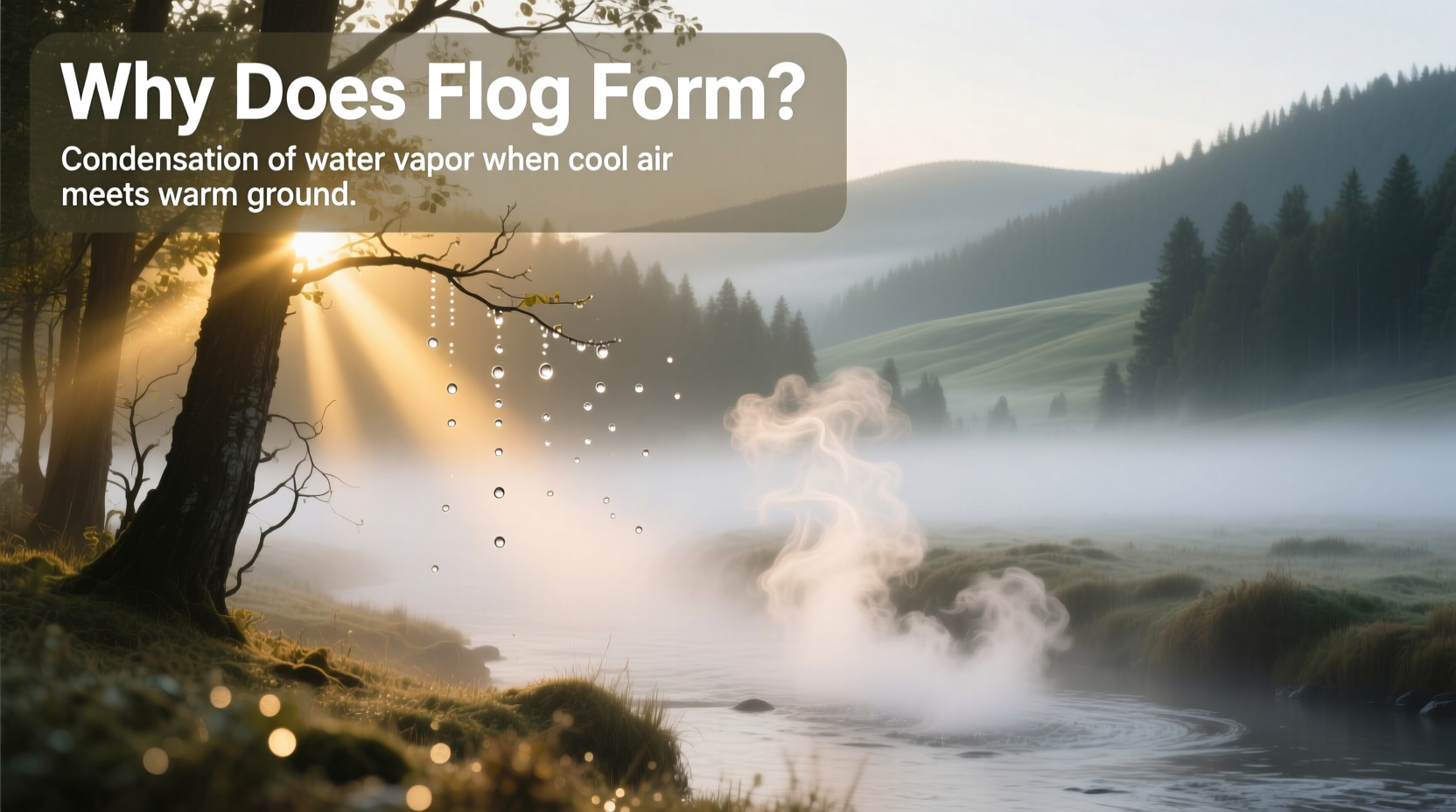
Fog is essentially a cloud that touches the ground. It consists of tiny water droplets suspended in the air, reducing visibility to less than 1 kilometer (about 0.6 miles). Unlike mist, which has lower density and allows visibility beyond 1 km, fog creates a dense veil that can obscure roads, coastlines, and airport runways.
The formation of fog depends on the balance between moisture in the air and temperature. When air near the surface cools to its dew point—the temperature at which air becomes saturated with moisture—excess water vapor condenses into liquid droplets. This process is identical to how clouds form aloft, but fog occurs at surface level due to localized cooling or moist air advection.
“Fog is not just 'low cloud'—it’s a precise interaction of temperature, humidity, and stability that reveals the delicate equilibrium of our atmosphere.” — Dr. Lena Reyes, Atmospheric Scientist, NOAA
The Science Behind Fog Formation: Cooling and Saturation
Fog forms when one of two primary conditions is met: either the air is cooled to saturation, or moisture is added until saturation occurs. In most natural settings, cooling is the dominant mechanism. There are several ways air near the surface can cool:
- Radiational cooling: On clear, calm nights, the Earth's surface loses heat through longwave radiation. The air in contact with the ground cools, eventually reaching the dew point.
- Advective cooling: Warm, moist air moves over a colder surface (such as cold ocean currents or snow-covered ground), causing the air to cool from below.
- Evaporative (or mixing) processes: When warm rain falls through cooler air, evaporation increases humidity until saturation is reached.
The rate and extent of cooling determine whether fog will form and how long it lasts. Wind speed also plays a role; light winds promote fog by mixing moist air near the surface without dispersing it, while strong winds tend to break up fog layers by promoting vertical mixing.
Types of Fog and Their Formation Conditions
Not all fog is the same. Different types form under distinct meteorological conditions. Recognizing these types helps explain why fog appears in some areas and not others.
| Type of Fog | Formation Process | Common Locations | Typical Time of Day |
|---|---|---|---|
| Radiation Fog | Ground cools rapidly at night, chilling air above it | Inland valleys, rural areas | Pre-dawn to early morning |
| Advection Fog | Warm, moist air moves over cold surface | Coastal regions (e.g., San Francisco) | Any time, often persistent |
| Upslope Fog | Moist air rises and cools along terrain slopes | Mountain foothills, elevated plains | Day or night, depending on wind |
| Steam Fog | Cold air moves over warm water, causing evaporation and rapid condensation | Lakes, rivers in fall/winter | Morning, especially in cold seasons |
| Frontal Fog (Precipitation-Induced) | Warm rain evaporates into cooler air near surface | Ahead of warm fronts | During or before rain events |
Real Example: San Francisco’s Iconic Advection Fog
One of the most famous examples of fog formation is the advection fog that blankets San Francisco each summer. Warm, moist air from the Pacific Ocean moves eastward and encounters the cold waters of the California Current. As the air cools over this cold marine layer, it reaches saturation and forms thick fog. The Golden Gate Bridge often disappears into this silvery haze, particularly in the evening and early morning. This pattern repeats reliably due to consistent ocean temperatures and prevailing westerly winds—making it a textbook case of advection fog.
Factors That Influence Fog Frequency and Duration
Several environmental and geographic factors determine where and how often fog occurs:
- Topography: Valleys trap cool, moist air, making them prone to radiation fog. Cold air drainage enhances pooling near river basins.
- Proximity to Water: Coastal and lakeside areas experience higher humidity and temperature contrasts, favoring advection and steam fog.
- Season: Radiation fog peaks in autumn and winter when nights are longer and cooler. Steam fog is common in late fall when water remains warm but air turns cold.
- Urban Heat Islands: Cities tend to have fewer foggy days because buildings and pavement retain heat, reducing nocturnal cooling.
In agricultural regions, fog can delay harvesting by keeping fields damp and reduce solar exposure critical for crop development. Conversely, in ecosystems like redwood forests, fog provides vital moisture during dry summers through a process called \"fog drip,\" where droplets collect on needles and fall to the forest floor.
Step-by-Step: How Radiation Fog Develops Overnight
Radiation fog is among the most common types. Here’s a timeline of how it typically forms:
- Sunset: The sun sets on a clear sky with little cloud cover, allowing terrestrial radiation to escape into space.
- Evening (6–9 PM): Surface temperatures begin to drop. Relative humidity slowly increases as air cools.
- Middle of Night (12–3 AM): Air near the ground approaches dew point. If wind is light (1–5 mph), a stable layer forms.
- Pre-Dawn (4–6 AM): Air reaches saturation. Condensation begins, forming tiny water droplets visible as fog.
- Sunrise and After: Solar heating warms the ground, which in turn warms the air. Fog lifts and dissipates from the bottom up, usually by mid-morning.
Frequently Asked Questions About Fog Formation
Why doesn’t fog form on cloudy nights?
Clouds act like a blanket, trapping heat radiating from the Earth’s surface. Without significant radiative cooling, the air doesn’t reach the dew point, preventing fog formation. Clear skies are essential for radiation fog.
Can fog form in hot weather?
Yes—but only if there’s sufficient moisture and a mechanism for cooling. For example, advection fog can occur in summer along coastlines when warm, humid air flows over cold ocean currents. The air may be warm overall, but the surface layer chills enough to form fog.
Is fog dangerous?
Fog itself isn’t harmful, but it drastically reduces visibility. This poses risks for drivers, pilots, and mariners. Dense fog has contributed to major traffic pileups and flight delays. In extreme cases, prolonged exposure to very cold fog can contribute to hypothermia due to wet skin and wind chill.
Practical Checklist: Observing and Predicting Fog
Whether you're a weather enthusiast, pilot, farmer, or commuter, being able to anticipate fog can be valuable. Use this checklist to assess fog potential:
- ✅ Check the forecast dew point spread (difference between temperature and dew point). A gap of 3°C (5°F) or less suggests high fog potential.
- ✅ Look for clear skies and light winds (< 10 mph) in the evening—ideal for radiation fog.
- ✅ Monitor coastal temperature gradients if near an ocean or large lake.
- ✅ Watch for signs of saturation: dew on surfaces, damp grass, or increasing humidity after sunset.
- ✅ Use real-time webcams or METAR reports at airports to confirm fog presence in your area.
Conclusion: Embracing the Science of Fog
Fog is far more than a scenic inconvenience—it’s a visible manifestation of atmospheric physics in action. From the quiet valleys blanketed in morning mist to the dramatic coastal banks rolling over cliffs, fog formation tells a story of temperature, moisture, and motion. By understanding the mechanisms behind its development, we gain insight into broader weather patterns and improve safety in travel and outdoor activities.
Next time you encounter fog, observe it closely. Note the time of day, nearby water sources, wind conditions, and how it clears. These observations connect you to the rhythms of the natural world. Share your experiences, ask questions, and deepen your appreciation for one of nature’s most subtle yet powerful phenomena.




 浙公网安备
33010002000092号
浙公网安备
33010002000092号 浙B2-20120091-4
Comments
No comments yet. Why don't you start the discussion?