
In 2025, the smartphone market has evolved rapidly, with foldables maturing and legacy flagships aging out of relevance. Yet, questions linger about older devices that once defined premium experiences. The Samsung Galaxy Z Fold 4 and the Apple iPhone 12 Pro Max were both top-tier flagships in their time—released just a year apart—but now face scrutiny over longevity, usability, and value. For users considering a second-hand or discounted purchase, or those holding onto these devices, the question is clear: which one still makes practical sense today?
This isn’t just about nostalgia. It’s about real-world performance, software support, repairability, and how well each device adapts to modern demands like AI features, multitasking, and camera expectations. Let’s break down where each stands in 2025.
Performance and Hardware Longevity
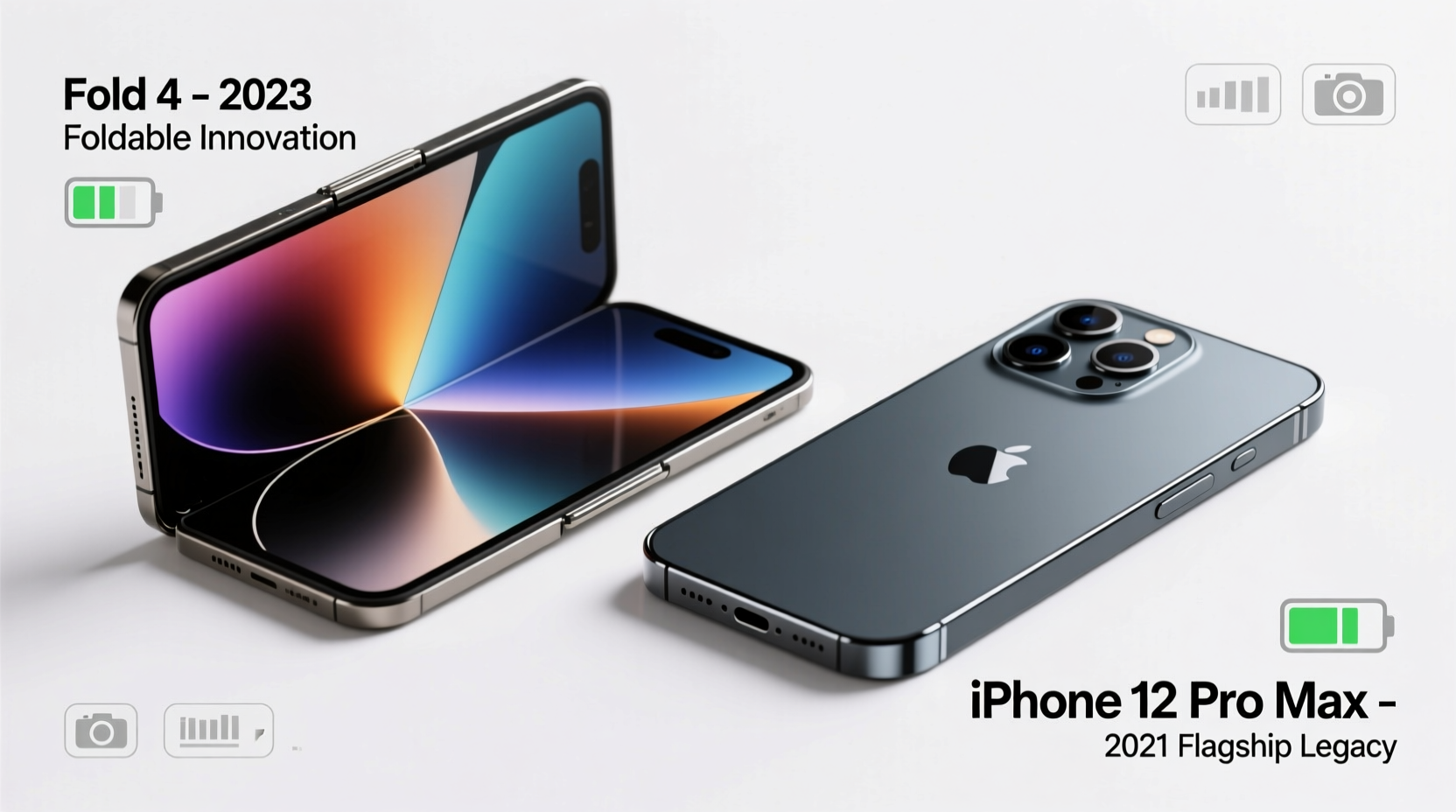
The iPhone 12 Pro Max launched in late 2020 with Apple’s A14 Bionic chip—an industry-leading processor at the time. Even in 2025, it remains surprisingly capable. iOS optimization allows the A14 to handle daily tasks, social media, video streaming, and even moderate gaming without significant lag. However, newer apps leveraging on-device AI and machine learning begin to expose its limitations, particularly in photo processing and augmented reality features.
The Galaxy Z Fold 4, released in 2022, runs on Qualcomm’s Snapdragon 8+ Gen 1. While powerful for its era, Android’s less aggressive background app management means multitasking across multiple large-screen panels can strain memory and thermals over time. By 2025, some users report occasional stuttering when switching between three active apps or using heavier productivity suites.
Battery degradation is a shared concern. Both devices are now three to five years old, and lithium-ion cells naturally degrade. The Fold 4’s dual-battery system (2x 2200mAh) is more complex and harder to replace than the iPhone’s single-cell design. Apple’s battery service program still supports the iPhone 12 series, making replacements accessible and relatively affordable.
Software Support and Future Updates
This is where the paths diverge sharply. Apple continues to support the iPhone 12 Pro Max with iOS updates. As of 2025, it runs iOS 18, gaining access to new AI-powered features like enhanced Siri intelligence, on-device summarization, and improved photo search. Apple typically offers 5–6 years of OS updates, meaning the 12 Pro Max will likely receive iOS 19 in fall 2025—its final major update.
Samsung promises four generations of Android OS upgrades and five years of security patches for the Fold 4. That means Android 14 was its last major OS update (delivered in 2023), and security updates will end in 2027. However, Google has begun phasing out support for older chipsets in core services like Google Photos AI editing and Live Translate. By 2025, the Fold 4 shows reduced compatibility with emerging Google ecosystem tools.
“Hardware age is one thing, but software obsolescence kills functionality faster. The iPhone’s long update cycle gives it an edge in future-proofing.” — Raj Mehta, Mobile Systems Analyst at TechLens Insights
Display, Usability, and Form Factor
The Fold 4 offers a transformative experience: a 6.5-inch cover screen and a 7.6-inch internal foldable AMOLED display. In 2025, this still feels futuristic. Multitasking with split-screen apps, dragging content between windows, and viewing documents side-by-side remain compelling use cases for professionals and creatives. However, the crease is more visible over time, and dust ingress—though mitigated by Samsung’s improved seal—can still cause pixel damage.
The iPhone 12 Pro Max, by contrast, delivers a traditional but refined experience. Its 6.7-inch Super Retina XDR OLED screen is bright, color-accurate, and durable. No moving parts mean fewer failure points. For most users, especially those not reliant on multitasking, it’s more reliable day-to-day.
One overlooked factor is pocketability. The Fold 4, even when folded, is thicker and wider than most phones. It doesn’t slide into tight pockets easily and risks hinge stress if stored under pressure. The iPhone 12 Pro Max, while large, fits standard phone holsters and cases without issue.
Camera Capabilities in 2025
Both phones had elite cameras in their prime. The iPhone 12 Pro Max introduced sensor-shift stabilization and a robust triple-lens system (wide, ultra-wide, telephoto). In 2025, its photos still hold up remarkably well—especially in natural light. Computational photography improvements in iOS 18 enhance dynamic range and low-light detail, making older hardware punch above its weight.
The Fold 4’s quad-camera array (including under-display front cam) was ambitious. While sharp in daylight, its night mode lags behind current standards. More critically, the inner screen’s under-display camera degrades selfie quality, making video calls grainy in dim environments. Third-party apps often default to the outer camera, disrupting the seamless foldable experience.
| Feature | iPhone 12 Pro Max (2025) | Fold 4 (2025) |
|---|---|---|
| Main Sensor | 12MP, sensor-shift OIS | 50MP, OIS |
| Low-Light Performance | Strong (improved via iOS 18) | Moderate (no recent tuning) |
| Front Camera Quality | 12MP, consistent output | 4MP under-display, soft detail |
| Video Recording | 4K Dolby Vision HDR | 8K@24fps, limited stabilization |
| AI Enhancements | Active in iOS 18 | Limited due to chipset age |
Real-World Example: Two Users, Two Paths
Consider Maria, a freelance designer who bought the Fold 4 in 2022. She uses it for sketching on the large screen, running Adobe Fresco alongside reference images. By 2025, she notices slower app launches and occasional crashes in Procreate when using high-resolution canvases. She also avoids folding the device immediately after use, fearing thermal stress. Still, the multitasking keeps her productive—until she needs to use Google Keep with Chrome and Notes simultaneously, where app compatibility breaks down.
Meanwhile, James, a travel photographer, holds onto his iPhone 12 Pro Max. He values reliability over novelty. His camera roll from 2024 Iceland trip looks indistinguishable from shots taken on newer iPhones. He appreciates Night mode consistency and the ease of AirDrop sharing. When he upgraded to an M3 MacBook, Handoff and Continuity features worked flawlessly—something the Fold 4 struggles with despite Samsung’s DeX improvements.
Tips for Maximizing Longevity in 2025
- Use lightweight launchers or disable animations to improve responsiveness.
- Avoid extreme temperatures—both devices suffer accelerated battery decay in heat.
- Enable storage optimization: offload unused apps (iOS) or use Lite versions (Android).
- Keep only essential apps updated; outdated apps consume fewer resources.
- For the Fold 4, clean the hinge weekly with a dry microfiber cloth to prevent debris buildup.
FAQ
Can the Fold 4 still run modern productivity apps smoothly?
Yes, for basic to moderate use. Apps like Microsoft Office, Slack, and Zoom work, but heavy multitasking with multiple large windows may cause lag or app reloads due to memory constraints.
Is the iPhone 12 Pro Max secure in 2025?
Yes. Apple continues to provide security updates, and iOS 18 includes advanced privacy controls like app tracking transparency and on-device data processing, keeping it safe for banking, messaging, and daily use.
Which phone holds resale value better?
The iPhone 12 Pro Max retains value significantly better. Used units in good condition sell for 30–40% of original price, while Fold 4 units fetch 15–20%, partly due to concerns about hinge durability and screen wear.
Conclusion: Which Flagship Makes Sense in 2025?
The answer depends on your priorities. If you value long-term software support, ecosystem integration, camera consistency, and reliability, the iPhone 12 Pro Max remains the smarter choice in 2025. It’s not flashy, but it works—predictably and securely.
The Galaxy Z Fold 4 appeals to early adopters and tech enthusiasts who prioritize form factor innovation and multitasking. But its hardware complexity, shorter update window, and growing software friction make it a riskier long-term investment. Unless you deeply need the large screen for creative or enterprise workflows, its novelty wears thin over time.
Ultimately, the iPhone 12 Pro Max proves that Apple’s commitment to longevity turns aging hardware into enduring tools. The Fold 4, while groundbreaking, reflects the challenges foldables still face: balancing innovation with sustainability.




 浙公网安备
33010002000092号
浙公网安备
33010002000092号 浙B2-20120091-4
Comments
No comments yet. Why don't you start the discussion?