
For city dwellers in compact apartments, transportation choices often come down to practicality over preference. Among the most sustainable and efficient options, bicycles stand out—but not all bikes are created equal when space is at a premium. Foldable bikes and standard commuter bikes each offer distinct advantages, but for those navigating tight hallways, shared storage, or limited floor area, the decision can be pivotal. The core question isn’t just about performance—it’s about how well a bike integrates into daily life within confined urban spaces.
This comparison dives deep into real-world usability, examining factors like storage, portability, maintenance, ride quality, and long-term value. Whether you're commuting to work, running errands, or planning weekend rides, understanding the trade-offs between foldable and standard commuter bikes can help you make a smarter, more sustainable choice.
Space Efficiency: The Apartment-Saving Factor
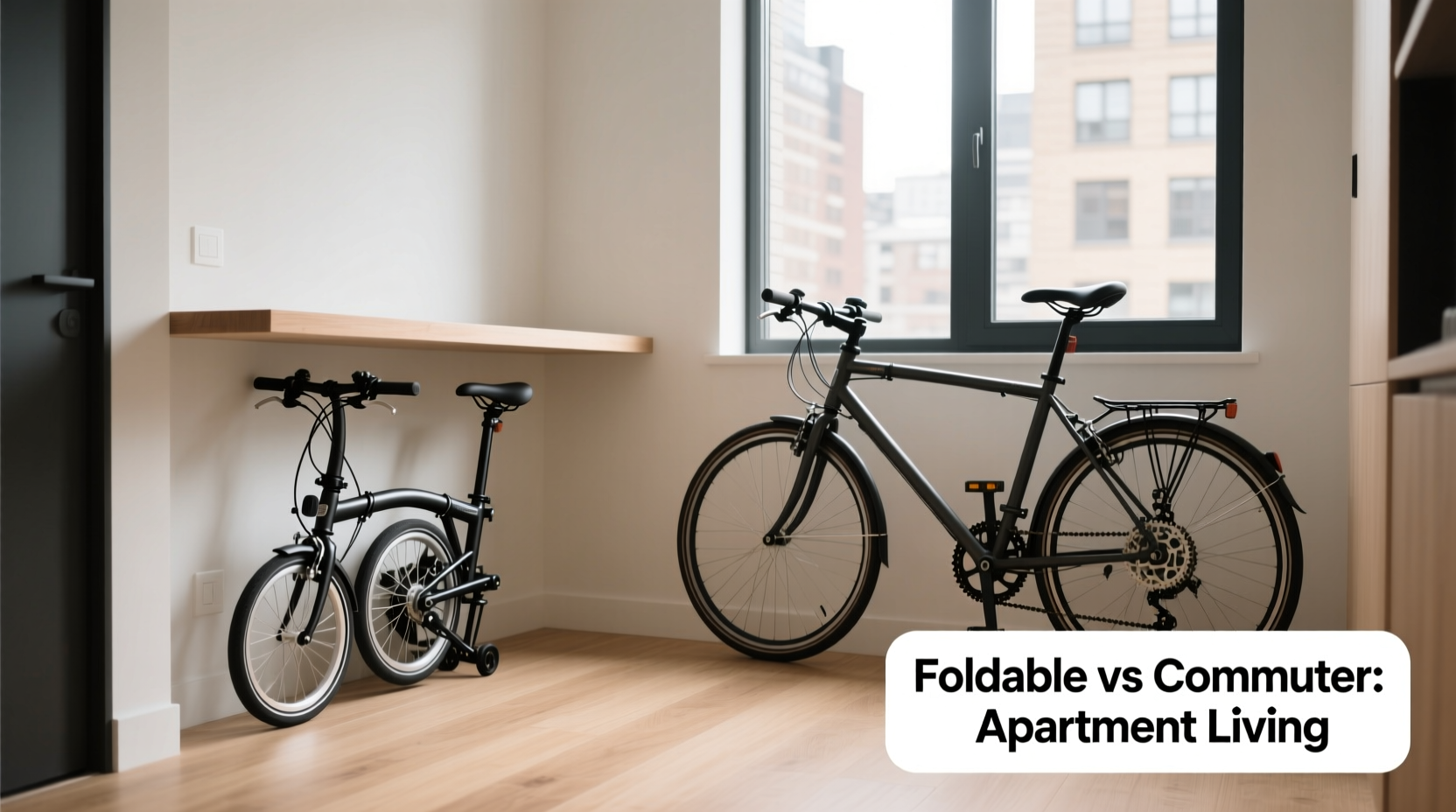
In cities where square footage comes at a premium, every inch counts. A full-size commuter bike typically requires 4–5 feet of floor space when stored indoors—a significant footprint in studios or one-bedroom units. Many apartment buildings lack secure outdoor bike racks, making indoor storage not just convenient but necessary for theft prevention.
Foldable bikes, by design, address this issue head-on. Most models collapse into a package roughly the size of a large suitcase—some as small as 30 x 20 x 12 inches. This allows them to fit neatly under a bed, beside a wardrobe, or even in a closet. Their compactness also makes them ideal for multi-modal transit; riders can fold them up and take them on subways, buses, or elevators without blocking pathways.
Standard commuter bikes, while generally longer and bulkier, aren't always impossible to store. Wall mounts and ceiling hoists can free up floor space, but these solutions require installation effort and may not be allowed in rental units. Additionally, lifting a 25–30 lb steel-frame bike overhead regularly can be impractical for many users.
Ride Quality and Performance Comparison
While foldable bikes excel in space-saving, they often compromise on ride comfort and efficiency. Smaller wheels (typically 16” or 20”) mean a bumpier experience on uneven pavement. The shorter wheelbase can feel less stable at higher speeds, and the frame geometry—optimized for folding—may lead to a more upright, less aerodynamic posture.
Standard commuter bikes, usually equipped with 700c wheels, roll more smoothly over cracks, potholes, and curbs. They maintain momentum better, require fewer pedal strokes per mile, and offer a more natural riding position. For commutes exceeding 3–5 miles, this difference becomes noticeable. Riders report less fatigue and greater confidence in traffic with larger-wheeled bikes.
Suspension features, tire width, and gearing also favor standard models. Commuter bikes commonly include front suspension forks, wider tires (35–45mm), and 7–9 speed drivetrains suited for hills and variable terrain. Foldable bikes often use narrower tires and simpler gearing systems, limiting versatility in hilly or rural areas.
“Ride quality isn’t just about comfort—it affects safety. A bike that handles predictably inspires rider confidence, especially in dense urban environments.” — Marcus Tran, Urban Cycling Advocate & Bike Safety Instructor
Portability and Multi-Modal Transit Use
One of the strongest arguments for foldable bikes lies in their seamless integration with public transit. In cities like New York, Tokyo, or London, where subway access is critical, being able to carry your folded bike onboard eliminates last-mile challenges. No need to wait for buses or hail rideshares—just unfold and ride from the station.
Many transit agencies explicitly allow folded bicycles during peak hours, while full-size bikes face restrictions. For example, Transport for London permits folded bikes at all times, whereas non-folding bikes may be barred during rush periods. Similar policies exist on commuter rails across Europe and North America.
Foldable models also shine for travelers. Lightweight versions (under 25 lbs) can be checked as luggage or carried onto trains and planes. Some ultra-portable designs, like the Brompton or Dahon Mariner D8, are used by digital nomads and business travelers who want to explore new cities without relying on rentals or taxis.
However, frequent folding and unfolding adds time and mechanical wear. Most models require securing latches, adjusting seats, and sometimes repositioning handlebars before each ride. This process takes 10–30 seconds—manageable daily, but potentially frustrating after a long day.
Cost, Durability, and Maintenance
Price is another key differentiator. Entry-level foldable bikes start around $500, but high-performance models with lightweight frames and premium components (e.g., Brompton, Tern) can exceed $2,000. These brands invest heavily in engineering durable hinges, reinforced joints, and corrosion-resistant materials to withstand repeated folding.
Standard commuter bikes range from $400 to $1,200 for comparable component quality. Because they lack complex folding mechanisms, they tend to have fewer points of failure. Chains, brakes, and drivetrains are often standardized, making repairs easier and cheaper at local bike shops.
Maintenance-wise, foldable bikes demand extra attention. Hinges and folding latches should be cleaned and lubricated monthly to prevent stiffness or rust. Misalignment from repeated use can affect steering precision. Additionally, smaller wheels mean tires wear faster and puncture more easily due to less surface contact and higher pressure requirements.
Still, durability isn’t solely determined by type. A well-maintained foldable bike used primarily for short urban trips can last 5–7 years. Likewise, a poorly stored commuter bike exposed to moisture may degrade quickly regardless of build quality.
| Factor | Foldable Bikes | Standard Commuters |
|---|---|---|
| Storage Footprint | Small (when folded) | Large (requires wall/ceiling mount) |
| Wheel Size | 16”–20” | 700c / 28” |
| Average Weight | 22–30 lbs | 25–35 lbs |
| Portability | High (can be carried) | Low (bulky to transport) |
| Ride Comfort | Moderate (bumpier on rough roads) | High (smoother roll, better shock absorption) |
| Transit-Friendly | Yes (allowed when folded) | Limited (often restricted) |
| Initial Cost | $500–$2,500+ | $400–$1,200 |
| Maintenance Complexity | Higher (hinges, alignment) | Lower (standard parts) |
Real-Life Scenario: Two Commuters, Two Choices
Consider two residents of downtown Chicago: Lena and Jamal.
Lena lives in a 550-square-foot studio with no balcony or storage room. Her building has narrow elevators and no bike room. She commutes 2.5 miles to work, mostly on smooth bike lanes, but often transfers between train and final leg. She chose a Brompton M6L. After folding it at the station, she rolls it through the office lobby and stores it under her desk. On weekends, she takes it on Amtrak to visit family in nearby suburbs. For her, the foldable bike isn’t just convenient—it enables a car-free lifestyle within tight spatial constraints.
Jamal, in contrast, rents a slightly larger one-bedroom with access to a secure basement storage area. His commute is 6 miles each way, including a steep hill near his neighborhood. He opted for a Trek FX3, a hybrid commuter with flat handlebars, suspension seatpost, and wide tires. While he must walk his bike up two flights to store it, the superior ride quality saves him energy. Over time, he’s logged over 1,200 miles without major issues. For him, performance outweighs portability.
Their stories illustrate that “better” depends on individual needs. There is no universal winner—only what aligns best with your environment, routine, and priorities.
Choosing the Right Option: A Step-by-Step Guide
Selecting between a foldable and standard commuter bike shouldn’t be arbitrary. Follow this logical sequence to make an informed decision:
- Assess Your Storage Space: Measure available indoor areas. Can you accommodate a full-size bike upright or mounted? If not, folding may be essential.
- Map Your Typical Routes: Are most trips under 3 miles on smooth surfaces? Foldables perform well here. Longer or hilly commutes favor standard bikes.
- Evaluate Transit Needs: Do you rely on trains or buses? Folding bikes offer flexibility if transit rules restrict full-size bikes.
- Set a Realistic Budget: Include potential accessories (locks, lights, mounts). High-end foldables cost more upfront but may save money on transit fares.
- Test Ride Both Types: Visit a local shop to compare handling, weight, and folding mechanics. Comfort is subjective and crucial.
- Check Building Policies: Some landlords prohibit indoor bike storage or modifications like wall hooks. Confirm rules before purchasing.
- Plan for Long-Term Use: Will your needs change in 2–3 years? Anticipate moves, job changes, or family growth that could shift priorities.
Frequently Asked Questions
Can I ride a foldable bike as comfortably as a regular commuter?
For short distances on paved paths, yes—especially with modern models featuring suspension seats and ergonomic grips. However, longer rides or rough roads will highlight the limitations of small wheels and rigid frames. Comfort is relative to expectations and route conditions.
Are foldable bikes harder to steal because they’re compact?
No—compactness doesn’t deter thieves. In fact, their portability makes them easier to carry away. Always use a sturdy U-lock or chain lock, and avoid leaving them unattended in public, even when folded.
Do foldable bikes lose value faster than standard ones?
Generally, no. Premium brands like Brompton retain strong resale value due to craftsmanship and loyal user bases. Mass-market foldables may depreciate faster, similar to entry-level commuter bikes.
Final Recommendations and Action Plan
If you live in a small apartment with no secure outdoor storage and prioritize convenience over speed, a foldable bike is likely the better choice. It maximizes space, integrates with transit, and supports a minimalist urban lifestyle. Look for models with robust hinge systems, pneumatic tires, and integrated carrying handles.
If you value ride quality, cover longer distances regularly, or have access to secure indoor storage, a standard commuter bike delivers superior performance and lower long-term maintenance. Its simplicity and reliability make it a sound investment for consistent, comfortable riding.
Quick Decision Checklist
- ✅ Apartment under 600 sq ft? → Lean toward foldable
- ✅ Commute under 3 miles? → Foldable viable
- ✅ Need to take transit frequently? → Foldable recommended
- ✅ Have wall or ceiling mounting options? → Standard commuter feasible
- ✅ Regularly ride on bumpy streets or hills? → Standard commuter preferred
- ✅ Budget over $1,500 for premium portability? → Consider high-end foldables
Conclusion
The choice between foldable bikes and standard commuters isn’t about which is objectively better—it’s about which fits your life better. In the context of apartment living, space efficiency often tips the scale toward foldables, but never at the expense of usability. A bike that’s stored out of sight but never ridden defeats its purpose.
By weighing your storage reality, commute demands, and personal preferences, you can select a bicycle that enhances—not complicates—your urban lifestyle. Whether you fold it under your desk or mount it proudly on the wall, the right bike empowers freedom, fitness, and sustainability—all within the footprint of your home.




 浙公网安备
33010002000092号
浙公网安备
33010002000092号 浙B2-20120091-4
Comments
No comments yet. Why don't you start the discussion?