
As urban centers grow denser and traffic congestion worsens, more commuters are turning to electric bikes as a sustainable, efficient alternative to cars and public transit. Among the options, two types dominate the market: foldable e-bikes and traditional (non-folding) e-bikes. While both offer electric assistance and eco-friendly transportation, their suitability for city life varies significantly based on lifestyle, space, and commute patterns. Choosing between them isn't just about preference—it's about matching your daily reality with the right tool.
In cities where parking is scarce, storage space limited, and public transit part of the journey, the foldable e-bike presents compelling advantages. Yet, traditional e-bikes often deliver superior ride quality, range, and durability. The real question isn’t which is “better,” but which is more practical for your specific urban routine.
Portability and Storage: The Foldable Advantage
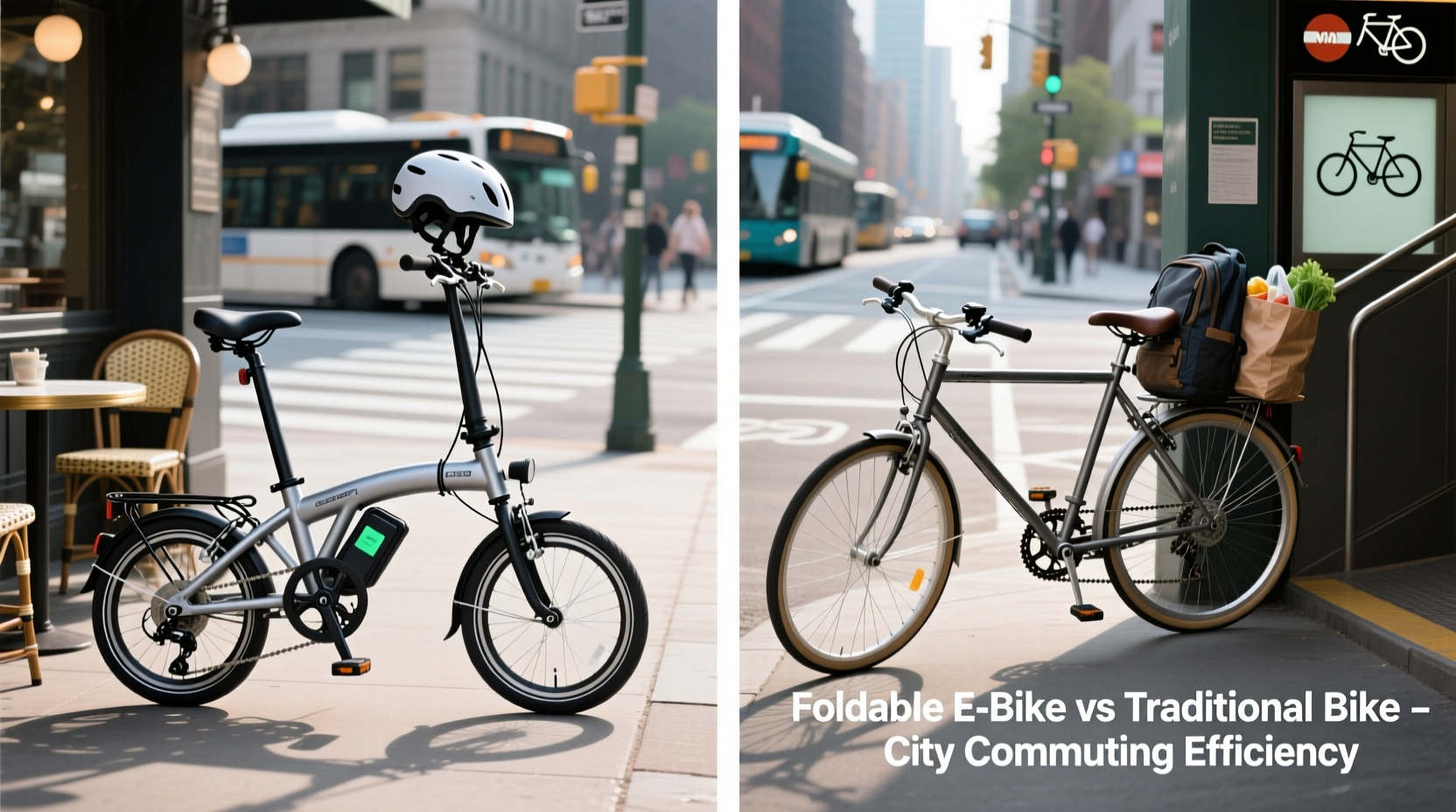
The most obvious difference lies in portability. Foldable e-bikes are engineered for compactness. Most models can be folded in under 30 seconds and stored upright in a closet, under a desk, or even taken onto buses and trains. This makes them ideal for apartment dwellers, office workers without secure bike parking, or anyone using multimodal transit.
In contrast, traditional e-bikes—while sometimes equipped with removable batteries or adjustable stems—remain bulky. Even when parked vertically, they require dedicated space that many city residents simply don’t have. A 2022 survey by the Urban Mobility Institute found that over 68% of urban cyclists cited lack of secure storage as a primary deterrent to owning a full-sized bike.
Foldable e-bikes typically weigh between 25–35 lbs (11–16 kg), while traditional models can exceed 50 lbs (23 kg). Lighter weight not only aids folding but also makes carrying up stairs or lifting onto a train platform more manageable. However, some high-end foldables use heavier motors and larger batteries, so always check specs before assuming lightness.
Ride Quality and Performance Comparison
Where foldable e-bikes excel in convenience, traditional e-bikes generally outperform in comfort and stability. Smaller wheels (often 16”–20”) on foldables can make for a bumpier ride on uneven pavement, potholes, or cobblestone streets common in older city districts. Larger 26” or 27.5” wheels on traditional models absorb shocks better and maintain momentum more efficiently.
Motor power and battery capacity also tend to favor traditional designs. With more frame space, manufacturers can install higher-capacity batteries (up to 750Wh or more), extending range to 60–100 miles per charge. Foldable models usually cap out around 400–500Wh, offering 25–50 miles depending on terrain and assist level.
| Feature | Foldable E-Bike | Traditional E-Bike |
|---|---|---|
| Weight | 25–35 lbs | 40–60 lbs |
| Wheel Size | 16”–20” | 26”–29” |
| Battery Range | 25–50 miles | 40–100 miles |
| Folding Time | 15–30 seconds | N/A |
| Storage Footprint | Compact (fits in corner) | Larger (needs garage or rack) |
| Price Range | $1,200–$2,500 | $1,000–$3,500+ |
That said, technological improvements have narrowed the performance gap. Modern foldable e-bikes like the Brompton Electric or Tern Vektron include suspension systems, torque sensors, and efficient mid-drive motors that rival many traditional commuter models. For shorter commutes under 10 miles, the ride difference may be negligible.
Real-World Commuting Scenarios
The best choice depends heavily on how you move through the city. Consider this example:
Mini Case Study: Maria lives in downtown Brooklyn and works in Midtown Manhattan. Her office is a 12-minute walk from the subway, but she avoids rush-hour crowds by biking to the station, folding her e-bike, and bringing it onboard. She stores it under her desk during work hours. A traditional e-bike would make this impossible due to size and transit rules. Her foldable e-bike cuts her total commute time by 22 minutes each way and eliminates last-mile walking in winter.
Maria’s situation highlights a key advantage: integration with public transport. In cities like London, Tokyo, Paris, and New York, folding bikes are explicitly permitted on subways and commuter rails during peak hours, whereas full-sized bikes face restrictions. For those relying on mixed-mode travel, foldables aren’t just convenient—they’re essential.
On the other hand, consider James, who lives in a ground-floor unit in Austin and commutes 15 miles each way along dedicated bike lanes. He values speed, comfort, and long-range capability. A traditional e-bike with a powerful motor and ergonomic geometry suits him far better. He doesn’t need to fold or carry his bike, and he charges it overnight in a secure garage.
Cost, Maintenance, and Long-Term Practicality
Upfront cost is another factor. While entry-level traditional e-bikes start around $1,000, quality foldable models begin closer to $1,800 due to complex hinge mechanisms and premium components. High-end folding e-bikes can reach $3,500, making them a significant investment.
Maintenance differs too. Folding bikes have more moving parts—hinges, locking levers, folding pedals—which introduces additional wear points. Regular lubrication of pivot joints and periodic checks of frame locks are necessary to ensure safety. Traditional e-bikes, with simpler frames, generally require less specialized upkeep.
“The engineering behind a reliable folding mechanism is deceptively complex. It must withstand daily stress while remaining lightweight. That’s why reputable brands invest heavily in hinge durability testing.” — David Lin, Senior Engineer at Pedego Electric Bikes
However, foldable e-bikes often come with higher build quality overall, as they target urban professionals willing to pay for convenience and design. Many include integrated lights, anti-theft features, and smartphone connectivity—features increasingly standard across both categories.
Choosing Based on Your Lifestyle: A Checklist
Still unsure which type fits your needs? Use this checklist to guide your decision:
- ✅ Do you live in an apartment with limited storage?
- ✅ Is your commute under 15 miles round-trip?
- ✅ Do you regularly use public transportation?
- ✅ Will you need to carry your bike up stairs or into elevators?
- ✅ Are theft and outdoor parking concerns high in your area?
- ✅ Do you value discretion and minimal footprint?
If you answered “yes” to three or more, a foldable e-bike is likely the more practical option.
Conversely, if your priorities include:
- Longer daily distances (15+ miles)
- Smoother ride over varied terrain
- Higher top speeds and hill-climbing power
- Lower upfront cost
- Dedicated indoor or secure outdoor storage
…then a traditional e-bike will serve you better.
FAQ: Common Questions Answered
Can foldable e-bikes handle hills?
Yes, most modern models come with 250W to 500W rear or mid-drive motors capable of handling moderate inclines. However, steeper hills may require more rider input compared to high-torque traditional e-bikes designed for mountainous terrain.
Are foldable e-bikes safe to ride unfolded?
Absolutely—if properly locked into place. Reputable brands conduct rigorous stress tests on folding mechanisms. Always perform a quick check before riding: ensure all latches are engaged and there’s no wobble at the hinges.
Do traditional e-bikes depreciate faster?
Not necessarily. Depreciation depends more on brand reputation, usage, and maintenance than form factor. However, foldable e-bikes from premium brands like Brompton retain resale value exceptionally well due to strong demand in urban markets.
Final Verdict: What’s More Practical for City Commuting?
For the majority of city dwellers, especially those in dense metropolitan areas with multimodal commutes, foldable e-bikes offer unmatched practicality. Their ability to transition seamlessly from road to train to office floor addresses the core challenges of urban mobility: space constraints, transit integration, and security.
That said, traditional e-bikes remain the superior choice for riders prioritizing performance, comfort, and longer distances. They shine in suburban-to-urban commutes, hilly cities, or for those with access to secure garages or covered parking.
The rise of micro-mobility has redefined what “practical” means. It’s no longer just about speed or distance—it’s about adaptability. In a city environment where every square foot counts and flexibility is currency, the foldable e-bike often emerges as the smarter, more agile solution.
Ultimately, the best e-bike is the one you’ll use consistently. If a traditional model sits unused because it’s too big to bring inside, or gets stolen off the street, its technical superiority means little. Conversely, a foldable that’s flimsy or underpowered won’t inspire confidence on longer rides.
Take Action: Find Your Ideal Urban Ride
Whether you lean toward the compact efficiency of a foldable or the robust performance of a traditional e-bike, now is the time to make a change. Cities worldwide are investing in bike infrastructure, and e-bikes are becoming central to sustainable urban living. Evaluate your commute, assess your space, and choose the option that removes friction—not adds to it.
Start by listing your non-negotiables: storage location, commute length, transit use, and budget. Then research models that meet those criteria. Read user reviews focused on daily commuting, not weekend adventures. And if possible, visit a local dealer for a hands-on demo.




 浙公网安备
33010002000092号
浙公网安备
33010002000092号 浙B2-20120091-4
Comments
No comments yet. Why don't you start the discussion?