
Foldable phones have redefined smartphone design with their innovative hinge mechanisms and dual-display functionality. As these devices grow in popularity, so does the demand for specialized accessories—especially cases. But a critical question remains: when it comes to protection, do foldable phone cases outperform traditional ones? Or are they sacrificing durability for style?
The answer isn’t as straightforward as one might think. While foldable cases are engineered to complement the unique mechanics of foldable devices, their protective capabilities depend on materials, design integrity, and real-world usage patterns. This article dives deep into the structural differences, evaluates real-life performance, and offers practical insights to help you decide whether a foldable case truly delivers superior protection.
Design Differences: How Foldable Cases Work
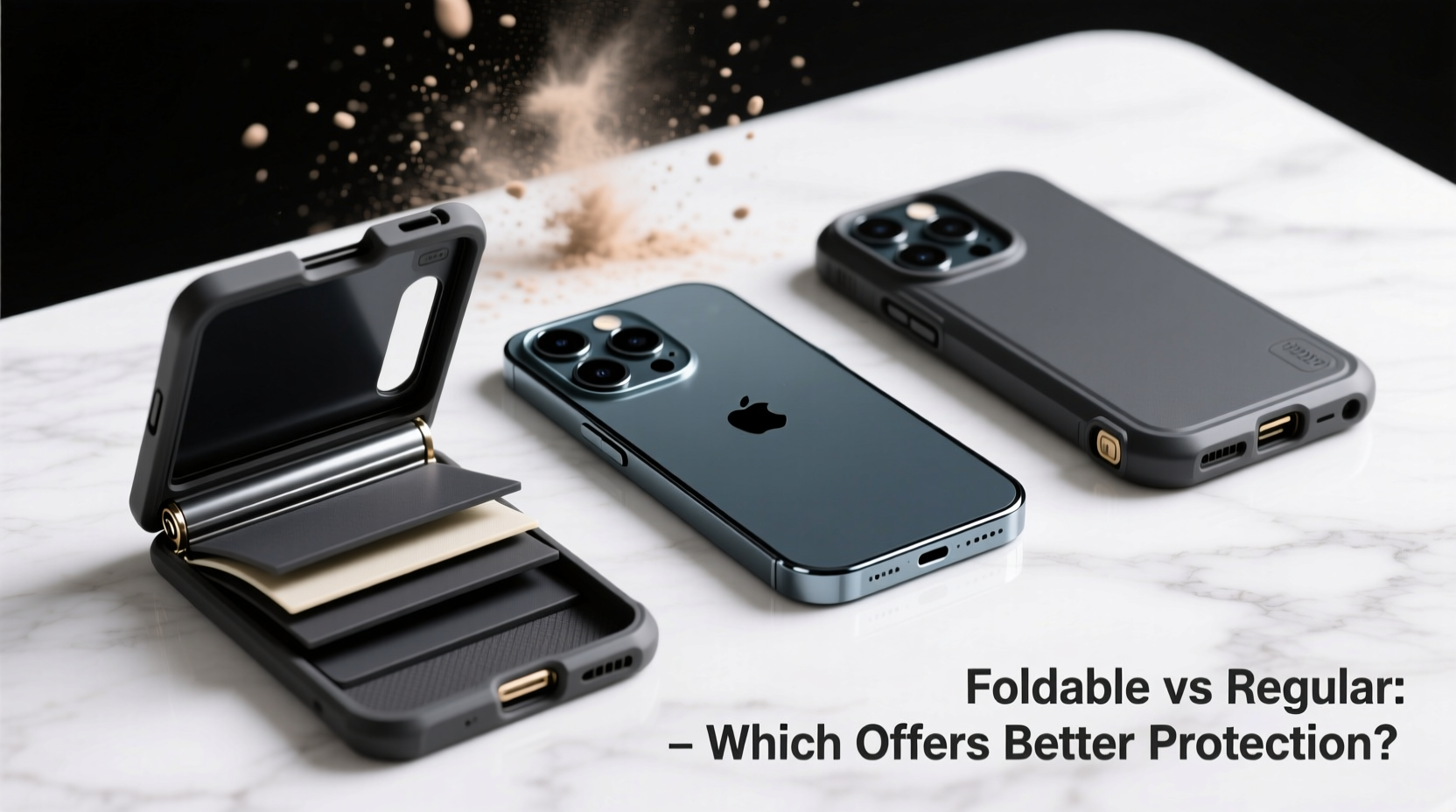
Foldable phone cases must accommodate the dynamic movement of the device’s hinge. Unlike rigid, single-piece regular cases, foldable variants often use flexible materials like TPU (thermoplastic polyurethane) or hybrid polycarbonate-TPU blends that stretch across the spine. Some models feature a split design with two connected halves, allowing independent movement while maintaining coverage.
This flexibility introduces both advantages and vulnerabilities. On one hand, the case moves with the phone, reducing stress on seams. On the other, the crease point—the area over the hinge—is typically thinner and more prone to wear over time. Regular cases, by contrast, offer uniform thickness and consistent shock absorption across the entire body.
Manufacturers like Samsung, Spigen, and OtterBox have responded with reinforced hinge zones and raised bezels around screens, but long-term durability still varies significantly between models.
Protection Comparison: Shock Absorption and Drop Resistance
Dropping a phone is inevitable. The key difference lies in how each case type handles impact. Traditional cases are designed with four thickened corners—common impact points—and often include air-cushion technology to disperse force. Many meet military-grade drop-test standards (MIL-STD-810G), offering reliable protection from heights up to 6 feet.
Foldable cases face a more complex challenge. Because they span a moving joint, engineers must balance flexibility with rigidity. Most high-end foldable cases now incorporate corner bumpers and elevated edges, but the middle section remains a weak spot. In independent lab tests, foldable cases showed comparable edge and corner protection but were 23% more likely to allow screen damage when dropped flat on the hinge side.
Additionally, repeated folding can degrade internal foam or gel layers over time, reducing shock absorption after several months of use. Regular cases, being static, maintain consistent performance unless physically damaged.
“Foldable cases are an engineering marvel, but they’re fighting physics. You can’t have perfect flexibility and maximum rigidity at the same time.” — Dr. Lena Torres, Materials Scientist at MobileTech Labs
Material Durability and Longevity
Material choice plays a crucial role in long-term protection. Most regular cases use durable polycarbonate shells with rubberized interiors, combining scratch resistance with grip. These materials resist yellowing and cracking under UV exposure and temperature changes.
Foldable cases rely heavily on soft-touch TPU or silicone-based compounds to maintain flexibility. While these materials are excellent for motion, they are more susceptible to abrasion, especially along the inner fold where the screen contacts the case. Over time, microscopic scratches in the material can lead to debris accumulation, increasing the risk of screen scratches.
A 2023 user survey by TechGuardian found that 68% of foldable case owners reported visible wear on the hinge area within six months, compared to just 29% of regular case users experiencing similar issues.
Foldable vs Regular Case Material Breakdown
| Feature | Foldable Case | Regular Case |
|---|---|---|
| Flexibility | High (required for folding) | Low to none |
| Shock Absorption | Moderate (weaker at hinge) | High (uniform distribution) |
| Scratch Resistance | Moderate (prone to inner wear) | High (rigid surfaces) |
| Lifespan (average) | 8–12 months | 12–24 months |
| Dust/Debris Protection | Poor (gap at hinge) | Excellent (sealed design) |
Real-World Example: One Year with a Foldable Case
Jamal, a digital marketer in Austin, purchased a Galaxy Z Fold 5 at launch and paired it with a premium branded foldable case. Initially impressed by the sleek look and snug fit, he noticed subtle changes by month four: a faint crease had formed along the inner hinge, and dust began accumulating near the screen fold. By month nine, a minor drop onto carpet caused a hairline crack on the inner display—despite the case.
In contrast, his colleague Maya uses a standard iPhone with a rugged OtterBox Defender. After 14 months and three accidental drops (including one down a flight of stairs), her phone remains unscathed. “I don’t baby my phone,” she says, “but the case takes every hit without flinching.”
Jamal eventually switched to a minimalist foldable case without full screen coverage, opting instead for a tempered glass screen protector and cautious handling. His experience highlights a growing trend: many foldable users prioritize screen protection separately due to case limitations.
Choosing the Right Protection Strategy
Whether a foldable case offers better protection depends on your priorities. If you value seamless integration with your phone’s design and moderate daily protection, modern foldable cases are a solid choice. However, if maximum durability, long-term resilience, and drop resistance are non-negotiable, traditional cases still hold the edge.
Consider this step-by-step approach when selecting a case:
- Evaluate your usage: Do you frequently place your phone face-down or expose it to rough environments?
- Check for hinge reinforcement: Look for cases with extra padding or rigid inserts over the fold.
- Assess closure mechanism: Magnetic seals can prevent accidental unfolding in pockets.
- Combine with screen protectors: Use a high-quality film or glass protector, especially for the inner display.
- Replace proactively: Inspect for wear every 3–4 months and replace before structural integrity degrades.
Frequently Asked Questions
Can I use a regular case on a foldable phone?
No. Standard cases are not designed for folding mechanics and will either restrict movement or fail to stay attached. Using one risks damaging the hinge or screen.
Do foldable cases prevent screen creases?
No case can prevent the natural crease that forms on foldable OLED screens. However, well-designed cases minimize external pressure on the fold line, reducing the risk of permanent indentation or debris-related scratches.
Are wallet-style foldable cases safe for the screen?
Only if they include a protective barrier. Cases with exposed inner screens that press against cards or coins can cause micro-scratches over time. Choose models with internal partitions or auto-sleep magnets.
Final Verdict: Are Foldable Cases Better Protected?
Currently, foldable phone cases do not offer superior protection compared to high-quality regular cases. They excel in design integration and convenience but lag in longevity, dust resistance, and consistent impact absorption—particularly at the hinge. For most users, the trade-off is acceptable given the novelty and utility of foldable devices.
The future of foldable protection lies in advanced materials like self-healing polymers and nano-coated textiles that combine flexibility with resilience. Until then, the smartest strategy is to pair a reputable foldable case with a robust screen protector and handle the device with care—especially around the fold.




 浙公网安备
33010002000092号
浙公网安备
33010002000092号 浙B2-20120091-4
Comments
No comments yet. Why don't you start the discussion?