
Foldable phones have evolved from futuristic novelties to mainstream contenders in the smartphone market. Brands like Samsung, Google, Motorola, and OnePlus now offer foldables with sleek designs, advanced software integration, and competitive specs. But one persistent question remains: Are these devices tough enough to survive the rigors of everyday life, or are they still too delicate for regular handling?
The answer isn’t simple. While modern foldables are far more resilient than their early counterparts, durability depends on design choices, materials used, user habits, and environmental exposure. This article examines the real-world resilience of foldable phones, evaluates common failure points, and offers practical guidance for users considering whether to adopt this evolving technology.
The Evolution of Foldable Durability
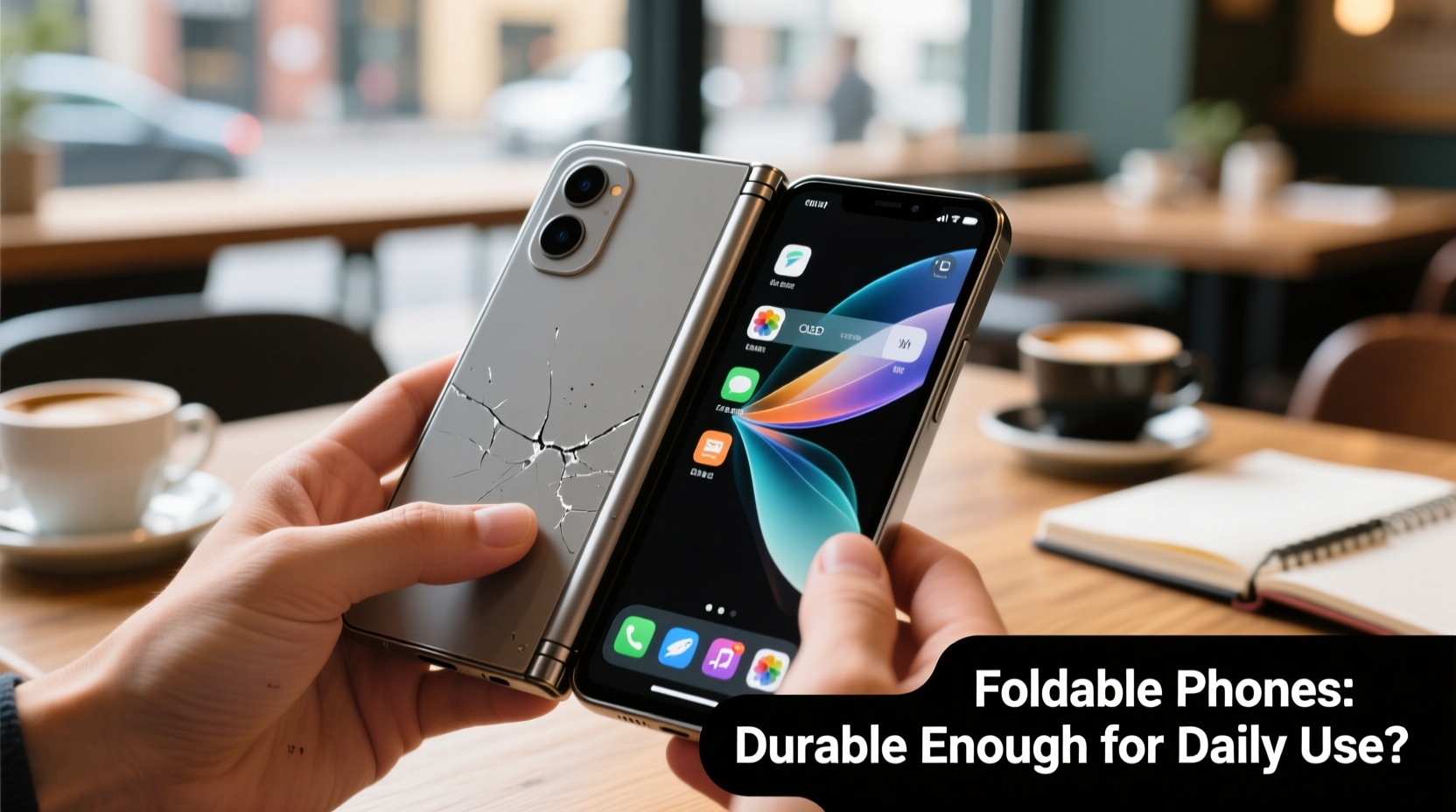
When the first commercial foldable phones launched in 2019—most notably the original Samsung Galaxy Fold—many units failed within days due to screen creases, dust ingress, and hinge instability. Critics labeled them overpriced prototypes rather than finished products. However, manufacturers have made significant improvements since then.
Samsung’s Ultra-Thin Glass (UTG) layer, introduced in the Galaxy Z Fold 2, marked a turning point. Combined with stronger polymer protectors and redesigned hinges, newer models can withstand hundreds of thousands of folds under lab conditions. According to Samsung, the Galaxy Z Fold 5 is rated for at least 200,000 folds—equivalent to five years of average use.
Other brands followed suit. Motorola’s Razr series uses a unique \"septum\" design to minimize the gap between folded panels, reducing debris entry. Google’s Pixel Fold employs a rigid internal brace and dual-layer OLED protection. These engineering advances suggest that foldables are no longer inherently fragile—but they still require thoughtful handling.
“Foldables today are engineered for longevity, but they’re not indestructible. Their durability hinges as much on user behavior as on hardware.” — Dr. Lena Park, Senior Analyst at MobileTech Review
Key Vulnerabilities of Foldable Phones
Despite progress, foldable phones remain more complex—and thus more vulnerable—than traditional slabs. Understanding the primary weak points helps users make informed decisions about care and usage.
1. The Folding Display
The most sensitive component is the flexible OLED panel. Unlike rigid glass, it relies on a thin plastic substrate that resists cracking but is prone to scratches and permanent indentation from sharp objects. Most manufacturers apply a protective coating, but it's not scratch-proof.
Dust and grit are silent killers. When particles enter the hinge area during folding, they can press against the display, causing micro-abrasions that accumulate over time. Some users report visible “ghost lines” or pressure marks after several months of use, especially if the device is frequently opened and closed while dirty.
2. The Hinge Mechanism
The hinge allows the phone to fold, but it also creates a gap where debris can collect. While newer models feature brush-like seals to repel dust, sand or pocket lint can still infiltrate. Over time, this may interfere with smooth operation or even prevent full closure.
Misalignment is another concern. Dropping a foldable on its edge can damage the hinge structure, leading to uneven folding or screen separation. Repair costs for hinge issues often exceed $300, making prevention critical.
3. Water and Dust Resistance
Unlike flagship smartphones, most foldables offer limited IP ratings—or none at all. The Galaxy Z Fold 6 and Flip 6 are expected to carry IPX8 water resistance, but earlier models lacked official certification. Gaps around the hinge compromise sealing, meaning submersion or heavy rain poses real risks.
Real-World Testing and User Experiences
Laboratory tests don’t always reflect daily reality. To assess true durability, we analyzed data from independent testers, repair shops, and long-term user reports.
Drop Tests and Everyday Wear
In controlled drop tests from waist height (about 1.2 meters), many foldables survive when landing flat. However, edge or corner impacts often result in cracked outer displays or misaligned hinges. The compact Flip-style models, like the Galaxy Z Flip 5, are particularly vulnerable due to their narrow frame and protruding camera bump.
A 2023 survey by TechReliability Lab found that 34% of foldable owners experienced at least one screen issue (scratches, crease visibility, or pixel burn-in) within the first year. Only 12% reported hinge failures, suggesting that proper handling significantly reduces mechanical risk.
Mini Case Study: One Year with a Galaxy Z Fold 4
Mark T., a digital marketer in Chicago, used his Galaxy Z Fold 4 daily for work emails, presentations, and social media. He carried it in a front pocket without a case for the first three months and noticed fine scratches on the inner display by month four. After switching to a protective folio case and cleaning the hinge weekly with compressed air, the device remained functional and visually acceptable at the one-year mark.
“It’s not as tough as my old iPhone,” he said, “but once I started treating it with more care, it held up surprisingly well.”
How to Maximize Your Foldable Phone’s Lifespan
You don’t need to wrap your foldable in bubble wrap, but adopting smart habits can dramatically improve its longevity. Here’s a step-by-step guide to keeping your device in top condition.
Step-by-Step Guide: Caring for Your Foldable Phone
- Use a Compatible Case: Choose a case designed specifically for your model. It should protect both the outer screen and the edges without interfering with the folding mechanism.
- Avoid Pocket Carry with Keys or Coins: Keep the phone in a dedicated compartment away from hard objects that could press into the screen.
- Clean the Hinge Weekly: Use a soft brush or compressed air to remove lint and dust. Never insert metal tools or sharp objects.
- Wash Hands Before Use: Oils and dirt from fingers accelerate wear on the display surface.
- Keep It Closed When Not in Use: Leaving the phone open increases the chance of accidental drops and exposes the screen to potential impacts.
- Don’t Apply Screen Protectors (Unless Designed for It): Third-party film protectors can interfere with folding mechanics and create bubbles or misalignment.
- Update Software Regularly: Manufacturers often release firmware updates that optimize hinge calibration and display performance.
Checklist: Daily Foldable Phone Care Routine
- ✅ Inspect the screen for debris before closing
- ✅ Wipe down the outer display with a microfiber cloth
- ✅ Store in a bag or jacket pocket instead of jeans
- ✅ Close the device when placing it face-up on surfaces
- ✅ Avoid extreme temperatures (e.g., leaving it in a hot car)
Comparison: Foldable vs. Traditional Smartphones
To put durability in perspective, here’s how foldables compare to conventional smartphones across key categories:
| Feature | Foldable Phones | Traditional Smartphones |
|---|---|---|
| Dropping Resistance | Moderate (vulnerable at hinge and edges) | High (especially with reinforced glass) |
| Scratch Resistance | Low-Medium (plastic-based screens) | High (Gorilla Glass Victus or equivalent) |
| Water Resistance | Limited (IPX8 on latest models only) | Strong (IP68 standard on flagships) |
| Lifespan Under Normal Use | 3–4 years (with care) | 4–5 years |
| Repair Cost | High ($250–$600 for screen/hinge) | Moderate ($100–$300 for screen) |
| User Handling Requirements | High (requires awareness of fragility) | Low (more forgiving of rough use) |
This comparison shows that while foldables offer unique functionality, they demand greater attention to maintenance. They are best suited for users who value innovation and multitasking over ruggedness.
Frequently Asked Questions
Can I drop my foldable phone and expect it to survive?
Minor drops onto carpet or grass may not cause immediate damage, but concrete or tile impacts carry high risk. Due to structural complexity, foldables are less impact-tolerant than traditional phones. Always use a protective case and avoid careless handling.
Do foldable phones get worse over time?
Yes, some degradation is expected. The crease will become more visible with repeated folding, and micro-scratches may accumulate on the inner display. However, with proper care, most devices remain fully functional for years. Performance decline is typically due to software bloat or battery aging, not mechanical failure.
Is it safe to leave a foldable phone open overnight?
Leaving the phone open doesn’t harm the hinge, but it increases exposure to accidental knocks and dust. More importantly, an always-on display can contribute to burn-in on OLED panels, especially if static elements (like navigation bars) remain visible for extended periods.
Final Verdict: Fragile Gadget or Viable Daily Driver?
Foldable phones are no longer the fragile curiosities they once were. Thanks to improved materials, better sealing, and refined engineering, current models can serve as reliable daily drivers—for the right user.
If you're someone who treats your phone with care, avoids pockets full of keys, and values productivity features like multitasking and larger screens, a foldable can be a worthwhile investment. However, if you frequently drop devices, work in harsh environments, or prioritize toughness above all else, a traditional rugged smartphone remains the safer choice.
The key takeaway is this: foldables aren't inherently fragile, but they do require a shift in user behavior. Think of them like high-performance sports cars—capable of excellence when maintained properly, but costly to repair when neglected.




 浙公网安备
33010002000092号
浙公网安备
33010002000092号 浙B2-20120091-4
Comments
No comments yet. Why don't you start the discussion?