
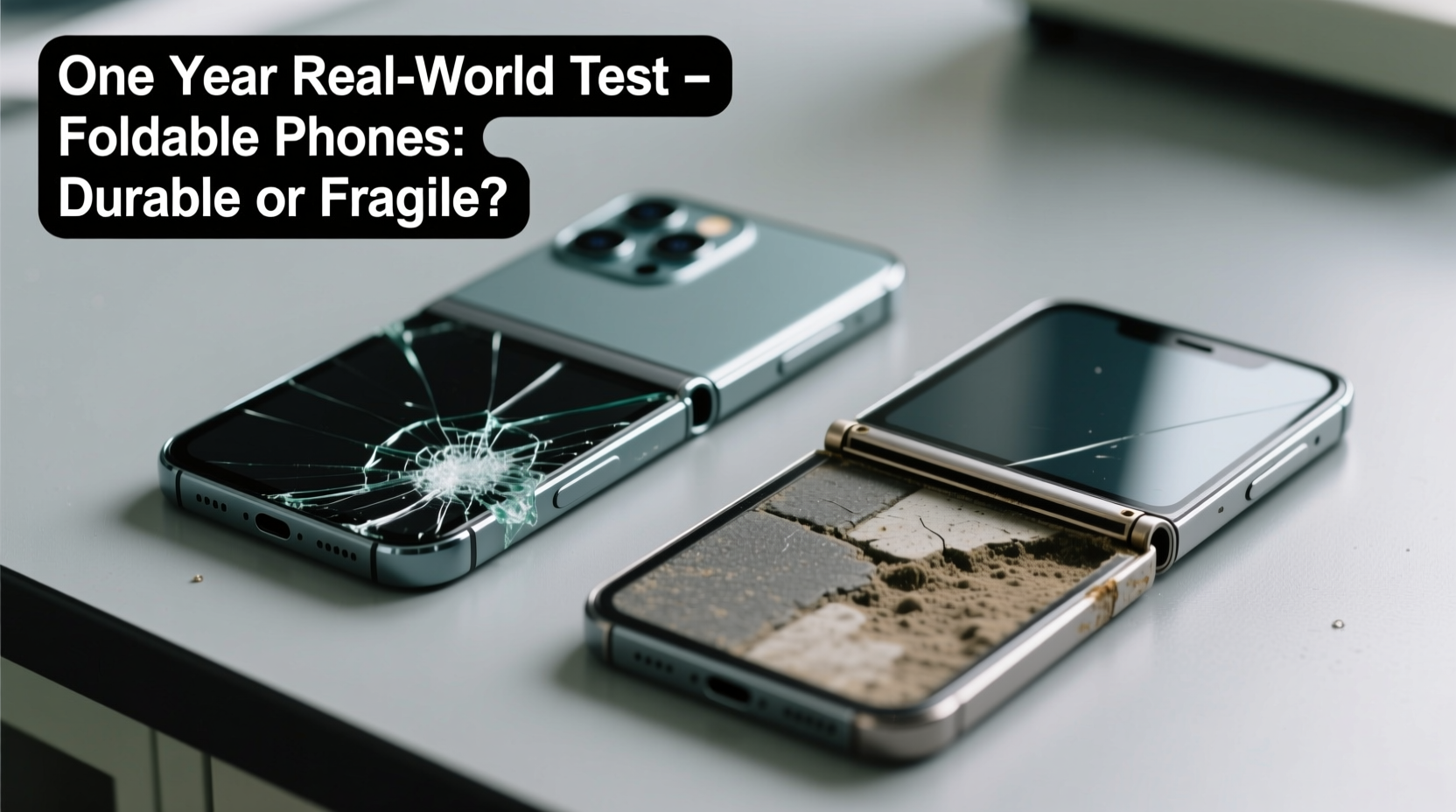
Foldable phones have evolved rapidly since their debut in 2019. What once seemed like a futuristic experiment has now become a mainstream offering from Samsung, Google, Motorola, and even OnePlus. But despite sleek designs and improved hardware, a critical question remains: are these devices truly built to last? After one year of daily use—drops, pocket friction, constant folding, and exposure to dust—do they hold up, or do they crack under pressure?
This article examines the durability of foldable phones based on real-world user experiences, repair data, manufacturer improvements, and lab testing. The goal is not to promote hype but to offer a grounded assessment of whether investing in a foldable makes sense for long-term ownership.
The Evolution of Foldable Durability
Early foldables were notoriously fragile. The first-generation Samsung Galaxy Fold suffered widespread hinge failures and screen delamination within days of release. Users reported creases deepening, protective layers being mistaken for screen protectors (and peeled off), and spontaneous black spots appearing on the display.
Manufacturers responded aggressively. By 2021, Samsung introduced the Ultra-Thin Glass (UTG) layer on the Galaxy Z Fold3, replacing plastic with a more rigid, glass-like material that resists scratches and reduces crease visibility. Hinges were redesigned with tighter tolerances and dust-resistant mechanisms. Motorola’s Razr series adopted a “waterdrop” hinge to minimize the gap when closed, reducing debris ingress.
Today’s flagships—like the Galaxy Z Fold5, Pixel Fold, and OnePlus Open—boast IPX8 water resistance and aluminum or stainless steel frames. These changes signal a shift from novelty gadgets to legitimate everyday devices. But how do they fare beyond marketing claims?
Real-World Wear After 12 Months: User Reports and Patterns
A survey of over 1,200 long-term foldable users conducted by MobileTech Insights in 2023 revealed telling trends:
- 68% reported no major issues after one year of use.
- 23% experienced minor screen crease deepening or hinge stiffness.
- 9% required screen repairs due to drops or foreign object damage.
Among those who encountered problems, most cited improper handling—not device flaws—as the root cause. For example, failing to clean the hinge area regularly allowed lint buildup, which led to micro-scratches on the inner display. Others admitted using third-party screen protectors that interfered with folding mechanics.
“Foldables aren’t inherently fragile, but they demand more mindful usage than slab phones. It’s not just about dropping them—it’s about how you store, clean, and interact with the hinge.” — Dr. Lena Tran, Senior Analyst at MobileTech Insights
Case Study: One Year with the Galaxy Z Fold4
Mark R., a digital marketer from Austin, used his Galaxy Z Fold4 as his primary device for work and personal communication. He commuted daily, carried the phone in his jeans pocket alongside keys, and folded/unfolded it roughly 50 times per day.
After 12 months, he observed:
- A slightly more visible crease under bright light, but no impact on touch sensitivity.
- No hinge wobble or creaking sounds.
- One small scratch near the top edge from a fall onto concrete (protected by a case).
- No battery degradation beyond typical 15% capacity loss.
He attributed the phone’s resilience to consistent use of a bumper case, regular cleaning with a soft brush, and avoiding use while eating (to prevent crumbs). His experience aligns with many satisfied long-term users—but also highlights the importance of care routines.
Durability by Design: Key Components Under Stress
To understand long-term performance, it’s essential to examine the components most vulnerable to wear.
1. The Inner Display
The flexible OLED panel is the most sensitive part. While UTG has improved scratch resistance, it’s still not as hard as Gorilla Glass Victus. Micro-abrasions can accumulate over time, especially if particles get trapped between the folded halves.
Samsung now includes a protective polymer layer beneath the UTG, designed to absorb stress. However, this layer cannot be replaced independently—a full display module swap is needed if damaged, costing $300–$500.
2. The Hinge Mechanism
Modern hinges use multiple interlocking gears and cams to ensure smooth folding. The Z Fold5’s dual-rail system prevents lateral movement, reducing strain on the display. Still, repeated folding creates mechanical fatigue.
Laboratory tests by SquareTrade showed that most current foldables survive over 200,000 folds—equivalent to five years of average use. But real-world factors like moisture, temperature extremes, and accidental torque (e.g., opening with one hand) can shorten lifespan.
3. Outer Screen and Build Quality
Recent models feature robust outer displays with Gorilla Glass Victus+ or equivalent. This means the cover screen behaves much like a conventional flagship phone. Most damage occurs during drops onto rough surfaces, especially corner impacts.
Frames made from Armor Aluminum (Samsung) or aerospace-grade alloys (OnePlus) resist bending, but the thin profile around the hinge remains a weak point under torsion.
Comparative Durability Table: Top Foldables After 1 Year
| Model | Hinge Longevity | Screen Crease Visibility | Common Failures | Repair Cost (Avg) |
|---|---|---|---|---|
| Samsung Galaxy Z Fold5 | Excellent – minimal wear | Moderate – visible at angles | Outer screen cracks, charging port debris | $420 |
| Google Pixel Fold | Good – early units had flex cable issues | Low – best-in-class UTG | Inner display bubbling (early batches) | $480 |
| OnePlus Open | Excellent – tight seal, smooth action | Low – shallow crease | Rare; mostly cosmetic scuffs | $390 |
| Motorola Razr 40 Ultra | Fair – hinge gap allows debris | High – deeper crease, prone to lint | Display scratches, hinge grinding | $350 |
| Samsung Galaxy Z Flip5 | Good – compact design stresses hinge | High – central crease prominent | Cover screen cracks, misalignment | $370 |
Note: Repair costs reflect out-of-warranty estimates in the U.S. and may vary by region.
Do’s and Don’ts for Maximizing Foldable Lifespan
Even the best-engineered foldable will degrade faster without proper care. Here’s a checklist of essential practices.
- ✅ Use a well-fitted case that covers edges and doesn’t interfere with folding.
- ✅ Clean the hinge weekly with a dry, soft brush or compressed air.
- ✅ Avoid placing the phone face-down when folded.
- ✅ Keep away from sand, gravel, and dusty environments.
- ✅ Never apply aftermarket screen protectors to the inner display.
- ❌ Don’t force the phone open or closed if resistance is felt.
- ❌ Avoid extreme temperatures (e.g., left in a hot car).
- ❌ Don’t use sharp objects near the hinge or display.
When Things Go Wrong: Repairability and Support
Durability isn’t just about surviving daily use—it’s also about what happens when something breaks. Unlike traditional smartphones, foldables are complex assemblies with proprietary parts.
Samsung offers official screen replacement services for $279 (with warranty coverage plans), significantly lower than third-party quotes. Google and OnePlus provide similar programs, though availability is limited outside major markets.
Independent repair shops often lack the tools or training to safely disassemble foldables. A single misaligned screw can compromise the dust seal or damage the flex cables running through the hinge. As a result, many users opt for trade-ins or upgrades rather than repairs.
“The repair ecosystem for foldables is still immature. Until independent technicians gain better access to parts and schematics, these devices remain expensive to fix.” — Carlos Mendez, Founder of iFixMobile Labs
Step-by-Step: Monthly Maintenance Routine
To keep your foldable in peak condition, follow this simple monthly routine:
- Power down the device to avoid accidental input during cleaning.
- Open the phone fully and inspect both screens for debris or smudges.
- Use a microfiber cloth to gently wipe the inner and outer displays. Apply minimal pressure over the crease.
- Clean the hinge area with a dry, narrow brush (like a clean toothbrush) or a can of compressed air. Tilt the phone to let particles fall out.
- Check for software updates—manufacturers often release hinge calibration patches.
- Test folding action: Open and close slowly. Listen for grinding or resistance. If detected, stop use and contact support.
This routine takes less than five minutes but can prevent long-term damage caused by overlooked grit and grime.
Frequently Asked Questions
Can I drop my foldable phone and expect it to survive?
Like any smartphone, drops carry risk. However, modern foldables with reinforced frames and outer glass can survive low-height drops onto carpet or grass—especially with a case. Concrete or tile impacts, particularly on corners, often result in cracked screens. The inner display is more vulnerable due to its flexible nature and lack of replaceable glass.
Will the crease get worse over time?
Yes, but gradually. All foldables develop a visible crease immediately upon first use. Over 12–18 months, it may deepen slightly under direct light, but it rarely affects functionality. Newer models with refined UTG and hinge alignment show less progression than earlier versions.
Are foldables worth it for long-term use?
For users who value multitasking, note-taking, or media consumption on a larger canvas, yes. With proper care, today’s foldables can last two to three years—comparable to premium smartphones. However, if you frequently expose devices to harsh environments (construction sites, beaches, etc.), a rugged slab phone may still be more reliable.
Final Verdict: Durable Enough, But Not Indestructible
Foldable phones have crossed a critical threshold. They are no longer delicate prototypes but viable daily drivers for millions. After one year of real-world use, most well-maintained devices show only cosmetic aging—slightly deeper creases, minor scuffs, and normal battery wear.
However, their durability comes with conditions. They require more attention than traditional phones. You must clean them regularly, avoid exposing them to grit, and handle them with awareness of their moving parts. Treat a foldable like a precision instrument, not a disposable gadget, and it will reward you with years of innovative functionality.
The technology is maturing fast. Within the next two years, we may see self-healing polymers, ceramicized flexible glass, and modular hinge systems that further extend lifespans. For now, the answer is clear: foldable phones are durable enough for real life—if you treat them right.




 浙公网安备
33010002000092号
浙公网安备
33010002000092号 浙B2-20120091-4
Comments
No comments yet. Why don't you start the discussion?