
Living in an apartment doesn’t mean sacrificing fitness. With limited square footage, every piece of equipment must earn its place. Two popular options—foldable treadmills and compact ellipticals—promise cardio workouts without overwhelming your space. But which truly fits better in a compact urban home? The answer depends on more than just dimensions. It involves understanding how each machine impacts your daily routine, floor plan, noise levels, and long-term motivation.
This guide breaks down the real-world differences between foldable treadmills and compact ellipticals, helping you choose based on practicality, not marketing claims. Whether you live in a studio or a two-bedroom high-rise, the right decision can turn a corner of your living room into a functional gym.
Space Efficiency: Dimensions and Footprint Comparison
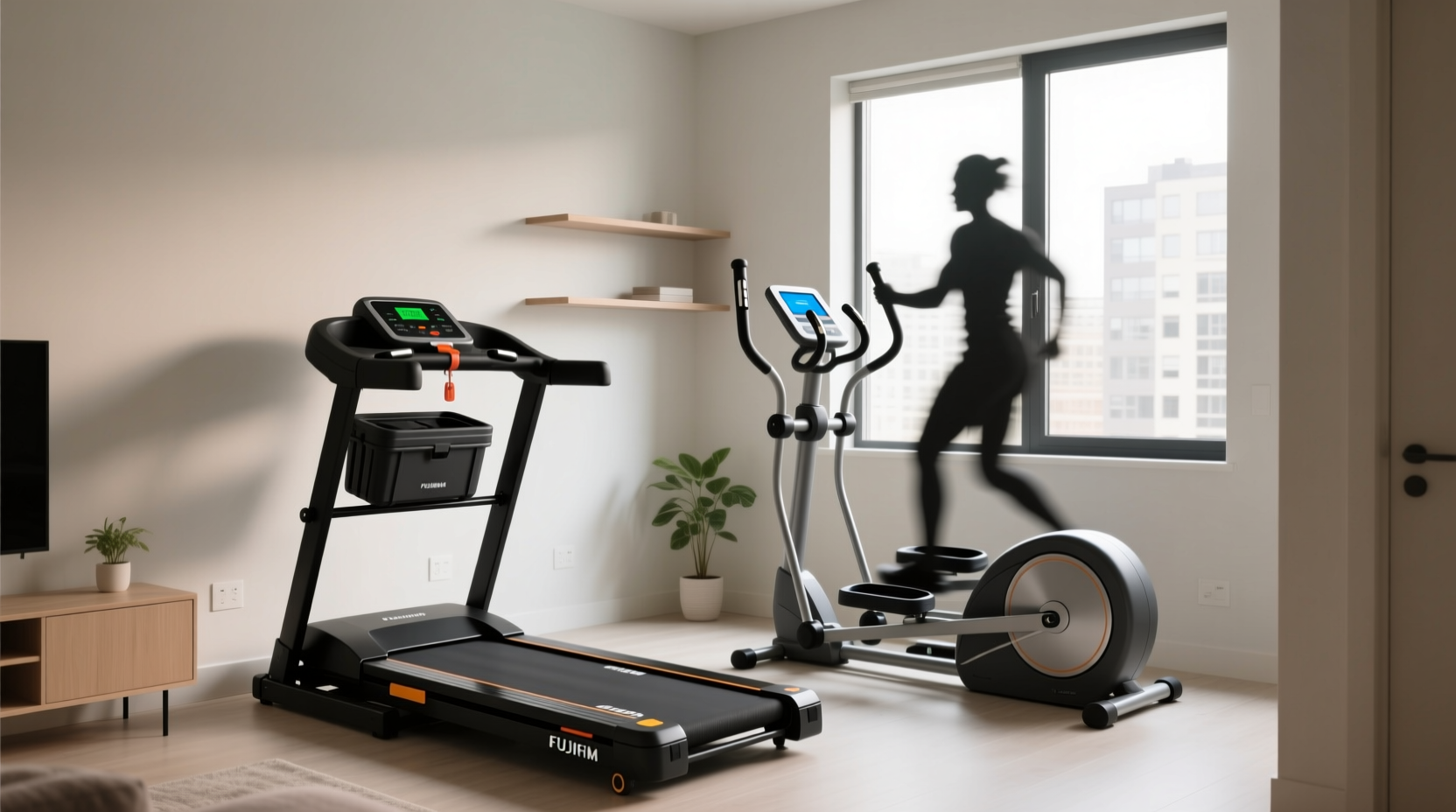
The most immediate concern for apartment dwellers is physical space. Both machines are designed with compactness in mind, but their actual footprint—especially when in use and stored—varies significantly.
Foldable treadmills typically range from 60 to 75 inches in length and 30 to 36 inches in width. When upright, they stand about 50 to 60 inches tall. While folded, many models reduce depth by 50–70%, allowing them to be tucked against a wall or behind a door. However, even in storage mode, they require vertical clearance and a stable surface to avoid tipping.
Compact ellipticals, on the other hand, are generally shorter—around 45 to 60 inches long—and maintain a consistent low profile. Most do not fold vertically like treadmills but instead slide under a bed or sofa due to their lower height (typically 12–18 inches). Their fixed structure means less moving parts, but also less flexibility in reconfiguration.
| Feature | Foldable Treadmill | Compact Elliptical |
|---|---|---|
| Average Length (Use Mode) | 60–75 in | 45–60 in |
| Average Width | 30–36 in | 20–28 in |
| Height (Upright/Folded) | 50–60 in / 70–75 in | 12–18 in (fixed) |
| Folding Mechanism | Vertical hydraulic fold | Rarely folds; may have wheels |
| Storage Flexibility | High (if ceiling permits) | Moderate (low-profile sliding) |
Noise and Vibration: Impact on Neighbors and Daily Life
In apartments, sound travels through floors and walls. A machine that’s efficient but loud can strain relationships with downstairs neighbors or disrupt quiet hours.
Foldable treadmills generate impact noise from foot strikes, especially at higher speeds. Even with cushioned decks and anti-vibration mats, jogging produces noticeable thumping. Running at 6+ mph on a second-floor unit may prompt complaints. Some users report needing rubber mats up to ¾ inch thick to dampen transmission.
Compact ellipticals operate nearly silently. Since there’s no foot impact—just smooth gliding motion—the primary sound comes from the flywheel or magnetic resistance system, usually a soft whir. This makes ellipticals ideal for early morning or late-night workouts without disturbing others.
“Residential noise complaints related to fitness equipment spike during evening hours. Low-impact machines like ellipticals are consistently less disruptive.” — Dr. Lena Park, Urban Acoustics Researcher, NYU Department of Environmental Health
If you share thin flooring or live above sensitive neighbors, the elliptical holds a clear advantage. Treadmills require additional investment in soundproofing solutions to be considerate.
Workout Quality and Fitness Goals
Space and noise matter, but so does effectiveness. Your fitness goals should shape your equipment choice—not the other way around.
Treadmills offer unmatched versatility. Walking, jogging, sprinting, and interval training engage more muscle groups and burn more calories per session than ellipticals. Incline settings simulate hill climbs, boosting cardiovascular intensity and leg strength. For runners training for races or those aiming to lose weight quickly, treadmills provide a more dynamic stimulus.
Ellipticals deliver low-impact, joint-friendly cardio. They engage both upper and lower body when equipped with moving handlebars, making them excellent for full-body conditioning without stress on knees or hips. However, calorie burn averages 10–20% lower than equivalent treadmill efforts. Users often find elliptical workouts less mentally engaging due to repetitive motion, leading to shorter sessions over time.
Consider this: If you’re recovering from injury, managing arthritis, or prefer steady-state cardio, the elliptical supports sustainable routines. But if you crave variety, speed work, or outdoor simulation, the treadmill offers a more adaptable experience—even if it demands more compromise in space and noise.
Real-Life Scenario: Maria’s Studio Apartment Decision
Maria lives in a 500-square-foot Brooklyn studio. She works from home and wants to stay active without turning her bedroom-living room combo into a gym warehouse. After researching, she tested both machines at a local fitness store.
The foldable treadmill she liked measured 72” x 34” when open—occupying nearly a third of her floor space. Though it folded vertically, the upright height (74”) meant it couldn’t fit in her closet. She’d have to keep it visible in the living area unless stored during the day. Plus, her downstairs neighbor had already complained about footsteps.
The compact elliptical was only 52” long and 24” wide. At 15” high, it could slide under her platform bed. It weighed 65 lbs—manageable with attached wheels—but lacked incline or speed variation beyond resistance levels. Still, Maria valued discretion and quiet. She prioritized consistency over intensity.
She chose the elliptical. “I knew I wouldn’t use something that took over my space or annoyed my neighbors,” she said. “Even if it burns slightly fewer calories, I’ll actually use it five days a week.”
Maria’s story illustrates a key truth: the best machine isn’t the most advanced—it’s the one you’ll use regularly within your environment’s constraints.
Buying Checklist: Choosing the Right Machine for Your Apartment
Before purchasing, evaluate these critical factors to avoid buyer’s remorse:
- Measure twice: Confirm clearance for use and storage, including ceiling height for folding treadmills.
- Check weight capacity: Ensure the machine supports your body weight safely—especially important for taller or heavier users.
- Test noise level: Visit a showroom or watch real-user videos to gauge operational sound.
- Verify assembly requirements: Some units need two people or tools; others arrive mostly pre-built.
- Review return policy: Buy from retailers offering at least a 30-day trial period in case it doesn’t fit as expected.
- Look for transport wheels: Essential for moving either machine short distances, especially on carpet or hardwood.
- Assess tech features: Bluetooth, app integration, and preset programs add value but aren’t essential for basic use.
Long-Term Practicality and Maintenance
Durability and upkeep influence how well each machine integrates into apartment life over time.
Foldable treadmills have more moving parts: hydraulic lifts, folding hinges, motorized belts, and electronic consoles. These components increase the likelihood of mechanical issues. Belts may require periodic tensioning; motors can overheat in poorly ventilated spaces. Regular lubrication (every 15–20 hours of use) is necessary to prevent premature wear.
Compact ellipticals have sealed bearings and magnetic resistance systems that require little maintenance. No belt means no slipping or fraying. Most models last 7–10 years with basic dusting and occasional bolt tightening. Fewer breakdowns translate to fewer service calls and replacement costs.
Additionally, treadmills tend to be heavier (150–250 lbs), making relocation difficult when moving apartments. Ellipticals average 60–100 lbs, often disassemblable into two pieces for easier transport.
If you anticipate frequent moves or lack technical confidence, the elliptical’s simplicity becomes a major asset.
Frequently Asked Questions
Can I use a foldable treadmill on a second-floor apartment?
Yes, but with precautions. Use a high-density rubber mat (at least 6mm thick) to absorb vibration. Avoid running at high speeds, especially during quiet hours. Check your building’s noise policies and inform neighbors if possible.
Do compact ellipticals build leg strength effectively?
They improve muscular endurance and cardiovascular health, but don’t replicate the resistance of weight training or hill walking. To increase intensity, raise the resistance level and use proper form—pressing through heels and engaging glutes. Pair with bodyweight exercises for balanced lower-body development.
Which machine takes up less visual space?
The elliptical wins here. Its low profile blends into furniture lines, while a folded treadmill often looks like a large appliance standing in the corner. For renters concerned about aesthetics, the elliptical is less intrusive.
Final Recommendation: Matching Machine to Lifestyle
There’s no universal winner. The best choice aligns with your priorities:
If you value high-intensity workouts, enjoy walking or running, and have adequate ceiling height and floor reinforcement, a foldable treadmill can work—even in an apartment. Just commit to using a mat, respecting quiet hours, and storing it properly.
If you prioritize quiet operation, minimal visual impact, joint safety, and consistent daily use, a compact elliptical is likely the smarter fit. It integrates seamlessly into small spaces and requires almost no adjustment to your living rhythm.
Ultimately, fitness sustainability in apartments hinges on convenience. A machine that’s slightly less powerful but always accessible will outperform a superior one that gathers dust because it’s awkward to use or store.
“The ideal home gym isn’t defined by equipment specs—it’s defined by how effortlessly it fits into your life.” — James Tran, Certified Personal Trainer & Urban Wellness Consultant
Take Action Today
You don’t need a dedicated fitness room to stay active. Start by measuring your available space and listing your top three fitness goals. Test machines in person if possible. Remember, consistency beats intensity when space is limited. Whether you choose a foldable treadmill or a compact elliptical, the real victory is creating a routine that lasts.




 浙公网安备
33010002000092号
浙公网安备
33010002000092号 浙B2-20120091-4
Comments
No comments yet. Why don't you start the discussion?