
When it comes to compact mirrors on keychains, two designs dominate the market: folding models with hinges and solid, fixed versions. The appeal of a foldable mirror is obvious—smaller footprint, better protection for the reflective surface, and easier integration into tight pockets or bags. But that convenience raises a legitimate concern: are those extra hinges going to fail over time? Is the trade-off between portability and durability worth it? Let’s take a close look at both types, how they hold up under daily use, and whether hinge failure is a common issue or just an overblown worry.
The Anatomy of a Keychain Mirror
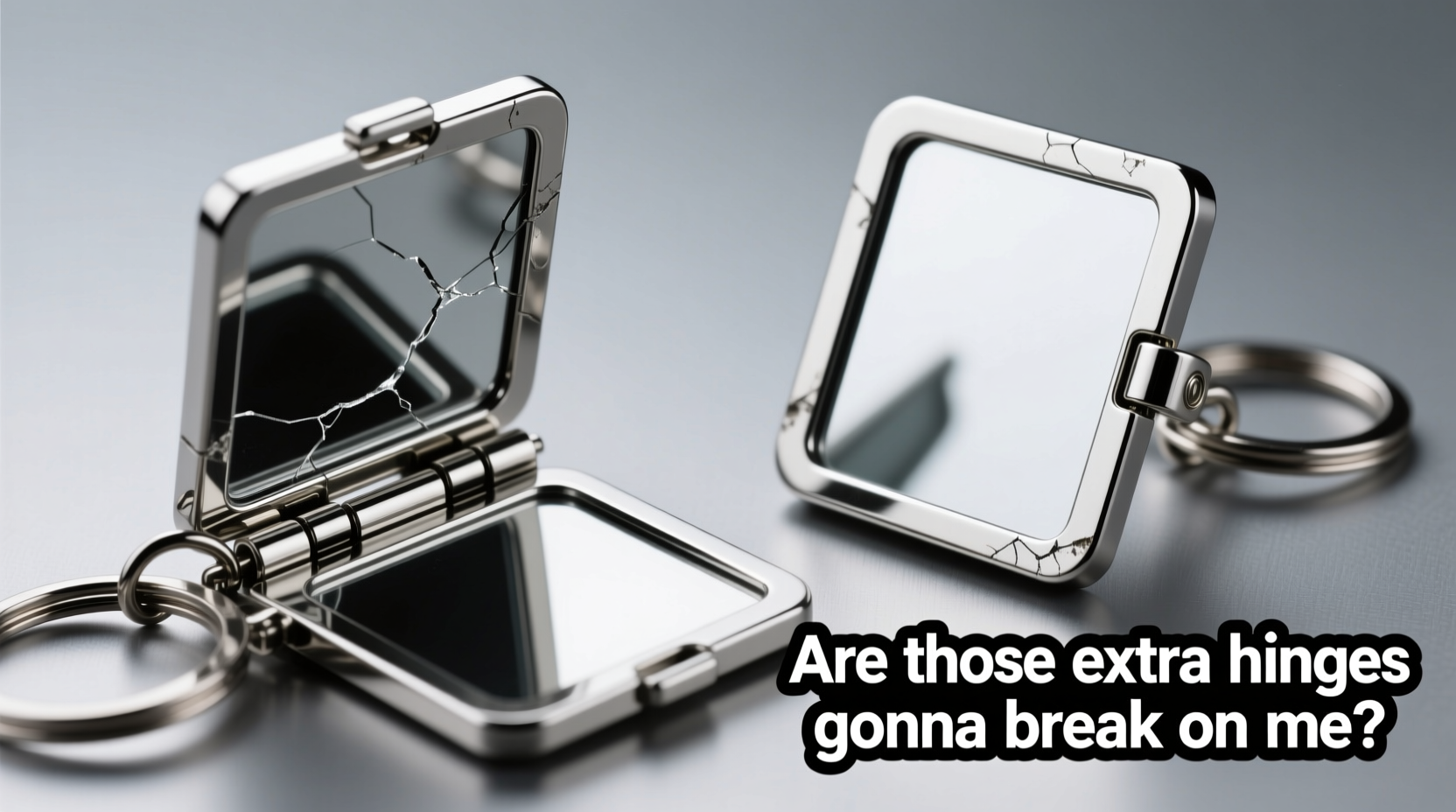
Before comparing folding and fixed mirrors, it helps to understand what goes into each. A typical keychain mirror consists of a small reflective surface (usually glass or acrylic), a frame (plastic, metal, or alloy), and a mounting system for attaching to keys. Fixed mirrors are one solid piece—the mirror is permanently exposed or covered by a non-moving shield. Folding mirrors, on the other hand, use one or more hinges to allow the mirror to open and close like a clamshell.
Hinges in these devices are usually made from stamped metal or molded plastic, depending on price point and intended durability. In budget models, thin metal or brittle plastic may be used, while premium versions often feature spring-loaded brass or stainless steel hinges designed for repeated motion.
Durability Showdown: Hinges vs Simplicity
At first glance, the fixed mirror seems inherently more durable. With no moving parts, there’s nothing mechanical to wear out. Drop it, toss it in your pocket, or let it rattle around with your keys—all without fear of internal damage. The mirror surface may scratch if not protected, but the structure itself remains intact.
Folding mirrors introduce complexity. Every time you open or close the device, stress is placed on the hinge mechanism. Over weeks or months, this repetitive motion can lead to loosening, cracking, or complete failure—especially if the materials are low-grade. However, not all folding mirrors are created equal. High-quality models use engineered hinges with torsion springs or friction fits that maintain tension long after hundreds of uses.
“Hinge failure isn’t inevitable—it’s a function of material quality and usage patterns. Well-made folding mirrors can last three years or more with daily use.” — Daniel Reeves, Industrial Designer specializing in compact tools
Real-World Use: Who Breaks What, and When?
Consider Sarah, a busy urban commuter who keeps her folding mirror keychain clipped to her work bag. She uses it daily—checking lipstick before meetings, adjusting her hair after biking. After six months, she notices the left hinge feels loose. By month nine, the mirror no longer stays closed unless held shut. It hasn’t broken completely, but functionality is compromised.
In contrast, Mark carries a fixed mirror attached to his house keys. He uses it less frequently—maybe twice a week—but subjects it to more impact, regularly tossing his keys onto hardwood tables or concrete counters. Two years later, the mirror is still fully functional. The surface has minor scratches, but the unit remains structurally sound.
This isn’t to say folding mirrors are doomed. Another user, Lena, bought a premium folding model with brass hinges and a magnetic closure. After 18 months of near-daily use, including travel and gym bag storage, the mirror operates as smoothly as day one. Her experience underscores a critical point: build quality matters more than design type.
Comparison Table: Folding vs Fixed Keychain Mirrors
| Feature | Folding Mirror | Fixed Mirror |
|---|---|---|
| Mirror Protection | Excellent (closed position shields surface) | Poor (mirror always exposed or partially covered) |
| Durability (Structure) | Varies (depends on hinge quality) | High (no moving parts) |
| Pocket/Purse Friendliness | Superior (compact when folded) | Average (can snag or reflect light) |
| Lifespan Expectancy | 6–36 months (material-dependent) | 2+ years (with basic care) |
| Repairability | Low (hinges rarely replaceable) | None needed (simple construction) |
| Price Range | $5–$25+ | $3–$15 |
How to Extend the Life of a Folding Mirror
If you prefer the compactness and protection of a folding design, you don’t have to accept premature failure as inevitable. Smart habits and selective purchasing can significantly improve longevity.
- Choose metal over plastic: Opt for models with metal housings and hinges. Aluminum, stainless steel, or zinc alloy frames resist deformation better than ABS plastic.
- Check hinge tension: Before buying, test how tightly the mirror opens and closes. A good hinge should require deliberate pressure—not flop open or shut.
- Avoid over-tightening: Don’t force the mirror past its natural stop. This can bend pins or crack housing.
- Clean gently: Use a microfiber cloth. Avoid solvents that might degrade adhesive or plastic components near the hinge.
- Detach when possible: If carrying in a bag where it might get crushed, remove it from heavy key rings to reduce leverage stress on the hinge.
When a Fixed Mirror Makes More Sense
There are scenarios where a fixed mirror is clearly the better choice. If your keys spend most of their time clattering at the bottom of a backpack or being thrown onto entryway tables, a folding model—even a high-end one—faces constant risk of being pried open by impact or pressure.
Fixed mirrors also shine in environments where simplicity is king: workshops, garages, or toolkits. There’s no need to worry about debris jamming the hinge or moisture causing corrosion. For users who only check their appearance occasionally, the lack of protection is a minor drawback compared to the peace of mind that comes with mechanical reliability.
Frequently Asked Questions
Do folding mirror hinges usually break?
Not always, but they’re the most common point of failure. Budget models with thin metal or weak plastic hinges tend to loosen or snap within 3–12 months of regular use. Higher-end versions with precision hinges can last several years.
Can I repair a broken folding mirror hinge?
Rarely. Most keychain mirrors are not designed for disassembly or part replacement. Once the hinge fails, the unit is typically unusable. Some DIY fixes involve epoxy or rivets, but these compromise aesthetics and function.
Are fixed mirrors more prone to scratches?
Yes. Because the mirror surface is usually exposed, it’s more likely to get scratched by keys, coins, or rough surfaces. Using a silicone cover or keeping it in a dedicated pocket can help reduce damage.
Final Verdict: Should You Worry About the Hinges?
The short answer: yes, but only if you’re buying poorly made folding mirrors. The presence of hinges doesn’t automatically doom a product to early failure. Instead, think of the hinge as a wear item—like the sole of a shoe or the battery in a remote. How long it lasts depends on how much you use it and what it’s made of.
If you value protection and portability, invest in a folding mirror from a reputable brand known for durable compact tools. Look for customer reviews that specifically mention long-term hinge performance. Avoid ultra-cheap multipacks from unknown vendors—those are often designed for novelty, not longevity.
On the other hand, if you prioritize ruggedness and don’t mind a slightly bulkier profile, a fixed mirror is a reliable, low-maintenance option. It won’t surprise you with mechanical issues, and with minimal care, it can serve you for years.
Take Action: Choose Smart, Use Smarter
Your keychain mirror might seem like a small detail, but it’s part of your daily routine—one more tool that either works seamlessly or becomes a nuisance. Whether you go folding or fixed, make your decision based on real usage patterns, not just initial appeal.




 浙公网安备
33010002000092号
浙公网安备
33010002000092号 浙B2-20120091-4
Comments
No comments yet. Why don't you start the discussion?