
When choosing a smartwatch, the decision often comes down to balancing style, functionality, and ecosystem integration. The Fossil Gen 5 Julianna and the Samsung Galaxy Watch series represent two distinct philosophies in wearable tech. One emphasizes fashion-forward design with solid smart features; the other prioritizes deep health tracking, long-term software support, and seamless Android integration. As newer models enter the market, many users are asking: in 2024, is Samsung still the better choice?
Design & Aesthetic Appeal
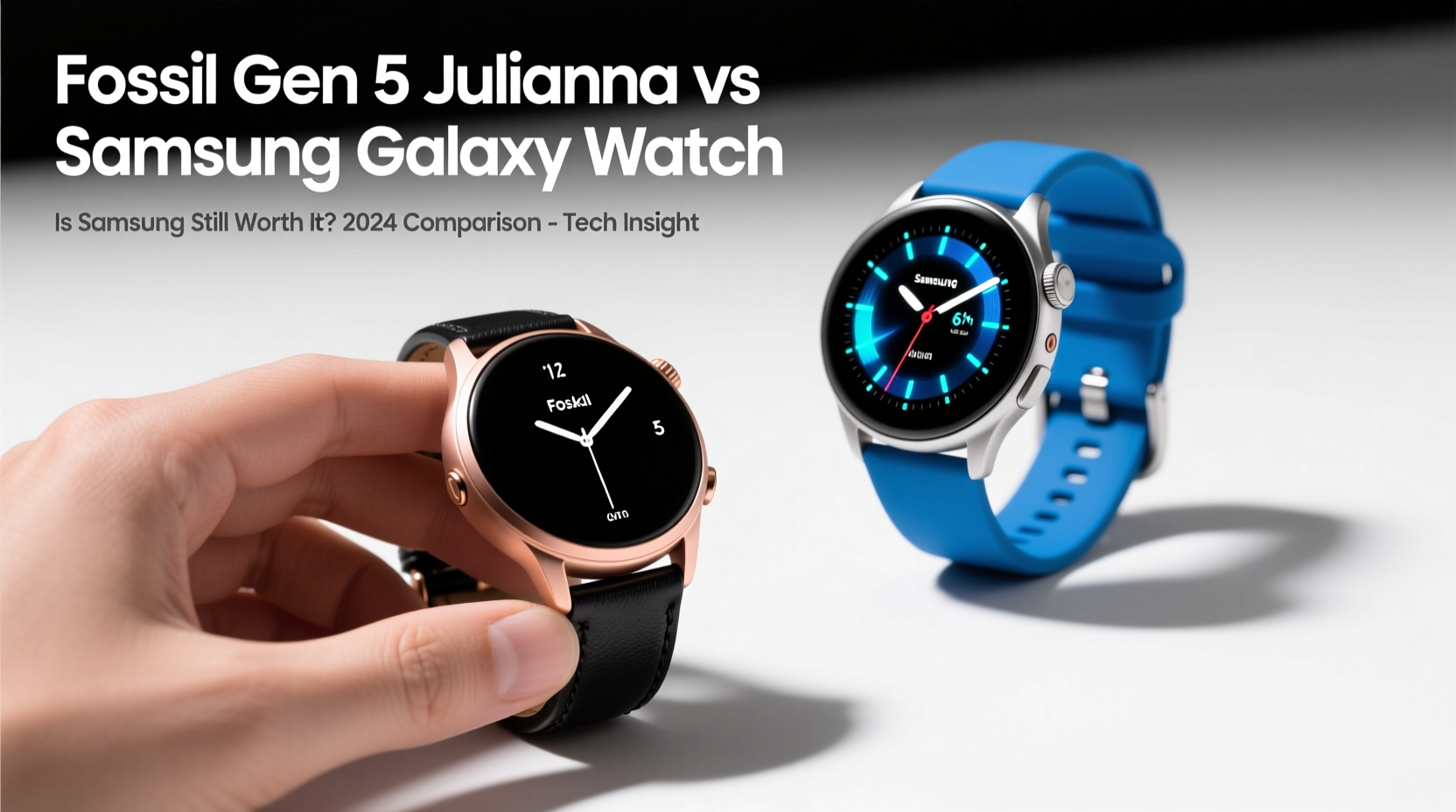
The Fossil Gen 5 Julianna stands out for its elegant, minimalist design tailored specifically for smaller wrists. With a compact 40mm stainless steel case, slim bezels, and interchangeable leather or mesh bands, it leans heavily into the “fashion accessory” category. Its round face and subtle crown placement give it the appearance of a traditional luxury timepiece—ideal for professionals or style-conscious users who want a smartwatch that doesn’t scream technology.
In contrast, the Samsung Galaxy Watch—particularly the Galaxy Watch 6 and Watch 6 Classic—opts for a more robust, athletic aesthetic. Available in 40mm and 44mm variants, the build is durable with aluminum or titanium frames and sapphire crystal glass on higher-end models. The rotating bezel (on Classic editions) remains a signature feature, offering tactile navigation that many users prefer over touch-only interfaces.
Performance & Software Experience
Both watches run on Wear OS by Google, but the implementation differs significantly. The Fossil Gen 5 Julianna uses Wear OS 3, delivering smooth performance thanks to the Qualcomm Snapdragon W5+ chipset. App loading is quick, voice assistant responses are responsive, and notifications sync reliably with Android and iOS devices.
Samsung’s Galaxy Watches also use Wear OS 3 (or 4, depending on model), but layer their own One UI Watch interface on top. This adds extra polish, deeper customization, and tighter integration with Samsung Health, Bixby, and Galaxy smartphones. For Samsung phone owners, this means seamless pairing, automatic updates, and advanced features like ECG, blood pressure monitoring (where available), and body composition analysis.
However, Fossil has faced criticism for inconsistent long-term software support. While the Gen 5 received timely updates initially, future OS upgrades remain uncertain. Samsung, on the other hand, guarantees up to four major Wear OS updates and five years of security patches—a significant advantage for users who plan to keep their device long-term.
“Software longevity is becoming just as important as hardware specs when evaluating smartwatches.” — David Lin, Senior Analyst at Wearable Insights Group
Feature Comparison: Key Differences at a Glance
| Feature | Fossil Gen 5 Julianna | Samsung Galaxy Watch 6 |
|---|---|---|
| Display | 1.19” AMOLED (394x394) | 1.36” AMOLED (432x432) |
| Battery Life | Up to 24 hours (typical use) | 40–70 hours (varies by usage) |
| Health Sensors | Heart rate, SpO2, sleep tracking | Heart rate, ECG, BIA, SpO2, skin temperature, sleep staging |
| Water Resistance | 3 ATM (splash-resistant) | 5 ATM + 50m water resistance |
| Special Features | Fashion-first design, Google Wallet, Fitbit integration | Rotating bezel, Bixby, Samsung Health Monitor, LTE option |
| Software Support | Limited (1–2 OS updates expected) | 4 OS upgrades, 5 years security updates |
| Price (MSRP) | $299 | $349–$429 |
Real-World Usage: A Day in the Life
Consider Sarah, a 32-year-old marketing executive who values both professionalism and fitness. She wears her watch from morning meetings to evening yoga classes. During a typical day, she receives calendar alerts, tracks her steps, monitors stress levels during presentations, and checks heart rate post-workout.
With the Fossil Gen 5 Julianna, Sarah appreciates how easily it blends with her business attire. The Google Assistant integration helps her send quick messages hands-free. However, she notices the battery drains by early evening, requiring nightly charging. She also misses advanced sleep insights and finds the workout detection less accurate than expected.
If Sarah used the Galaxy Watch 6 instead, she’d benefit from longer battery life, automatic workout detection, and detailed recovery metrics through Samsung Health. The rotating bezel makes scrolling through notifications easier during meetings. But some colleagues comment that the watch looks too “techy” next to her silk blouse—especially in the larger 44mm model.
This scenario illustrates a key trade-off: the Fossil excels in form and subtlety; the Samsung delivers superior function and insight.
Battery Life and Charging Habits
Battery performance can make or break a smartwatch experience. The Fossil Gen 5 Julianna typically lasts about one full day under moderate use—receiving notifications, tracking activity, and using GPS occasionally. Heavy users may need to charge midday. Fast charging helps, offering a full charge in roughly 60 minutes.
The Galaxy Watch 6 offers 1.5 to 2.5 days depending on settings. Features like always-on display, LTE, and continuous health monitoring reduce longevity, but most users can stretch it to two full days with conservative usage. Samsung’s fast charging is slightly quicker, reaching full capacity in about 45 minutes.
Is Samsung Still Worth It in 2024?
For users deeply embedded in the Android ecosystem—especially those with Samsung phones—the answer is a strong yes. The Galaxy Watch offers unmatched integration, comprehensive health tracking, reliable software updates, and a mature app ecosystem. Its durability and swim-proof design make it ideal for active lifestyles.
However, the Fossil Gen 5 Julianna carves out a niche for users who want a smartwatch that doesn’t dominate their wrist. It’s lighter, thinner, and more discreet. Thanks to its partnership with Google and Fitbit, it includes essential wellness tools without compromising elegance. For iPhone users seeking a premium Wear OS experience, Fossil remains one of the few stylish options with full iOS compatibility.
That said, Samsung continues to innovate. With AI-powered health insights, improved voice assistant capabilities, and stronger third-party app support, the Galaxy Watch maintains a technological edge. Unless design is your top priority, Samsung offers better long-term value.
Checklist: Choosing Between Fossil and Samsung
- ✅ Do you prioritize fashion and subtlety? → Lean toward Fossil Gen 5 Julianna
- ✅ Are you a Samsung phone user? → Galaxy Watch offers deeper integration
- ✅ Need multi-day battery life? → Samsung wins
- ✅ Want advanced health metrics (ECG, body fat, etc.)? → Choose Samsung
- ✅ Prefer a lightweight, feminine fit? → Fossil Julianna fits better
- ✅ Planning to keep the watch for 3+ years? → Samsung’s update policy is safer
Frequently Asked Questions
Can the Fossil Gen 5 Julianna track swimming?
No, the Fossil Gen 5 Julianna is rated at 3 ATM, which means it’s splash and sweat resistant but not suitable for swimming or submersion. For swim tracking, the Samsung Galaxy Watch (5 ATM) is a far better choice.
Does the Galaxy Watch work well with iPhones?
Limited functionality. While basic notifications and step tracking work, key features like ECG, blood pressure, and full app syncing require a Samsung or recent Android phone. iPhone users get a stripped-down experience.
Which watch has better GPS accuracy?
The Samsung Galaxy Watch generally provides more consistent GPS tracking during outdoor runs and hikes due to optimized antenna placement and firmware. The Fossil Gen 5 is decent but may lag in dense urban areas or under tree cover.
Final Verdict: Making the Right Choice for You
The Fossil Gen 5 Julianna and Samsung Galaxy Watch serve different needs. If your primary goal is to wear a beautiful, understated device that handles everyday smart tasks with grace, the Fossil is an excellent pick. It bridges the gap between jewelry and technology in a way few others do.
But if you're serious about fitness, health monitoring, and long-term usability, the Samsung Galaxy Watch remains the gold standard among Android-compatible wearables. Its combination of hardware durability, software support, and ecosystem synergy makes it a smarter investment over time—even at a higher price point.
In the end, ask yourself: are you buying a watch to complement your outfit, or to transform your lifestyle? Your answer will guide you to the right choice.




 浙公网安备
33010002000092号
浙公网安备
33010002000092号 浙B2-20120091-4
Comments
No comments yet. Why don't you start the discussion?