
When choosing a smartwatch, the decision often comes down to style versus substance. The Fossil Gen 5 and the Samsung Galaxy Watch represent two distinct philosophies in wearable tech. Fossil leans into fashion-first design with Wear OS under the hood, while Samsung delivers a feature-rich, health-focused device deeply integrated into its mobile ecosystem. But do Samsung’s additional capabilities—like advanced sleep tracking, ECG, and blood pressure monitoring—justify the premium price and steeper learning curve? Or does Fossil’s streamlined, stylish approach offer better real-world value for most users?
Design and Build: Fashion Meets Function
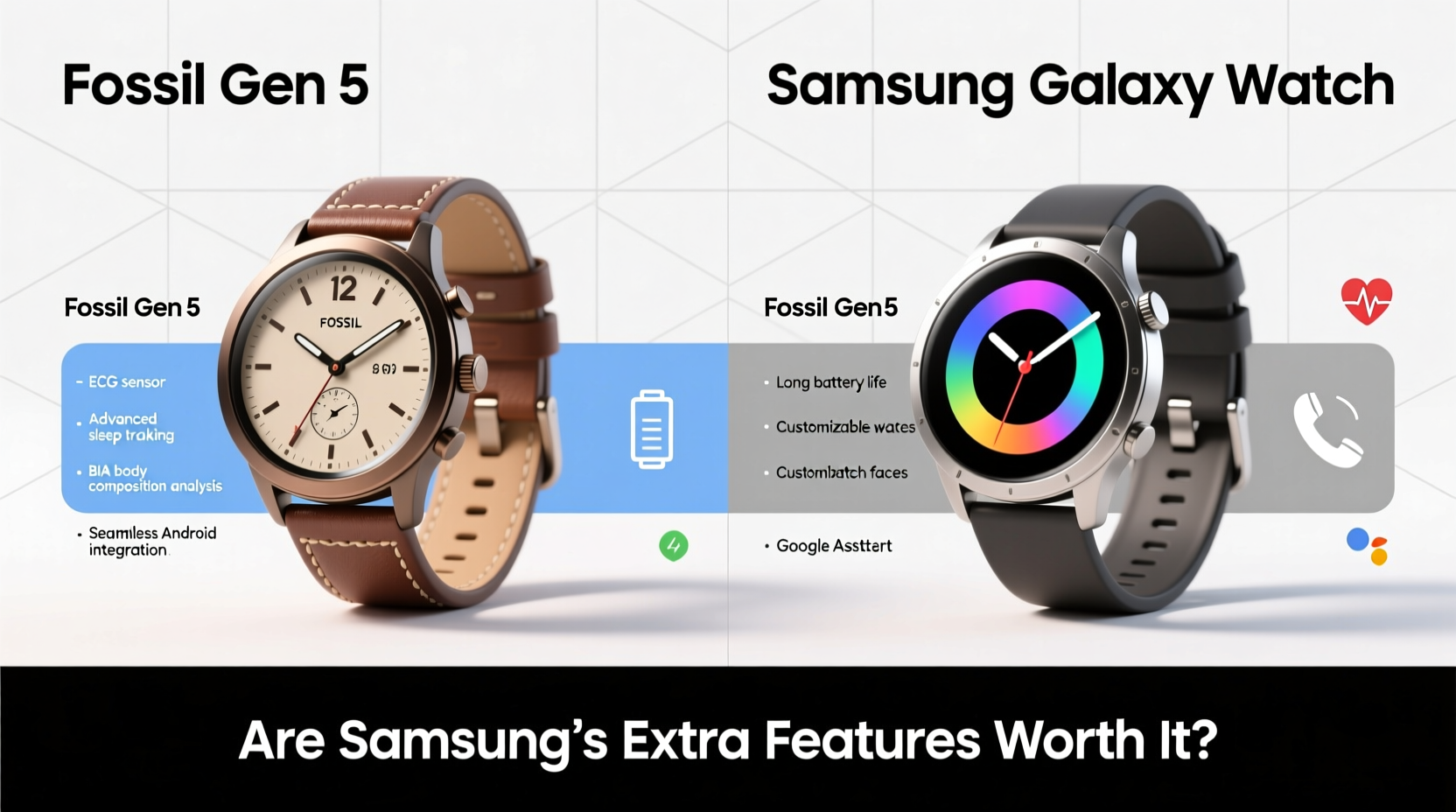
The Fossil Gen 5 stands out with its classic timepiece aesthetic. Available in stainless steel, leather, and mesh bands, it blends seamlessly into both casual and formal wardrobes. Its circular face and slim profile give it the look of a traditional watch, which appeals to users who want smart functionality without sacrificing elegance.
In contrast, the Samsung Galaxy Watch series—particularly the Galaxy Watch 6 and Watch 7 models—opts for a more modern, sporty design. While still refined, its materials (such as aluminum or titanium) and digital-first interface emphasize performance over pure aesthetics. The rotating bezel on older models has been replaced with touch-based navigation in newer versions, marking a shift toward usability over tactile feedback.
Software and Ecosystem: Where the Real Differences Emerge
Both watches run Wear OS, but their software experiences diverge significantly. The Fossil Gen 5 uses a near-stock version of Wear OS with Google apps front and center—Google Assistant, Maps, Wallet, and Fit. It’s intuitive, fast, and ideal for Android and iPhone users alike who prioritize simplicity and app access.
Samsung overlays its One UI Watch interface on top of Wear OS, adding layers of customization and deeper integration with Samsung phones. This means seamless pairing with Galaxy Buds, SmartThings control, and enhanced notifications. However, this advantage diminishes if you don’t own other Samsung devices. On an iPhone, many of these ecosystem perks disappear, making the experience closer to the Fossil—but at a higher cost.
“Samsung’s software depth is impressive, but only truly shines within its own ecosystem. Outside of it, much of that sophistication becomes redundant.” — David Lin, Senior Wearables Analyst at TechPulse Insights
Health and Fitness Tracking: Is More Always Better?
This is where Samsung pulls ahead on paper. The Galaxy Watch includes advanced sensors for ECG, blood pressure estimation (with calibration), body composition analysis (BIA), and detailed sleep staging with snore detection. These tools cater to users actively managing cardiovascular health or seeking comprehensive wellness insights.
Fossil Gen 5, by comparison, offers standard tracking: heart rate, SpO2, step counting, and basic sleep stages. It lacks medical-grade sensors and doesn’t support FDA-cleared features. For the average user focused on daily activity and general fitness, this is more than sufficient. But for those with specific health concerns, Samsung’s extras provide tangible benefits.
However, consider how often you’ll use these advanced features. ECG readings are useful during irregular heartbeat episodes, but not needed daily. Blood pressure tracking requires frequent recalibration with a traditional cuff, reducing convenience. In practice, many users rely on step goals and workout summaries—areas where both watches perform similarly.
Feature Comparison Table
| Feature | Fossil Gen 5 | Samsung Galaxy Watch |
|---|---|---|
| Operating System | Wear OS (Google) | Wear OS + One UI |
| Battery Life | ~24–36 hours | ~40–70 hours (varies by model) |
| ECG Monitoring | No | Yes (FDA-cleared) |
| Blood Pressure Estimation | No | Yes (requires calibration) |
| Sleep Tracking Detail | Basic stages & SpO2 | Detailed stages, snore detection, respiration |
| Body Composition (BIA) | No | Yes (Galaxy Watch 5+) |
| Rotating Bezel | No | No (discontinued after Watch 4) |
| Price Range | $250–$350 | $300–$500+ |
| Best For | Fashion, simplicity, cross-platform use | Health tracking, Samsung ecosystem |
Real-World Usage: A Case Study
Consider Sarah, a 34-year-old marketing manager who wears her watch from morning meetings to evening walks. She owns an iPhone and values a polished appearance. She chose the Fossil Gen 5 because it matches her work attire and syncs effortlessly with her calendar and messages. She checks her step count occasionally and uses GPS for weekend hikes. She tried a friend’s Galaxy Watch and appreciated the detailed sleep report but found the constant health prompts overwhelming. After two weeks, she realized she never used the ECG or body fat features.
Meanwhile, James, a 52-year-old with a family history of hypertension, opted for the Galaxy Watch 6. He pairs it with his Galaxy S24 and uses the blood pressure trend tracker weekly. When his watch alerted him to an elevated resting heart rate over several days, he consulted his doctor—and caught early signs of atrial fibrillation. For James, Samsung’s “extra” features weren’t just nice-to-have—they were health-saving.
This contrast illustrates a key point: the value of Samsung’s advanced tools depends entirely on individual needs. For proactive health management, they’re invaluable. For everyday lifestyle enhancement, they may go underused.
Battery Life and Daily Usability
One practical drawback of Samsung’s feature density is power consumption. Even with larger batteries, Galaxy Watches typically require charging every 1.5 to 3 days, depending on usage. Features like continuous ECG background monitoring, BIA scans, and always-on display settings accelerate drain.
The Fossil Gen 5 lasts about one full day under normal use. While shorter than Samsung’s best, it’s predictable. You charge it nightly, like your phone. Some users prefer this consistency over juggling partial charges or power-saving modes.
Checklist: Choosing the Right Watch for You
- ✅ Do you own a Samsung phone? → Galaxy Watch gains significant advantages.
- ✅ Do you have specific health conditions (e.g., heart issues, hypertension)? → Samsung’s medical sensors add real value.
- ✅ Is style a priority for work or social settings? → Fossil Gen 5 offers superior versatility.
- ✅ Do you use non-Samsung devices (iPhone, Pixel, etc.)? → Fossil provides a smoother cross-platform experience.
- ✅ Are you overwhelmed by data and notifications? → Simpler interfaces like Fossil’s may reduce digital fatigue.
Frequently Asked Questions
Can I use Samsung’s ECG and blood pressure features without a Samsung phone?
No. These health features require a paired Galaxy phone for setup and ongoing use due to regulatory and security reasons. They are unavailable on iPhones or non-Galaxy Android devices.
Does the Fossil Gen 5 support third-party fitness apps?
Yes. It runs Wear OS, so you can install Strava, MyFitnessPal, Spotify, and other popular apps directly from the Play Store on your watch.
Is the Galaxy Watch worth the extra $100–$150 over the Fossil Gen 5?
Only if you actively use its advanced health tools or are embedded in the Samsung ecosystem. Otherwise, the Fossil offers better style-to-price ratio and broader compatibility.
Conclusion: Matching Features to Lifestyle
The question isn’t whether Samsung’s extra features are technically superior—they clearly are. The real issue is whether those features align with your daily life and long-term goals. For tech enthusiasts, health-conscious individuals, or Samsung loyalists, the Galaxy Watch delivers meaningful value that justifies its cost. But for the majority of users who want a reliable, attractive smartwatch for notifications, fitness tracking, and occasional health checks, the Fossil Gen 5 offers a more balanced, accessible experience.
Ultimately, the best smartwatch isn’t the one with the most features—it’s the one you’ll actually wear and use consistently. Before paying a premium for capabilities you might never tap into, ask yourself: what do I truly need on my wrist?




 浙公网安备
33010002000092号
浙公网安备
33010002000092号 浙B2-20120091-4
Comments
No comments yet. Why don't you start the discussion?