
In a world where jewelry often serves as both fashion statement and emotional anchor, two symbols stand out for their enduring resonance: the four leaf clover and the locket necklace. One rooted in folklore and chance, the other steeped in intimacy and memory—both carry weight far beyond their physical form. As we navigate 2024, a year marked by renewed interest in personal symbolism and mindful adornment, the question arises: which of these pieces holds deeper meaning today?
The answer isn’t universal. It depends on personal values, cultural context, and the stories we choose to carry close to our hearts. Yet by examining their histories, emotional impact, and evolving roles in contemporary life, we can better understand which symbol might speak more profoundly to individuals in this moment.
The Symbolism Behind the Four Leaf Clover
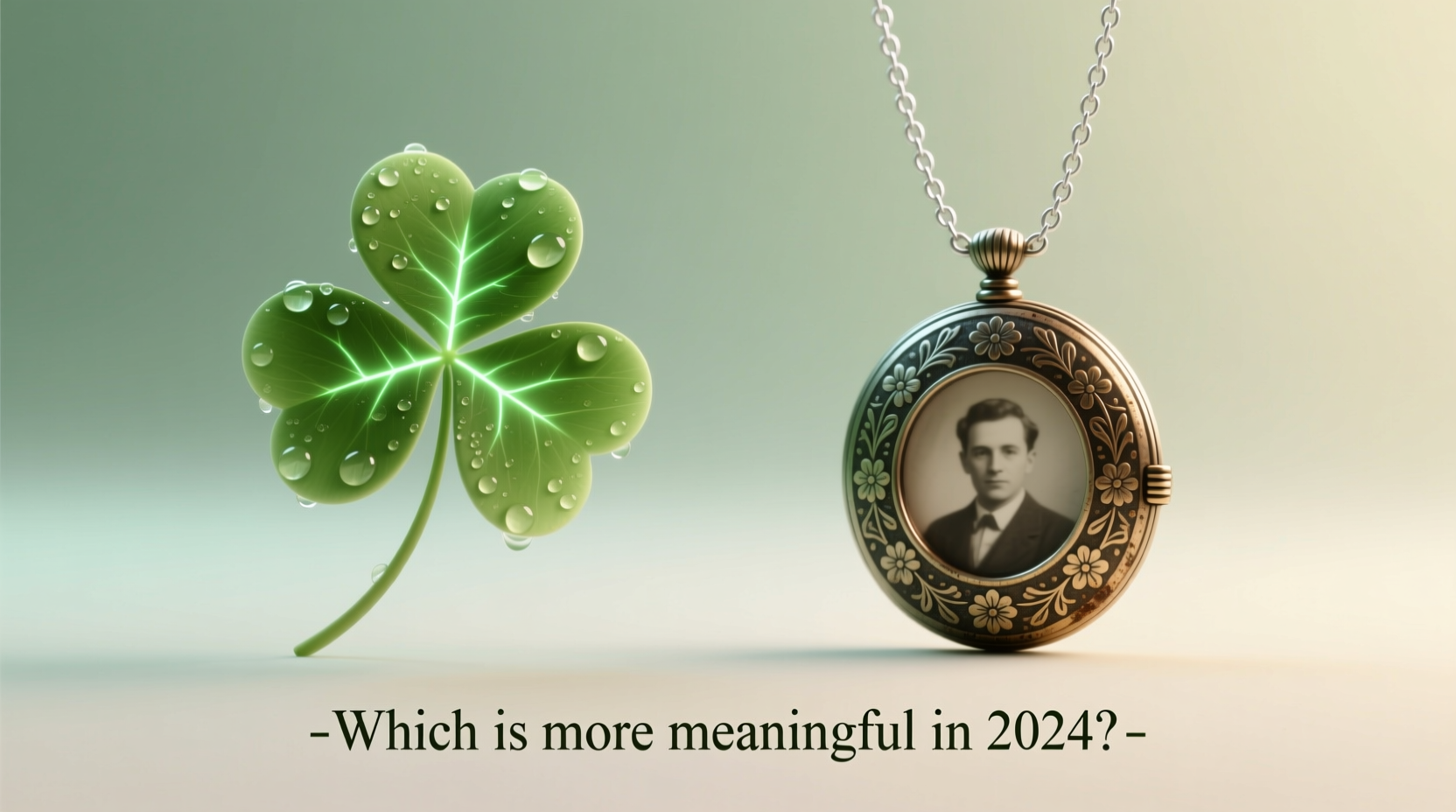
The four leaf clover has long been associated with luck. According to Irish tradition, each leaf represents something sacred: hope, faith, love, and the elusive fourth leaf—luck. Finding one in the wild is rare, occurring roughly once in every 10,000 three-leaf clovers, which only deepens its mystique.
But beyond superstition, the clover carries subtle spiritual undertones. In Celtic culture, it was believed to offer protection against evil spirits. In Christianity, some interpret the leaves as representing the cross, baptism, crucifixion, and resurrection. Modern interpretations often lean into mindfulness—the act of searching for a clover becomes a meditative practice, encouraging presence and gratitude.
The Emotional Weight of the Locket Necklace
A locket is more than an accessory; it’s a vessel. Traditionally used to hold photographs, locks of hair, or handwritten notes, the locket transforms jewelry into a private archive of love, loss, and connection. Whether passed down through generations or gifted during pivotal moments—a birth, a wedding, a farewell—it becomes a tactile extension of memory.
In 2024, lockets are experiencing a quiet renaissance. With rising interest in heirloom-style pieces and anti-fast-fashion movements, people are seeking jewelry that tells a story. A locket allows wearers to carry someone with them—not just in spirit, but in object form. This tangible intimacy gives it a depth that transcends trend cycles.
“Lockets aren’t just sentimental—they’re psychological anchors. They help us maintain continuity in times of change.” — Dr. Naomi Reed, Cultural Psychologist at University College Dublin
Comparing Meaningfulness: A Practical Breakdown
To assess which piece holds greater meaning in today’s context, consider the following dimensions:
| Aspect | Four Leaf Clover | Locket Necklace |
|---|---|---|
| Personal Connection | Symbolic, aspirational | Deeply personal, experiential |
| Cultural Roots | Folkloric (Celtic/Irish) | Global (Victorian to modern) |
| Emotional Resonance | Hope, optimism | Grief, love, remembrance |
| Customization | Limited (design variations) | High (contents, engravings) |
| Longevity of Significance | Stable over time | Often increases with age |
While the clover inspires forward-looking positivity, the locket grounds the wearer in lived experience. Its meaning evolves as relationships deepen or transform. For many, this dynamic quality makes it feel more “alive” than a static symbol of luck.
A Modern Case: When Symbols Meet Real Life
Consider Maya, a 32-year-old teacher from Portland. After losing her mother in early 2023, she inherited a vintage silver locket containing a tiny photo of her grandmother. Initially hesitant to wear it—fearing it would amplify grief—she eventually began wearing it daily by summer. “It didn’t bring her back,” she says, “but it gave me a way to talk to her silently. On hard days, I touch it like a prayer.”
That same year, Maya also bought a minimalist four leaf clover pendant after a friend gifted her a lucky charm before a job interview. She wears it on professional days—a talisman of confidence. “The clover reminds me I’m capable. But the locket? That’s where my heart lives.”
This duality reflects a broader trend: people aren’t choosing one symbol over the other, but using both for different emotional needs. The clover for aspiration, the locket for belonging.
How to Choose What’s Right for You in 2024
Meaning isn’t inherent—it’s assigned. Your choice should reflect not just aesthetics, but intention. Ask yourself:
- Do I want a symbol of future possibility or a tribute to the past?
- Am I drawn to universal myths or private memories?
- Will this piece grow with me over decades?
If you value legacy, family, or romantic remembrance, a locket may resonate more deeply. If you’re navigating uncertainty, new beginnings, or simply wish to cultivate a mindset of gratitude and openness, the four leaf clover offers gentle encouragement.
Step-by-Step Guide to Selecting Your Meaningful Piece
- Reflect on your current life chapter: Are you healing, starting over, celebrating, or honoring someone?
- Identify your emotional need: Comfort? Courage? Connection?
- Research designs with intention: Look for ethically made pieces that align with your values.
- Consider customization: Engrave a date, name, or phrase to deepen personal relevance.
- Wear it mindfully: Let the piece serve as a prompt for reflection, not just decoration.
FAQ
Can a four leaf clover be meaningful without believing in luck?
Absolutely. Even without superstition, the clover can symbolize rarity, resilience, and the beauty of small wonders. Many wear it as a reminder to stay present and appreciate life’s subtle gifts.
Are lockets outdated in 2024?
No—quite the opposite. With the rise of slow fashion and emotional wellness, lockets are being reimagined in sleek, modern forms. From magnetic nano-lockets to digital versions embedded in smart jewelry, the concept is more relevant than ever.
Is one symbol more gender-neutral than the other?
Both can be worn by anyone. Clover pendants are often marketed as unisex due to their nature-based simplicity. Lockets, historically seen as feminine, are now designed in bold, minimalist styles embraced across genders.
Final Thoughts: Meaning Is Personal, Not Prescriptive
In 2024, the most meaningful jewelry isn’t determined by popularity, celebrity endorsement, or viral trends—it’s defined by the stories we attach to it. The four leaf clover speaks to the human desire for hope, serendipity, and light in uncertain times. The locket answers a deeper need: to remember, to love, and to carry proof that we were known and cherished.
So which is more meaningful? If measured by emotional depth, historical weight, and capacity for personal narrative, the locket necklace edges ahead. But the four leaf clover remains powerful in its own right—especially for those building futures they believe in.
Ultimately, the best choice isn’t about which symbol is “better,” but which one feels true when you hold it in your hand or rest it against your chest. In a world full of noise, that quiet sense of recognition—that’s where real meaning begins.




 浙公网安备
33010002000092号
浙公网安备
33010002000092号 浙B2-20120091-4
Comments
No comments yet. Why don't you start the discussion?