
Thyme is a staple herb in kitchens worldwide, prized for its earthy aroma and versatility across cuisines. Yet one of the most common questions home cooks face is whether to use fresh or dried thyme—and how the two differ in flavor, potency, and application. The choice isn't just about availability; it affects the depth, balance, and authenticity of a dish. Understanding the distinctions ensures better seasoning decisions, especially when building complex flavor profiles in soups, stews, roasts, and sauces. This guide breaks down the essential characteristics of both forms, offering practical advice on usage, substitution ratios, storage, and culinary pairings.
Definition & Overview
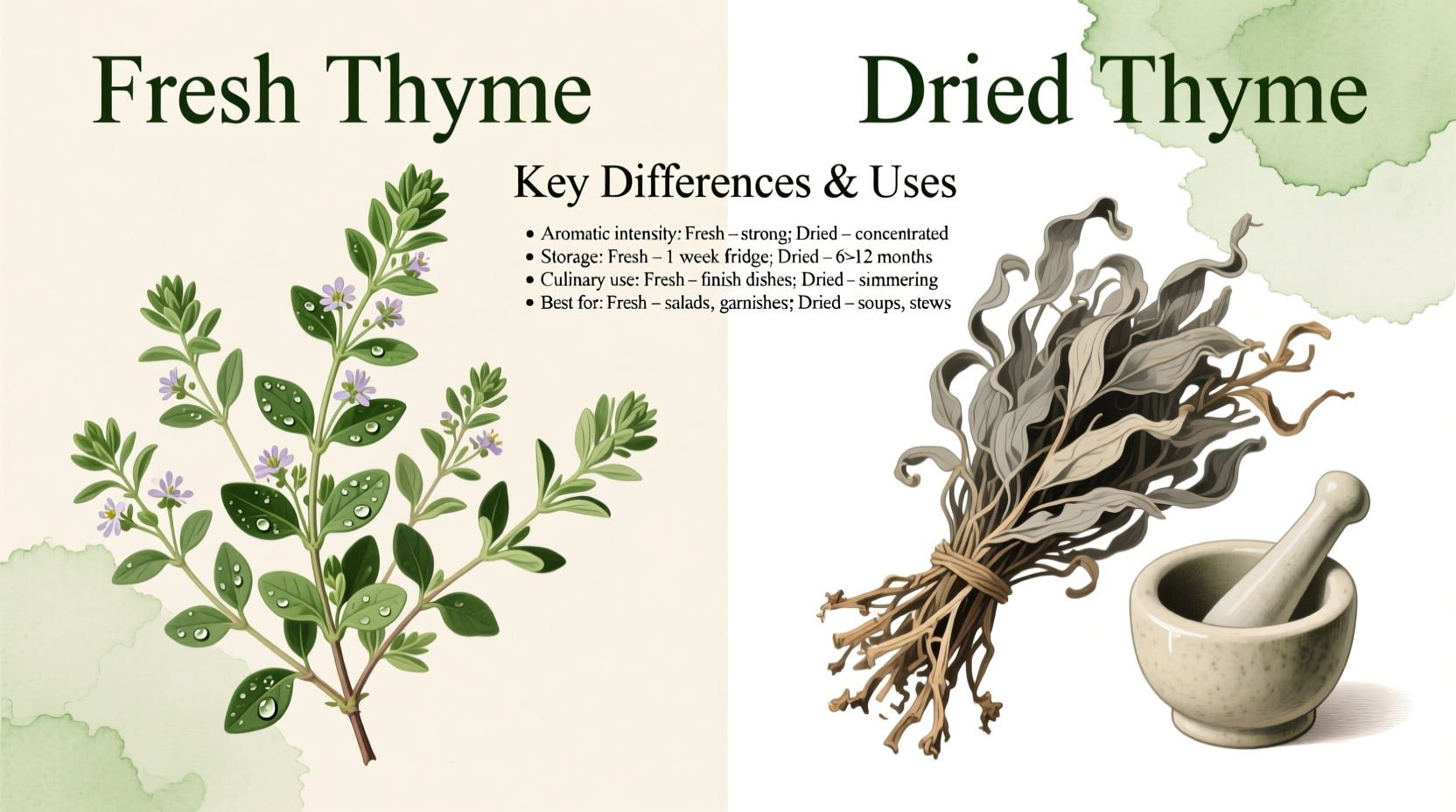
Thyme (Thymus vulgaris) is a perennial herb native to the Mediterranean region, belonging to the Lamiaceae family, which includes mint, oregano, and basil. It grows as a low shrub with tiny, gray-green leaves and delicate purple flowers. Historically used in ancient Egyptian embalming and Greek incense, thyme has long been valued for both its aromatic qualities and preservative properties.
In modern cooking, thyme appears in two primary forms: fresh and dried. Fresh thyme consists of whole sprigs—stems with attached leaves—harvested at peak maturity. Dried thyme is made by dehydrating the leaves, concentrating certain compounds while diminishing others. Both deliver the herb’s signature camphorous, slightly minty, and subtly peppery notes, but their intensity, texture, and integration into dishes vary significantly.
Key Characteristics
The sensory and functional differences between fresh and dried thyme stem from moisture content, volatile oil retention, and physical form. These factors influence how each version behaves during cooking.
| Characteristic | Fresh Thyme | Dried Thyme |
|---|---|---|
| Flavor Profile | Bright, grassy, mildly floral with a soft herbal bite | More concentrated, earthier, with intensified woody and camphor notes |
| Aroma | Subtle, green, slightly citrusy (due to thymol and carvacrol) | Stronger, more pungent, with pronounced medicinal undertones |
| Moisture Content | High (70–80%) | Low (5–10%) |
| Texture/Form | Whole sprigs or stripped leaves; fibrous stems | Crumbling dried leaves or powder |
| Shelf Life | 7–14 days refrigerated | 1–3 years if stored properly |
| Culinary Function | Adds freshness; ideal for finishing or slow infusion | Provides deep background flavor; better for long-cooked dishes |
| Heat Stability | Delicate oils degrade quickly under high heat | More stable due to concentration; withstands prolonged cooking |
Practical Usage
How you use thyme depends on the form, the dish, and the desired outcome. Each version excels in different contexts.
Fresh Thyme: When and How to Use
Fresh thyme shines in dishes where vibrancy matters—those served shortly after preparation or where herbs are part of the final presentation. Its tender leaves release subtle aromatics without overpowering other ingredients.
- Infusing liquids: Add whole sprigs to simmering broths, poaching liquids, or wine reductions. Remove before serving, as stems are too tough to eat.
- Finishing dishes: Strip leaves and sprinkle over roasted vegetables, grilled fish, or compound butter just before plating.
- Raw applications: Finely chop and mix into vinaigrettes, salsas, or herbed cheeses for a bright lift.
- Marinades: Combine with olive oil, garlic, and lemon zest to marinate poultry or lamb.
Because fresh thyme has a milder presence, it often requires larger quantities than dried. A typical bouquet garni might include two to three sprigs to achieve sufficient flavor penetration in stocks.
Dried Thyme: When and How to Use
Dried thyme is the preferred choice for recipes involving extended cooking times. Its concentrated form integrates seamlessly into dry rubs, spice blends, and baked goods.
- Stews and braises: Add early in the cooking process to allow full rehydration and flavor dispersion.
- Dry rubs: Blend with paprika, garlic powder, and black pepper for meats like pork shoulder or beef brisket.
- Sauces and gravies: Stir in during thickening stages to deepen complexity without adding moisture.
- Baking: Incorporate into savory scones, herb breads, or biscuit doughs for an aromatic backbone.
Dried thyme’s potency means less is needed. However, because volatile oils diminish over time, older batches may require slight increases in quantity to compensate for flavor loss.
Pro Tip: To maximize flavor from dried thyme, briefly toast it in a dry pan or bloom it in warm oil before adding to dishes. This helps release trapped essential oils and improves integration into the dish.
Variants & Types
While Thymus vulgaris (common thyme) dominates culinary use, several cultivars offer nuanced variations. Some are available in both fresh and dried forms, though availability varies by region and season.
Common Varieties
- Lemon Thyme (Thymus citriodorus): Features a distinct citrus note due to citral content. Excellent with seafood, poultry, and fruit-based salads. More commonly found fresh.
- French Thyme: A tighter-growing variety of common thyme with slightly more intense flavor. Often considered superior for drying.
- Caraway Thyme: Rare, with a hint of caraway seed aroma. Used in specialty meat dishes.
- Creeping Thyme: Primarily ornamental but edible. Milder in flavor; suitable for garnishes or ground covers in edible landscaping.
Forms Available
| Form | Description | Best For |
|---|---|---|
| Fresh Whole Sprigs | Intact stems with leaves; sold in bunches | Stocks, roasting, grilling (remove before serving) |
| Fresh Loose Leaves | Leaves stripped and packaged; more perishable | Salads, garnishes, quick sautés |
| Dried Whole Leaves | Crumbled dried leaves; retains shape | General-purpose cooking, spice mixes |
| Dried Powder | Fine grind; faster dissolution | Rubs, marinades, baking (use sparingly) |
Comparison with Similar Ingredients
Thyme is sometimes confused with other woody herbs, particularly oregano and marjoram. While related, these herbs have distinct identities.
| Herb | Flavor Comparison | Substitution Advice |
|---|---|---|
| Oregano | Bolder, spicier, more assertive; dominant in Italian and Mexican cuisine | Not a direct substitute. Use half the amount if replacing thyme; expect stronger flavor. |
| Marjoram | Sweeter, milder cousin of oregano; sometimes called \"knotted marjoram\" | Can replace thyme in delicate dishes (e.g., egg preparations, light sauces). |
| Rosemary | Pine-like, highly resinous; can dominate if overused | Use ¼ to ½ the amount of rosemary when substituting for thyme. |
| Savory (Summer/Winter) | Peppery, bean-friendly herb; close in function to thyme | Excellent 1:1 substitute, especially in legume dishes. |
\"Thyme brings structure to a sauce the way salt brings clarity. But unlike salt, you can’t adjust it at the end. Choosing the right form—fresh or dried—is part of the seasoning strategy from the start.\" — Chef Elena Ruiz, Culinary Instructor, Institute of Mediterranean Cuisine
Practical Tips & FAQs
What is the fresh-to-dried thyme conversion ratio?
The standard substitution is **1 teaspoon of dried thyme = 1 tablespoon of fresh thyme leaves**. This accounts for moisture loss and concentration of flavor compounds during drying. However, taste as you go—especially with older dried thyme, which may have lost potency.
Can I substitute fresh for dried in slow-cooked dishes?
Yes, but increase the quantity. Use three times the amount of fresh thyme when replacing dried. For example, if a stew calls for 1 tsp dried thyme, add 1 tbsp fresh. Keep in mind that fresh thyme will break down more completely over time.
How do I store fresh thyme to extend shelf life?
Wrap fresh sprigs in a slightly damp paper towel and place them in a sealed container or produce bag in the refrigerator crisper drawer. Alternatively, stand them upright in a glass with an inch of water (like cut flowers) and cover loosely with a plastic bag. Change water every two days. Properly stored, fresh thyme lasts up to two weeks.
How should I store dried thyme?
Keep in an airtight container away from heat, light, and moisture—such as a dark pantry cupboard. Avoid storing near the stove or oven. Label with purchase date. Dried thyme retains optimal flavor for 6–12 months, though it remains safe to use for up to three years.
How can I tell if dried thyme has gone bad?
Check aroma and color. If the scent is faint or musty and the color has faded from green-gray to brownish, the essential oils have degraded. While not harmful, it will contribute little flavor. Discard if clumping occurs due to moisture exposure.
Is frozen thyme as good as fresh?
Freezing preserves flavor better than drying but alters texture. Strip leaves and freeze them in ice cube trays with water or olive oil. Use directly in cooked dishes—do not use frozen thyme in raw applications. Flavor remains robust for 6–8 months.
Should I remove thyme stems before eating?
Always. Fresh thyme stems are woody and indigestible, even after prolonged cooking. Strip leaves by holding the sprig upside down and sliding your fingers from top to bottom. For dried thyme, no preparation is needed.
Which dishes benefit most from fresh thyme?
Dishes where freshness defines quality: seared scallops with lemon-thyme butter, herbed goat cheese crostini, spring vegetable tarts, or infused simple syrups for cocktails. Also ideal for cold dishes like potato salad or grain bowls.
Which dishes are best suited for dried thyme?
Long-simmered preparations: beef bourguignon, chicken soup, tomato sauce, lentil dal, or stuffing. Also effective in spice blends like herbes de Provence, za’atar, or Cajun seasoning.
Storage & Usage Checklist
- ✔️ Store fresh thyme in the fridge wrapped in damp paper towel
- ✔️ Use within 10 days for peak flavor
- ✔️ Store dried thyme in a cool, dark place
- ✔️ Label containers with purchase date
- ✔️ Bloom dried thyme in oil or toast lightly for enhanced flavor
- ✔️ Always strip fresh thyme leaves from stems before use
- ✔️ Replace dried thyme every 12–18 months for best results
Summary & Key Takeaways
Fresh and dried thyme are not interchangeable without adjustment—but each has a rightful place in the kitchen. Fresh thyme delivers brightness and finesse, ideal for finishing touches and short-cooked dishes. Dried thyme offers concentrated, earthy depth, making it indispensable for slow-cooked meals and pantry-ready seasoning.
The core principles are simple: use fresh for immediacy and delicacy, dried for longevity and intensity. Understand the 1:3 substitution ratio, respect proper storage methods, and always consider the role thyme plays in the overall flavor architecture of a dish.
Mastery of herbs begins with attention to form and timing. Whether you're crafting a rustic coq au vin or garnishing a summer tart, choosing the right thyme—and using it wisely—elevates everyday cooking into something memorable.
Next time you reach for thyme, pause and ask: does this dish need freshness or foundation? Your answer will shape the flavor profile more than you think.




 浙公网安备
33010002000092号
浙公网安备
33010002000092号 浙B2-20120091-4
Comments
No comments yet. Why don't you start the discussion?