
For home cooks navigating the vibrant world of fresh chiles, choosing between Fresno and Serrano peppers can be a point of confusion. Both are common in Mexican and Southwestern cuisine, often found side by side in grocery stores, yet they differ significantly in heat, texture, and ideal applications. Understanding these differences isn’t just about managing spice levels—it’s about making intentional choices that elevate flavor, balance textures, and achieve authentic results in dishes like salsas, ceviches, marinades, and stews. This guide breaks down the distinctions between Fresno and Serrano peppers with precision, offering practical insights for everyday cooking and professional technique.
Definition & Overview
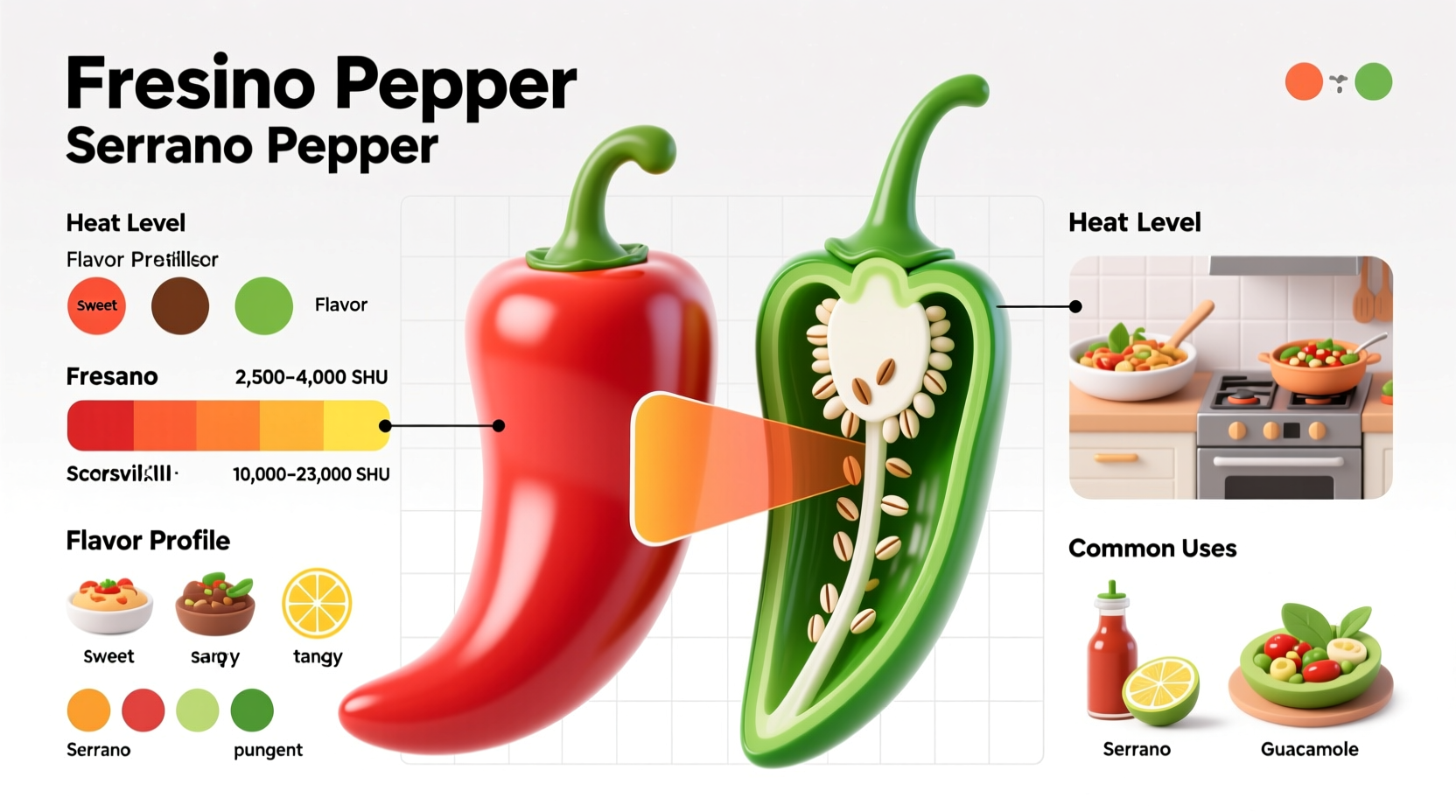
Fresno peppers (Capsicum annuum) are medium-sized chili peppers developed in California in the 1950s by horticulturist Clarence Hodges. Named after Fresno County, they resemble smaller versions of jalapeños but offer a more complex flavor profile as they mature. Typically harvested green or red, their taste evolves from grassy and bright to rich and slightly sweet.
Serrano peppers, native to the mountainous regions of Puebla and Hidalgo in Mexico, are smaller, straighter, and notably hotter than Frenos. Their name comes from “sierra,” meaning mountain range, reflecting their highland origins. Prized for their crisp bite and clean heat, serranos are a staple in raw preparations like pico de gallo and hot sauces.
While both belong to the same species and share visual similarities—especially when young—their culinary roles diverge due to differences in capsaicin content, flesh thickness, moisture level, and flavor development over time.
Key Characteristics
| Characteristic | Fresno Pepper | Serrano Pepper |
|---|---|---|
| Size & Shape | 2–3 inches long; conical, slightly curved; similar to small jalapeño | 1–2.5 inches long; slender, straight, smooth skin |
| Color | Green (immature), ripening to bright red or orange-red | Green, red, brown, or yellow at maturity |
| Heat Level (Scoville Units) | 2,500–10,000 SHU | 10,000–23,000 SHU |
| Flavor Profile | Grassy and tangy when green; fruity, smoky, and mildly sweet when red | Sharp, bright, vegetal, with intense upfront heat |
| Flesh Thickness | Thicker walls, meatier texture | Thinner walls, crisp and juicy |
| Maturity Time | 60–80 days; often used at multiple stages | 70–85 days; commonly used green |
| Culinary Function | Balanced heat with body; good for roasting, blending, preserving | Pure, piercing heat; ideal for raw applications and quick cooking |
| Shelf Life (Refrigerated) | 2–3 weeks | 1–2 weeks |
Practical Usage: How to Use Each Pepper
Fresno Peppers: The Balanced Chile
Fresnos excel where a moderate level of heat must coexist with structural integrity and depth of flavor. Their thicker walls make them less prone to disintegrating during cooking, which is ideal for techniques requiring prolonged exposure to heat.
- Salsas y Guacamole: Finely diced red Fresno adds warmth and fruitiness without overwhelming delicate avocado. A single seeded and minced pepper enhances complexity in guacamole without dominating.
- Roasted Applications: Roast whole over an open flame or under a broiler until blistered. Peel and slice into strips (rajas) for use in quesadillas, egg scrambles, or alongside grilled meats.
- Preserves & Pickling: Their firm texture holds up well in vinegar brines. Combine sliced green Fresnos with garlic, oregano, and peppercorns for a versatile pickled condiment.
- Stews & Braises: Add chopped red Fresno to posoles, chilis, or lentil soups. They contribute subtle sweetness and gentle heat that melds seamlessly into long-simmered dishes.
- Infused Oils & Vinegars: Steep slices in heated oil (cooled before storage) or white wine vinegar for flavored bases used in dressings or drizzles.
Pro Tip: When using red Fresnos, consider them akin to a milder poblano-meets-jalapeño hybrid. If you're building layered flavor in a dish, add them early to mid-cook to allow their sugars to caramelize and integrate.
Serrano Peppers: The Precision Heat Source
Serranos deliver a sharper, faster burst of heat and are best suited to dishes where freshness and clarity of spice are paramount. Their thin walls break down quickly, dispersing heat rapidly—a trait that demands careful handling.
- Raw Salsas & Ceviche: Mince finely and fold into pico de gallo or seafood ceviche. One serrano can season an entire batch; seeds and membranes should be removed for controlled heat.
- Hot Sauces: Blend with lime juice, cilantro, and garlic for an uncooked green sauce (salsa verde cruda). For cooked versions, simmer briefly to preserve brightness while taming edge.
- Garnishes: Thinly slice and scatter over tacos, enchiladas, or soups as a finishing touch. The crisp texture provides contrast to soft ingredients.
- Marinades: Include minced serrano in citrus-based marinades for chicken or fish. The acid helps extract flavor while tempering the burn.
- Infusions: Use sparingly in aguas frescas or cocktail rims (e.g., micheladas), where even a whisper of heat enhances refreshment.
Caution: Always wear gloves when handling serranos. Capsaicin transfers easily to skin and eyes, causing irritation. After preparation, clean cutting boards and knives thoroughly with soapy water.
Variants & Types
Fresno Variations
- Green Fresno: Harvested early, it has a clean, slightly bitter note reminiscent of bell pepper with mild heat. Best used raw or lightly sautéed.
- Red Fresno: Fully mature, offering deeper, almost berry-like sweetness and broader heat. Ideal for roasting, blending, or drying.
- Dried Fresno: Less common but available in specialty markets. Rehydrated, it works in moles or ground into powder for rubs. Not as widely used as dried arbol or ancho.
- Smoked Fresno (Chipotle-style): Rare commercially, but home cooks can cold-smoke red Fresnos and dry them for a custom chipotle alternative—smokier and sweeter than traditional chipotles.
Serrano Variations
- Green Serrano: Most common form. Crisp, tart, and intensely spicy. Used fresh in daily cooking across central Mexico.
- Red Serrano: Matured on the plant, slightly fruitier and marginally hotter. Often used in salsas or preserved in vinegar.
- Pickled Serranos: Widely available in jars. Tangy and fiery, excellent for garnishing tacos al pastor or adding zip to sandwiches.
- Dried Serrano (Chiltepin-style): Occasionally sold whole or crushed. Drying concentrates heat and creates a brittle, flaky texture suitable for sprinkling on finished dishes.
- Colored Cultivars: Yellow, orange, and brown varieties exist, bred for ornamental or niche culinary use. Heat remains consistent across colors.
Insider Note: In Oaxaca and Puebla, farmers sometimes grow heirloom serrano types with purple streaks or tapered tips. These aren't commercially standardized but may appear at local markets during peak season (summer to early fall).
Comparison with Similar Ingredients
Understanding how Fresno and Serrano peppers compare to other common chiles helps prevent missteps in substitution and recipe execution.
Fresno vs Jalapeño
- Fresnos and jalapeños are nearly identical in size and shape, but Fresnos typically run hotter—especially when red.
- Fresnos develop more pronounced sweetness at maturity, whereas jalapeños retain a greener, earthier tone.
- Jalapeños are more commonly smoked (chipotle) and canned; Fresnos are rarer in processed forms.
- Substitution: Use Fresno for a spicier, fruitier kick. Replace 1 jalapeño with ½ to 1 Fresno depending on desired heat.
Serrano vs Jalapeño
- Serranos are consistently hotter—up to three times more intense than jalapeños.
- Serranos have thinner walls and higher water content, making them less suitable for stuffing.
- Their flavor is brighter and less vegetal, with a quicker heat onset.
- Substitution: Replace 1 serrano with 2–3 jalapeños (seeded) for equivalent heat in cooked dishes.
Fresno vs Serrano: Direct Comparison
| Factor | Fresno | Serrano |
|---|---|---|
| Best Raw? | Moderate—good in blends but less punchy | Excellent—crisp, immediate heat |
| Best Cooked? | Superior—retains structure, develops sweetness | Fair—breaks down quickly; best added late |
| Texture | Meaty, substantial | Crisp, juicy, fragile |
| Heat Onset | Gradual, warming | Fast, sharp, front-of-mouth |
| Storage Longevity | Longer due to thicker skin | Shorter; prone to wilting |
| Availability | Widely available in U.S. supermarkets | Common in Latin markets and major chains |
\"I reach for serranos when I want heat to speak first—like in a raw salsa or a last-minute garnish. With Fresnos, I’m looking for something that simmers into the background, enriching the dish over time.\" — Carlos Méndez, Executive Chef, Comal y Cilantro, Austin, TX
Practical Tips & FAQs
How do I control the heat level in these peppers?
Remove the seeds and white inner membranes (placenta), where most capsaicin resides. For mildest effect, seed and rinse the pepper under cold water. Retain both for maximum fire. Remember: red peppers of either type tend to be hotter than green ones.
Can I substitute one for the other?
Yes, but adjust quantity carefully. Use half a Fresno in place of one serrano for similar heat. Conversely, replace one Fresno with two seeded serranos if aiming for comparable intensity with brighter flavor.
Which is better for canning or preserving?
Fresnos are superior for canning due to their thicker flesh, which holds shape during processing. Whole or sliced, they maintain crunch in pickled mixes. Serranos soften more readily, making them better for relishes or sauces where texture breakdown is acceptable.
Do these peppers freeze well?
Both freeze effectively. Chop or slice before freezing for convenience. Blanching is optional but helps preserve color. Frozen serranos lose crispness but retain heat—ideal for cooked dishes. Fresnos maintain better texture post-thaw.
When are they in season?
Peak availability runs from late summer through early fall (August–October). However, both are grown year-round in California and Mexico, so they’re generally accessible in supermarkets regardless of season.
Are there health benefits?
Like all chili peppers, both contain capsaicin (linked to metabolism support and pain relief), vitamin C (abundant in raw form), and antioxidants. One raw serrano provides nearly 100% of daily vitamin C needs. Heat diminishes some nutrients during cooking, but flavor compounds remain bioactive.
Why does my recipe call for \"minced\" vs \"sliced\"?
Minced peppers distribute heat evenly throughout a dish—critical in salsas or batters. Sliced or roasted pieces provide textural contrast and localized bursts of flavor, such as in rajas or taco toppings. Choose based on whether you want integration or accent.
Can I grow these at home?
Absolutely. Both thrive in containers or garden beds with full sun and well-drained soil. Serranos require slightly longer growing seasons but produce prolifically. Start seeds indoors 8–10 weeks before last frost. Provide consistent watering and avoid nitrogen-heavy fertilizers, which promote leaves over fruit.
Growing Hack: Pinch off the first few flowers to encourage bushier plants and higher yields later in the season. Both varieties benefit from cage support as they bear fruit.
Summary & Key Takeaways
Fresno and Serrano peppers occupy distinct niches in the kitchen despite superficial similarities. Recognizing their differences empowers cooks to make deliberate choices that align with a dish’s intended outcome.
- Fresno peppers offer balanced heat, meaty texture, and evolving sweetness—best for roasting, stewing, and applications requiring body.
- Serrano peppers deliver sharp, clean heat with crisp freshness—ideal for raw salsas, garnishes, and quick infusions.
- Heat-wise, serranos are significantly hotter, often doubling or tripling the Scoville output of a Fresno.
- Substitutions are possible but require adjustment: reduce volume when replacing serranos with Fresnos, and vice versa.
- Always handle both with care—capsaicin absorption is cumulative, especially with repeated exposure.
- Freshness matters: choose firm, glossy specimens free of wrinkles or soft spots for optimal performance.
Mastering the use of these two chiles isn’t about memorizing data points—it’s about developing intuition. Over time, you’ll learn to see a Fresno as a builder of depth and a Serrano as a spark of brilliance. Keep both in rotation, and let your palate guide which belongs in the bowl, on the grill, or at the center of the plate.
Next Step: Try making two versions of salsa verde—one with roasted red Fresno, another with raw green serrano. Taste them side by side to experience how form, heat, and texture shape the final dish. You’ll gain firsthand insight no chart can fully convey.




 浙公网安备
33010002000092号
浙公网安备
33010002000092号 浙B2-20120091-4
Comments
No comments yet. Why don't you start the discussion?