
Turning a passion for footwear into a thriving business is more achievable than ever. With rising consumer demand for unique, sustainable, and purpose-driven brands, the market rewards innovation and authenticity. But transforming a sketch in a notebook into a recognized shoe brand requires more than creative flair—it demands strategy, planning, and relentless execution. This guide walks through the essential stages of building a shoe design company from the ground up, offering real-world insights and practical tools to help you go from idea to brand with confidence.
Clarify Your Vision and Define Your Niche
Every iconic shoe brand started with a clear point of view. Before investing in materials or prototypes, define what your brand stands for. Ask yourself: Who are you designing for? What problem does your footwear solve? Is it about performance, sustainability, bold aesthetics, or comfort reinvented?
Successful brands don’t try to appeal to everyone. They carve out a niche—whether it’s eco-conscious sneakers made from algae foam, minimalist sandals for urban professionals, or adaptive footwear for people with mobility challenges. A focused identity attracts loyal customers and differentiates you in a crowded marketplace.
The Power of Purpose
A strong mission statement isn’t just marketing fluff—it guides every decision, from material sourcing to customer service. Consider Allbirds, which built a global brand around “sustainable comfort.” Their commitment to natural materials and carbon transparency resonates with environmentally conscious consumers and informs product development, packaging, and even retail partnerships.
“Design is not just about how shoes look. It’s about why they exist.” — Tanya Chen, Founder of Sole Theory and Footwear Innovation Consultant
Create a Realistic Roadmap: The 12-Month Launch Timeline
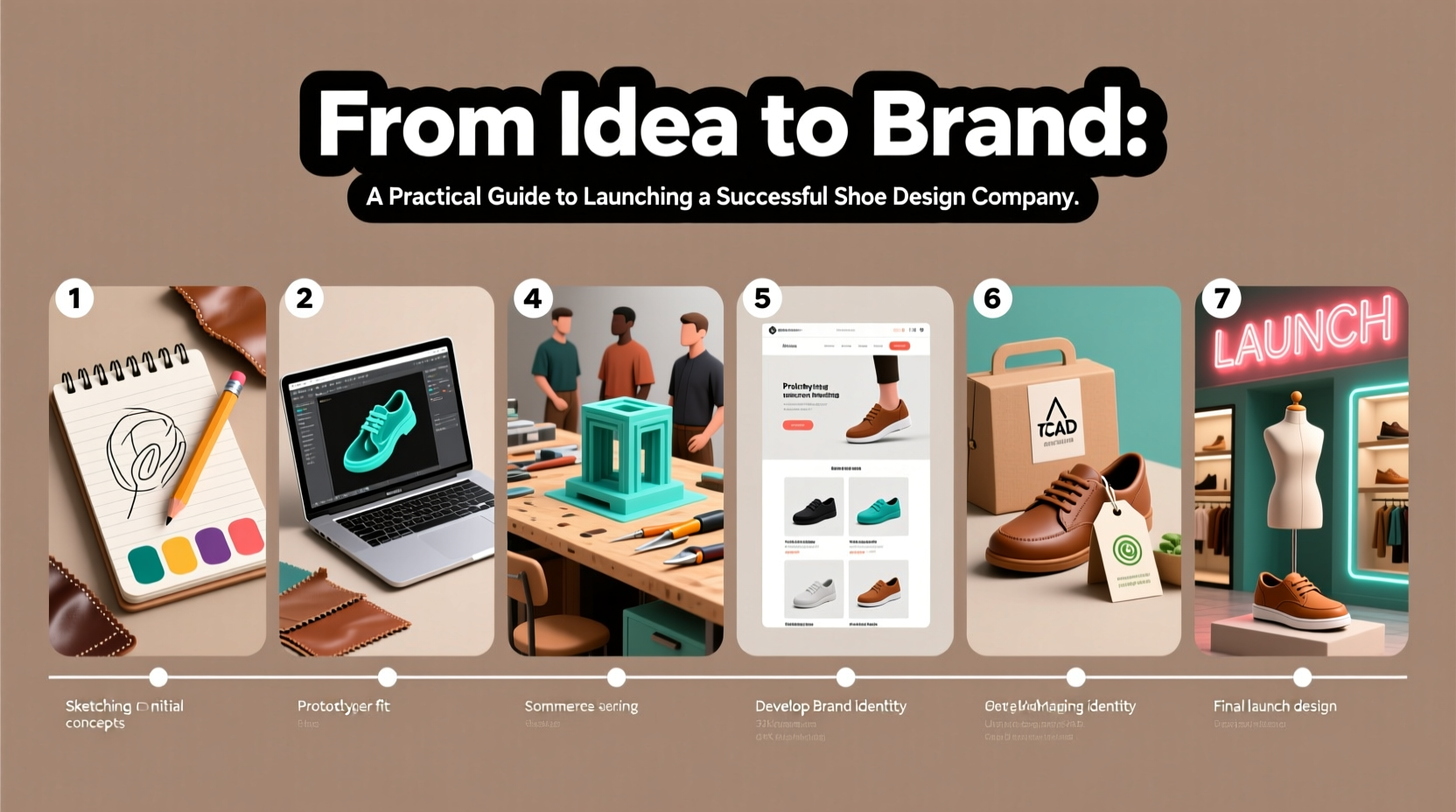
Bringing a shoe brand to life takes time. Rushing can lead to poor quality, cash flow issues, or misaligned messaging. Use this step-by-step timeline to stay organized and on track.
- Month 1–2: Market research, brand naming, logo design, and initial sketches.
- Month 3–4: Develop technical flats (detailed side views), select materials, and source manufacturers.
- Month 5–6: Create first prototypes, test fit and function, gather feedback.
- Month 7–8: Refine designs, finalize production specs, set up e-commerce platform.
- Month 9–10: Place initial production order, develop marketing assets, begin pre-launch outreach.
- Month 11–12: Launch website, execute marketing campaign, fulfill first orders.
This schedule assumes a small batch production model, ideal for startups testing the market. Adjust based on complexity, funding, and team size.
Design with Manufacturability in Mind
Beautiful sketches don’t always translate into wearable, producible shoes. Understanding basic footwear construction is crucial. Collaborate early with a technical designer or sample maker who can assess whether your vision is feasible at scale.
Key considerations include:
- Material availability and cost per unit
- Last compatibility (the mold that shapes the shoe)
- Stitching techniques and durability under stress
- Assembly line efficiency in factories
Many new designers underestimate tooling costs—custom molds, dies, and hardware can run thousands of dollars. Opt for existing lasts or modular components when possible to reduce upfront investment.
Choosing Between Local and Overseas Manufacturing
The decision impacts quality control, lead times, ethical standards, and pricing. Here's a comparison:
| Factor | Local Manufacturing | Overseas Manufacturing |
|---|---|---|
| Cost per Unit | Higher ($80–$150) | Lower ($30–$70) |
| Minimum Order Quantity | Low (50–200 pairs) | High (500–1,000+ pairs) |
| Lead Time | 4–8 weeks | 12–20 weeks |
| Quality Oversight | Easier to visit and audit | Requires third-party inspections |
| Sustainability & Ethics | Often transparent and certified | Varies widely; due diligence required |
For early-stage brands, local or regional production offers flexibility and faster iteration. As volume grows, transitioning partially overseas may improve margins—if managed responsibly.
Build Your Brand Identity Beyond the Shoe
Your product is just one part of the story. Consumers connect with narratives, values, and experiences. Invest in cohesive branding that extends across packaging, tone of voice, social media, and customer interactions.
Elements to develop:
- A memorable brand name and logo
- A consistent color palette and typography
- A compelling origin story (why did you start this?)
- Photography style and visual language
Mini Case Study: StepWise Footwear
Lena Park launched StepWise Footwear after struggling to find stylish yet supportive shoes during long hospital shifts. She began by interviewing 50 nurses about their footwear pain points. Her first prototype—a slip-resistant clog with memory foam and antimicrobial lining—was tested over three months in real clinical environments.
Instead of mass-producing, Lena crowdfunded her debut run via Kickstarter, raising $127,000 from healthcare workers worldwide. She used factory partners in Portugal known for medical footwear expertise, ensuring high standards without compromising ethics. Within 18 months, StepWise was stocked in two specialty retailers and generating six figures in annual revenue—all while maintaining full ownership.
Her success came from solving a specific problem, validating demand early, and building trust through transparency.
Launch Smart: Marketing and Sales Strategy
A great shoe won’t sell itself. Even with flawless design and craftsmanship, visibility determines survival. Focus on channels where your target audience already spends time.
Start with:
- A professional e-commerce site with high-quality product photos and detailed fit guides
- Instagram and TikTok content showing behind-the-scenes design, wear tests, and customer stories
- Email list building through lead magnets like “How to Choose Shoes That Last” guides
- Micro-influencer collaborations in your niche (e.g., podiatrists, runners, fashion stylists)
Pricing strategy matters. Avoid underpricing to compete—this devalues your work and limits growth. Calculate all costs (materials, labor, shipping, platform fees, marketing) and aim for a healthy gross margin (ideally 50–70%).
Essential Pre-Launch Checklist
- Brand Foundation
- ✅ Finalized name, logo, mission, and visual identity
- ✅ Registered business entity and trademark search completed
- Product Readiness
- ✅ 2–3 approved prototypes with fit validation
- ✅ Confirmed manufacturer agreement and MOQ
- ✅ UPC codes, labeling, and packaging designed
- Digital Presence
- ✅ Functional website with secure checkout
- ✅ Social media profiles active and branded
- ✅ Email collection system in place
- Operations
- ✅ Inventory tracking method established
- ✅ Shipping rates and return policy drafted
- ✅ Customer service plan (FAQs, response time)
Frequently Asked Questions
How much does it cost to start a shoe brand?
Initial costs vary widely but typically range from $10,000 to $50,000 for a small first run. This includes design, prototyping, tooling, manufacturing, branding, and website setup. Lower-cost options exist using print-on-demand platforms, though customization and quality are limited.
Do I need formal design training to start a shoe company?
No. While technical knowledge helps, many successful founders partner with experienced pattern makers or use freelance platforms like Upwork or Fiverr to access skilled artisans. Passion, research, and collaboration often outweigh formal credentials.
How do I protect my shoe designs from being copied?
Design patents offer protection for unique aesthetics, though they can be costly and slow to obtain. More practical steps include documenting your design process, watermarking images, working with trusted manufacturers under NDAs, and building a strong brand that’s harder to imitate authentically.
Conclusion: Start Small, Think Big
Building a shoe design company is a marathon, not a sprint. Success comes not from perfection on day one, but from launching with integrity, learning quickly, and adapting with purpose. You don’t need millions to begin—just a compelling idea, a well-defined audience, and the discipline to execute step by step.




 浙公网安备
33010002000092号
浙公网安备
33010002000092号 浙B2-20120091-4
Comments
No comments yet. Why don't you start the discussion?