
Walking a dog should be a peaceful experience—yet for many pet owners, it turns into a daily tug-of-war. When your dog pulls on the leash, it’s not just exhausting; it can also strain your relationship with your pet and even cause physical harm if the wrong equipment is used. Harnesses are often recommended over collars to reduce neck pressure, but not all harnesses are created equal. The key difference lies in where the leash attaches: front clip versus back clip. Understanding this distinction is crucial to choosing a harness that effectively reduces pulling while keeping your dog safe, comfortable, and happy.
How Dog Harnesses Work: A Mechanical Overview
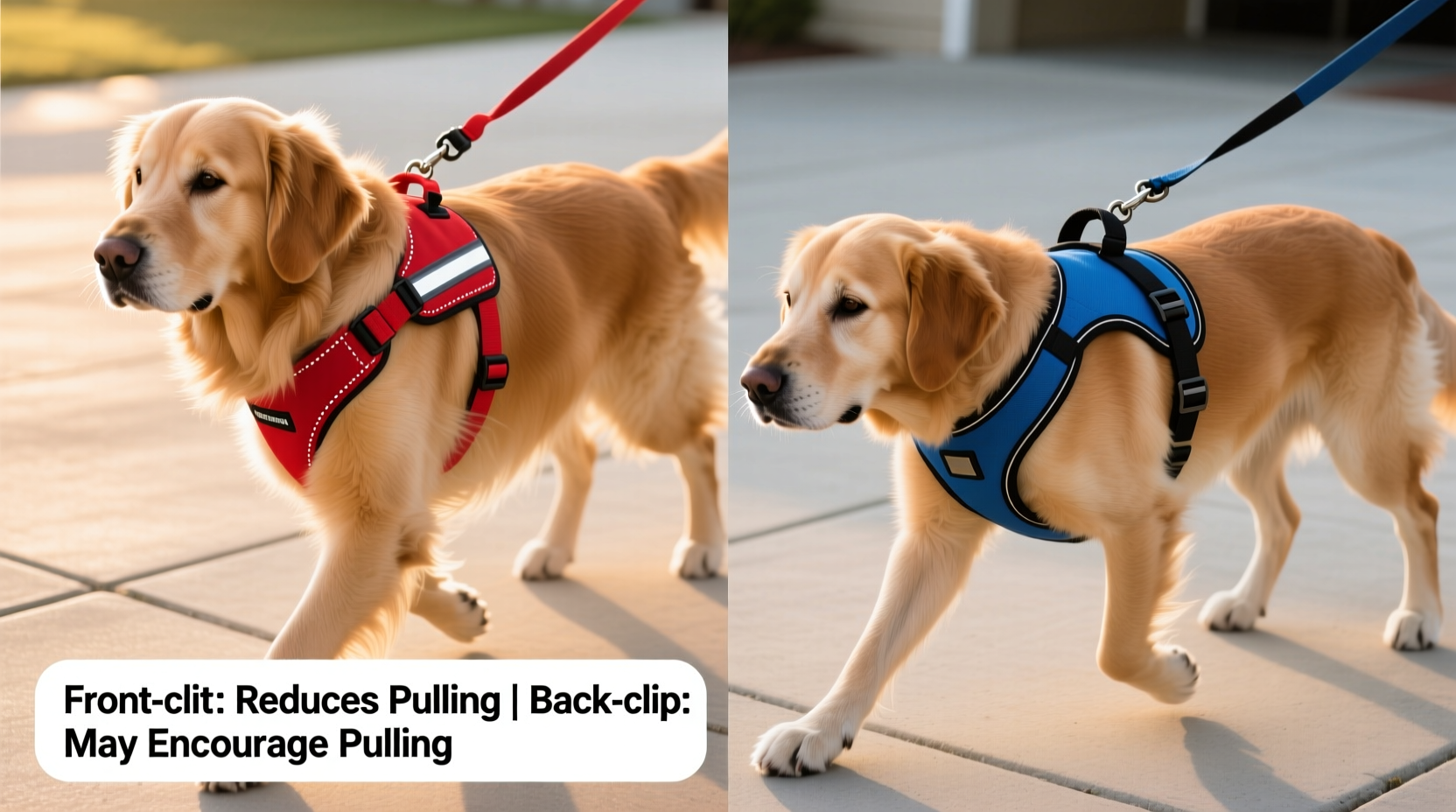
A dog harness distributes pressure across the body rather than concentrating it on the neck, making it a safer alternative to traditional collars—especially for dogs prone to tracheal collapse or those with brachycephalic breeds like pugs and bulldogs. However, the point of leash attachment dramatically affects how the harness influences your dog’s behavior during walks.
Back-clip harnesses attach the leash to a ring located between the dog’s shoulder blades, similar to how a collar functions but with broader support. Front-clip harnesses, on the other hand, connect the leash to a ring on the chest, typically near the sternum. This subtle shift in mechanics leads to vastly different outcomes when a dog attempts to pull.
The physics behind pulling is simple: when a dog lunges forward, a back-clip harness allows them to move freely in that direction, reinforcing the pulling behavior. A front-clip harness, by contrast, redirects the dog’s momentum sideways when they pull, creating gentle resistance and encouraging them to turn back toward the handler. This redirection is the foundation of humane, force-free training.
Front Clip vs Back Clip: Pros and Cons Compared
Choosing between front and back clip isn’t just about preference—it’s about aligning the tool with your goals. If your primary concern is stopping pulling, the decision becomes clearer when you examine both options side by side.
| Feature | Front-Clip Harness | Back-Clip Harness |
|---|---|---|
| Pulling Control | High – redirects dog when pulling, discouraging forward motion | Low – allows dog to pull freely, may reinforce unwanted behavior |
| Comfort & Fit | Good – well-designed models distribute pressure evenly | Excellent – most dogs adapt quickly, minimal adjustment needed |
| Training Support | Strong – promotes attention and engagement with handler | Limited – no built-in correction mechanism |
| Suitability for Pullers | Ideal – especially for strong or excitable dogs | Poor – may encourage pulling due to lack of resistance |
| Ease of Use | Moderate – some dogs need time to adjust to turning response | Easy – familiar feel, quick to put on |
| Risk of Injury | Very low – when properly fitted, no strain on neck or joints | Low – better than collar, but can still encourage jerking motions |
Why Front-Clip Harnesses Are More Effective at Reducing Pulling
Front-clip harnesses work because they leverage natural canine movement patterns. When a dog pulls and the leash is attached to the chest, the resulting tension causes the dog to pivot slightly toward the handler. This subtle turn disrupts forward momentum and creates a teachable moment. Over time, the dog learns that pulling doesn’t get them where they want to go—walking calmly does.
This method is rooted in behavioral science. Dr. Sophia Yin, a renowned veterinarian and animal behaviorist, emphasized that tools which interrupt unwanted behaviors without punishment lead to faster, more sustainable learning. She noted:
“When we use equipment that gently guides rather than forcibly restrains, we preserve the dog’s confidence and strengthen the human-animal bond.” — Dr. Sophia Yin, DVM, MS
Front-clip harnesses do exactly that. They don’t choke, yank, or cause pain. Instead, they provide feedback—like bumping into a wall when walking too fast. Dogs quickly learn to adjust their pace and pay attention to their handler.
That said, effectiveness depends on proper fit and consistent use. A loose or poorly adjusted harness can slip, twist, or fail to redirect correctly. Always ensure the harness sits snugly, with only two fingers fitting beneath any strap, and that the leash ring is centered over the chest.
When Back-Clip Harnesses Make Sense
Despite their limitations in managing pulling, back-clip harnesses aren’t obsolete. They serve important roles in specific situations:
- Dogs with mobility issues – Older dogs or those with arthritis may find front-clip harnesses uncomfortable due to the twisting motion required during redirection.
- Dogs trained not to pull – If your dog already walks politely on a leash, a back-clip harness offers freedom of movement without compromising safety.
- Service or working dogs – Many service animals use back-clip harnesses because they’re designed for straight-line movement and stability, not behavior modification.
- Dogs sensitive to chest pressure – Some dogs react negatively to having pressure on their chest, especially if they have respiratory conditions.
The key is matching the tool to the dog’s needs and training level. For untrained or strong-pulling dogs, however, a back-clip harness alone is unlikely to solve pulling problems—and may make them worse by allowing the dog to practice the very behavior you’re trying to eliminate.
Real-World Example: Transforming a Reactive Puller
Consider Max, a three-year-old Australian Shepherd adopted from a shelter. His owner, Lisa, loved him deeply but dreaded walks. Max would lunge at squirrels, bark at bikes, and drag her down the street, leaving her with sore shoulders and frayed nerves.
She started with a standard back-clip harness. While it prevented choking, Max pulled harder than ever—reinforced by the fact that each surge forward brought him closer to whatever he wanted to investigate. Frustrated, she consulted a certified dog trainer, who recommended switching to a front-clip harness combined with reward-based training.
Within two weeks of consistent use, Max began to slow down when he felt the gentle turn from the front attachment. Paired with treats for walking beside her, the harness became a cue for calm behavior. After six weeks, Lisa could walk Max through busy parks with minimal pulling. The change wasn’t just physical—it improved their bond. Max looked to her for guidance instead of reacting impulsively.
This case illustrates that while the harness plays a critical role, it works best as part of a broader strategy that includes patience, consistency, and positive reinforcement.
Step-by-Step Guide to Transitioning to a Front-Clip Harness
Switching harness types requires care to avoid confusion or discomfort. Follow this timeline to ensure a smooth transition:
- Week 1: Indoor Introduction
Let your dog wear the harness inside the house with no leash attached. Pair it with meals, playtime, or treats to create positive associations. - Week 2: Leash Familiarization
Attach a lightweight leash and let your dog drag it (supervised) around the house or yard. This helps them get used to the sensation of resistance. - Week 3: Short Outdoor Sessions
Begin short walks in low-distraction areas. Reward your dog frequently for walking beside you. If they pull, stop moving and wait for slack in the leash before continuing. - Week 4: Increase Duration and Distraction
Gradually extend walks and visit busier environments. Continue rewarding calm behavior and remain patient during setbacks. - Ongoing: Consistency and Reinforcement
Use the harness on every walk. Avoid reverting to a back-clip harness, even for convenience, as it will undo progress.
Frequently Asked Questions
Can a front-clip harness hurt my dog?
When properly fitted, a front-clip harness does not hurt dogs. In fact, it reduces strain on the neck and spine compared to collars or back-clip harnesses used by pullers. However, an ill-fitting harness—too tight or rubbing under the armpits—can cause chafing. Always check for fit and inspect your dog’s skin regularly.
Will my dog learn not to pull without a harness?
Yes, but it takes longer. Leash manners can be taught through positive reinforcement training alone. However, using a front-clip harness accelerates the process by providing immediate, consistent feedback. Think of it as training wheels for walking etiquette.
Are no-pull harnesses the same as front-clip harnesses?
Most no-pull harnesses are front-clip designs, but not all front-clip harnesses are marketed as “no-pull.” Look for models specifically engineered to redirect pulling force, such as the Freedom Harness, Easy Walk, or SENSE-ation. Avoid harnesses that allow excessive wiggling or have loose chest straps.
Checklist: Choosing the Right Harness for Your Dog
- ✅ Measure your dog’s girth (behind front legs) and neck for accurate sizing
- ✅ Choose a harness with adjustable straps for a secure fit
- ✅ Ensure the leash ring is positioned on the chest, not the side
- ✅ Check that the harness doesn’t restrict leg movement or rub underarms
- ✅ Opt for padded straps if your dog has short fur or sensitive skin
- ✅ Read reviews focused on durability and effectiveness for pullers
- ✅ Test the harness with supervision and adjust as needed
Conclusion: Prioritizing Safety, Comfort, and Behavior
The debate between front clip and back clip dog harnesses ultimately comes down to purpose. If your goal is to stop pulling without harming your dog, the evidence strongly favors front-clip harnesses. They offer a humane, effective solution grounded in behavioral principles and biomechanics. Back-clip harnesses have their place—but not for dogs who haven’t yet learned polite walking habits.
Remember, no harness replaces training. The best results come from combining the right tool with consistent, reward-based guidance. By investing in a quality front-clip harness and dedicating time to practice, you’re not just reducing pulling—you’re building trust, improving communication, and making every walk a shared joy rather than a struggle.




 浙公网安备
33010002000092号
浙公网安备
33010002000092号 浙B2-20120091-4
Comments
No comments yet. Why don't you start the discussion?