
For anyone who’s ever dropped their phone on tile, concrete, or worse—into a puddle—the moment of impact is etched into memory. That sickening clatter, the frantic grab, the inspection for cracks. If you're among the chronically clumsy, your phone likely bears the scars: micro-scratches on the back, chipped corners, or a spiderwebbed screen. In those moments, you might wonder: would a full coverage case have saved it?
The debate between full coverage and partial phone cases isn’t just about aesthetics—it’s about risk management. One promises maximum defense; the other prioritizes slimness and accessibility. But when accidents happen daily, does the added bulk of a full coverage case translate into meaningful protection? Or is it overkill for most users?
What Defines Full Coverage vs Partial Cases?
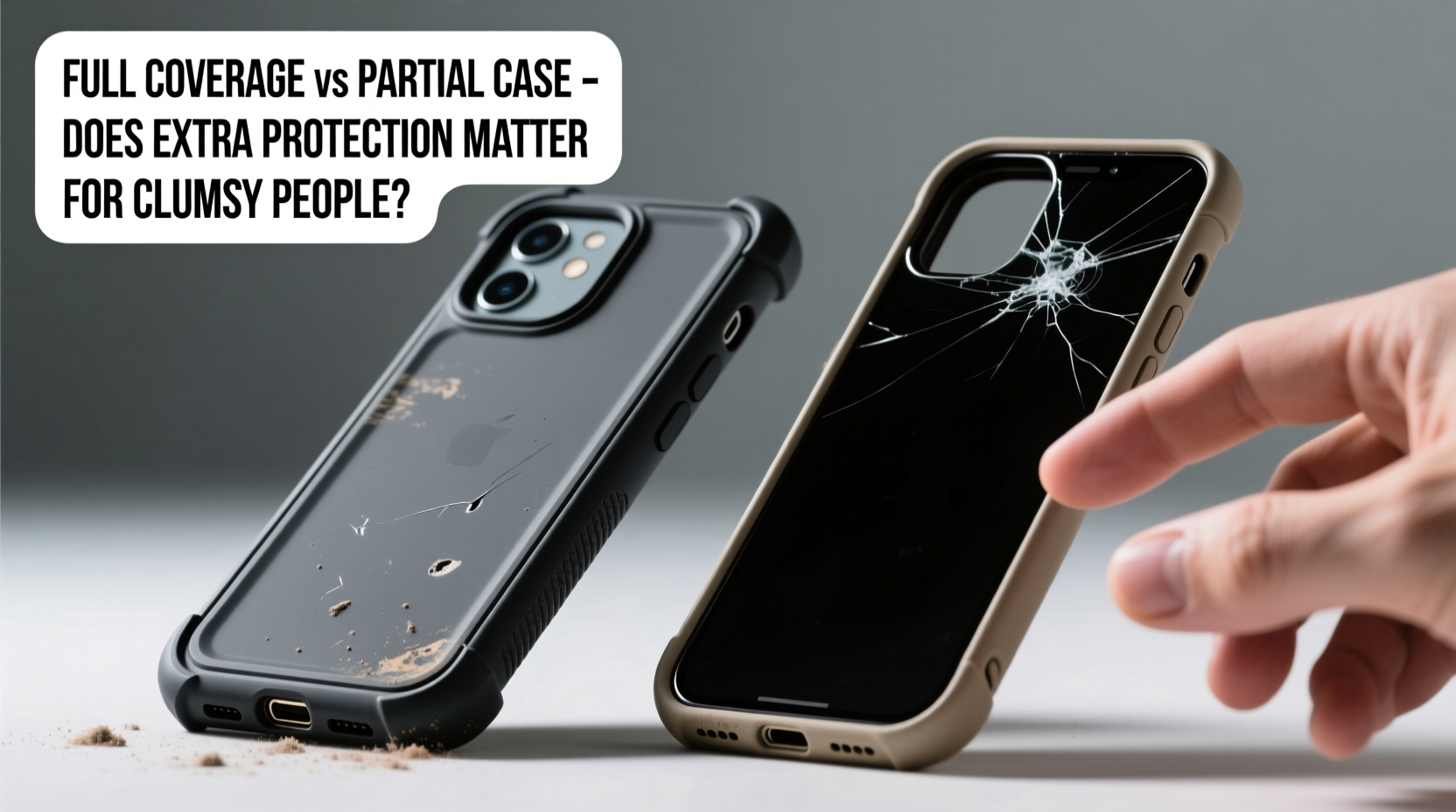
Understanding the structural differences is key to making an informed decision.
Partial cases typically wrap around the edges and bottom of the phone, leaving the back and camera module exposed. They’re designed to absorb shock from side and corner drops while maintaining access to wireless charging and preserving the phone’s original look. Most are made from TPU (thermoplastic polyurethane) or hybrid materials with aluminum or polycarbonate frames.
Full coverage cases, on the other hand, encase the entire device—including the back, sides, top, and often the screen. Some models include flip covers or built-in screen protectors. These are commonly used in industrial or outdoor settings where phones face dust, moisture, and repeated impacts.
Real-World Impact: How Drops Actually Happen
Clumsiness isn’t random—it follows patterns. Studies by insurance providers like SquareTrade and iFixit show that most phone damage occurs from falls between 3 and 5 feet, often onto hard surfaces like hardwood, tile, or pavement. The most common impact points? Corners and edges.
A 2022 drop test by Consumer Reports found that 78% of cracked screens resulted from corner-first impacts, while 14% came from flat-back drops. This suggests that edge protection is critical—but what about the rest?
Consider this scenario:
Mini Case Study: Sarah, a nurse working 12-hour shifts, carries her phone in her scrubs pocket. She drops it multiple times a week—on linoleum floors, metal carts, and once into a sink. After six months, her partial-case-protected iPhone has a cracked screen and scuffed back glass. She switches to a full coverage rugged case. Over the next nine months, despite similar drops, there’s no damage—even after falling from a gurney.
The difference wasn’t just thickness—it was comprehensive shielding. The full coverage case absorbed impacts from all angles and prevented direct contact between the phone and contaminants like water and disinfectant wipes.
Protection Breakdown: What Each Case Type Shields Against
| Threat | Partial Case | Full Coverage Case |
|---|---|---|
| Corner/edge drops | ✅ Moderate cushioning | ✅✅ Reinforced corners, deeper bumpers |
| Back glass cracks | ❌ Exposed surface | ✅ Thick backing, raised edges |
| Screen cracks | ❌ Unless paired with screen protector | ✅ Often includes lip or flip shield |
| Dust & debris | ❌ Gaps around ports/buttons | ✅ Sealed ports, covered microphone |
| Liquid spills/splashes | ❌ No resistance | ✅ Water-resistant seals (IP68-rated models) |
| Pocket scratches (keys, coins) | ❌ Back remains vulnerable | ✅ Fully enclosed |
The data shows a clear trend: full coverage cases offer superior defense across nearly every category. But protection comes at a cost—literally and functionally.
When Extra Protection Matters Most
Not everyone needs a tank-like case. But certain lifestyles make full coverage not just beneficial, but essential.
- Active professionals: Construction workers, delivery drivers, healthcare staff, and tradespeople regularly expose phones to drops, liquids, and debris.
- Outdoor enthusiasts: Hikers, cyclists, and campers face mud, rain, and uneven terrain.
- Parents with young children: Phones get passed around, dropped from strollers, or dunked in diaper bags.
- Chronic droppers: If you average more than one drop per month, statistically, you’ll crack a screen within a year without robust protection.
“For high-risk users, a full coverage case isn’t luxury—it’s liability prevention. We see 40% fewer claims from users with rugged cases.” — Mark Tran, Senior Risk Analyst at MobileShield Insurance
Practical Trade-offs: Usability vs. Security
No solution is perfect. Full coverage cases introduce several usability compromises:
- Bulk: Adds 5–8mm to thickness and 30–50g in weight.
- Heat retention: Can trap heat during gaming or GPS navigation.
- Button responsiveness: Rubberized buttons may feel less precise.
- Wireless charging: Many full coverage cases require removal for efficient charging.
- Aesthetics: Often utilitarian or “industrial” in design.
Meanwhile, partial cases preserve sleekness, enhance grip subtly, and rarely interfere with accessories. However, they assume a level of careful handling that many users simply don’t maintain.
Step-by-Step: Choosing the Right Case for Your Clumsiness Level
- Assess your drop frequency: Track how often you drop your phone over two weeks. More than twice? Lean toward full coverage.
- Evaluate your environment: Do you work outdoors, near water, or in dusty areas? Full coverage offers environmental sealing.
- Check your phone’s build: Glass-backed phones (most flagships) are far more fragile than plastic-backed budget models.
- Test fit and function: Ensure the case doesn’t block speakers, mics, or MagSafe/wireless charging if you rely on them.
- Review warranty and insurance: If you have AppleCare+ or carrier insurance, a partial case might suffice. Without coverage, go rugged.
Frequently Asked Questions
Do full coverage cases prevent screen cracks?
Yes—when properly designed. High-quality full coverage cases include raised bezels or flip covers that ensure the screen doesn’t make direct contact during face-down drops. Combined with a built-in screen protector, they significantly reduce cracking risk.
Can I use a full coverage case with a screen protector?
It depends. Many full coverage models come with integrated screen shields. Adding a separate tempered glass protector may cause interference or poor touch sensitivity. Check manufacturer guidelines before layering protections.
Are partial cases useless for clumsy people?
Not entirely. They offer decent shock absorption for minor drops and help prevent edge dents. But they won’t stop back glass shattering or screen impacts from high falls. For frequent accidents, they’re insufficient as standalone protection.
Final Verdict: Does the Extra Protection Matter?
For clumsy users, the answer is a resounding yes. The extra millimeters and grams of a full coverage case translate directly into reduced repair costs, longer device lifespan, and fewer emergency replacements. While partial cases suit cautious users who value design and convenience, they leave too many vulnerabilities exposed for those prone to mishaps.
Think of it like seatbelts. A partial case is like wearing one only part of the time—fine if nothing goes wrong, but inadequate when it does. A full coverage case ensures you’re protected no matter how—or where—you drop your phone.




 浙公网安备
33010002000092号
浙公网安备
33010002000092号 浙B2-20120091-4
Comments
No comments yet. Why don't you start the discussion?