
In an era where automotive engineering mirrors advancements once reserved for aerospace, full-size sedans have evolved into sophisticated machines that balance luxury, intelligence, and dynamic capability. No longer just transportation, today’s large sedans integrate space-inspired technologies—think adaptive materials, AI-driven systems, and energy-efficient propulsion—with performance characteristics that rival sports cars. For drivers who value both comfort and capability, these vehicles represent the pinnacle of modern mobility.
The convergence of space tech and high-performance engineering has redefined what a full-size sedan can be. From self-diagnosing onboard systems to predictive suspension setups, manufacturers are borrowing concepts from satellite design, astronautics, and deep-space telemetry to enhance real-world driving experiences. At the same time, powerful engines, precise handling, and intelligent all-wheel drive ensure that these sedans don’t sacrifice excitement for sophistication.
What Makes a Full-Size Sedan \"Space-Tech Ready\"?
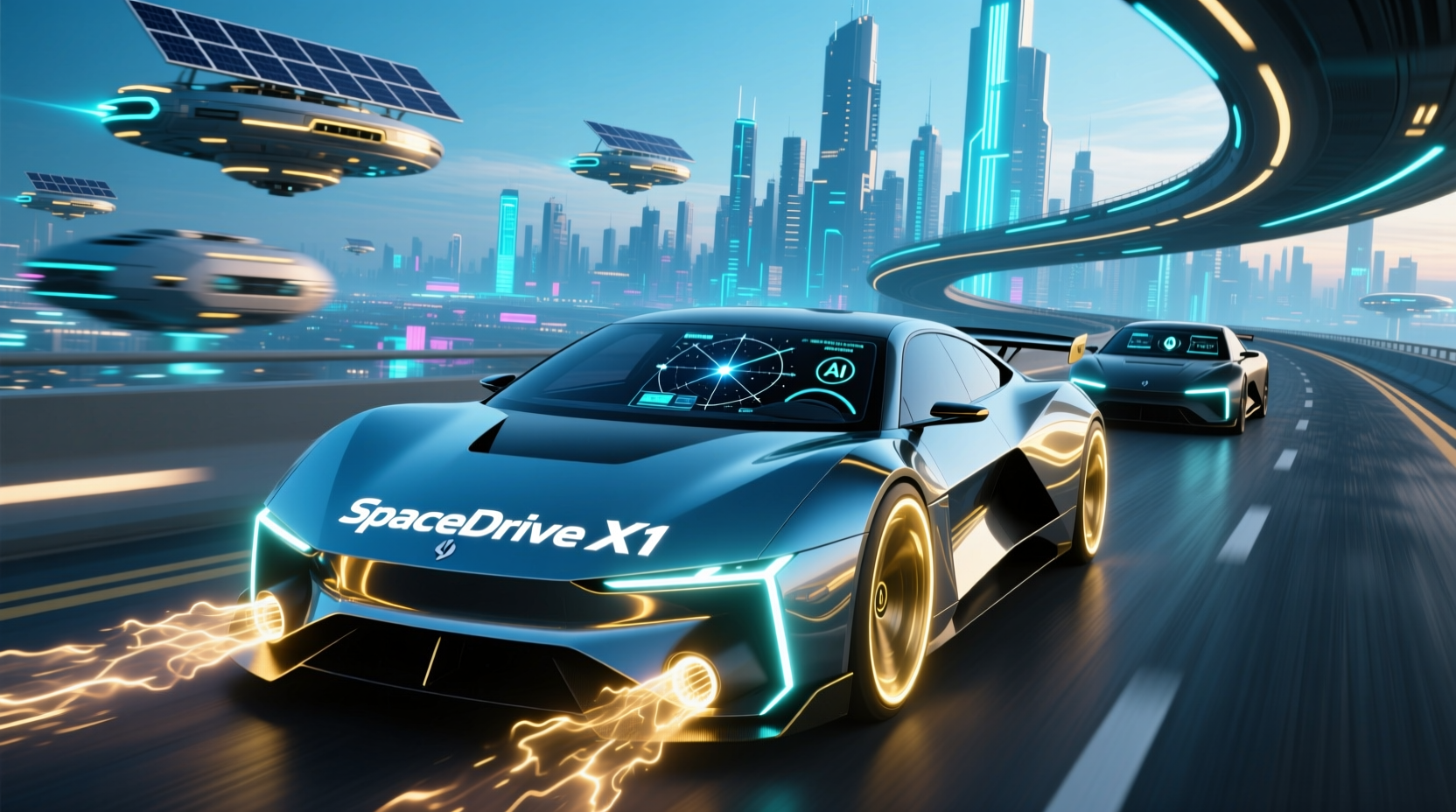
Modern full-size sedans incorporate technologies originally developed for extreme environments—like those found in orbit or on planetary surfaces. These innovations aren't just about novelty; they improve safety, efficiency, and driver engagement.
- Adaptive Damping Systems: Inspired by vibration control in spacecraft, these suspensions adjust in real-time using sensors that anticipate road irregularities.
- AI-Powered Driver Assistance: Machine learning algorithms, similar to those used in autonomous satellites, enable predictive cruise control and lane management.
- Thermal-Regulating Materials: Derived from spacesuit insulation, cabin materials now maintain optimal temperatures with less HVAC strain.
- Over-the-Air (OTA) Updates: Borrowed from satellite firmware protocols, OTA updates keep vehicle software current without dealership visits.
- Energy Recovery Systems: Regenerative braking and smart battery management echo power conservation strategies used on Mars rovers.
Performance That Matches Its Intelligence
A common misconception is that advanced technology comes at the expense of driving dynamics. The latest generation of full-size sedans proves otherwise. With turbocharged V6 and V8 engines, electric powertrains delivering instant torque, and chassis tuned by engineers with motorsport backgrounds, these cars offer thrilling acceleration and composed handling.
Take, for example, the integration of torque-vectoring all-wheel drive. Originally tested in lunar rover prototypes for stability on uneven terrain, this system now allows sedans to distribute power across individual wheels during cornering, enhancing grip and agility. Combined with active rear differentials and rear-wheel steering, even the largest sedans feel nimble and responsive.
“Today’s full-size sedans are more like intelligent cruisers than traditional luxury boxes. They anticipate conditions, adapt their behavior, and deliver performance with precision.” — Dr. Lena Patel, Automotive Systems Engineer, MIT Mobility Lab
Top Models Merging Space Tech and Performance
| Model | Space-Inspired Tech | Performance Specs | Notable Feature |
|---|---|---|---|
| Mercedes-Benz S-Class | Predictive Suspension with Road Scan | 429 hp, 0–60 mph in 4.4s | Lidar-based adaptive damping |
| BMW 7 Series (i7) | Quantum-Inspired Encryption & OTA Updates | 536 hp (electric), 0–60 in 4.5s | Cybersecurity derived from satellite comms |
| Lucid Air Sapphire | Thermal Management from EV Battery Research | 1,200 hp, 0–60 in 2.0s | Space-grade cooling for sustained output |
| Audi A8 L | ZF ProAI Driver Brain (satellite-grade processing) | 453 hp, quattro AWD, 4.4s 0–60 | Real-time traffic prediction via cloud sync |
| Genesis G90 Electrified | Silent Cabin Tech (inspired by ISS modules) | 420 hp, dual-motor AWD | Active noise cancellation from aerospace acoustics |
How to Choose the Right High-Tech Performer
Selecting a full-size sedan that balances cutting-edge innovation with driving satisfaction requires attention to several key factors. Use this checklist to guide your decision-making process:
- Confirm availability of over-the-air software updates
- Test drive with adaptive suspension in varied conditions
- Evaluate real-world range (for EVs) under climate extremes
- Verify cybersecurity features (e.g., encrypted key fobs, intrusion detection)
- Assess voice/AI assistant responsiveness and natural language understanding
- Review warranty coverage for electronic components and battery systems
- Determine service network access to software diagnostics tools
Real-World Example: The Cross-Country Commute Upgrade
Consider Mark T., a data infrastructure consultant based in Denver. After years of driving a conventional luxury sedan, he upgraded to a Lucid Air Grand Touring for his weekly trips between Colorado and Phoenix. His route includes mountain passes, desert heat, and variable weather—conditions that challenge both man and machine.
Equipped with space-derived thermal regulation, the Lucid maintained cabin comfort without draining battery life excessively. Its AI navigation learned his preferred rest stops and adjusted charging schedules accordingly. During one stretch through New Mexico, a sudden sandstorm triggered automatic air filtration and reduced speed via predictive sensors—technology adapted from Mars rover environmental response systems.
“It didn’t feel like I was just driving a car,” Mark said. “It felt like we were navigating together. The way it anticipated changes reminded me of how mission control supports astronauts.”
Maintaining Peak Performance and Tech Reliability
High-tech vehicles demand thoughtful maintenance. Unlike older models where issues were mechanical and visible, modern sedans rely on interconnected digital systems. A single sensor malfunction can cascade into multiple alerts or degraded functionality.
Follow this step-by-step timeline to keep your vehicle operating at its best:
- Monthly: Check software update status via infotainment menu. Ensure GPS and cellular signals are strong during parked periods.
- Every 6 Months: Schedule a diagnostic scan at an authorized center to review sensor calibration and battery health.
- Annually: Clean exterior sensors (cameras, radar units) with non-abrasive wipes. Recalibrate forward-facing systems if windshield was replaced.
- Biennially: Inspect thermal management hoses and coolant levels, especially in electric variants where battery longevity depends on temperature control.
- Ongoing: Keep firmware passwords and owner accounts secure. Enable two-factor authentication if available.
Frequently Asked Questions
Are space-inspired technologies only available in ultra-luxury models?
No. While brands like Mercedes, BMW, and Lucid lead in implementation, many mid-tier full-size sedans now include scaled-down versions of these systems—such as predictive cruise control and basic OTA updates—thanks to modular tech platforms shared across brands.
Do these advanced systems reduce reliability?
Initially, yes—early adopters faced bugs and unexpected shutdowns. However, with improved redundancy architectures and fail-safe programming modeled after aerospace standards, today’s systems are far more robust. Most manufacturers now employ triple-redundant circuits for critical functions like braking and steering.
Can I disable certain AI features if I prefer manual control?
Absolutely. Nearly all modern sedans allow granular customization. You can typically turn off predictive suspension, lane centering, or voice assistants while retaining core safety systems like automatic emergency braking.
Final Thoughts: The Future Is Here—and It Drives Well
The fusion of space-age innovation and high-performance engineering in full-size sedans marks a turning point in automotive history. These vehicles are no longer defined solely by their size or opulence but by their intelligence, resilience, and responsiveness. Whether navigating city streets or long interstate stretches, they offer a level of confidence and comfort previously unimaginable.
As technology continues to evolve—from quantum computing in vehicle brains to self-healing materials inspired by bioengineering in zero gravity—the gap between terrestrial transport and orbital readiness will continue to narrow. But for now, the most accessible version of that future sits parked in driveways, ready to deliver space-level sophistication with every mile.




 浙公网安备
33010002000092号
浙公网安备
33010002000092号 浙B2-20120091-4
Comments
No comments yet. Why don't you start the discussion?