
For millions struggling with insomnia, a good night’s sleep often feels out of reach. While medication and therapy play vital roles, many turn to simpler, non-invasive tools—like blankets—to ease their way into rest. Two popular options stand out: fuzzy blankets and weighted blankets. Both promise comfort, but they operate on entirely different principles. One offers sensory indulgence through softness; the other uses deep pressure stimulation to calm the nervous system. So, which is better for insomnia? The answer depends on individual needs, sleep habits, and the underlying causes of sleep disruption.
Understanding Insomnia: Why Comfort Matters
Insomnia isn’t just about difficulty falling asleep—it includes trouble staying asleep, waking too early, or feeling unrested despite adequate time in bed. Chronic insomnia affects up to 10% of adults and is often linked to stress, anxiety, poor sleep hygiene, or medical conditions like depression or chronic pain.
The body’s ability to relax is critical for initiating sleep. This is where tactile input becomes powerful. Touch influences the autonomic nervous system: gentle, consistent pressure can shift the body from “fight-or-flight” (sympathetic) to “rest-and-digest” (parasympathetic) mode. Blankets, especially those designed with sensory feedback in mind, can act as passive tools to support this transition.
Fuzzy and weighted blankets both contribute to comfort, but they do so differently. Understanding these differences is key to making an informed choice.
What Is a Fuzzy Blanket—and How Does It Help With Sleep?
A fuzzy blanket, also known as a plush, sherpa, or fleece throw, is prized for its ultra-soft texture. Made from synthetic fibers like polyester or microfiber, it provides a cozy, warm sensation that mimics being wrapped in a cloud. Its appeal lies in sensory pleasure: the smooth glide of fabric against skin, the warmth it retains, and the emotional comfort associated with childhood blankets or snuggling up on a cold night.
While not specifically engineered for sleep disorders, fuzzy blankets can improve sleep quality by:
- Providing thermal comfort in cooler environments
- Offering a psychological sense of safety and familiarity
- Enhancing bedtime rituals through tactile satisfaction
- Reducing skin-level discomfort from rougher bedding
For people whose insomnia stems from environmental discomfort—such as cold rooms or scratchy sheets—a fuzzy blanket may be enough to tip the balance toward better sleep.
How Weighted Blankets Work: The Science Behind Deep Pressure Stimulation
Weighted blankets are filled with evenly distributed beads, glass pellets, or other materials to create a gentle, consistent pressure across the body—typically around 10% of the user’s body weight. This design leverages deep pressure stimulation (DPS), a therapeutic technique used in occupational therapy and mental health treatment.
Research shows DPS can increase serotonin and melatonin levels while reducing cortisol, the stress hormone. A 2020 study published in Journal of Clinical Sleep Medicine found that participants using weighted blankets experienced significantly improved sleep efficiency and reduced nighttime movements.
“Deep touch pressure can mimic the effect of a reassuring hug, helping the nervous system downshift into a calmer state.” — Dr. Rebecca Turner, Sleep Neurologist
For individuals with anxiety-related insomnia, restless legs, or ADHD, the grounding effect of a weighted blanket may offer more targeted relief than softness alone. The sensation reduces physiological arousal, making it easier to fall and stay asleep.
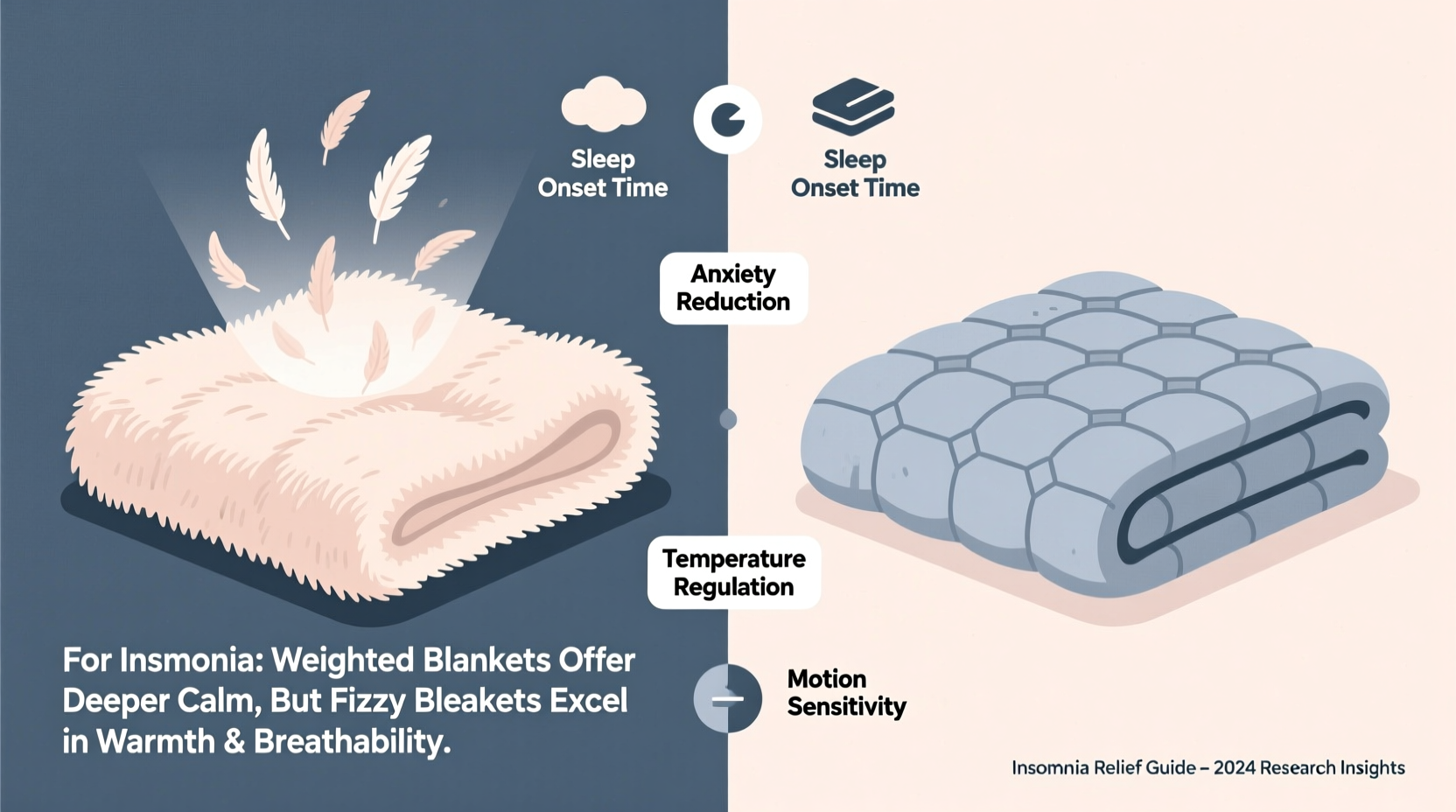
Direct Comparison: Fuzzy vs Weighted Blankets for Insomnia
| Feature | Fuzzy Blanket | Weighted Blanket |
|---|---|---|
| Primary Benefit | Softness, warmth, sensory pleasure | Deep pressure, nervous system regulation |
| Mechanism | Tactile comfort and insulation | Deep pressure stimulation (DPS) |
| Best For | Cold sleepers, emotional comfort seekers | Anxiety, restlessness, sensory processing issues |
| Sleep Onset Improvement | Moderate (via coziness) | High (via neurochemical changes) |
| Nighttime Awakenings | Limited impact | Reduces frequency due to grounding effect |
| Overheating Risk | Higher (especially with polyester) | Varies by model; some are cooling |
| Recommended Use Cases | Seasonal use, relaxation, light naps | Chronic insomnia, anxiety, autism, PTSD |
When a Fuzzy Blanket Might Be Better
If your insomnia is mild and primarily influenced by environmental factors—such as a drafty room or uncomfortable bedding—a high-quality fuzzy blanket could be sufficient. Its appeal is emotional and physical: wrapping yourself in something soft triggers positive associations and signals safety. This can be especially helpful for people who associate bedtime with stress or screen overuse.
Additionally, children or elderly users who find weighted blankets too restrictive may prefer the freedom and warmth of a fuzzy option.
When a Weighted Blanket Has the Edge
For those with clinical insomnia rooted in hyperarousal, anxiety, or sensory dysregulation, a weighted blanket is often more effective. The constant pressure provides proprioceptive input—the body’s awareness of itself in space—which promotes a meditative, grounded state. Many users report feeling “held” or “safe,” similar to swaddling an infant.
One limitation: weighted blankets are not recommended for people with sleep apnea, circulatory issues, or respiratory conditions, as the added weight could restrict breathing during sleep.
Real-World Example: Sarah’s Experience With Both Types
Sarah, a 34-year-old graphic designer, struggled with chronic insomnia for years. Her mind raced at night, and she often lay awake for hours despite being exhausted. Initially, she bought a plush, oversized fuzzy blanket hoping the softness would help her unwind. While she enjoyed the texture, her sleep didn’t improve much—she still woke up multiple times.
After reading about weighted blankets, she invested in a 15-pound version (about 10% of her body weight). Within three nights, she noticed a difference. “It felt like I was being gently hugged,” she said. “My heart rate slowed down almost immediately.” Over two weeks, her average time to fall asleep dropped from 70 minutes to under 25. She now uses the weighted blanket year-round and keeps the fuzzy one for daytime lounging.
Sarah’s case illustrates a common pattern: sensory comfort helps, but neurological regulation often delivers deeper results for persistent insomnia.
Choosing the Right Option: A Practical Checklist
Not sure which blanket suits your needs? Use this checklist to guide your decision:
- ✅ Do you struggle with racing thoughts or nighttime anxiety? → Lean toward weighted
- ✅ Is your bedroom cold, and do you tend to get chilly at night? → Fuzzy may suffice
- ✅ Have you tried standard sleep hygiene without success? → Consider weighted for enhanced impact
- ✅ Do you have mobility issues, asthma, or heart problems? → Consult a doctor before using weighted
- ✅ Are you sensitive to textures or dislike pressure on your chest? → Fuzzy is likely safer
- ✅ Do you share the bed with a partner? → Ensure the blanket size allows shared comfort
- ✅ Do you sweat heavily at night? → Look for breathable, cooling versions of either type
Combining Both: Can You Use Them Together?
Yes—and many people do. A practical approach is to layer a lightweight fuzzy blanket over a weighted one. This combines the grounding effect of weight with the softness and warmth of plush fabric. Just ensure the combination doesn’t cause overheating.
Alternatively, use the weighted blanket during initial sleep onset and remove it later in the night if it becomes too warm. Some users keep a fuzzy throw at the foot of the bed for easy access when adjusting layers.
Frequently Asked Questions
Can a weighted blanket be too heavy?
Yes. A blanket exceeding 10% of your body weight—or one that feels constricting—can cause discomfort or breathing difficulties. Always follow manufacturer guidelines and listen to your body. Children should use only pediatric-approved weights.
Are fuzzy blankets bad for allergies?
Some synthetic fuzzy blankets can trap dust, pet dander, and moisture, potentially aggravating allergies. Opt for machine-washable, hypoallergenic models and wash them every 2–4 weeks to maintain hygiene.
Do weighted blankets work for everyone with insomnia?
No. While many benefit, others find the pressure unsettling or too warm. Results vary based on the root cause of insomnia. Those with primary sleep maintenance issues (waking up frequently) tend to see more benefit than those with circadian rhythm disorders.
Final Thoughts: Matching the Tool to the Problem
There’s no universal “better” when comparing fuzzy and weighted blankets for insomnia—it comes down to the nature of your sleep challenges. If your main barrier to sleep is physical discomfort or cold, a well-chosen fuzzy blanket can make a meaningful difference. But if your insomnia is tied to stress, anxiety, or an overactive mind, a weighted blanket offers a scientifically supported advantage.
The most effective sleep solutions are personalized. Consider starting with one type, tracking your sleep patterns for a week, then experimenting with the other. Some discover that alternating based on mood or season works best. Others find a hybrid approach ideal.
Ultimately, both blankets serve a valuable purpose: they reintroduce intentionality into bedtime. In a world of screens and stimuli, taking time to wrap yourself in comfort—whether soft or weighted—is a small act of self-care with outsized benefits.




 浙公网安备
33010002000092号
浙公网安备
33010002000092号 浙B2-20120091-4
Comments
No comments yet. Why don't you start the discussion?